Aerospace Aluminum Casting Challenges and How Manufacturers Overcome Them
2026-06-18
Aerospace aluminum casting is one of the most highly difficult types of making because the metal parts have to work perfectly in harsh circumstances. A lot of the important structural parts, engine housings, and lightweight brackets that meet strict safety standards in the aircraft business are made using aluminum die casting methods. This way of making things uses high-pressure injection techniques and aerospace-grade aluminum alloys to make parts that are very strong while also being very light. This is important for the performance and fuel economy of airplanes. To get around the problems that come with working in this field, you need advanced technology, careful process control, and a deep understanding of material science. This is what sets qualified providers apart from the rest.
Understanding Aerospace Aluminum Casting Challenges
Every part made for the aircraft industry has to be perfect, so casting flaws are not only a quality problem; they could also be a safety risk that grounds whole fleets.
Primary Quality Defects and Their Impact
Porosity is still the biggest problem in the military aluminum casting industry. These very small air pockets form when gases get stuck during solidification. This weakens the structure that aircraft engineers count on for parts that are needed for flight. A common case of gas porosity is when hydrogen dissolves in liquid aluminum and can't get out before the metal hardens. When aluminum cools, it contracts, leaving holes inside that weaken its mechanical qualities and cause parts to fail the stress tests needed for AS9100 approval.
Cold shuts happen when two metal streams don't join properly during the casting process. This leaves unsightly seam lines that can be used to start cracks. When thermal stress is higher than the material's strength at high temperatures, hot tears form during the last steps of solidification. Both flaws instantly rule out parts for use in aircraft, where every part has to go through strict non-destructive testing like X-ray inspection and ultrasonic analysis.
Design Complexity and Lightweight Requirements
When designing aerospace parts, it's hard to find the right balance between keeping solid function and lowering weight. Engineers have to make shapes with very thin walls—sometimes as little as 1.8 mm—while making sure the part can handle vibrations, changes in temperature, and mechanical loads for decades. It gets harder when you need to add things like mounting bosses, cooling channels, and support ribs to a single casting that would normally have to be put together from separate pieces using standard machining.
With the creation of electric aircraft and rules meant to make cars use less fuel, the push to make things lighter has grown. Every gram that is taken off of an airplane saves money on operational costs, which forces makers to choose the best aluminum alloys and design factors. But taking out too much material causes stress concentration points and industrial problems that raise the cost of production and the amount of waste.
Temperature Control and Alloy Considerations
In military uses, success or failure depends on keeping exact temperature windows throughout the casting cycle. Aluminum alloys like A356 and 319 need melt temps between 650°C and 720°C. Changes of only 15°C can have a big effect on how fluid they are, how well they absorb gas, and how strong they are in the end. The filling temperature, which is usually kept between 200°C and 300°C, needs to be matched by the mold temperature to make sure the metal flows properly without solidifying too quickly or causing too much thermal shock to the tools.
The chemistry of alloys is also very important for aluminum die casting. Because it is made up of silicon and magnesium, A356 aluminum is better at being cast and keeping its shape under pressure. This makes it perfect for structural parts in aircraft that need to be heated to T6. The 319 metal works better at high temperatures because it has copper added to it, but it is more likely to crack when it solidifies because of the heat. By knowing these metallurgical details, buying teams can check to see if a seller really understands the needs for aircraft materials or is just making claims.
Root Causes and Analysis of Key Aluminum Die Casting Challenges
To figure out why casting errors happen, we need to look at how material science and manufacturing process factors affect each production cycle.
Material Properties and Alloy Behavior
Aerospace-grade aluminum alloys have unique casting properties that have a direct effect on how defects form. When properly superheated, A356 aluminum flows very well, filling in thin parts and complex features that other alloys can't do. Its silicon presence (about 7%) makes it a eutectic composition that reduces shrinkage porosity while still allowing for good weldability for additional processes. When magnesium (0.3-0.45%) is added, it allows the T6 heat treatment to precipitate harden, which results in tensile strengths above 280 MPa, which is necessary for aircraft parts that have to hold weight.
When you compare aluminum to other casting metals, you can see why this one is preferred for aircraft uses. Even less dense are magnesium metals, but they are more expensive and don't fight corrosion as well. Zinc metals are better at maintaining their shape and have smoother surfaces, but they can't handle the high temperatures found in engine areas or near exhaust systems. Aerospace aluminum alloys have special qualities that make them valuable. For example, they have a heat conductivity of about 150 W/m·K, naturally fight corrosion by forming oxide layers, and can be recycled. Purchasing teams know this when they look at how well a part will work in the long term.
Process Variables and Manufacturing Bottlenecks
Precision in controlling temperature is the main process element that affects the quality of aircraft castings. Changes in the melt temperature affect how easily hydrogen dissolves in aluminum, which is directly related to the amount of holes in finished parts. When liquid aluminum is heated above its ideal temperature, it absorbs more gases. On the other hand, when it is heated too slowly, the metal becomes less fluid and cold shuts happen. These problems are fixed in modern foundries by using automated temperature tracking systems that keep the accuracy at ±5°C during both the melting and holding stages.
How well liquid metal fills complicated mold shapes before it hardens depends on the injection pressure settings. When high-pressure die casting, forces are usually between 10,000 and 15,000 psi. But for aircraft parts, pressure profiles need to be changed to find the right mix between filling speed and gas entrapment caused by turbulence. It is easier to fill the mold all the way without compromising its internal strength when the original injection is slower and the end pressure is higher.
Mold design is another important bottleneck that slows down production and lowers the standard of parts. Placement of gates, runner size, and opening setup must all work together to move metal and get rid of stored air. Back pressure from not enough draining stops the machine from fully filling, and over-sized gates waste material and make run times longer. These problems can now be predicted by simulation software before the hardware is made, but many suppliers don't have the technical knowledge to understand the results correctly and make designs better based on them.
How Leading Manufacturers Overcome Aerospace Aluminum Casting Challenges
Modern foundries use collaborative engineering and advanced production tools to solve aerospace casting problems in a whole new way.
Vacuum-Assisted and Squeeze Casting Technologies
It has become clear that vacuum-assisted die casting is the best way to get rid of gaps in aircraft parts. Before and during metal injection, this process removes air from the mold hole. This keeps gases from getting trapped, which is something that regular atmospheric casting can't do. The vacuum level, which is usually kept at 50–100 mbar, greatly lowers the amount of internal porosity. This lets heat treatment processes happen that would normally cause damaged parts to split. Vacuum-formed parts always pass X-ray inspection standards that reject 30 to 40 percent of traditionally made parts.
By applying steady pressure while the metal hardens, squeeze casting blends the best parts of both casting and forging. Up to 100 MPa of force is applied by hydraulic rams to the metal as it solidifies. This gets rid of the shrinking pores and improves the grain structure for better mechanical qualities. This method makes aircraft parts with mechanical qualities that are similar to those of wrought aluminum. For example, the elongation values are over 8%, while in normal die casts they are only 3-5%. In exchange for longer cycle times and more expensive equipment, squeeze casting is only cost-effective for high-value aerospace uses where better performance supports higher costs.
Real-Time Monitoring and Process Automation
The best foundries in the business have set up sensor networks that keep an eye on important factors during every casting cycle. Multiple thermocouples check the temperatures of the metal and plastic and make automatic changes when they become off. Pressure sensors check the profiles of injection forces by comparing real data to known patterns that show the mold is properly filled. This real-time feedback lets problems be fixed right away, before they get worse. This cuts down on scrap rates, which are usually between 8 and 12 percent in the manufacturing industry, to just 2 to 3 percent for aircraft production runs.
Automated systems also make sure uniformity, which is something that humans can't do over thousands of casting rounds. Robotic metal ladling gets rid of the temperature loss and contamination risks that come with pouring metal by hand. Programmable spray systems use exact patterns of mold release agent to keep things from sticking without too much buildup that damages the surface. When these technologies are combined, they make production settings where process capability indices (Cpk values) are higher than 1.67, which is the minimum level of quality that aerospace quality systems require for important characteristics.
Design Collaboration and Simulation Software
For aerospace casting projects to be successful, component makers and manufacturing experts need to work together from the start. This partnership finds possible casting issues during the planning phase, when changes are cheaper than making changes to the tools after the mold has been made. An experienced casting expert looks at CAD models and suggests changes to the wall thickness, joint radii, and draft angle that make the parts easier to make without affecting their functionality.
Before spending money on tools, simulation software like MAGMASOFT and ProCAST can predict how metal will move, how temperatures will spread, and how it will solidify. These tools show engineers where porosity is most likely to happen, so they can move gates, add overflows, or change cooling lines to avoid problems. One redesign of an aerospace bracket got rid of a hot tear flaw that kept happening by moving a heavy piece that was found through modeling. This saved the customer six weeks of fixing and $45,000 in wasted tooling. Managers in charge of buying things should ask possible sellers directly about their simulation tools and ask for examples of design optimization work they've done for other aerospace customers.
Procurement Insights and Selecting the Right Aerospace Aluminum Die Casting Supplier
When picking an aluminum die casting manufacturer for aircraft uses, you need to look at a lot more than just cost and wait time when getting a quote.
Certification Systems and Quality Infrastructure
As9100 certification is the basic quality system standard for aircraft providers. It builds on ISO 9001 by adding controls for managing configurations, assessing risks, and keeping track of things. This license shows that a company has written down procedures for every step that affects the quality of their products, from checking the materials that come in to ensuring they are safe to shipping them out. But licensing alone isn't enough to give buyers peace of mind. Procurement teams should check how strictly suppliers actually follow their procedures by visiting the suppliers' sites and looking at calibration records, training materials, and how well correction actions work.
A supplier's Nadcap certification for non-destructive testing and heat treatment shows that they are dedicated to meeting aircraft quality standards. For this specialized license, foundries must pass strict audits that test their technical knowledge in certain processes. Many general foundries can't pass these audits. Suppliers with Nadcap credentials have put money into the right tools, skilled workers, and tried-and-true methods that give people faith in their flying skills.
Manufacturing Capabilities and Geographic Considerations
By looking at their production tools, suppliers can see if they can meet the numbers and tolerances needed by the aircraft industry. High-speed CNC machining centers with a fourth-axis can do the complicated secondary processes that aircraft castings need. They can achieve dimensional accuracy of ±0.05mm, which slower machines can't do. When making bigger structure parts, where high-pressure die casting causes too much turbulence, low-pressure casting tools are better. When procurement workers know which casting techniques a supplier is good at, they can match the needs of a component with the right manufacturing methods.
Location affects how well people can communicate, how long it takes to get things, and how resilient the supply line is. When compared to foreign options, domestic suppliers in the United States make site trips easier, protect intellectual property more easily, and make logistics less complicated. This gap has been filled by companies like Fudebao Technology, which has set up complete quality systems and English-speaking expert teams that make working with American aircraft customers easy. They bought high-tech tools like high-speed machining centers and precision low-pressure casting machines to show that they can meet flight requirements while also keeping costs low.
Flexibility for Prototyping and Small Batch Production
Rapid prototyping is often needed in aerospace projects to make sure that ideas work before investing in production tools. Suppliers who offer prototype casting services using soft tools or additive manufacturing designs shorten the time it takes to develop new products and lower the risk of losing money. Being able to make 10 to 50 trial casts lets engineers test parts physically and figure out what changes need to be made before hardened production molds are made.
Small-batch production is very important during the building of new airplanes and for spare parts that serve older platforms. Manufacturers who will take orders as low as 100 to 500 pieces without charging ridiculously high minimums offer strategic benefits that go beyond initial cost concerns. This flexibility makes sure that there is continuity throughout the duration of a program, from the pilot to production and aftermarket support. This creates a full partnership instead of a supplier relationship based on transactions.
Future Trends and Opportunities in Aerospace Aluminum Die Casting
Digital technologies, improved materials, and efforts to be more environmentally friendly are coming together to change how aircraft casting works and how the competition works.
Industry 4.0 Integration and AI-Driven Quality Control
Foundries are becoming more data-driven places for aluminum die casting, where AI can predict problems before they happen thanks to smart manufacturing technologies. Machine learning algorithms look at old casting data and find subtle trends that human operators miss by connecting process parameters with quality results. Based on similarities with past successful projects, these systems suggest the best options for new component designs. This shortens the time it takes to build them and increases the number of parts that work the first time.
Computer vision systems now check all casts for surface flaws, which used to have to be done by hand. High-resolution cameras take thousands of pictures every minute, and neural networks that have been trained on millions of cases can tell the difference between cosmetic flaws and real problems. Not only does this technology make spotting more reliable, it also collects good data that drives efforts to keep the manufacturing process better all the time.
Advanced Alloys and Hybrid Manufacturing Processes
Metallurgists are working on the next wave of aluminum alloys that are best for use in aircraft casting. These mixtures have scandium and other alloying elements that smooth out the grain structure and make them work better at high temperatures than A356 can now. Even though the material costs more, the efficiency gains make it worth it for demanding uses like engine parts and buildings that are subject to long-term thermal loads.
Aerospace parts could be made in interesting ways using hybrid production that combines casting and additive methods. Using directed energy deposition to add complex features that traditional casting can't make, this method forms the main structure in the usual way. The end result combines the cost-effectiveness of casting to remove large amounts of material with the physical freedom of additive manufacturing. This makes it possible to make patterns that are better than those that could be made with either process alone.
Sustainability and Regulatory Adaptation
Environmental laws have a bigger impact on choosing materials and making things in flight. Because aluminum can be recycled over and over again without losing any of its properties, it has natural environmental benefits that procurement teams now officially measure along with cost and performance metrics. When foundries invest in closed-loop recycling systems and renewable energy, the carbon footprint of cast parts goes down. This makes them stand out in a market where aircraft OEMs are trying to meet strict emission reduction goals.
Changes to rules about handling chemicals and trash need careful planning to make sure they are followed. Suppliers who show they care about the environment by getting ISO 14001 approval and giving clear reports become lower-risk partners for aircraft projects that last for decades. This focus on the long term sets strategic sellers apart from casual vendors looking for short-term contracts.
Conclusion
Aerospace aluminum die casting problems need more than just basic manufacturing skills. They need specialized knowledge, cutting-edge technology, and an unwavering dedication to quality that sets top providers apart from the rest. This piece talks about defects, design complexity, and process factors that show why standard purchasing methods can't be used to source aerospace components. Knowing these technical facts helps engineering and buying teams ask smart questions, evaluate suppliers in a useful way, and finally find makers who can give aerospace applications the accuracy, certification, and dependability they need.
FAQ
What makes aluminum casting ideal for aerospace applications?
Aluminum casting has a great strength-to-weight ratio that directly increases the amount of fuel an airplane can use and the amount of cargo it can carry. The natural resistance of the material to corrosion means it can handle tough environments without the need for protective coats that add weight. After being heated, aerospace-grade metals like A356 get mechanical qualities that are similar to wrought aluminum. The casting process creates nearly net forms with built-in features that remove the need for welding and putting the parts together.
How do manufacturers prevent porosity in aerospace castings?
Leading makers use vacuum-assisted casting technology to remove air from mold holes before metal is injected. This keeps gas from getting trapped and causing porosity. Hydrogen uptake in liquid aluminum is limited by tight temperature control. Using nitrogen or argon to purge, advanced degassing equipment lowers the amount of dissolved gas below critical levels. Any leftover holes are found with real-time X-ray inspection before parts join aerospace supply lines.
Can aerospace suppliers accommodate rapid prototyping and small production runs?
Qualified aerospace casting providers keep prototype development options open by using "soft tooling" methods that lower the original investment and shorten the time needed for validation. Many companies allow small batches of around 100 pieces. They do this because they know that aerospace projects need this level of flexibility during the development phase and for aftermarket spare parts that serve older aircraft systems as they reach the end of their useful lives.
Partner With Fudebao Technology for Your Aerospace Casting Requirements
Aerospace engineering teams and procurement professionals seeking a reliable aluminum die casting manufacturer will find comprehensive capabilities at Fudebao Technology. Our factory does everything needed to make aircraft parts, from precise melting and low-pressure casting to high-speed CNC machining and advanced surface treatments. We can make parts with tolerances as small as ±0.05mm. International aerospace names have relied on our proven skills in casting aluminum alloys and copper alloys, along with quality systems that meet strict approval standards. During design optimization, our engineering team works closely with customers and uses modeling technology to keep bugs from happening and cut down on development costs. Our manufacturing process is flexible enough to fit plans at every stage, whether your project needs to test a sample or make a lot of them. Email our aerospace experts at hank.shen@fdbcasting.com to talk about how our advanced skills and technical know-how can help you meet your unique component needs.
References
Campbell, J. (2015). Complete Casting Handbook: Metal Casting Processes, Metallurgy, Techniques and Design. Butterworth-Heinemann Publications.
Kaufman, J.G. & Rooy, E.L. (2004). Aluminum Alloy Castings: Properties, Processes, and Applications. ASM International.
Davis, J.R. (Ed.). (1993). Aluminum and Aluminum Alloys (ASM Specialty Handbook). ASM International.
SAE International. (2017). Aerospace Casting Quality Standards AMS-STD-2175: Castings, Classification and Inspection. Society of Automotive Engineers.
Bonollo, F., Urban, J., Bonatto, B. & Botter, M. (2005). "Gravity and Low-Pressure Die Casting of Aluminum Alloys: A Technical and Economical Benchmark." La Metallurgia Italiana, 97(6), 23-32.
Zhao, H. & Zhao, J. (2019). "Defect Formation Mechanisms and Control Strategies in High-Pressure Die Casting of Aluminum Alloys." Journal of Materials Processing Technology, 265, 116-131.



YOU MAY LIKE
_1756361423150.webp "Cryopump body")
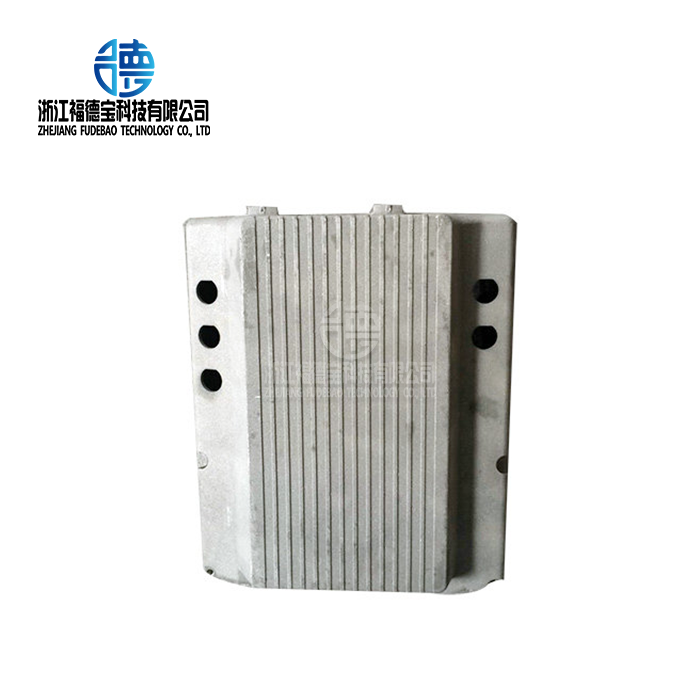
_1756346613780.webp "Aluminum tent base Casting")
_1756346570305.webp "Bracket aluminum casting")