
Sand Casting Copper and Aluminum: Material Comparison Guide
2026-06-18
When it comes to sand casting, the choice between copper and aluminum affects not only the short-term success of production, but also the long-term performance of the product and how much it costs. Both metals can be used in sand casting methods, but each has its own benefits that make it better for certain business needs. Copper is important for energy sector parts because it is good at conducting electricity and resisting corrosion. Aluminum, on the other hand, is lightweight and easy to machine, which makes it perfect for car and aircraft uses. When engineering managers, sourcing directors, and procurement teams know about these material properties, they can make sure that the specs they give for parts meet practical needs and budget limits. This comparison guide looks at the practical factors that affect the choice of materials in real-life factory settings.
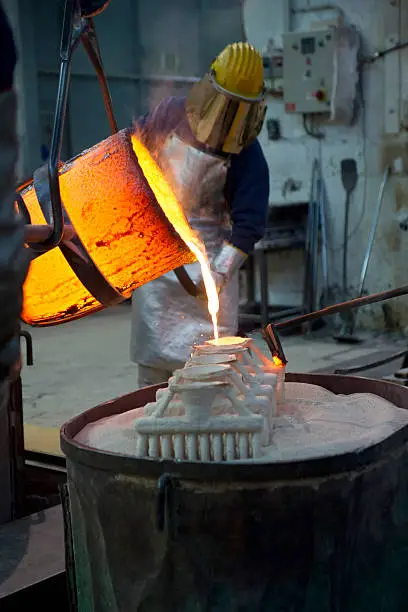
Understanding Sand Casting: Process and Material Considerations
The Fundamentals of Sand Casting Technology
In sand casting, liquid metal is shaped into complex shapes using disposable sand molds that are stuck together with either green clay sand or chemically-activated glue systems. This foundry method is used for more than 60% of all metal casts in the world. It solves important problems that fixed mold methods can't. The process can handle parts weighing anywhere from a few ounces to over 100 tons. It also gets rid of the high costs of die casting tools for small to medium-sized production runs and works with high-melting-point metals like special types of copper and aluminum. The collapsibility of the sand lets it break down as the metal cools, which stops hot tearing in casts that have a lot of solidification shrinking.
Material Properties That Drive Casting Performance
Choosing the right metal affects every part of the casting process. Because pure copper has a melting point of 1,085°C and aluminum alloys have a melting point of around 660°C, they need different furnaces and ways to prepare the molds. The rate at which the material solidifies and how it cools inside the mold hole are both affected by thermal conductivity. This changes the structure of the grains and their mechanical properties. Fluidity, or the metal's ability to fill complex cast sections before hardening, varies a lot between these materials. In general, aluminum has better flow properties. To keep flaws like shrinking porosity or missing fill conditions to a minimum, these physical behaviors must be taken into account when designing the mold, setting up the gates, and placing the risers.
Tolerance and Surface Quality Expectations
Dimensional errors in sand casting are usually within the range of CT10 to CT13, and surface finishes are between 6.3 and 12.5 Ra micrometers. Material choice has a direct effect on these results. Because copper has a higher filling temperature, mold erosion can be worse, which could lower the quality of the surface compared to aluminum casts. Resin-bonded sand systems produce tighter precision and smoother surfaces than green sand methods. This is especially helpful when making copper parts that don't need a lot of post-machining. Tolerance standards should be weighed against the cost of production, with the knowledge that tighter specs raise the costs of both making tools and inspecting them, no matter what material is used.
Comparative Analysis of Copper and Aluminum in Sand Casting
Physical and Mechanical Property Differences
Different performance patterns are made by the basic properties of these metals in sand casting. Copper alloys have much higher tensile strength, often reaching 300 MPa, compared to aluminum, which usually has a range of 150 to 200 MPa for popular casting grades. Because copper is stronger, it is better for parts that are under a lot of mechanical stress or wear. On the other hand, aluminum's density of 2.7 g/cm³ compared to copper's 8.9 g/cm³ results in huge weight savings, which is very important in transportation uses where every gram affects fuel economy. With a thermal conductivity of about 205 W/m·K, aluminum is better at getting rid of heat than copper alloys. However, pure copper has a thermal conductivity of 385 W/m·K, which is higher than both of them.
Resistance to corrosion and durability in harsh environments
Lifecycle costs are greatly affected by how long a material lasts in certain working conditions. When copper is exposed to air, it naturally forms protective patina layers. These layers keep the copper from rusting over time, making it perfect for use in marine settings, water systems, and outdoor projects. Aluminum forms a thin, strong oxide layer that protects it from rusting in air, but if the surface isn't treated properly, it can break down in very acidic or alkaline circumstances. Because they are less likely to rust, copper metals are often used for valve bodies and pump housings in industrial machinery that works with chemicals. Aluminum is often used in automotive uses because it is lightweight and resistant to corrosion. This is especially true when protective layers are added to the natural oxide layer.
Thoughts on Cost Structure and the Supply Chain
The cost of raw materials has a big effect on the overall economics of a project. Copper usually costs more per pound than aluminum, but because copper is denser than aluminum, volume-based comparisons need to be done with great care. Besides the cost of buying materials, production prices are also very different. Because aluminum has a lower melting point, it uses less energy when melting and filling, and because it is easier to machine, it takes less time and wears out tools less quickly. These factors become more important as production levels rise. Copper's higher scrap value helps make up for some of its lack, especially in places where recycling is important. Aluminum has more global sources than copper, which is mostly mined in a few areas, so the supply chain has been more stable in the past. However, both markets experience seasonal price changes that require strategic planning for buying.
Application Suitability: Choosing Between Copper and Aluminum
Electrical and Energy Sector Applications
Power distribution and production systems need materials that can safely carry power and work well in harsh situations. Copper castings are used in electrical housings, motor end rings, generator parts, and high-current connections, all of which need to have the best conductivity possible for the system to work well. Copper sand molds are used in renewable energy setups for parts of wind turbine generators and solar tracking mechanisms that need to work well with electricity and be resistant to weather. Aluminum works well in bigger electrical housings and heat sinks where weight reduction is important and a little less conductivity is still fine. Strategic sourcing teams look at the size requirements for conductors. For example, aluminum parts need about 1.6 times the cross-sectional area of copper parts to match their ampacity, which changes how designs are put together.
Automotive and Transportation Components
Aluminum is used a lot in modern vehicles because it helps keep them lighter. Sand-cast aluminum is used to make transmission housings, engine frames, structural nodes, and suspension parts. The strength-to-weight ratios of these parts make them safer without sacrificing fuel economy. After being cast, these parts are often given a T6 heat treatment to improve their mechanical qualities and make them strong enough for structural use. Copper is used in very few but important ways in cars, like in electrical bus bars and special heat exchanger cores for cooling systems. Heavy-duty industrial cars and construction equipment still use sand-cast aluminum for their gearbox housings and differential cases because it can be used to make complex internal passages for cooling and lubrication.
Industrial Machinery and Equipment Manufacturing
Machine part standards include parts that last a long time and keep working well even when they're used all the time. When dealing with corrosive fluids, pump housings often use copper metal casts, especially bronze versions that are resistant to wear as well as rust. In petroleum processing, compressor bodies and valve manifolds need copper types that can stay strong in harsh chemical and high-temperature conditions. Aluminum castings are used in industries where rust isn't a big problem. For example, the lighter weight of aluminum makes it easier to install and maintain parts for textile machinery frames, food processing equipment, and material handling systems. When mechanical engineers look at the starting cost of a material and how long they think it will last, copper is often more cost-effective over a 20-year period of use in heavy-duty uses.
Optimizing Sand Casting Outcomes with Best Practices
Design Considerations for Material-Specific Challenges
Design features that take into account how each metal solidifies are the first step to making a successful casting. Copper shrinks about 2.1% volumetrically compared to 6.6% for aluminum. This means that risers need to be carefully sized and placed to feed hardening sections properly. Aluminum has great flexibility, which lets wall sections be smaller. In sand casting, they can be as thin as 3–4 mm, while copper needs at least 5–6 mm. Copper casts have higher thermal expansion reactions with the sand mold, so draft angles that make it easier to remove the pattern should be a little wider. During the design process, our engineering team works together with clients and uses modeling software to guess the fill patterns and find possible defect spots before starting to make the pattern.
Quality Control Protocols Ensuring Consistent Results
Strict checking procedures keep casting flaws that hurt component performance at bay. We use a multi-step testing process that starts with Optical Emission Spectrometry to check the chemistry of the molten metal before each pour. This makes sure that the alloy makeup meets ASTM B505 standards for aluminum alloys or ASTM B584 standards for copper alloys. For mechanical property checking, standard specimen measurements are used to make separate test bars and check the tensile strength, yield strength, and elongation values. Non-destructive testing methods include ultrasound examination for finding internal shrinkage porosity, radiographic examination for finding inclusion distributions, and dye penetrant examination for proving the stability of the surface. Coordinate Measuring Machine scanning checks the accuracy of dimensions against CAD models, and capability studies show that the method stays the same across production runs.
Defect Prevention Through Process Control
Common casting flaws are caused by process factors that can be changed. Gas porosity happens when molds don't let enough gas through or when metal isn't degassed enough. We fix this problem by carefully formulating sand systems that keep the right amount of gas through while still providing the necessary strength, along with rotating degassing of aluminum melts. Misruns and cold shuts happen when the metal hardens before it fills the mold hole all the way. These breaks can be avoided by using the right gate design, controlling the pouring temperature well, and pouring at the right rate. Mold damage or bad sand can cause sand inclusion flaws. This risk can be reduced by using high-grade silica sands and the right binder systems. All of these safety steps raise yield rates, which lowers the costs of repair that hurts production efficiency and delivery dependability.
Partnering with Reliable Sand Casting Suppliers for Copper and Aluminum
Technical Capabilities and Manufacturing Infrastructure
To choose the right foundry partner, you need to look at more than just the basic sand casting tools they have available. High-frequency induction burners at our site can precisely control the temperature of both aluminum and copper alloy families while keeping tight compositional limits. Low-pressure casting tools are used in addition to standard gravity-pour operations to improve process control for making thin-wall aluminum parts. Integrated CNC machining centers, which include HAAS automation systems made in the United States, finish parts precisely to within 0.05 mm of accuracy, turning rough casts into parts that are ready to be put together. This full "melting-casting-finishing-surface treatment" process gets rid of the organizational problems that come with supply chains with multiple vendors. It also shortens lead times while keeping tight quality control at every stage of production.
Certification Standards and Material Traceability
Global supply lines in the car and aircraft industries need quality systems that can be checked and full record of all materials. Zhejiang Fudebao Technology keeps up-to-date certifications that help them meet customer compliance standards. They also have written processes for controlling patterns, managing sand systems, melting methods, and inspection routines. Material tracking starts with receiving the ingot and ends with shipping the final component. At every step of the manufacturing process, heat numbers are kept track of. This system for documentation supports PPAP submissions for clients in the car industry, First Article Inspection reports for aircraft projects, and material test reports that meet the requirements of industrial equipment. When engineering managers and quality directors are looking for new suppliers for key parts, our quality management tools give them the information they need.
Responsive Service and Engineering Support
In addition to getting the work done, good partnerships with suppliers rely on being able to work together on technical issues and communicate clearly. Our engineering team gets involved early on in the process of making components. They look over designs to make sure they can be made and suggest improvements that make them easier to make without affecting their usefulness. Rapid pattern creation and prototype casting services let you test designs quickly before committing to production. We keep technical staff who speak English as their first language to ensure clear communication about standards and quick answers to questions through direct conversation between engineers. This way of providing service has helped build long-lasting relationships with OEM companies that need both reliable production and ongoing growth projects. Suppliers who treat each project as a joint engineering effort instead of a transactional commodity buy are better for procurement teams. This is true whether they are looking for sand-cast aluminum housings for electronics or copper alloy parts for industrial machinery.
Conclusion
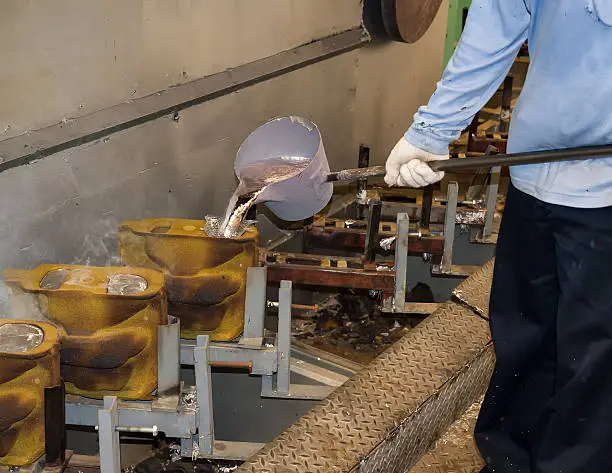
Copper or aluminum? Choosing the right material for a sand casting job affects how well it works, how much it costs, and what kinds of uses it can be used for. Copper is stronger and less likely to rust in electrical and industrial uses that need it, while aluminum is lighter, which is important in the transportation and aircraft industries. Instead of just going with the first option, successful buying strategies match the properties of materials to specific operating needs. Quality foundry partners bring important knowledge about how to improve processes, stop defects, and use integrated production to turn the promise of materials into reliable parts that work well. As global supply lines change and performance standards get higher, it becomes more valuable for knowledgeable buyers and skilled casting providers to work together to gain a competitive edge through smart material choices.
FAQ
Which material better handles high-temperature operating environments?
Copper metals can usually handle higher temperatures better than regular aluminum casting grades. Most aluminum alloys lose their mechanical strength above 150°C. However, some high-temperature aluminum alloys keep their mechanical strength up to about 250°C. Copper alloys stay structurally sound and dimensionally stable at temperatures above 400°C. This makes them better for parts in heat exchangers, industrial furnaces, and high-temperature fluid handling systems where the working conditions often go beyond what aluminum can handle.
What defects should quality teams monitor during incoming inspection?
Some important flaws that need to be fixed are shrinkage porosity, which shows up as subsurface voids that can be found using ultrasonic or radiographic testing, surface porosity, which looks like pinholes and makes the pressure-tightness less effective, cold shuts, which look like seam-like breaks in the metal from incomplete fusion, and sand inclusions, which make hard spots that damage machining tools. Verification of dimensions should show that important features are within the allowed ranges, and eye inspection can find problems with the surface finish. Acceptance standards should be based on how the part works. For example, cosmetic flaws may be okay on surfaces that can't be seen, but closing faces need to be almost perfectly solid.
How do the amount of creation affect the cost of materials?
Aluminum usually has lower total costs for large production runs because it costs less to make and can be machined more quickly. When you buy less copper, the higher price is more tolerable because the cost of each piece is a smaller part of the total project costs. In addition to the price of the raw materials, the break-even study should also look at how much energy it takes to melt them, how long the secondary processing takes, and how long the product is supposed to last. Copper parts usually pay for themselves over time because they last longer and don't need to be replaced as often. This is especially helpful in situations where the cost of work to install the part is higher than the cost of the part itself.
Partner with Fudebao Technology for Superior Sand Casting Solutions
Zhejiang Fudebao Technology has decades of experience in sand casting copper and aluminum, working with clients around the world in the energy, industrial equipment, and car industries. Precision casting and CNC machining are both part of our advanced production infrastructure. This lets us make finished parts that meet the strictest requirements of modern engineering uses. We have strict quality control procedures in place to make sure that every casting meets your performance needs. This is backed up by extensive material tracking and approval paperwork. No matter if you need help making a prototype or a lot of them, our expert team is here to help you with engineering throughout the whole project process. Contact our sand casting experts at hank.shen@fdbcasting.com right away to talk about your specific component needs, get technical specifications, or set up an evaluation sample. You'll be surprised at how working with a dependable sand casting manufacturer can improve the quality of your products and the performance of your supply chain.
References
American Foundry Society. (2021). Sand Casting Processes: Complete Technical Manual for Ferrous and Non-Ferrous Metals. Schaumburg, IL: American Foundry Society Publications.
Campbell, J. (2015). Complete Casting Handbook: Metal Casting Processes, Metallurgy, Techniques and Design (2nd ed.). Oxford: Butterworth-Heinemann.
Davis, J.R. (Ed.). (2001). Copper and Copper Alloys (ASM Specialty Handbook). Materials Park, OH: ASM International.
Kaufman, J.G., & Rooy, E.L. (2004). Aluminum Alloy Castings: Properties, Processes, and Applications. Materials Park, OH: ASM International.
Brown, J.R. (2000). Foseco Ferrous Foundryman's Handbook (11th ed.). Oxford: Butterworth-Heinemann.
Beeley, P.R. (2001). Foundry Technology (2nd ed.). Oxford: Butterworth-Heinemann Scientific Publications.



YOU MAY LIKE
_1756345939856.webp "Aluminum casting chassis")
_1756346371362.webp "separator housing")
_1756349696500.webp "Pulley aluminum casting")
_1756349146076.webp "Lawn mower case casting")
_1756346668222.webp "Aluminum castings Decorative buckles")
_1756346310015.webp "Aluminum castings Crane bracket")
_1756346043433.webp "guardrail connecting block")
_1756345858191.webp "Aluminum casting crafts")