
Why Aluminum Die Casting Is Ideal for Automotive Parts?
2026-02-27
When making cars, aluminum die casting is one of the most important steps. Choosing the best way to make the parts has a direct effect on their quality, speed, and cost-effectiveness. This detailed guide looks into why aluminum die casting has become the preferred method for automakers around the world. It covers important issues like the properties of the material, the need for accuracy, and the cost-effectiveness of production that global B2B procurement teams need to think about.
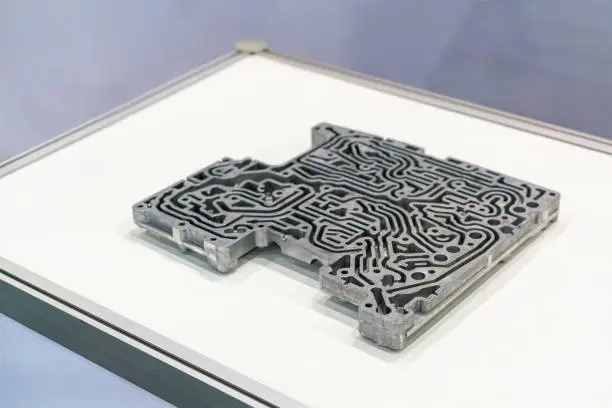
Material choice is very important in the automotive business because they are always trying to make parts that are light, last a long time, and meet strict safety and performance standards. Global rules on fuel efficiency are getting stricter, and cars are getting more complicated. As a result, automakers need manufacturing processes that offer consistent quality while keeping costs low. This guide goes over everything from the basics of procurement to more advanced topics. Its goal is to help car manufacturers and suppliers make smart decisions when they're looking for reliable, high-performance parts.
Understanding Aluminum Die Casting and Its Role in Automotive Parts
High pressure, usually between 1,500 and 25,000 PSI, is used to push molten aluminum alloy into exactly engineered steel molds during aluminum die casting. This method makes parts that are very accurate in terms of their dimensions, have a great surface finish, and always have the same mechanical qualities that are needed for automotive uses. Die casting is better than sand casting or investment casting because it can be done over and over again and has tighter tolerances, which are important for current automotive systems.
The Die Casting Process Explained
The first step in die casting is to melt aluminum alloy in kilns that are kept at temperatures between 1,200°F and 1,300°F. The liquid metal is then pumped into steel dies using either hydraulic or mechanical systems. This causes the metal to solidify quickly, making parts that are dense and strong. Because it is kept in a controlled environment, the metal has few holes and great mechanical qualities. This makes it perfect for safety-important car parts like engine blocks, transmission housings, and structural parts.
Popular Aluminum Alloys in Automotive Applications
A380, A383, and ADC12 are some of the most common aluminum alloys used in car die casting. Each has its own benefits for different uses. The A380 is good at both flowing fluids and resisting rust, so it can be used for engine parts and housings. A383 is better for making complex shapes, and ADC12 is better for structural uses because it has higher mechanical strength. These alloys are lightweight and have good thermal conductivity and corrosion resistance. They meet the needs of the car industry for long-lasting parts that use less gas.
Advanced Machinery and Technology Integration
Modern die casting plants use high-tech tools like cold chamber machines for working with metal, automated handling systems, and quality control technologies that are built right in. Along with casting, high-speed machining centers and CNC tools are used to make finished parts with tolerances as tight as ±0.05mm. These parts and assemblies are used in cars and have to meet very strict requirements.
Advantages of Aluminum Die Casting for Automotive Parts
Aluminum die casting is becoming more and more popular in the auto business because of its capacity to produce lightweight designs without sacrificing strength. The parts made with this method usually weigh 40 to 60 percent less than similar iron or steel parts. This directly leads to better fuel economy and lower emissions. This benefit of losing weight is especially important for electric cars, where every pound saved means longer battery life and better performance.
Precision and Complex Geometries
Die casting makes it possible to make complicated shapes with thin walls and lots of small openings inside them that would be impossible or too expensive to make any other way. Following are the main reasons why precision casting is perfect for use in cars:
- Dimensional accuracy - With tolerances of within ±0.1mm across all production runs. This means that extensive secondary machining processes are not needed.
- Surface finish quality - Making smooth areas that don't need much finishing, which cuts down on processing time and costs
- Integration capabilities - These let more than one part be cast at the same time, which cuts down on building steps and possible weak spots
- Design flexibility - This lets engineers find the lightest parts while keeping the structure performance high
These precise abilities solve important problems in the car manufacturing process, especially when parts need to fit tightly, like in transmission housings, engine blocks, and electronic control unit enclosures.
Cost Efficiency and Production Scalability
For example, when making a lot of cars, the cost savings of aluminum die casting become clear. Even though the original cost of the tools may be high, the cost of each part goes down a lot as more are made. This makes it a very cost-effective method for automotive applications that need thousands or millions of parts. Small parts can be made at rates of up to 200 to 300 cycles per hour, which gives manufacturers the flexibility they need for current assembly lines for cars.
Environmental Sustainability
The fact that aluminum can be recycled perfectly fits with the environmental goals of the auto business. Almost all of the aluminum used in die casting can be recycled without changing its properties. This makes the production system closed-loop. Recycling aluminum uses only about 5% of the energy that is needed for primary production. This makes the manufacturing of cars much better for the earth and supports the ideas of the circular economy.
Comparing Aluminum Die Casting with Alternative Processes in Automotive Manufacturing
Knowing how aluminum die casting stacks up against other ways of making things helps buying teams make smart choices based on the needs of a specific application. Each way of making things has its own pros and cons that need to be weighed against the needs of the car industry for quality, cost-effectiveness, and production efficiency.
Aluminum Die Casting vs. Sand Casting
Sand casting is cheaper for making tools and gives you more freedom to make prototypes, but it doesn't give you the precise dimensions and smooth surface finish that most automotive uses need. Die casting is better for making precise car parts because it can make parts with tolerances 5–10 times tighter than sand casting. Die-cast parts usually only need a small amount of cutting to get a smooth finish, while sand-cast parts usually need a lot of work.
Comparison with Plastic Injection Molding
While plastic injection molding lets you make more complex designs and uses less expensive materials, aluminum die casting has better mechanical and thermal properties that are necessary for car uses. Aluminum parts can work in temperatures up to 400°F, which is much higher than what plastic can handle. Aluminum is the only material that can be used in engine bays and other places where temperatures change because it keeps its shape even when temperatures change.
Alternative Metal Casting Processes
Zinc and magnesium casting each have their own benefits, but for automotive uses, aluminum is the best choice because it has the best mix of strength, weight, and resistance to corrosion. As manufacturers value lightweight solutions without lowering safety or performance standards, the adoption of aluminum die casting has continued to grow. Every year, the amount of aluminum used in cars goes up by about 8 to 10 percent.
Design Considerations and Quality Control for Automotive Aluminum Die Cast Parts
For vehicle die casting projects to be successful, design optimization must be carefully thought out from the very beginning of the development process. To avoid common problems like porosity, cold shuts, and dimensional distortion, engineers have to think about things like draft angles, wall thickness consistency, and gate placement. The right design standards make sure that the structure is strong and looks good, and they also make the most of the die casting process's natural benefits.
Defect Prevention Through Design Excellence
Important design elements that stop casting flaws include keeping the wall thickness between 2 and 6 mm, using draft angles of 1 to 3 degrees, and placing gates in the best places to allow metal to move properly. These things must be thought about in order to get uniform quality in automotive settings where failing a part is not an option. The right rib design and fillet curves also help with even cooling and stress distribution, which is very important for parts that are loaded and unloaded quickly.
Advanced Quality Control Technologies
Modern die casting plants for cars use high-tech testing tools to make sure that the parts they make are reliable. These quality control methods show that the industry is dedicated to doing its best:
- X-ray inspection systems - finding holes and other things inside that could weaken the structure
- 3D coordinate measuring machines - checking the accuracy of dimensions across complicated geometries with accuracy down to the micron level
- Automated optical inspection -finding flaws on the surface and making sure the quality of the finish is always the same
- Statistical process control - keeping an eye on production factors in real time to keep quality from changing
These advanced screening tools get rid of broken parts before they get to the assembly lines, which helps reach the goal of zero defects in manufacturing, which is important for safety and reliability standards in the auto industry.
Integration with CNC Machining Services
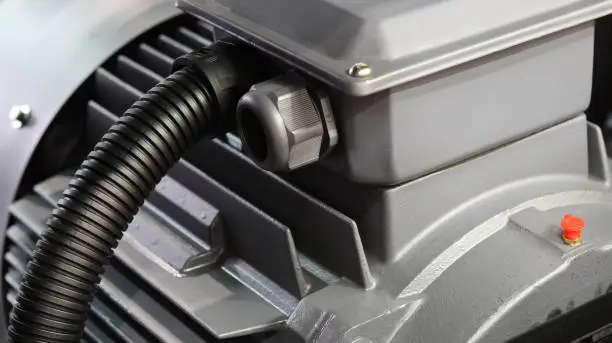
Because die casting and precise CNC cutting work together, they make a powerful way to make parts for cars. After casting, critical surfaces that need exact tolerances or certain surface finishes can be machined. This strikes the right balance between precision needs and near-net-shape economics. This unified method lowers total production costs while still meeting the high quality standards needed for automotive uses.
Procurement Insights: Choosing the Right Aluminum Die Casting Supplier for Automotive Parts
When buying cars around the world, teams have to look at possible suppliers using more than just their basic manufacturing skills. For partnerships to work, suppliers need to know the rules of the automotive business, have the right credentials, and consistently show high quality. When choosing a supplier, you should look at their technical skills, where they are located, and their possibility for a long-term partnership.
Certification and Compliance Requirements
Automotive suppliers need to keep up with certifications like IATF 16949, which shows they can meet the needs of the automotive quality control system. Extra qualifications, such as ISO 14001 for managing the environment and ISO 45001 for health and safety at work, show that the business is doing a great job overall. With these certifications, suppliers can be sure that they can meet the high standards needed to make car parts.
Geographic and Strategic Considerations
Logistics prices, lead times, and the strength of the supply chain are all affected by where strategic suppliers are located. Having suppliers with facilities in important places for making cars, like the US, Mexico, or Asia with integrated supply lines, is very helpful. Being close to final assembly companies lowers transportation costs and allows for just-in-time delivery. Additionally, regional suppliers often offer better communication and faster response times for quality issues or changes in engineering.
Custom Order Capabilities and Support Services
Custom parts made for specific vehicle platforms are often needed in automotive uses. Suppliers must show that they can help with testing, making tools, and designing things that can be made. Being able to handle different order quantities, from small amounts for prototypes to full production runs, gives you options for how to build and launch your product.
Zhejiang Fudebao Technology Co., Ltd. is a great example of how to do car aluminum die casting because they can do everything from melting the metal to finishing it and treating the surface. We have high-tech tools like high-speed machining centers, CNC lathes, low pressure casting machines, and precision die casting equipment at our facility. This means that we can deliver anything from a blank to a finished product all in one place, with an accuracy level of ±0.05mm. This high level of accuracy meets the strict needs of car parts, medical equipment housings, and other important uses where quality must not be compromised.
Conclusion
Aluminum die casting is the best way to make parts for cars because it combines the unique qualities of being lightweight, strong, and efficient in production, all of which are needed in modern car making. The process meets important goals in the industry, such as making it more fuel-efficient, making it cheaper to make a lot of things, and protecting the environment by making the materials recyclable.
For automotive uses ranging from engine components to structural elements, aluminum die casting is unrivaled due to its compelling advantages of dimensional accuracy, complex geometry capability, and superior surface finish. As the auto industry moves toward electric cars and higher performance standards, aluminum die casting technology gives manufacturers the tools they need to meet these tough requirements while keeping costs low and quality high.
FAQ
Why is aluminum die casting preferred over other casting methods for automotive parts?
Die casting aluminum gives you very accurate measurements, a smooth surface, and the power to make complicated shapes with very small errors. For auto parts that need to fit perfectly and work reliably, these qualities are important. Also, the process is very repeatable for high-volume production, which makes it a cost-effective way to make cars.
What types of automotive components benefit most from aluminum die casting?
Aluminum die casting is a great option for engine blocks, transmission housings, structural brackets, electrical control unit enclosures, and heat dissipation parts. These parts need to be light, have accurate measurements, and be strong mechanically. Die casting can do all of these things.
How does aluminum die casting contribute to vehicle fuel efficiency?
Parts made of aluminum usually weigh 40 to 60 percent less than parts made of steel or iron. This weight loss immediately makes the vehicle use less gas and put out less pollution. In electric cars, smaller parts increase the battery's range and make the car run better overall.
What quality standards should automotive buyers expect from die casting suppliers?
Suppliers of car die castings should keep their IATF 16949 certification and show that they consistently meet automotive quality standards. You can expect dimensional tolerances of less than 0.1 mm, detailed quality documentation, and traceability methods that meet the needs of the automotive supply chain.
What are typical lead times for custom automotive die cast components?
Lead times depend on how complicated the job is and what tools are needed. After the final design is approved, prototype parts can usually be made within 4 to 6 weeks. However, factory tooling and the first production runs usually take 8 to 12 weeks. When a supplier can do both manufacturing and shipping, arrival times are often cut down.
Partner with Fudebao Technology for Superior Automotive Die Casting Solutions
Precision aluminum die casting options from a trusted industry leader can change the way you make cars. Zhejiang Fudebao Technology uses advanced manufacturing techniques and thorough quality control systems to make parts that are better than what the car industry requires. Our fully integrated facility offers full manufacturing solutions, from the first prototypes to full production. This makes sure that the quality of your car projects is always the same and that they are delivered on time. Get in touch with us at hank.shen@fdbcasting.com to talk about your aluminum die casting needs and find out why Fudebao Technology is the provider of choice for major automakers. See how precision, new ideas, and dedicated customer service can make a difference in your next automotive job.
References
Davis, J.R. "Aluminum and Aluminum Alloys: ASM Specialty Handbook." ASM International Materials Park, 2019.
Campbell, J. "Complete Casting Handbook: Metal Casting Processes, Metallurgy, Techniques and Design." Butterworth-Heinemann, 2021.
Kaufman, J.G. and Rooy, E.L. "Aluminum Alloy Castings: Properties, Processes, and Applications." ASM International, 2018.
Ghomashchi, R. and Vikhrov, A. "Squeeze Casting: An Overview." Journal of Materials Processing Technology, 2020.
Lumley, R.N. "Fundamentals of Aluminium Metallurgy: Production, Processing and Applications." Woodhead Publishing, 2019.
Totten, G.E. and MacKenzie, D.S. "Handbook of Aluminum: Vol. 1: Physical Metallurgy and Processes." Marcel Dekker Publishing, 2021.



YOU MAY LIKE
_1756361423150.webp "Cryopump body")
_1756360265131.webp "Aluminum casting chair legs")
_1756349862928.webp "belts pulleys")
_1756349002499.webp "Aluminum alloy clamp casting")
_1756348623524.webp "Turbine compressor housing")