When Should You Choose Sand Casting Instead of Aluminum Die Casting?
2026-05-29
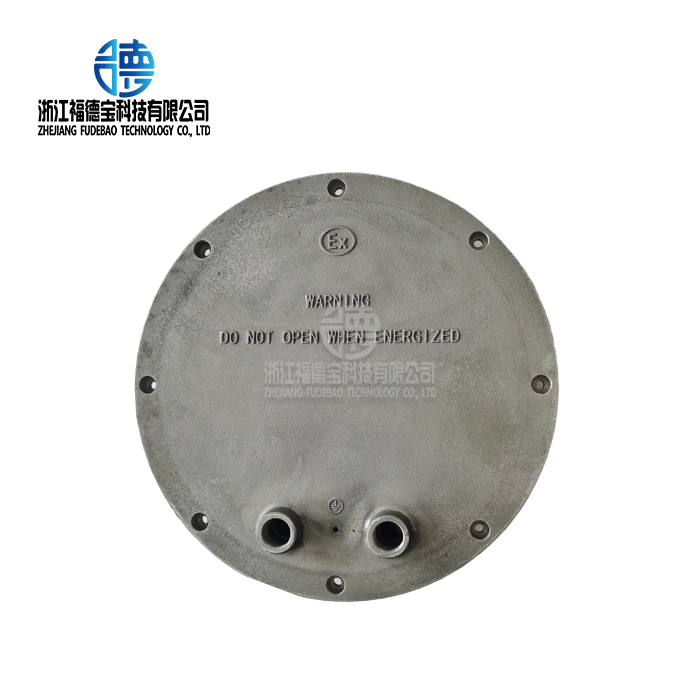
Sand casting is better than aluminum die casting for low-to-medium production quantities, big or complicated geometries, alloy selection flexibility, or constrained startup budgets. Sand casting can process high-melting-point materials like steel, iron, and titanium, accommodates items from a few ounces to over 100 tons, and removes the prohibitively expensive upfront manufacturing costs of permanent metal molds.
Understanding Sand Casting and Aluminum Die Casting
Selecting the correct metal forming method entails understanding the differences between sand casting and aluminum die casting. Both approaches are crucial to contemporary manufacturing, although they serve different production contexts.
What Defines Sand Casting?
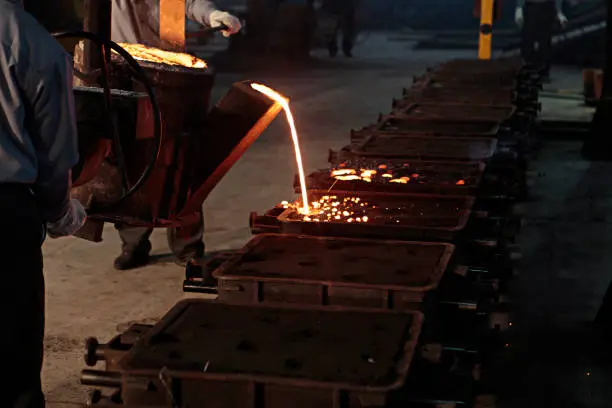
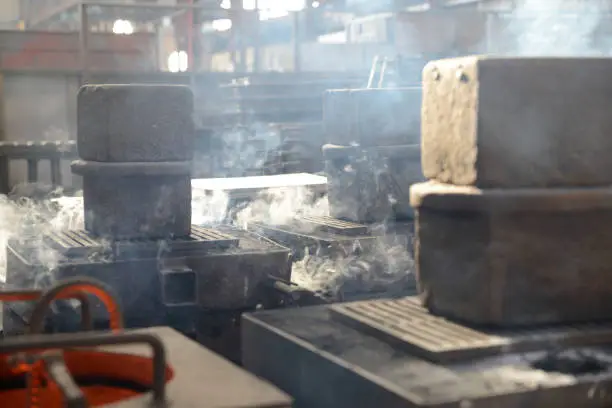
Sand casting uses rigorously bound sand mixtures—usually green (clay-bonded) or resin (chemically-bonded)—to build throwaway molds for molten metal. As a foundry staple that produces over 60% of metal castings globally, sand casting solves crucial production problems that other technologies cannot. Sand casting works with large casting weights and unrivaled alloy flexibility to cast high-melting-point ferrous and non-ferrous metals that are hard to process in permanent molds.
How Aluminum Die Casting Differs
High-pressure equipment injects molten aluminum into reusable metal molds at above 10,000 psi in aluminum die casting. This method achieves high dimensional consistency, surface finishes of 1.6 to 3.2 Ra (microns), and fast cycle times for mass manufacturing. The permanent steel dies provide tight tolerances around ISO 8062 CT4-CT6, making die casting ideal for automobile housings, electrical enclosures, and consumer electronics components with little post-machining.
Material Compatibility Considerations
Material choice strongly affects procedure. Sand casting can use carbon steel, stainless steel, ductile iron, bronze, and specific superalloys, whereas aluminum die casting is limited to aluminum alloys and zinc. This adaptability is vital for industrial equipment components that need wear resistance, high-temperature stability, or magnetic qualities. Identifying material compatibilities helps procurement experts match production techniques to performance standards and regulatory compliance.
Key Factors to Consider When Choosing Between Sand Casting and Aluminum Die Casting
Strategic process selection balances technical and economic factors that affect project performance and profitability. Process selection depends largely on production volume. Sand casting patterns cost 70-90% less than die casting molds and take 2–6 weeks to tool, compared to 8–16 weeks for metal dies.
Production Volume Economics
Sand casting is cost-effective for prototypes, pilot production batches, and yearly volumes under 1,000 units. Aluminum die casting has cost-per-unit advantages at quantities over 5,000 pieces per year since the greater initial investment amortizes over bigger production runs.
Dimensional Accuracy Requirements
Process appropriateness is heavily influenced by tolerance expectations. Aluminum die casting meets the strict standards of automotive powertrains and aerospace components with dimensional precision of ±0.1mm for essential features. Sand casting typically yields ISO 8062 CT10-CT13 tolerances of ±0.5mm to ±2mm, varying on size and complexity. Engineering managers must decide if functional needs necessitate die casting perfection or if sand casting tolerances with selective CNC machining of mating surfaces are cheaper.
Design Complexity and Size Constraints
Each technique is limited by part shape and dimensional envelope. Die casting molds limit component size to under 50kg owing to machine capacity and mold handling. Sand casting is ideal for making huge, complicated parts like excavator counterweights, multiple-ton pump housings, and valve bodies with sand core passageways. The disposable mold permits undercuts and interior geometries that are unachievable or too costly in permanent molds.
Lead Time and Flexibility Demands
Project deadlines and engineering change management effect process appropriateness. Sand casting patterns can be changed faster than die casting dies—wooden patterns in days, and metal patterns in days. This flexibility is crucial during product development or in markets with frequent design iterations. Die casting requires longer preparation but yields dependable, high-speed output.
Advantages and Limitations of Sand Casting Over Aluminum Die Casting
Procurement teams may optimize manufacturing strategy and supplier collaborations by understanding sand casting's strengths and drawbacks.
Core Advantages of Sand Casting
Sand casting has three competitive advantages that make it essential for certain applications. Engineers may build complicated internal channels, varying wall thicknesses, and sophisticated exterior features using core assemblies. Sand casting is affordable for specialty components, replacement parts, and bespoke machines due to cheap tooling costs. Perhaps the biggest benefit is that foundries can pour almost any castable alloy, from aluminum and bronze to high-carbon steel and nickel-based superalloys, meeting performance criteria that aluminum die casting cannot.
Inherent Limitations to Manage
Quality control in sand casting requires proactive management. Precision mating surfaces require post-casting machining due to surface finish of 6.3 to 12.5 Ra (microns). Gas porosity, sand inclusions, and shrinkage cavities require thorough investigation. Pattern maintenance and statistical process control are needed for dimensional consistency, which fluctuates more than die casting. Expendable molds increase material prices and cycle times compared to high-pressure die casting.
Practical Use Cases: When Sand Casting Outperforms Aluminum Die Casting
Sand casting outperforms other techniques in technical and economic terms in real-world applications.
Heavy-Duty Automotive Components
Sand casting is still used to make complicated engine blocks and cylinder heads for heavy-duty vehicles, agricultural equipment, and marine powertrains. These components include complicated cooling passageways and oil galleries made of internal sand cores that endure heat cycling and combustion pressures. By choosing sand-cast ductile iron cylinder heads over die casting with secondary welding, a renowned agricultural equipment manufacturer cut component prices by 40%. These applications need thermal expansion and structural stresses that the material qualities and sand casting naturally accept.
Energy Sector Critical Components
Large oil and gas valve bodies and pump casings are perfect for sand casting. These components weigh over 200kg, have intricate internal flow passageways, and need corrosion-resistant Duplex Steel or high-nickel alloys for high-pressure deep-sea or caustic chemical conditions. A Gulf Coast petrochemical complex ordered sand-cast CF8M stainless steel pump housings that have performed dependably for over 15 years in severely corrosive use. Aluminum die casting was impractical and manufactured alternatives were too expensive.
Industrial Machinery and Construction Equipment
Large gearbox housings, crane counterweights, and structural brackets exhibit sand casting's scalability. An excavator manufacturer sand casts 500kg to 3,000kg counterweights to achieve exact mass distribution for machine stability and include mounting features and attaching points. Earthmoving dependability requires sheer mass and vibration dampening, which sand casting offers at a fraction of the cost of fabricated or die-cast alternatives needing substantial welding and assembly.
How to Optimize Sand Casting Quality for Your Production Needs
Sand casting demands strategic process management and supplier coordination for consistent, high-quality results.
Advanced Mold Preparation Techniques
Quality of molds impacts casting success. To maximize mold strength and permeability, green sand systems must manage clay content (7-10%), moisture (3-5%), and compaction density. Furan and phenolic resins provide shear strength and gas permeability to avoid porosity in resin-bonded sand systems, which improve dimensional accuracy and surface quality. Leaders use automated sand mixing and testing technology to monitor sand qualities in real time and change formulas to preserve mold quality throughout production batches.
Critical Quality Control Protocols
Buyers need strict inspection processes to reduce foundry flaws. Before pouring, Optical Emission Spectrometry checks alloy composition against ASTM or EN requirements to prevent mechanical property variations. Tensile, yield, and elongation are verified by mechanical testing with witness bars and Brinell hardness. Ultrasonic or radiographic testing identifies interior shrinkage or gas porosity, whereas Magnetic Particle Inspection or Dye Penetrant testing finds surface fissures. Coordinate Measuring Machine scanning verifies casting tolerances against CAD models, revealing pattern rectification issues.
Strategic Supplier Partnerships
Finding appropriate foundry partners greatly affects project success. Process maturity and quality dedication are shown by ISO 9001, IATF 16949, and AS9100 vendors. Reviewing supplier pattern-making, alloy, heat treatment, and machining capabilities guarantees project alignment. Successful long-term manufacturing relationships start with clear communication protocols surrounding First Article Inspection requirements, quality measurements, and corrective action processes.
Conclusion
Sand casting is best for projects that require design freedom, low-to-medium production quantities, big or complicated geometries, or materials other than aluminum alloys. Understanding the cost, dimensional capabilities, material options, and quality differences between sand casting and aluminum die casting empowers procurement professionals to make informed decisions that meet technical requirements and budget constraints. Strategic supplier agreements with recognized foundries and stringent quality processes make sand casting a reliable, cost-effective option for demanding automotive, energy, industry, and aerospace applications.
FAQ
Can sand casting achieve surface finishes comparable to aluminum die casting?
Sand casting generates 6.3–12.5 Ra (microns) surface finishes, whereas aluminum die casting produces 1.6–3.2 Ra. Unlike smooth metal dies, disposable sand molds generate texture. However, resin-bonded and fine-grain sands increase surface quality. Most applications use selective CNC machining of important mating surfaces and leave non-functional areas as-cast to save money.
What production volumes justify die casting tooling investment?
The crossover threshold is usually approximately 5,000 units per year, depending on part complexity and size. Tooling costs are 70-90% cheaper than die casting molds, making sand casting economically favorable below this level. Despite higher initial investment, die casting's per-unit cost benefits favor 10,000+ unit projects.
Are environmentally sustainable sand casting options available?
Modern foundries use energy-efficient induction melting, recovered sand systems that recycle 95%+ of molding ingredients, and water-based binders instead of solvent-based resins. Green sand systems' clay-based, reusable composition promotes sustainability. When assessing vendors, procurement teams can ask about foundry environmental certifications and waste reduction.
Partner with Fudebao Technology for Expert Sand Casting Solutions
Zhejiang Fudebao Technology provides precision sand casting and integrated machining for demanding industrial applications. Our facility handles the whole manufacturing process, from melting to surface treatment, enabling one-stop delivery with ±0.05mm precision. Our aluminum alloy, copper alloy, and stainless steel castings exceed strict quality criteria for the automotive, industrial equipment, machinery manufacturing, and aviation industries. We provide PPAP paperwork and technical assistance throughout your project as a qualified sand casting company with powerful CNC machining machines and quality inspection systems. Our engineering staff can provide a full technical examination and discuss your casting needs at hank.shen@fdbcasting.com.
References
American Foundry Society. Metalcasting Design and Purchasing Handbook. Schaumburg: American Foundry Society, 2018.
Brown, John R. Foseco Ferrous Foundryman's Handbook. 11th ed. Oxford: Butterworth-Heinemann, 2000.
Campbell, John. Complete Casting Handbook: Metal Casting Processes, Metallurgy, Techniques and Design. 2nd ed. Oxford: Butterworth-Heinemann, 2015.
International Organization for Standardization. ISO 8062-3:2007 Geometrical Product Specifications (GPS) — Dimensional and Geometrical Tolerances for Moulded Parts. Geneva: ISO, 2007.
Beeley, Peter R. Foundry Technology. 2nd ed. Oxford: Butterworth-Heinemann, 2001.
Stefanescu, Doru M. ASM Handbook Volume 15: Casting. Materials Park: ASM International, 2008.



YOU MAY LIKE
_1756352400994.webp "chassis enclosure")
_1756348711711.webp "anti surge turbo housing")
_1756348356531.webp "Automobile engine oil pan")
_1756346310015.webp "Aluminum castings Crane bracket")