
Sand casting is still one of the most flexible and cost-effective ways to make machines, and it is used in many fields, from making cars to making big equipment. This basic metal making method makes it possible to make complicated parts that would be hard to make or wouldn't be cost-effective to make any other way. For procurement managers, engineers, and original equipment manufacturers (OEMs), knowing how sand casting works and what it can do is important for making smart buying choices that balance quality needs with budget limits.
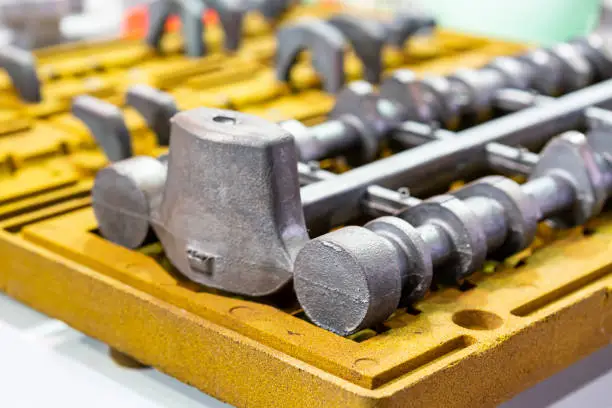
The use of sand casting in current gear production goes beyond its historical importance. Modern foundries use a mix of old-fashioned sand shaping methods along with new metals and quality control systems to make parts that meet exact performance requirements. Sand casting has special benefits in making big, complex shapes with excellent material qualities, whether you're looking for engine blocks for car uses or structure frames for industrial equipment.
This complete guide looks at the practical aspects of using sand casting in machines. It covers everything from basic processes to how to choose a provider. We'll look at common parts made by sand casting, ways to improve quality through optimization, and a comparison of sand casting with other ways of making things. Our main goal is still to give customers and foundry providers useful information that helps them make good purchasing choices and work together well.
Understanding Sand Casting in Machinery Manufacturing
Sand casting is an important part of making machines because it can make complex metal parts quickly and cheaply. Molds are made from sand mixes that can be shaped into complex shapes and a range of sizes. This makes the process especially useful for machinery uses that need unique solutions. Learning about the basics of sand casting helps people who work in buying decide if it's a good fit for certain part needs.
What is Sand Casting and How Does It Work?
The first step in sand casting is to make a pattern that looks like the shape of the part that is being cast. This design is used to make holes in carefully mixed sand, which is then used to make molds that will shape the final metal part. Because they are easy to shape and can be used again and again, green sand molds made of silica sand, clay, and water are the most popular way to make parts for machines. These molds are good at keeping their shapes while also making it easy to remove and change the pattern.
Chemically bound sand molds are better at accuracy and surface finish, so they can be used to make parts for machines that need to be more precise. The chemical bonding process makes the walls of the mold stronger so that metal can't get through them. This makes the cast surfaces smoother. This method works especially well for parts like pump housings and valve bodies where the quality of the surface affects performance directly and cuts down on the need for post-casting cutting.
Key Materials and Metals Used in Sand Casting for Machinery
When equipment sand casting, the role of the part, the working surroundings, and performance needs all affect the choice of material. Cast iron is still the best material for big machines because it doesn't wear down easily, doesn't cause vibrations, and is easy to make. Different types of iron, like gray iron and malleable iron, have different mechanical properties. This lets engineers find the best qualities for each application.
Steel alloys are better for making high-stress machinery parts because they are stronger and tougher. It is easy to bond and machine carbon steels, while managed chemical makeup in low-alloy steels improves their mechanical properties. Alloys made of aluminum have become popular in machines where weight reduction is important, especially in aircraft and mobile equipment. These metals have good strength-to-weight ratios and are very good at resisting rust and transferring heat.
Advantages and Limitations of Sand Casting for Industrial Applications
When it comes to design, sand casting is very flexible. It can handle complicated internal spaces and different wall thicknesses that would be hard to make with other methods. Scalability goes from small amounts for prototypes to large production runs, so it can be used in a variety of buying situations. Cost-effectiveness becomes the main benefit, especially for big parts where other ways are too expensive to be practical.
The main problems with sand casting compared to precision casting are the surface finish and the accuracy of the dimensions. Surface roughness levels usually fall between 6.3 and 25 micrometers, and important areas often need more work to be done on them. For most uses, dimensional margins are between ±2 and 5 mm, but smaller specs can be reached with careful process control. These restrictions affect how parts are designed and how they need to be processed after casting, which buying teams need to think about when planning how to source materials.
Typical Machinery Components Produced by Sand Casting
Because sand casting is so flexible, it can be used to make a wide range of machine parts for many different industries. Sand casting is a versatile manufacturing process that can be used to make anything from car engines to large industrial machinery. Knowing the most common uses for sand casting helps procurement workers find ways to add it to their supply lines.
Engine and Transmission Components
One of the most common uses of sand casting in the machinery industry is to make engine blocks. Because coolant tubes, oil galleries, and cylinder bores need complex internal shapes, sand casting is the best way to make them. Cast iron engine blocks are very stable at high temperatures and don't wear down easily. Aluminum versions are lighter and can be used in cars and airplanes. Sand casting's design freedom is demonstrated by its capacity to cast complete mounting bosses and intricate water jacket designs.
The ability of sand casting to create big, intricate boxes with exact bearing surfaces and mounting connections is advantageous for transmission housings. The process works with different wall widths that are needed to keep the structure strong while still letting internal parts get to them. Cylinder heads show how sand casting can handle complicated port shapes and valve seat locations in a single casting process, which cuts down on the need for assembly and the number of possible leak points.
Hydraulic and Pneumatic Machinery Parts
Valve bodies for hydraulic systems are a good example of how sand casting can be used to make parts with complex flow paths inside them. The process makes it possible to make complicated mounting and opening setups that would need many cutting steps if they were made from solid stock. For tough hydraulic uses, cast iron and steel metals offer the right amount of strength to pressure and wear.
Pump housings show that sand casting can handle both simple volute shapes for centrifugal pumps and complicated internal tanks for positive displacement designs. Being able to cast seamless fitting plates and suction/discharge links makes the system more reliable and simplifies the building process. Sand casting's ability to create high-integrity pressure tanks with complex internal shapes is used to make brake parts like calipers and master brake cylinders.
Heavy Equipment and Agricultural Machinery Castings
Gearbox housings for building and farming tools show how well sand casting can handle big, complicated parts. Careful pattern creation and cast building are needed to make sure that these parts have the right bearing places, multiple mounting surfaces, and entry holes for upkeep. Cast iron and steel are strong materials that can last for a long time in tough working conditions in high-load situations.
The form and size options for sand casting make it a good way to make frame parts for big machinery. When making something out of plate or structural steel, it would take a lot of welding to add mounting points, reinforcing ribs, and access features that can be built into a large structural casting. Housing parts for mobile equipment show how waterproof covers with built-in mounting features and service entry points can be made by sand casting.
Industrial Machine Frames and Structural Parts
Industrial machinery's load-bearing parts depend on sand casting's ability to make strong structures with the best arrangement of materials. By carefully choosing the right materials and making the best designs, machine tool bases and frames show how sand casting can combine the ability to reduce vibrations with the ability to build strong structures. The process makes it possible to make parts with different cross-sections that are stiffest and lightest possible.
Surface processes and finishing operations are also ways that sand casting can be customized. To keep working costs as low as possible, parts can be made with cutting limits in important places and not on non-important ones. During the casting process, mounting bosses, threaded inserts, and location features can be added as integral parts. This cuts down on extra processes and improves the accuracy of the assembly.
Optimizing Sand Casting for Machinery Production
In sand casting, process improvement has a direct effect on the quality of the parts, the speed of production, and the general cost-effectiveness. Foundries can make high-quality products that meet strict requirements for machinery performance by using advanced mold design techniques, material selection strategies, and quality control measures. Knowing about these optimization methods helps procurement workers figure out what the foundry can do and set reasonable quality standards.
Improving Surface Finish and Dimensional Accuracy
The first step in improving a mold design is making a plan that takes into account how much the metal will shrink, the draft angles, and where the splitting lines will go. Smart gate and riser design makes sure that the mold fills properly while reducing the noise that can lead to surface flaws. Choosing the right sand is very important for the quality of the surface. Finer grain sizes make edges smoother, but they need to be carefully managed to avoid flaws caused by gas.
Shell molding and vacuum-assisted casting are two advanced molding methods that improve the quality of the surface finish and the accuracy of the dimensions in sand casting. These steps make the walls of the mold stronger so that metal doesn't get through them or the mold expands when it gets hot. This makes it easier to control the dimensions. Controlled cooling techniques help reduce warping and leftover stresses that might change the end size and shape of a component and the way it is machined.
Common Defects in Machinery Sand Castings and Their Solutions
One of the most common problems in sand casting is porosity, which can show up as gas porosity from trapped gases or shrinking porosity from not feeding the mold enough. To stop gas porosity, molds need to be properly vented, liquid metal needs to be degassed, and filling techniques need to be improved. Controlling shrinkage and porosity requires careful riser placement and feeding design to make sure there is enough metal during solidification.
Inclusions from sand weathering or slag trapping can weaken the structure of a component and make it harder to machine. Some ways to stop this from happening are to use the right gates to slow down the moving metal, do the right degassing and skimming, and control the sand system so that it doesn't have too many friable bits. Non-destructive testing is used as part of quality control to find and fix problems with inclusions before the final assembly of the parts.
Reducing Lead Time: Rapid Sand Casting Techniques for Prototyping and Small Batches
When it comes to sand casting, rapid prototyping methods use 3D printing to make patterns and direct sand printing to make molds. These methods cut pattern creation time by a huge amount while still allowing complicated shapes that would be hard to make with standard methods. Direct sand printing doesn't need any patterns at all, so molds can be made the same day for quick development.
It takes less time to use no-bake sand systems than green sand systems, especially for making small batches. Chemical bonds allow these systems to cure at room temperature, so there is no need for drying time and filling can begin right away after the mold is put together. Because no-bake molds improve the accuracy of measurements and finish of the surface, they often don't need as much post-casting processing, which cuts total lead times even more.

Comparison of Sand Casting with Other Casting Methods in Machinery Industry
Procurement experts can choose the best making method for a specific part by knowing the pros and cons of each casting process. There are different perks to each casting method that work with different production numbers, accuracy needs, and budgets. Choosing the right strategic process can have a big effect on the success of a project and the long-term efficiency of the supply chain.
Sand Casting vs Die Casting: Strengths, Costs, and Applications
Die casting is the best way to make a lot of small parts with a perfect finish and accurate measurements. However, due to greatly lower equipment costs, sand casting becomes more cost-effective for bigger components and smaller production rates. Die casting machines can only make parts for machines that are a certain size, but sand casting machines can make parts of almost any size.
Sand casting can accommodate a wider range of materials, including those with high melting points like steel and iron, which is another important difference. Die casting is most useful for metals with lower melting points, like magnesium, aluminum, and zinc. Sand casting is often the only practical casting method for machinery uses that need the strength of cast iron or steel.
Sand Casting vs Investment Casting: Precision vs Cost Efficiency
Investment casting is better than sand casting at maintaining accurate dimensions and a smooth surface, so it can be used to make fine machinery parts that don't need a lot of post-processing. But the complicated wax design and clay shell methods make the prices much higher and the wait times much longer. When it comes to bigger parts, sand casting is more cost-effective than investment casting because the extra accuracy doesn't make up for the extra cost.
While sand casting can handle big structure parts and systems, investment casting's size restrictions limit its use to smaller machine components. The variety of metals that can be used in sand casting is also greater. For example, large-section malleable iron casts would be hard to make using investment casting methods.
Emerging Alternatives: Sand Casting vs 3D Printing for Prototyping
Additive manufacturing technologies can be used with standard sand casting to make quick prototypes that can be used for product development. Using polymer materials, 3D printing lets you quickly try out different design ideas, while sand casting lets you test your ideas with real production materials and methods. 3D-printed models are used in hybrid ways for sand casting. These methods combine fast pattern development with tried-and-true metal casting methods.
Metal 3D printing technologies are becoming more popular as options for making small, complicated parts, but they are still too expensive for making bigger machine parts. Sand casting still has a lot of benefits when it comes to large production runs and small parts that are common in machinery making. On the other hand, 3D printing is better for very specific tasks that need to be very complicated or quickly customized.
Selecting the Right Sand Casting Supplier for Machinery Parts
Choosing a foundry is a very important choice that affects the quality of the parts, the dependability of delivery, and the general success of the project. For relationships to work, expert skills, quality processes, and how well the buyer and seller organizations' cultures match up must all be carefully looked at. When buying workers know the important evaluation factors, they can find foundries that can meet their needs for complicated machinery production while also building long-term partnerships.
Criteria for Choosing a Reliable Sand Casting Foundry
Quality standards tell you a lot about a foundry's skills and how committed they are to managing quality in a structured way. ISO 9001 certification shows that a basic quality system has been put in place, while industry-specific standards, like TS 16949 for car uses, show that the company has a better understanding of the needs of that field. When it comes to aircraft uses, NADCAP approval is the top level of quality system development and expert skill.
When figuring out production capacity, you need to look at both what you can do now and how you can make it bigger in the future. Modern foundries with automated casting systems, controlled gas melting, and high-tech material handling show that they are dedicated to making sure quality is always maintained and production runs smoothly. Metallurgical knowledge shown by qualified staff and in-house labs makes sure that the right materials are chosen and processes are optimized for each application.
Customization and Tooling Cost Considerations
Investing in patterns and tools for sand casting is a big one-time cost that needs to be spread out over a lot of output. Finding out what the foundry can do for pattern creation, change, and repair can help you figure out the total cost of ownership, which goes beyond the piece price. Long-term production plans can benefit from foundries that offer pattern keeping and upkeep services.
Flexible production methods make it easy to deal with different batch sizes and scheduling changes that happen a lot in machinery making. Foundries that can do both automatic and hand casting can adjust their processes to meet the needs of different number requirements. This makes sure that they can produce goods at the lowest cost across a wide range of order patterns. Secondary processing, such as heat treatment, drilling, and testing, makes the supply chain simpler and makes it easier to keep track of schedules.
Ensuring Supply Chain Reliability and Communication
Superior casting partners can tell the difference between basic providers and those with good communication systems and project management skills. Regular reports on progress, finding problems before they happen, and working together to solve them are all things that help projects succeed. Deliveries are safe when they are close together or through established shipping networks. This keeps transportation costs and wait times to a minimum.
Supply chain openness, which includes finding materials, managing capacity, and keeping track of relationships with subcontractors, helps sellers figure out how much risk there is and make plans for it. Foundries with established buyer approval programs and backup capacity plans show that their supply chains are mature, which lowers the risk of buying during times of high demand or sudden problems.
Case Study: Successful Partnership Examples in Machinery Sand Casting
A major company that makes farm equipment worked with a local factory to make big casts for transmission housings for their line of tractors. The first thing they did together was optimize the design, which cut the weight of each part by 15% while also making the structure work better. By finding casting limitations and possibilities early on, concurrent engineering methods cut down on development time and design costs.
As the relationship grew, the vendor took over managing the supplies and made sure that production plans were always in sync. This cut down on handling costs and made deliveries more reliable. Statistical process control and continuous improvement programs led to quality gains that led to zero-defect delivery success over several production seasons. This example shows how smart relationships between foundries can provide benefits beyond just supplying parts.
Company Introduction and Services
Zhejiang Fudebao Technology Co., Ltd. is a world-class company that specializes in precision cutting and metal casting. They make parts out of aluminum alloy, copper alloy, and stainless steel for markets around the world. We have a wide range of skills that allow us to make high-quality casts from blanks to finished products for use in aircraft, industrial equipment, tool making, and the automobile industry. The fact that the company has gone from working with middlemen to forming direct supply partnerships with foreign brands like American HAAS automatic machine tools and ESS energy storage batteries shows how dedicated we are to quality and dependability.
Our modern factory has high-speed machining centers, CNC lathes, low pressure casting machines, and die casting tools, among other cutting-edge manufacturing technologies. This all-encompassing method includes the whole production process, from melting to casting, finishing, and surface treatment. This gives the company full control over quality and delivery times. Precision powers of ±0.05mm accuracy meet the strict needs of precision parts for cars, medical equipment housings, and other important uses.
Advanced inspection systems, material tracking programs, and approved quality management systems are all parts of our quality assurance processes that are built into every part of our business. Our technical team has a lot of experience with both metalworking and modern manufacturing, which lets them improve both the design and production processes. Our flexible powers and customer-focused approach make sure that your projects are successful, whether you need concept development, small batch production, or high-volume manufacturing.
Conclusion
Sand casting is still an important part of making tools because it can be used to make a wide range of complex parts for different purposes. The process is both cheap and easy to build, so it can be used for a wide range of things, from engine blocks for cars to structure frames for big machinery. Procurement workers can make better buying choices that combine performance needs with cost limits when they know what sand casting can and can't do and how to make it work better.
To make sand casting work in machinery production, suppliers need to be carefully chosen, needs to be made clear, and people need to work together to improve quality. As industrial technologies change, mixed techniques that blend old-fashioned sand casting with newer design and testing methods become possible. As machinery designs get more complicated and performance standards keep going up, sand casting methods will change and adapt to meet these needs while keeping their main benefits of being cost-effective and flexible in design.
FAQs
What kinds of metals work best for sand casting parts for machines?
Cast iron, steel, aluminum, and copper alloys are all common metals. The type of metal used is determined by the technical needs, the working conditions, and the cost. Cast iron is great for big machines because it doesn't break down easily, and aluminum alloys are lighter for mobile uses.
How can I make sand-cast machinery parts less likely to have flaws?
Improving mold design, using high-quality sand systems, managing cooling rates, and doing thorough quality checks during production are all ways to cut down on defects. The quality of casting is greatly improved by using the right gates, letting the metal breathe, and keeping an eye on the process.
When can I expect to get unique machinery parts made by sand casting?
Lead times rely on the complexity, the number of parts that need to be made, and the lead time for fast development. They can be as short as a few days or as long as several weeks for large-scale production. Usually, pattern creation takes the most time when making new parts.
Partner with Fudebao Technology for Superior Sand Casting Solutions
Find out how Fudebao Technology's advanced sand casting services can help you meet your needs for making machines. Our wide range of experience in making aluminum alloys, copper alloys, and stainless steel gives your projects the quality and dependability they need. We can be very precise up to ±0.05mm and have full control over the whole process, from melting the metal to making the finished parts. This gives procurement workers the technical excellence and supply chain stability they look for in a sand casting maker.
Our skilled technical team works closely with clients to improve designs, cut costs, and speed up the time it takes to get machinery parts to market. Our dedication to customer success and combined skills make sure that project goals are always met, whether you need help making a sample, planning production, or getting supplies on a regular basis. Email us at hank.shen@fdbcasting.com to talk about your unique sand casting needs and find out how our partnership method can help your business.
References
Campbell, John. "Complete Casting Handbook: Metal Casting Processes, Metallurgy, Techniques and Design." Second Edition. Butterworth-Heinemann, 2015.
American Foundry Society. "Sand Casting Manual." Sixth Edition. American Foundry Society Publications, 2018.
Brown, John R. "Foseco Ferrous Foundryman's Handbook." Eleventh Edition. Butterworth-Heinemann, 2000.
Stefanescu, Doru M. "Science and Engineering of Casting Solidification." Third Edition. Springer International Publishing, 2015.
Beeley, Peter R. "Foundry Technology." Second Edition. Butterworth-Heinemann, 2001.
Heine, Richard W., Carl R. Loper Jr., and Philip C. Rosenthal. "Principles of Metal Casting." Second Edition. McGraw-Hill Education, 1967.



_1756347888208.webp "New energy motor shell")
_1756361423150.webp "Cryopump body")
_1756360265131.webp "Aluminum casting chair legs")
_1756352400994.webp "chassis enclosure")
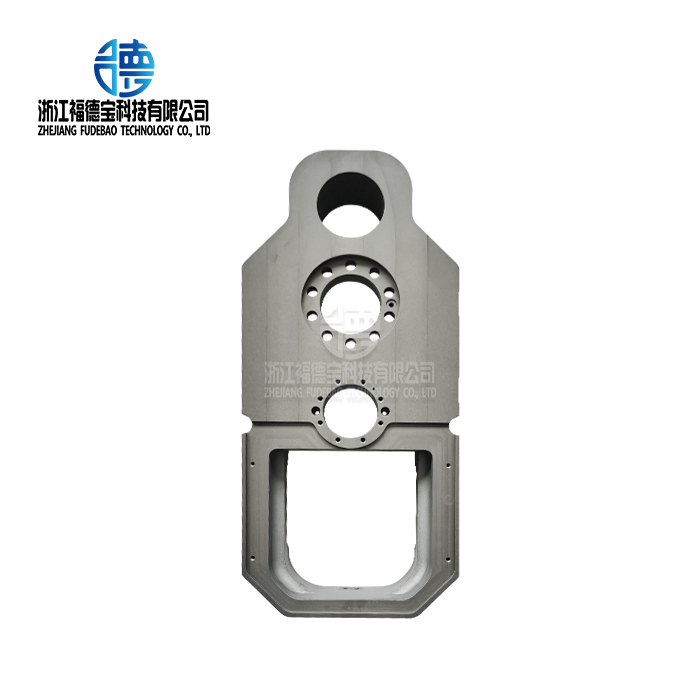
_1756349071334.webp "HAAS mounting bracket")
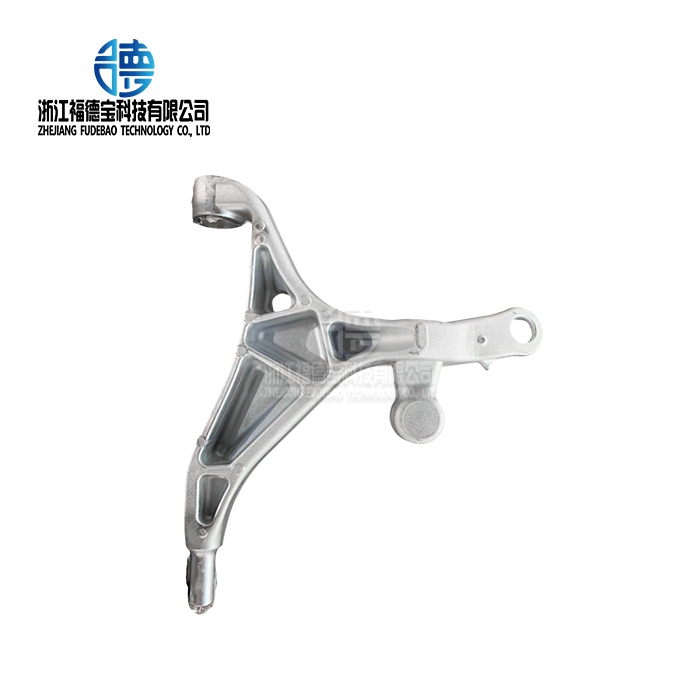
_1756346144394.webp "aluminum die casting hinge")