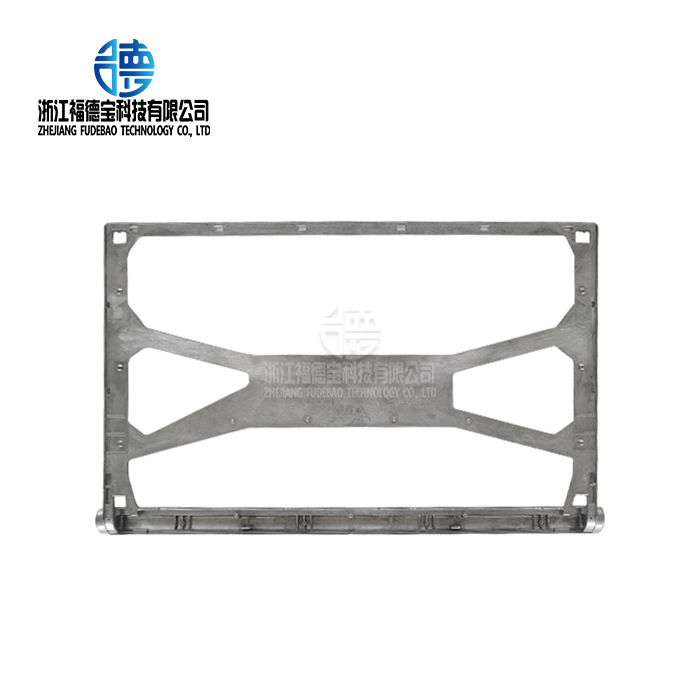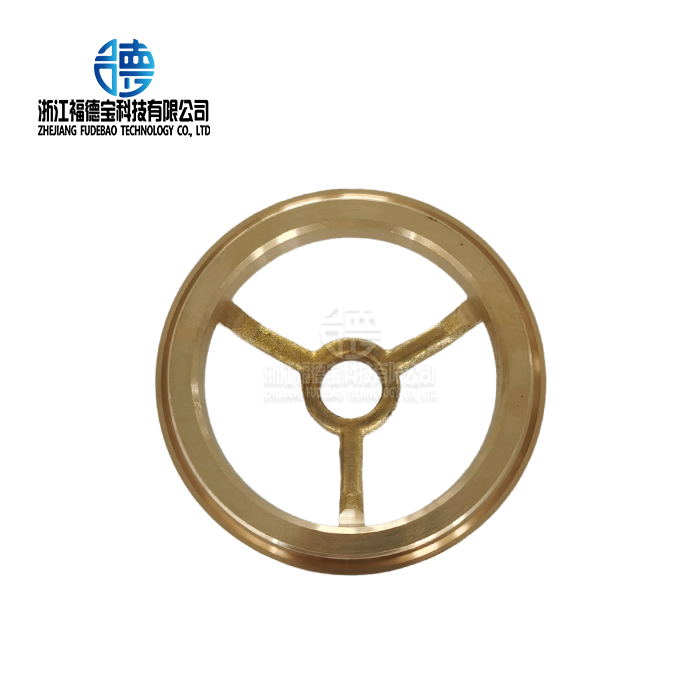
Aluminum Die Casting for Electric Vehicle Components
2026-01-26
Aluminum die casting changes the way electric vehicles are made by making parts that are strong, light, and meet strict performance standards. Under high pressure, this precise manufacturing method shapes molten aluminum alloys into complicated shapes. This is done to make important EV parts like battery housings, motor brackets, and thermal management systems. Modern electric vehicles need parts that are both light and strong. For automotive engineers and procurement workers looking for reliable, cost-effective ways to make things, aluminum die casting is the best choice.

Understanding Aluminum Die Casting and Its Role in EV Components
The Fundamentals of Aluminum Die Casting Technology
Utilizing a complex manufacturing process called aluminum die casting, liquid aluminum alloy is pushed into precisely designed steel molds under high pressure. This process usually works at pressures between 1,500 and 25,000 PSI, which makes sure that the mold hole is completely filled and the dimensions are very accurate. Rapid solidification makes parts with better mechanical qualities and smoother surfaces, so they don't need to go through a lot of secondary machining.
The progress in die casting technology has been similar to the shift in the auto business toward electric vehicles. In the past, internal combustion engines needed heavy parts that could handle high temperatures. Now, electric powertrains need light solutions that can keep the structure strong while meeting complex electrical and thermal needs. Modern aluminum die casting machines with real-time monitoring systems can make parts with tolerances as small as ±0.05mm, which is exactly what is needed for electric vehicle uses.
Essential Benefits for Electric Vehicle Applications
Due to its unique combination of properties that solve multiple engineering challenges at once, aluminum die casting is used more and more by manufacturers of electric vehicles. The process creates very good thermal conductivity, which is important for battery thermal management systems that need to get rid of heat quickly to keep their working temperatures at the right level. Because aluminum is naturally electrical, it is also perfect for motor housings and the cases that hold electrical components.
EV designers are still trying to find ways to make them lighter, because every kilogram affects range and efficiency. Die-cast aluminum parts usually weigh 40 to 60 percent less than steel parts of the same size and shape, but they are just as strong. This weight benefit directly leads to better energy efficiency and a longer driving range, both of which are important factors in getting people to buy electric cars.
Optimal Aluminum Alloys for EV Manufacturing
Different aluminum die casting metals have different properties that make them better for certain electric vehicle uses. A380 alloy is great for making complicated shapes like battery enclosures and motor housings because it is very fluid and easy to die-fill. The A383 alloy is better at keeping air inside, which is important for parts that need to be hermetically sealed. A360 alloy, on the other hand, has better corrosion protection, which is important for parts that are outside and exposed to the elements.
As part of the selection process, mechanical properties, thermal properties, and production issues must all be taken into account. The amount of silicon in a material affects how fluid it is and how quickly it shrinks. Copper additions make it stronger at high temperatures. Magnesium makes things stronger while also making them lighter, which is especially important for building parts. Engineers can choose the best alloys for their unique needs when they understand these relationships.
Comparing Aluminum Die Casting with Other Manufacturing Methods for EV Components
Performance Analysis Across Manufacturing Processes
Choosing the right manufacturing method has a big effect on the quality of the parts, the efficiency of production, and the total cost of the project. Sand casting gives you more design freedom and lowers the cost of tools, but the parts it makes have rougher surfaces and wider limits for size. While sand casting can be used for low-volume prototyping, it usually needs a lot of machining to get the precision needed for EV uses.
Even though magnesium die casting is lighter than aluminum, it can be hard to make because of the cost of the materials and the need to be careful about fire safety. Zinc die casting has very good surface finish quality and accuracy in measurements, but it doesn't have the thermal performance needed for many EV uses. Aluminum extrusion makes strong, light profiles, but it's not as flexible for complicated designs as die casting, which can make things in three dimensions.
Procurement pros need to look at the total cost of ownership instead of just the piece prices when comparing these options. Because die casting can make nearly net-shape parts with few other steps, the overall cost of production is often lower, even though the original investment in tools is higher.
Cost Implications and Volume Considerations
The amount of production has a big impact on the choice of manufacturing method and the overall cost of the project. Die casting is most cost-effective for medium to high-volume production runs, usually more than 5,000 pieces per year, because it takes a large initial investment in precise tools. But as the number of pieces made goes up, the cost per piece goes down a lot. This makes die casting a very cheap option for mass production.
When you only need a few pieces, you might prefer a different way, like CNC machining from billet aluminum, even though the material costs more per piece. The break-even point is based on the complexity of the parts, the tolerances that need to be kept, and the needs of the secondary process. To find the best ways to make things, sophisticated cost modeling looks at things like tooling amortization, cycle times, material usage, and quality-related costs.
How to Optimize Quality and Performance of Aluminum Die Cast EV Components?
Advanced Defect Prevention Strategies
Improving quality starts with putting in place thorough plans to stop mistakes throughout the whole manufacturing process. The most common problem in aluminum die casting is porosity, which is usually caused by gases getting stuck or not enough air flow. Modern vacuum-assisted die casting systems get rid of air from mold holes before metal is injected, which makes the parts denser, stronger, and better at conducting electricity and heat.
When metal streams don't properly fuse during filling, weak spots form that threaten the structure's stability. This is called a cold shut. Controlled injection speeds and optimized gate systems make sure that the mold is fully filled while keeping the metal at the right temperature throughout the process. Advanced modeling software can guess where defects might happen before the tooling is built, which lets the design be changed before they happen.
Here are the most important steps you can take to avoid defects and make sure the quality of your parts is high:
- Temperature Control Systems: Keeping the metal's temperature exactly between 630°C and 680°C provides the best fluidity and stops it from solidifying too quickly, which can lead to surface defects or incomplete filling.
- Optimizing the injection parameters: Keeping an eye on the injection speeds and pressures stops turbulence and makes sure the whole cavity is filled, which is especially important for the complicated shapes that are popular in EV applications.
- Mold Design Excellence: Gates, runners, and overflow areas should be placed strategically to control the flow of metal and allow blocked gases to escape properly.
- Real-time Monitoring: High-tech sensors keep an eye on important factors like temperature, pressure, and cycle times, so changes can be made right away when they happen.
All of these thorough steps work together to make sure that high-quality parts that meet strict automotive standards are always made, and that rejection rates and the costs that come with them are kept to a minimum.
Process Optimization for Enhanced Performance
To get the best results, process improvement needs to be done in a way that takes into account every part of the manufacturing cycle. Controlling the temperature in the die has an effect on both the quality of the parts and how quickly they are made. The best temperature ranges depend on the metal used and the shape of the parts. Advanced thermal management systems keep all mold surfaces at the same temperature. This makes sure that the cooling rate is the same and that there aren't many differences in the sizes of the parts.
Alloy management includes more than just choosing the right alloy. It also includes handling it correctly, getting rid of gas, and keeping an eye on its makeup during production runs. Automated ladling devices keep the quality of the metal stable while reducing oxidation. Regular spectrographic analysis makes sure that the makeup of the alloy stays within certain limits. This stops changes in properties that could affect how well the component works.
Selecting Reliable Aluminum Die Casting Suppliers for Electric Vehicle Manufacturing
Essential Evaluation Criteria for Supplier Selection
Choosing a supplier is a big choice that affects the quality of the product, the reliability of delivery, and the long-term success of the project. Logistics prices, lead times, and how well people can communicate are all affected by where things are located. Suppliers with carefully placed facilities can help the local area while keeping transportation costs low. Being close to major automotive manufacturing hubs is often a sign of experience with quality standards and supply chain needs for the automotive industry.
Customization is what sets exceptional sellers apart from commodity providers. EV parts often have special requirements that make it hard to use standard production methods. Suppliers who are flexible in how they create tools, change processes, and help engineers can meet complex needs while still meeting quality standards. This skill is especially useful during the growth stages of a product, when design changes happen a lot.
Production scalability affects both the current success of a project and its ability to grow in the future. Changes in market-driven demand can be accommodated by suppliers who are ready to handle changes in volume without affecting delivery schedules. Multiple production lines, backup equipment, and employees who are trained in more than one skill set make the company resistant to problems that could affect supply consistency.
Reputation Assessment and Partnership Potential
The reputation of a supplier shows how much knowledge they have, how well they do their job, and how happy their customers are across many projects and industries. Testimonials from clients, case studies, and trips to references can give you an idea of how the business works and how it solves problems. Having long-term relationships with big OEMs shows that you can perform well in the tough conditions that are common in the automotive supply chain.
Getting a certification shows that you are dedicated to quality management and constant growth. ISO 9001 certification sets up basic quality management systems, and TS 16949 certification meets the particular needs of the automotive industry. Getting more certifications in areas like workplace health and environmental management shows that your business is truly excellent at everything it does.
Collaborations that work well in the EV business show that people have the right experience and technical skills for what electric vehicles need. Suppliers who have worked on managing battery heat, isolating high-voltage parts, and blocking electromagnetic interference can help new projects in important ways. This specialized understanding cuts down on technical risks and speeds up the development process.

Company Introduction and Our Aluminum Die Casting Solutions for EV Components
Fudebao Technology's Specialized EV Manufacturing Expertise
Zhejiang Fudebao Technology has become a leading company in aluminum die casting foundries, specializing in precise casting and machining solutions for the electric car market, which is changing quickly. Our full range of manufacturing services includes the whole production cycle, from melting the raw materials to treating the finished surface. This makes sure that quality control is always the same and that project management is streamlined.
Our cutting-edge building has high-speed machining centers, CNC lathes, low-pressure casting machines, and precision die casting systems, among other high-tech tools. With this unified method, we can provide full solutions, from rough casting blanks to finished machined parts, with accuracy up to ±0.05mm in terms of size. These high levels of accuracy are necessary for important EV parts like motor housings, battery enclosures, and thermal control components.
The main things that make our ability to make EV parts stand out are the following:
- Full Process Integration: Our "melting-casting-finishing-surface treatment" process gets rid of the quality problems and time delays that come with supply chains with multiple vendors.
- Advanced Quality Systems: Using automotive-grade quality management makes sure that all PPAP paperwork is followed and that the statistical process is controlled during all production runs.
- Flexible Production Scaling: The equipment's ability can handle both small prototypes and large amounts of production, helping clients from the idea stage all the way through mass production.
- Knowledge of Materials: A lot of experience with aluminum alloys, copper alloys, and stainless steel lets us choose the best materials for each EV's performance needs.
Because these skills work together, we can be a full manufacturing partner instead of just a supplier of parts. This helps our clients succeed in the competitive electric car market.
Partnership Approach and Service Excellence
Our dedication goes beyond high-quality manufacturing to full technical help throughout the whole project lifecycle. Collaboration between engineers starts with the creation of the first concept. During this stage, our team makes suggestions for design optimization that make the product easier to make while still meeting performance standards. This proactive method cuts down on development time and avoids costly design changes as much as possible.
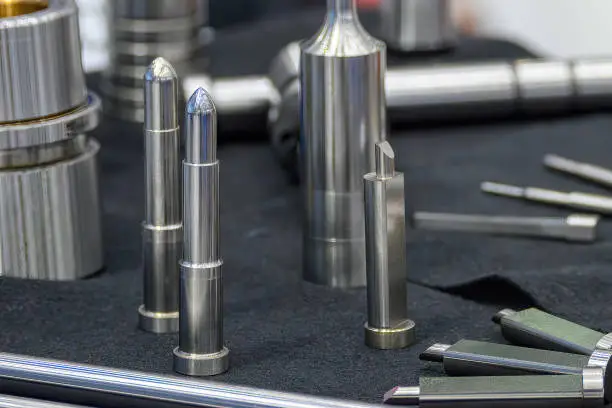
Specific quality assurance procedures are in place to meet the standards of the electric vehicle industry. These include checking dimensions, certifying materials, and performing performance tests that are useful for automotive uses. Coordinate measuring machines, hardness testing, and surface finish proof are some of the inspection tools we use to make sure that parts meet strict requirements before they are shipped.
Conclusion
For making parts for electric vehicles, aluminum die casting is the best method because it reduces weight, performs well in hot conditions, and keeps its shape, all of which are important for current EVs. Because the technology can make complicated geometries with very high accuracy in dimensions while still being cost-effective at high production volumes, automakers that want to stay ahead in the market for electric vehicles need to use it. Procurement professionals can use aluminum die casting to improve product performance and meet factory efficiency goals by carefully choosing suppliers and making sure processes work as efficiently as possible.
FAQ
What makes aluminum die casting ideal for electric vehicle components?
Aluminum die casting offers superior thermal conductivity for heat management, excellent strength-to-weight ratios for energy efficiency, and precise dimensional control for complex assemblies. The process creates near-net-shape components that require minimal secondary machining, reducing overall manufacturing costs while meeting automotive quality standards.
How do I select the right aluminum alloy for my EV application?
Alloy selection depends on specific performance requirements including thermal conductivity, electrical properties, corrosion resistance, and mechanical strength. A380 alloy suits general applications with complex geometries, while A383 provides enhanced pressure tightness for sealed components. Consulting with experienced foundries ensures optimal alloy matching to application requirements.
What are typical lead times for custom aluminum die cast components?
Lead times vary based on component complexity and tooling requirements. Simple components with existing tooling may ship within 2-4 weeks, while custom projects requiring new tooling typically require 8-12 weeks for initial samples and tooling validation. Production volumes and supplier capacity also influence delivery schedules.
Partner with Fudebao Technology for Your EV Aluminum Die Casting Needs
Automotive engineers and procurement professionals seeking a reliable aluminum die casting supplier for electric vehicle applications can leverage Fudebao Technology's comprehensive manufacturing expertise and proven track record. Our integrated production capabilities, precision machining equipment, and automotive-grade quality systems deliver the performance and reliability essential for successful EV component manufacturing. Connect with our technical team at hank.shen@fdbcasting.com to discuss your specific requirements and explore how our aluminum die casting solutions can enhance your electric vehicle projects.
References
Lumley, R.N. "Fundamentals of Aluminum Metallurgy: Production, Processing and Applications in the Automotive Industry." Woodhead Publishing Series in Metals and Surface Engineering, 2018.
International Die Casting Association. "Advanced Die Casting Technologies for Electric Vehicle Applications: Industry Best Practices and Quality Standards." IDCA Technical Publication, 2022.
Zhang, L., Wang, H., and Chen, M. "Optimization of Aluminum Die Casting Processes for Automotive Lightweight Applications." Journal of Manufacturing Science and Engineering, Volume 144, Issue 8, 2022.
Automotive Industry Standards Committee. "Material Specifications and Testing Protocols for Electric Vehicle Component Manufacturing." AISC Publication AIS-2021-EV, 2021.
Rodriguez, P.A., Thompson, K.R., and Liu, S. "Thermal Management Solutions in Electric Vehicle Battery Systems: Materials and Manufacturing Considerations." International Journal of Automotive Technology, Volume 23, Number 4, 2022.
European Die Casting Association. "Sustainable Manufacturing Practices in Aluminum Die Casting for Electric Mobility Applications." EDCA Research Report, 2023.



YOU MAY LIKE
_1756352712247.webp "stainless steel hex plug")
_1756349862928.webp "belts pulleys")
_1756346259673.webp "heavy duty hinges")