
How Does the Sand Casting Process Work Step by Step?
2026-06-05
Sand casting employs specifically bound sand combinations to build disposable molds for molten metal to construct complicated metal components. This time-tested method accounts for over 60% of all metal castings worldwide because sand casting eliminates die casting's prohibitively high tooling costs, accommodates casting weights from ounces to over 100 tons, and offers unmatched alloy flexibility for processing high-melting-point metals like steel, iron, and titanium that permanent molds struggle with.
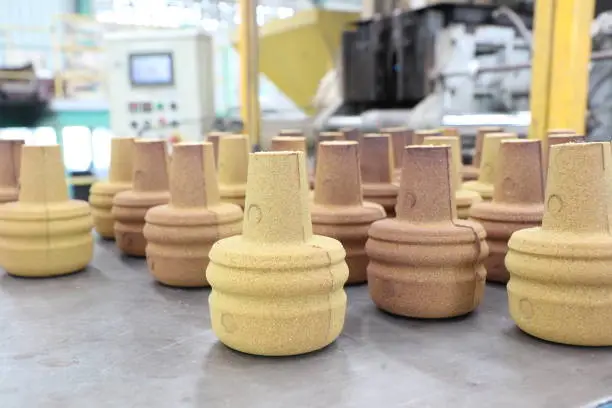
What Is Sand Casting? An Essential Overview
Sand casting is an adaptable manufacturing process that solves crucial production problems that other technologies cannot, making it vital to the foundry sector. The procedure includes compacting sand around a design to form a hollow and filling it with molten metal. Sand molds are disposable, so they're destroyed after part removal, allowing producers to create complicated interior geometries.
Understanding Sand Casting Materials
Two main sand systems dominate modern foundries. Green sand is cost-effective for high-volume production runs with regular tolerances since it employs wet clay and water as binders. For bigger, heavier components, resin sand systems using furan or phenolic resins provide excellent surface finishes and dimensional precision. Which system is used affects part quality and production costs.
Why Sand Casting Remains Relevant?
Sand casting handles three production issues concurrently. Low-to-medium volume manufacturing runs are profitable without large tooling expenditures. Manufacturers may cast several-ton components that die casting machines cannot handle. The process works with most castable alloys, including energy and heavy equipment materials that must withstand extreme conditions.
Step-by-Step Breakdown of the Sand Casting Process
To achieve perfection, numerous highly regulated procedures must be conducted from idea to sand casting. Buying teams may establish realistic targets and collaborate with foundries when they understand this procedure.
Pattern Creation and Preparation
Pattern creation is the first stage in turning technical designs into tools. Patterns are made from wood, metal, or high-density polymers, accounting for metal shrinkage while cooling. Draft angles allow simple removal from the sand mold, and core prints for interior cavities are needed. CNC machining in modern foundries improves pattern precision to ±0.05mm, affecting final casting tolerances.
Mold Preparation and Assembly
A cope (top) and drag (bottom) flask is used by foundries to pack prepared sand around the pattern. Sand mixture must be precise—too loose and mold collapses; too dense and gasses cannot escape, creating porosity. Workers carefully remove the pattern from both flask sides after compacting them, leaving a flawless cavity impression. Workers carefully insert chemically bound sand cores in internal channels before reassembling the flask halves. Because slight alignment problems create final casting dimensional variances, this stage requires skilled craftsmanship.
Metal Melting and Pouring Operations
Before pouring, Optical Emission Spectrometry verifies alloy chemical composition to ASTM or EN requirements. To achieve total fluidity, furnace operators superheat the metal beyond melting point and carefully manage pouring temperature and pace. Pouring too fast generates turbulence and gas entrapment, while pouring too slowly causes premature solidification and cold closes where metal streams fail to combine. Molds lie atop high-refractoriness silica sand beds that can endure 1600°C without fusing to the casting.
Cooling and Solidification Management
Castings are unaffected when metal solidifies after pouring. Metal characteristics and dimensional stability are greatly affected by cooling rates. Rapid cooling strengthens and finens grain structures but raises internal tension. The sand mold's intrinsic permeability releases trapped gasses, preventing porosity. Sand collapses during cooling, preventing hot ripping in metals with significant solidification shrinkage, an advantage over permanent molds.
Shakeout and Finishing Operations
Shakeout cracks the sand mold by mechanical vibration or human pounding after castings cool. Workers use cutting torches or saws to remove cores and castings from internal channels and gating systems. Shotblasting removes sand and oxidation scale from surfaces. Sand casting typically achieves dimensional tolerances of ISO 8062 CT10-CT13 with surface finishes between 6.3 to 12.5 Ra microns, which is sufficient for many applications but requires machining for critical interfaces. Most castings then go to CNC machining centers for precision finishing.
Common Challenges in Sand Casting and How to Overcome Them
Recognizing these difficulties allows proactive sand casting supply chain dependability mitigation solutions. Quality concerns affect part integrity and production efficiency even in well-controlled foundries.
Addressing Porosity and Gas Defects
When trapped air or combustion gases cannot escape after solidification, interior gaps reduce mechanical strength. We term this gas porosity. The major defense is controlling sand permeability—the combination must compress for mold strength while allowing gas escape. Proper mold venting keeps gasses away from crucial casting areas. Before pouring, molten metal degassing agents chemically bind hydrogen and other dissolved gasses. Pouring basin design is controlled by experienced foundries to reduce turbulence and air entrainment.
Managing Shrinkage and Hot Tears
Every metal contracts during solidification, and incorrect feeding can cause shrinkage voids in heavier parts. Foundry engineers feed cooling contracting regions with risers, molten metal reservoirs. Understanding directional solidification principles helps arrange risers so thin parts freeze near risers. Solidifying metal cannot tolerate thermal contraction pressures at geometric discontinuities, causing hot rips. To reduce stress, pattern designers use broad fillet radii and prevent abrupt section transitions.
Preventing Mold-Related Defects
Mold weakness under metallostatic pressure produces erosion by allowing sand to enter the casting, causing rough surfaces and inclusions. Good sand bonding and compression during molding avoid this. Thermal stress from molten metal hitting cold sand causes mold breaking. Using proper binder systems and regulating moisture in green sand molds prevents cracking. Working with foundries that use statistical sand property controls assures mold quality every time.
Applications of Sand Casting Across Industries
The sand casting approach has been demonstrated in several production areas, each using its own benefits. These tools let procurement teams see how this manufacturing process fits their operations.
Automotive and Heavy-Duty Powertrains
Heavy-duty engine blocks and cylinder heads are traditional sand casting applications with complicated internal geometry and harsh operating conditions. Internal sand cores produce complex cooling and oil passageways that cannot be machined. These parts must resist thousands of heat cycles and 2,000 psi combustion pressures. Sand casting's huge, complicated forms with integrated mounting bosses and internal webbing strengthen transmission housings and differential cases without adding weight.
Energy and Oil-Gas Infrastructure
Large valve bodies regulating subsea pipeline flow show sand casting handling corrosion-resistant superalloys like Duplex Steel that withstand corrosive chemicals. Sand molds readily fit thick-walled oil refinery pump casings, which weigh several tons. Die casting cannot manage the high melting temperatures of nickel-based alloys used in high-temperature power generating equipment, hence the method is ideal.
Heavy Machinery and Construction Equipment
Sand casting gives excavator counterweights sheer bulk and vibration dampening for earthmoving stability. Sand casting can make huge gearbox housings with bearing seats and shaft bores in one piece for mining equipment. Another benefit is that foundries may make one-time unique parts for equipment maintenance without the significant tooling investment of permanent mold techniques.
Rapid Prototyping and Custom Manufacturing
Due of lower pattern tooling costs than die casting, design engineers increasingly employ sand casting for functional prototypes. Instead of months, a design may be made and castings poured in weeks, speeding development. Companies evaluating ideas before investing in high-volume production tooling benefit from this speed-to-market advantage. For small production runs when die casting tooling costs cannot be amortized, custom machinery makers profit from sand casting.
How to Choose the Right Sand Casting Supplier for Your Business?
Choosing a sand casting supplier affects product quality, delivery reliability, and long-term competitiveness. Procurement teams should consider several parameters to meet operational needs.
Quality Certification and Technical Capability
ISO 9001 certification ensures quality management systems, whereas IATF 16949 certifies automotive supply chains. Aerospace vendors need AS9100 traceability and enhanced inspection certification. Beyond certifications, can the foundry's in-house engineering help with design for manufacturability evaluations and solidification simulation for gating system optimization? Technical competency includes inspection equipment, especially non-destructive testing techniques. Ultrasonic Testing, Radiographic Inspection, and Magnetic Particle Inspection demonstrate internal quality checking before shipping.
Production Capacity and Flexibility
Check if the supplier's equipment meets your component size and volume needs. Small precision casting foundries may lack overhead cranes and flask sizes for massive industrial components. Can the provider adjust batch sizes as demand changes? Pattern creation normally takes two to six weeks before initial article production, thus lead time estimates should match your planned cycles.
Forming Strategic Partnerships
The best supply relationships go beyond transactional purchase to collaboration. Suppliers who keep safety stock, participate in continuous improvement, and communicate during production issues give value beyond competitive price. Visits to the foundry reveal housekeeping standards, equipment condition, and labor skill levels that paper certifications cannot. Long-term collaborations allow suppliers to invest in component-specific tooling and process enhancements, improving quality and lowering costs.
Conclusion
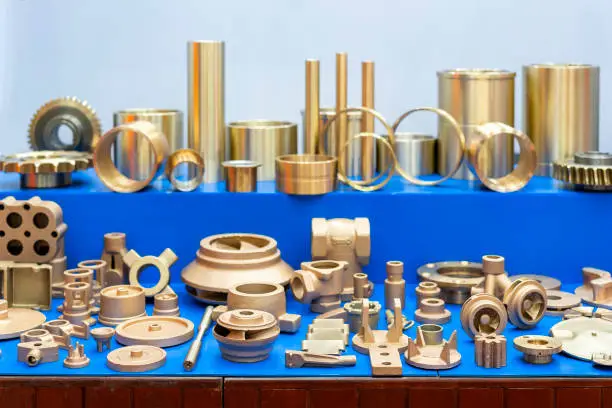
Understanding the sand casting process helps procurement and engineering teams make educated sourcing decisions and work effectively with foundry partners. The technique offers production flexibility, component size capacity, and alloy variability that other casting technologies cannot cheaply match. Porosity and shrinkage need careful process control, yet experienced foundries using stringent quality processes create castings that satisfy exacting automotive, energy, heavy industrial, and aerospace criteria. To develop robust supply chains that support long-term competitiveness, suppliers must be evaluated for technical competence, quality certifications, and collaboration possibilities beyond price comparisons.
FAQ
What distinguishes green sand from resin sand casting systems?
Green sand uses wet clay and water as binding agents for cost-effective high-volume manufacture with standard tolerances. Sand casting with resin sand uses furan or phenolic binders to increase surface finishes, dimensional accuracy, and mold strength for bigger, heavier components. Green sand is better for ordinary manufacturing due to material costs and curing time, whereas resin sand is better for precise applications.
How do foundries prevent gas porosity in finished castings?
Maintaining sand permeability allows gas escape during metal solidification. Proper mold venting keeps combustion gasses away from key casting areas. Melting metal using degassing chemicals chemically binds hydrogen before pouring. Shot blasting patterns during mold preparation and green sand system moisture level optimization lessen gas entrapment risk.
What minimum wall thickness can sand casting reliably achieve?
Non-ferrous metals like aluminum have a minimum wall thickness of 3mm–5mm, whereas ferrous alloys need 5mm–9mm. Thinner parts risk cold closes when metal streams freeze before filling the mold. Sand cools flowing metal and small channels impede its movement.
Do sand castings require secondary machining operations?
Non-critical surfaces generally work well as-cast, especially for aesthetic or non-mating applications. CNC machining is usually needed to ensure flatness, concentricity, and dimensional tolerances on mating surfaces, precise bores, and threaded features. Sand casting yields looser tolerances than die casting or permanent mold techniques, thus useable surfaces require post-casting machining.
What typical lead times should buyers expect for sand casting projects?
Pattern development takes two to six weeks, depending on complexity and whether traditional machining or 3D printing is used. Die casting tooling takes months, but this timetable is better. Sand casting is excellent for prototype development and medium-volume production where tooling amortization confronts permanent mold economics since foundries may deliver first articles within days after pattern completion.
Partner with Fudebao Technology for Your Sand Casting Requirements
Zhejiang Fudebao Technology Co., Ltd. is a leading aluminum foundry supplying automotive, industrial equipment, and machinery manufacturers. Our facility handles everything from melting to casting to precision finishing and surface treatment, reducing coordination issues in multi-vendor supply chains. Our core equipment, such as high-speed machining centers, CNC lathes, low-pressure casting machines, and die casting systems, provide one-stop delivery with ±0.05mm machining precision. Precision satisfies stringent automotive and industrial component and equipment requirements where dimensional control affects assembly efficiency and operating dependability. We continuously meet quality requirements with direct supplier partnerships with worldwide companies like American HAAS automated machine tools. For dependable sand casting, engineering managers and sourcing directors can contact hank.shen@fdbcasting.com to discuss your application needs and how our integrated production capabilities can optimize your supply chain.
References
American Foundry Society. (2021). Metalcasting Process Fundamentals: Sand Casting Technology and Applications. Des Plaines, IL: AFS Publications.
Brown, J.R. (2019). Foseco Ferrous Foundryman's Handbook (11th ed.). Oxford: Butterworth-Heinemann.
Campbell, J. (2015). Complete Casting Handbook: Metal Casting Processes, Metallurgy, Techniques and Design (2nd ed.). Oxford: Butterworth-Heinemann.
International Organization for Standardization. (2022). ISO 8062-3:2022 Geometrical Product Specifications (GPS) — Dimensional and Geometrical Tolerances for Moulded Parts. Geneva: ISO.
Stefanescu, D.M. (2020). ASM Handbook Volume 15: Casting. Materials Park, OH: ASM International.
Zuo, Z., & Huang, T. (2018). Sand Casting Quality Control and Defect Analysis in Modern Foundries. Journal of Materials Processing Technology, 256, 112-128.



YOU MAY LIKE
_1756347888208.webp "New energy motor shell")
_1756349696500.webp "Pulley aluminum casting")
_1756349002499.webp "Aluminum alloy clamp casting")
_1756346421748.webp "Aluminum casting telescopic bracket Parts")