Guide to CNC Machining Tolerances and Precision Standards
2026-04-10
According to CNC machining tolerances, the range of allowed differences in a part's measurements and physical features that doesn't affect its functionality. CNC machining achieves very precise measurements by automatically executing toolpaths. This gets rid of the errors that come with human work and can reach levels of accuracy as low as ±0.005mm. When B2B procurement teams know about tolerance specifications, relevant industry standards, and factors that affect precision, they can make smart sourcing decisions that balance quality needs with manufacturing economics. This makes sure that parts fit correctly in important assemblies used in energy, aerospace, automotive, and industrial equipment.
Understanding CNC Machining Tolerances and Precision Standards
Tolerance definitions are what make cooperation in precision production work. During the CNC machining process, there are three different types of standards that together decide whether a part will work properly when it is put together.
Types of Tolerances in Precision Manufacturing
Dimensional limits say how much difference is okay in length, width, diameter, and depth measures. A shaft with a width of 25 mm and a tolerance of ±0.02 mm means that the real size that is made can be anywhere from 24.98 mm to 25.02 mm and still work. The Geometric Dimensioning and Tolerancing (GD&T) rules guide geometric limits, which determine how flat, perpendicular, cylindric, and in the right place a shape is. When mating surfaces must line up perfectly under load, like in transmission housings for cars and aircraft structure frames, these specs are very important. Texture quality is defined by surface finish standards and is measured in Ra (average roughness) values. Typical as-machined finishes range from Ra 3.2μm for general uses to Ra 0.4μm for closing surfaces in medical devices and hydraulic parts.
International Standards Governing Precision Machining
Several standards groups set minimum levels of accuracy that make it easier for manufacturers around the world to talk to each other. The general tolerance standards for machined parts are set by ISO 2768. Technical sketches usually list the ISO 2768-m (medium) and ISO 2768-f (fine) categories. GD&T techniques are mostly governed by ASME Y14.5 in the aerospace and military industries in North America, while DIN standards are still used a lot in industrial machinery in Europe. We've seen that clients in regulated industries, like aircraft and medical device manufacturing, are asking for certification compliance paperwork along with physical parts. This makes the supply chain more clear.
Critical Factors Influencing Achievable Precision
CAD/CAM software integration turns 3D models into exact G-code directions that tell tools how to move. This is the digital link between what the designer wants and what the product actually looks like. Material qualities have a big effect on how it machines. For example, aluminum alloys like 6061-T6 are easy to machine and keep their shape well, but superalloys like Inconel 718 need special tools and slower feed rates because they tend to work-harden. Repeatability is directly affected by how well the machine is calibrated. No matter how skilled the user is, a machining center with worn ball screws or thermally unstable structures will not be able to keep tight tolerances. As tool wears down, surface finish and measurement accuracy get worse over time. This is why forecast tool management systems are needed in high-volume production settings. Changes in the environment, such as changes in humidity and temperature, cause both workpieces and machine structures to expand and contract. This is especially difficult when working on big metal castings that need to be machined to within 0.05 mm of their 500mm+ dimensions.
Step-by-Step Guide to Achieving Optimal CNC Machining Tolerances
For precision manufacturing to work, measurements must be analyzed in a planned way at all stages of the production process. Knowing how the different factors in a process affect each other helps buying teams make reasonable requirements that keep costs from going up too much.
Analyzing Critical Dimensions and Machining Methods
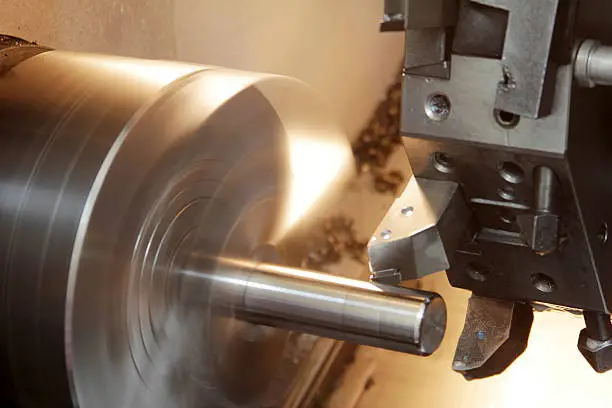
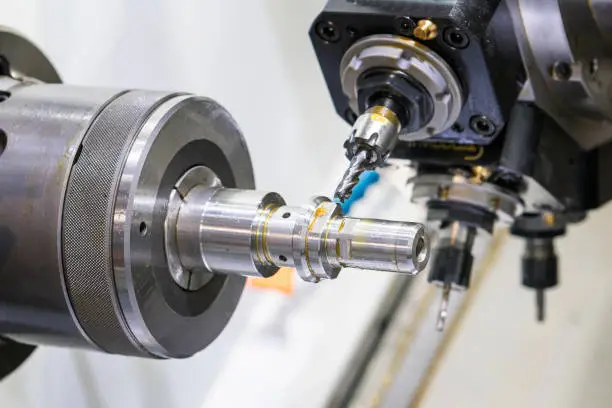
The first step in the dimensional analysis method is to figure out which traits are functionally important and which are purely aesthetic. For bearing press-fits, mounting bolt holes that need a H7 tolerance class need different cutting techniques than external corners with non-critical radii. Multi-axis machining skills have a big effect on the tolerances that can be used. For example, 3-axis machining centers are great for making prismatic parts with features on a single plane, while 5-axis continuous machining is needed for making turbine blades and hip implants with surfaces that are compoundly curved. We've found that when CNC machining lathes are used to turn, the sizes of shaft components are usually accurate to within 0.01%. On the other hand, when milling thin-walled aluminum housings, special fixtures may be needed to stop dimensional drift caused by bending.
Balancing Tolerance Requirements with Manufacturing Economics
When you specify tighter standards than are technically necessary, the costs go up exponentially without improving performance. If a size needs a tolerance of ±0.1mm, it might be possible to get it in one roughing pass. But if the tolerance needs to be ±0.02mm, it takes more semi-finishing and finishing passes with slower material removal rates, special tools, and longer cycle times. Iterative development with fast CNC machining lets design teams make sure that the tolerances they need are met in real-world assembly and operation situations before they spend a lot of money on production tools. This method works really well in car settings where cast aluminum engine blocks are machined a lot—testing prototypes shows which bearing bore tolerances really need ±0.015mm accuracy and which ones can be satisfied with standard ±0.05mm accuracy.
Form Tolerances and Assembly Considerations
When parts need to fit together properly, interdimensional relationships are often more important than individual feature limits. No matter how accurate the measurements are, a gearbox case with perfect hole sizes but not enough perpendicularity between mounting faces will cause the bearings to become misaligned and fail early. True position limits, which are set using GD&T notation, control how features relate to each other in space, making sure that bolt patterns line up correctly during assembly. We often work with companies that make industrial equipment, and they've learned this lesson the hard way: a pump housing with holes that were ±0.03mm in diameter wasn't usable because the mounting faces weren't parallel enough, which caused the motor coupling to be out of alignment at an angle, which led to catastrophic vibration failures in field installations.
How to Select a CNC Machining Partner for Precision Components?
The choice of supplier has a direct effect on the quality of the product, the dependability of shipping, and the long-term success of manufacturing. We've made systematic review factors that help procurement teams find partners who can do the job.
Defining Tolerance Requirements in RFQ Documentation
Technical specs that work well make sure that needs are clear. Following ISO or ASME standards, technical sketches should include GD&T writing that lists datum references, tolerance zones, and material conditions. When asking for quotes on aluminum die-cast housings that will need CNC machining later, make it clear which areas will stay as-cast and which will be machined with certain standards. Giving suppliers STEP or IGES CAD files along with PDF models lets them import geometry straight into CAM software, which cuts down on programming mistakes and speeds up the quote process.
We suggest being very clear about the material grades—just saying "aluminum" isn't enough when the properties of 6061-T6 (moderate strength, great machinability) and 7075-T6 (high strength, higher tool wear) are so different. Also, standards for surface finish should use actual Ra values instead of vague terms like "smooth finish" that can't be measured.
Assessing Supplier Certifications and Equipment Capabilities
Manufacturing capability includes more than just having the right tools. It also includes having the right quality systems, process controls, and measuring tools. ISO 9001 certification shows that a basic quality management system has been put in place. AS9100 (aerospace) and IATF 16949 (automotive) certificates show that processes are rigorous in their own fields, with features like PPAP paperwork, FMEA analysis, and statistical process control. Visiting production facilities, either in person or online, shows how well the equipment is maintained, how well the facilities are kept clean, and how well the operations are run. All of these things are strongly linked to quality outcomes.
When you evaluate equipment, you should look at the machining center's capabilities, such as its line travel, spindle speeds, tool capacity, and the level of complexity of its control system. A source that makes aircraft brackets out of Titanium Ti-6Al-4V needs high-torque spindles, through-spindle coolant delivery, and maybe even CNC machining lathes, that can keep their positions accurate to within ±0.005mm over long production runs. Our metrology department runs climate-controlled inspection rooms where CMM checks are done at a normal 20°C. This gets rid of the effects of heat expansion that can mess up measurements. This infrastructure serves many fields, such as medical equipment housings and precise car parts. Tolerance verification paperwork is sent with every shipment.
Evaluating Quality Assurance Processes and Communication
Strong process control tells the difference between providers who can give quality and those who can't. Statistical Process Control (SPC) that uses control charts to keep an eye on measurement trends lets you make changes before parts go out of tolerance, so you can sort them before they go out of tolerance. Before letting production quantities go out, First Article Inspection (FAI) protocols make sure that new setups make parts that are in line with the standards. This is done by keeping thorough measurement records and material certifications.
Long-term relationship success can be predicted by how quick communication is during the quotation, sampling, and production stages. When suppliers point out design features that make manufacturing harder or suggest loosening tolerances on non-critical measurements, they show that they are involved in engineering, which avoids costly mistakes.
Conclusion
CNC machining precision standards and limits are what make it possible for parts to work reliably in a wide range of challenging situations. When procurement workers know about different types of tolerances, foreign standards, and process variables, they can clearly state what they need and choose manufacturing partners who can meet those needs. Systematic dimensional analysis finds the best balance between practical needs and manufacturing economics. This keeps costs from going up because of too strict specs. By looking at certificates, equipment capabilities, and quality systems, suppliers can be screened to find partners who can provide consistent accurate delivery. Using best practices like monitoring plans, improved toolpaths, and environmental controls helps keep tolerances low throughout the entire production process, making sure that parts always meet standards from the pilot stage to mass production.
FAQ
What tolerance levels can precision CNC machining achieve?
Standard precise CNC machining usually gives limits of ±0.025mm to ±0.05mm on parts that are properly mounted and used with measured tools. When practically necessary, specialized precision grinding and ultra-precision machining can achieve ±0.005mm to ±0.002mm on key features, but at these levels of accuracy, the cost goes up a lot.
How does material selection influence achievable tolerances?
Dimensional stability and cutting behavior are directly affected by the qualities of the material. Aluminum metals like 6061-T6 and 7075-T6 are very good at transferring heat, so they don't work too hard and can be made with tight specs and a smooth surface. Grades of stainless steel like 316L tend to work-harden more quickly, so it's important to be careful when choosing the cutting parameters to keep the dimensions accurate. Specialized tools are needed to work with superalloys like Inconel 718, and they produce a lot of cutting heat, so strong fixtures are needed to keep the metal from warping during grinding.
Can CNC machining accommodate prototype and low-volume production?
Yes, this freedom is one of the main benefits compared to molding or casting, which need to spend a lot of money on tools. CNC machining lets you make working samples from engineering-grade materials, so you can test your idea in real-world situations before committing to methods for mass production. For low-volume production of 10 to 500 units, it is often cheaper to machine the parts than to spread the cost of the tools out over too few units.
Partner with Fudebao Technology for Precision CNC Machining Excellence
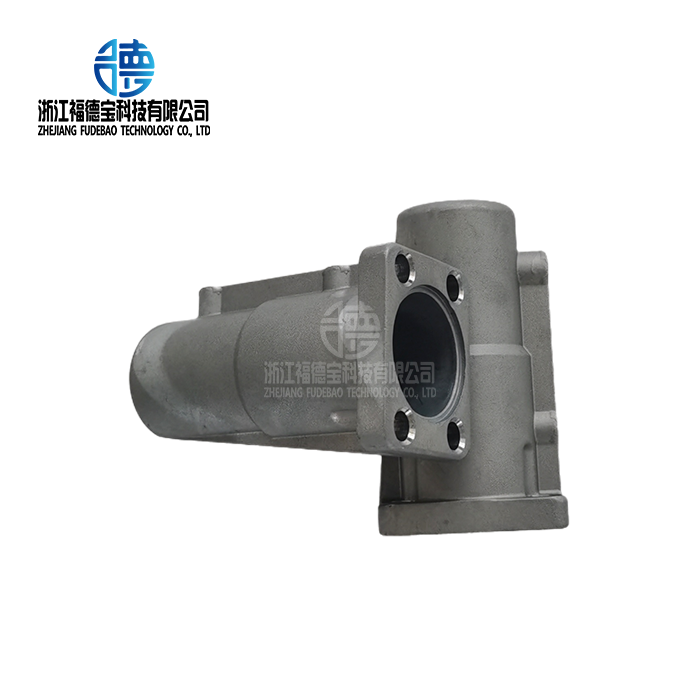
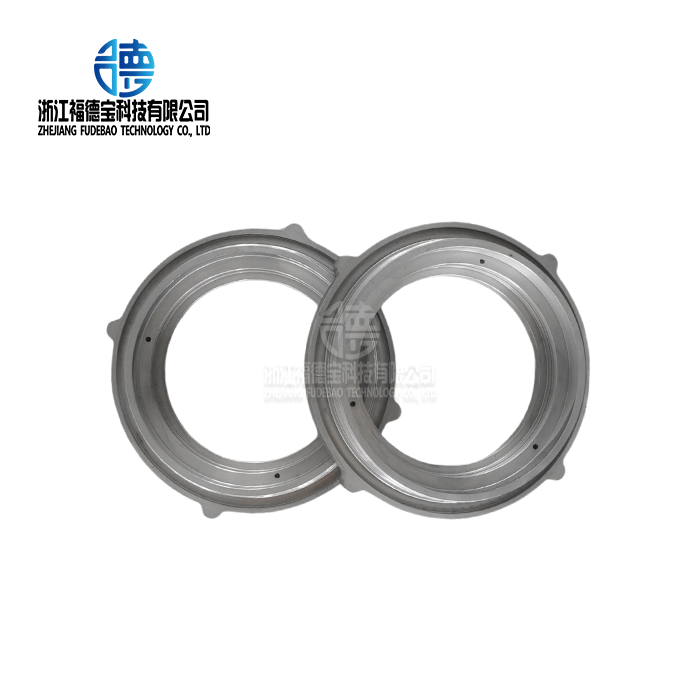
Consistently accurate measurements need more than just the right tools. They also need industrial knowledge that includes material science, process engineering, and quality systems. Through our full production environment, Zhejiang Fudebao Technology serves as a one-stop shop for CNC machining for cars, industrial machinery, electrical equipment, and new aerospace uses. Our plant can cast both aluminum alloys and copper alloys and also do advanced machining with American HAAS automation equipment. We can send finished parts that are correct to ±0.05mm straight from the raw materials to your assembly line. Our engineering team is here to help you with any technical questions you have at any time during the lifecycle of your project, whether you need sample brackets to test new designs or large quantities of precision housings with PPAP documentation. Get in touch with hank.shen@fdbcasting.com right away to talk about your tolerance needs and find out how our one-stop production method simplifies the supply chain while still delivering quality results.
References
Krar, S.F., Gill, A.R., & Smid, P. (2020). Technology of Machine Tools (8th ed.). McGraw-Hill Education.
Machinery's Handbook Editorial Staff. (2020). Machinery's Handbook (31st ed.). Industrial Press.
Ostwald, P.F., & Muñoz, J. (2019). Manufacturing Processes and Systems (9th ed.). John Wiley & Sons.
American Society of Mechanical Engineers. (2018). ASME Y14.5-2018: Dimensioning and Tolerancing. ASME International.
International Organization for Standardization. (2016). ISO 2768-1:1989 General tolerances — Part 1: Tolerances for linear and angular dimensions without individual tolerance indications. ISO Standards.
Boothroyd, G., Dewhurst, P., & Knight, W.A. (2021). Product Design for Manufacture and Assembly (3rd ed.). CRC Press.



YOU MAY LIKE
_1756349957728.webp "metric v belt pulley")
_1756349862928.webp "belts pulleys")
_1756346668222.webp "Aluminum castings Decorative buckles")
_1756346310015.webp "Aluminum castings Crane bracket")