Copper Casting Suppliers: What Buyers Should Evaluate Before Ordering
2026-06-02
Buyers must evaluate copper casting vendors' technical skills, material expertise, and quality standards to guarantee components fulfill strict operating requirements. Copper casting uses precise molds to pour molten copper alloys into complicated shapes with high heat conductivity and corrosion resistance. The selection process examines casting methods, alloy transparency, production capacity, and industry standards, which affect product performance, project timelines, and long-term supply chain reliability in automotive, industrial machinery, electrical infrastructure, and aerospace sectors.
Understanding Copper Casting and Its Industry Standards
Fundamentals of Copper Alloy Casting Processes
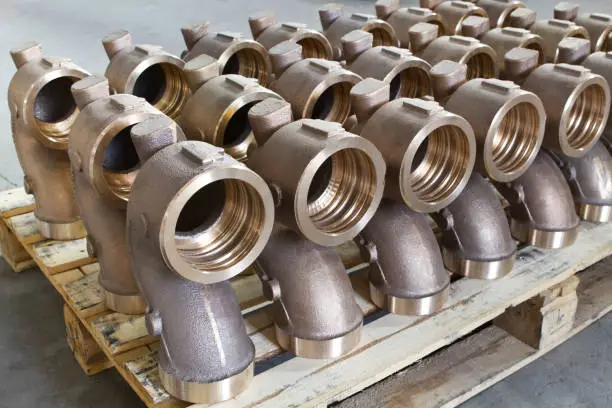
Copper alloy casting uses application-specific processes to turn molten metals into functioning components. This process can handle delicate interior cavities and valve bodies, making sand casting suitable for medium to large production runs. Investment casting (lost-wax casting) produces fine surface details and strict tolerances for electrical connections and precision fittings. High-velocity centrifugal casting produces thick, void-free bushings and cylinder liners. Dimensional accuracy, surface quality, and mechanical qualities vary by method.
Critical Industry Standards Governing Copper Castings
The buyer must ensure the provider meets criteria. ASTM B584 sets chemical composition and mechanical property limitations for general copper casting. For high-stress conditions, ASTM B148 specifies aluminum-bronze sand castings for marine propulsion systems with tensile strengths of 750 MPa. European copper alloy casting grades are standardized by EN 1982 for microstructural density and metallurgical quality. These frameworks ensure components survive operating loads, corrosive environments, and thermal cycling.
Alloy Composition and Material Selection Criteria
Alloy selection affects performance. Aluminum bronzes (C95400, C95800) are strong and seawater-resistant for maritime applications. Tin bronzes (C90700, C93200) reduce bearing and wear plate friction in heavy equipment. Cupronickels (C96200) resist chloride and biofouling in desalination equipment. C81100 high-conductivity coppers keep switchgear terminals efficient. As composition discrepancies affect mechanical qualities and service life, buyers should seek material certificates and third-party chemical analysis reports validating alloy validity.
Key Criteria to Evaluate When Selecting Copper Casting Suppliers
Technical Expertise and Casting Method Diversity
Supplier capacity goes beyond equipment to process mastery. Assess if manufacturers have experience in sand, investment, centrifugal, and low-pressure copper casting to match production quantities and geometric complexity. Technical teams should master gating system design to manage metal flow and directed solidification to reduce porosity. Custom project lead times and prototype accuracy depend on mold development skills such pattern creation and core fabrication.
Production Capacity and Delivery Reliability
Assessing manufacturing throughput prevents bottlenecks. Custom electrical housings may require flexible batch production, whereas high-volume car orders require automated molding lines and quick cooling. Lead times depend on alloy, mold complexity, and post-casting machining. Due to pattern preparation, melting schedules, heat treatment cycles, and dimensional checks, aluminum bronze castings take 3-5 weeks to ship. Suppliers using standard alloy buffers expedite urgent orders without compromising quality.
Transparency in Material Sourcing and Traceability
Reliable vendors track ingots to completed components. Request paperwork relating heat figures to chemical studies to verify alloy ASTM or ISO compliance. Aerospace and defense regulations need batch-level traceability. Suppliers who use ISO 9001 and AS9100-certified foundries exhibit material integrity and supply chain accountability.
Quality Assurance and Risk Management in Copper Casting Procurement
Identifying and Mitigating Common Casting Defects
Hydrogen absorption while melting causes gas porosity, lowering mechanical strength. Effective copper casting suppliers use nitrogen or argon lances and phosphor copper deoxidizers to degass. Optimized riser design reduces shrinkage porosity caused by insufficient feeding not compensating for solidification contraction. During pouring, fluxing and skimming must remove inclusions—slag or oxide particles in castings. Before machining, buyers should check suppliers do radiographic testing (RT) and ultrasonic inspection (UT) for subsurface problems.
Dimensional Inspection and Metallurgical Testing Protocols
Comprehensive quality frameworks include CMM inspections and metallurgical validation. CMM analysis validates ±0.05mm dimensional tolerances, essential for CNC-machined automobile housings with perfect mating surfaces. Tin bronzes attain 75-85 HB for bearings after heat treatment via hardness testing. Tensile testing confirms ultimate strength claims, especially for propeller blades. Suppliers with in-house spectroscopy, microscopy, and mechanical testing labs use proactive quality control.
Environmental and Safety Compliance Standards
Regulatory compliance safeguards product and company reputation. Bismuth-bronze and selenium-brass replacements are used since RoHS requires lead-free alloys for drinking water. Castings with NSF/ANSI 61 certification are safe for drinking water. The REACH registration certifies chemical substance compliance in Europe. ISO 45001 certifications show suppliers have safe workplaces, preventing contamination and manufacturing delays that disrupt supply chains.
Comparing Copper Casting Suppliers: What Differentiates the Best?
Reputation, Experience, and Industry Certifications
Through decades of service to difficult areas, established copper casting suppliers exhibit longevity. Automotive OEM and industrial equipment manufacturer client testimonials verify technical expertise and delivery dependability. ISO 9001 accreditation verifies quality management systems meet global standards. IATF 16949 certifies automotive process controls such PPAP paperwork and failure mode analysis. AS9100 aerospace certifications show vendors comprehend strict traceability and inspection requirements beyond commercial norms.
Pricing Models and Procurement Flexibility
Transparent pricing breaks down tools, material, machining, and surface treatments. Tiered pricing by order volume optimizes prototype and mass manufacturing costs. Some vendors allow small batches of 50-100 pieces for testing, while others demand 500+ units for profitability. Customization options like unique alloy compositions or heat treatments improve application performance when conventional grades fail.
After-Sales Support and Technical Consulting Services
Superior suppliers are engineering partners, not transactional vendors. Technical consultation throughout design optimizes casting shapes for manufacturability, decreasing weight and preserving structural integrity. Rapid prototyping with 3D-printed patterns speeds product development. Material defect and dimensional non-conformance warranties show craftsmanship confidence. Continuous feedback and improvement channels enable collaborative connections that innovate component performance and process efficiency.
Strategic Tips for B2B Buyers to Optimize Copper Casting Procurement
Aligning Supplier Capabilities with Project Specifications
Matching a copper casting supplier's capabilities to a project's demands starts with detailed specification papers that identify metal grades, dimensional restrictions, surface treatments, and testing techniques. Investment casting may be appropriate for intricate shapes with undercuts or thin walls. However, sand casting is cheaper for big valve bodies. Expected volume affects tooling costs. Permanent molds are preferable for high-volume production, although throwaway molds are cheaper for small runs. Buyers obtain accurate prices and fewer revisions with full technical data packages.
Navigating Global Procurement and Logistics Challenges
Partnering internationally involves customs documentation, tariff classification, and shipment logistical expertise. Experienced Incoterms (FOB, CIF, DDP) suppliers clarify cost and risk transfer. To minimize casting corrosion during maritime freight, hardwood containers with moisture barriers are required. Lead times should include manufacturing schedules, inspection intervals, and delivery, usually 6-10 weeks for foreign orders. Buffer inventory or dual-source techniques reduce geopolitical and port congestion hazards.
Building Long-Term Partnerships for Continuous Improvement
Clear communication and mutual growth goals fuel strategic connections. Defect rates, on-time delivery, and engineering change responsiveness are reviewed regularly to discover improvement possibilities. Joint discovery of novel alloys or lightweighting methods puts both parties at the forefront of innovation. Volume agreements provide suppliers income stability, preferred pricing, and priority manufacturing slots. These alliances build supply chain resilience, essential for organizations facing unpredictable markets and changing client needs.
Conclusion
Copper casting buyers prioritize certifications, material traceability, and defect avoidance to get high-performance components. Technical skills, quality assurance systems, and strategic alignment with project goals must be carefully assessed when choosing a provider. Comparing suppliers by reputation, pricing transparency, and after-sales assistance reveals partners that add value beyond transactions. Strategic procurement—matching requirements to supplier strengths, global logistics, and collaboration—optimizes supply chain resilience and operational efficiency. Informed supplier selection eliminates expensive quality failures, manufacturing delays, and product performance issues in automotive, industrial, electrical, and aerospace applications.
FAQ
What typical lead times should buyers expect for copper casting orders?
Copper casting orders for simple aluminum bronze sand castings take 3–5 weeks, whereas complex investment castings take 6–8 weeks. Mold preparation, melting plans, cooling periods, heat treatment, and finishing effect schedules. Large orders with well-known tools finish faster than unique jobs that require fresh designs. Suppliers with raw material stocks and flexible manufacturing strategies can accommodate urgent delivery requests.
How can buyers verify copper alloy quality before ordering?
Ask sellers for material certificates, such as chemical composition studies from outside labs that meet ASTM or EN standards. Verify final strength and elongation rates in tensile test data. Make sure metal samples are real via spectroscopic. Check for quality management certifications (ISO 9001, IATF 16949) that demonstrate tight material sourcing and testing procedures. Reliable sources link heat numbers to final items for comprehensive traceability.
What distinguishes copper casting suppliers from bronze casting specialists?
The names bronze and copper-based metals are commonly interchangeable because they contain tin, aluminum, or other elements. Some vendors specialize in aluminum bronze for naval usage, tin bronze for bearings, or high-conductivity copper for electrical equipment. Each metal has various processing needs. Cooling aluminum bronzes slowly prevents them from stiffening, while handling leaded bronzes safely requires attention to the environment. Buyers should ensure the supplier's knowledge matches their metal demands and use conditions.
Partner with Fudebao Technology for Precision Copper Casting Solutions
Zhejiang Fudebao Technology Co., Ltd. serves automotive, industrial equipment, and electrical industries globally with decades of copper casting and precision machining experience. Our production capabilities include melting, sand casting, low-pressure casting, and CNC machining, producing components with ±0.05mm tolerances. With high-speed machining centers and modern inspection systems, we can produce blanks to final products in one stop. We satisfy rigorous PPAP documentation requirements. Our engineering staff assists with technical questions throughout design and development, such as copper casting supplies for boat propulsion parts or electrical housings. Contact hank.shen@fdbcasting.com to discuss your project and see how our quality-driven processes may help you buy.
References
American Society for Testing and Materials. (2021). ASTM B584: Standard Specification for Copper Alloy Sand Castings for General Applications. West Conshohocken, PA: ASTM International.
American Society for Testing and Materials. (2020). ASTM B148: Standard Specification for Aluminum-Bronze Sand Castings. West Conshohocken, PA: ASTM International.
European Committee for Standardization. (2019). EN 1982: Copper and Copper Alloys—Ingots and Castings. Brussels: CEN.
Davis, J. R. (2018). Copper and Copper Alloys: ASM Specialty Handbook. Materials Park, OH: ASM International.
National Sanitation Foundation. (2022). NSF/ANSI 61: Drinking Water System Components—Health Effects. Ann Arbor, MI: NSF International.
International Organization for Standardization. (2021). ISO 9001:2015—Quality Management Systems: Requirements. Geneva: ISO Central Secretariat.



YOU MAY LIKE
_1756348300182.webp "Aluminum die-cast housing")