Copper Casting for Aerospace Applications: Key Material Advantages
2026-06-10
Copper casting is essential in aircraft engineering due to its superior heat conductivity, corrosion resistance, and mechanical accuracy. Copper alloys outperform several alternatives in aviation systems that require components that can tolerate severe temperatures, fast thermal cycling, and corrosive atmospheres. These castings are used in aerospace electrical housings, heat exchangers, connection assemblies, and specialty brackets where failure is unacceptable.
Understanding Copper Casting in Aerospace
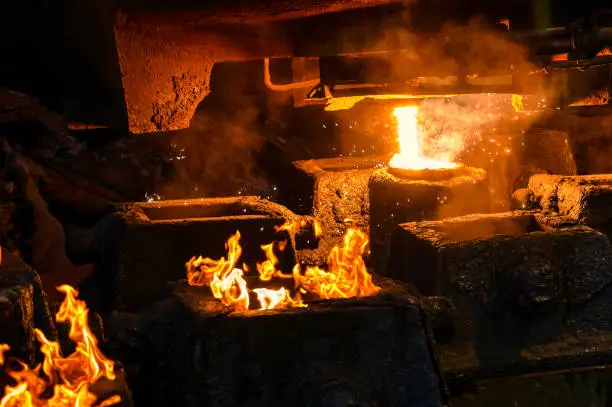
Copper casting technologies have evolved to fulfill aerospace production precise standards using numerous specialized techniques.
Core Casting Techniques for Aerospace Components
Lost wax casting is the best option for aerospace engineers that need complex geometries with precise tolerances. A ceramic casing surrounding a wax design allows molten copper alloys to fill every tiny detail once the wax melts. This technology is often used in turbine cooling passageways and complicated electrical connection bodies where internal channels must transmit fluids or signals according to design criteria.
Sand casting makes bigger copper components like mounting brackets and structural housings versatile. To attain aerospace-grade smoothness, surface finishes require extra machining, yet core placement permits interior voids. High-speed centrifugal casting forces denser material toward outer walls, making it useful for cylindrical bushings and bearing surfaces where porosity would reduce load-bearing capacity.
Temperature Control and Metallurgical Precision
Copper alloys melt at composition-specific temperatures. Aluminum bronzes solidify around 1030-1080°C, whereas cupronickel alloys pour at 1150-1200°C. Cooling rates alter grain structure; regulated solidification avoids tensile degradation from columnar grain formation. Aerospace foundries carefully monitor cooling curves, using chill plates to speed heat extraction in essential parts and slow cooling elsewhere to reduce residual stress.
Addressing Common Casting Defects
Porosity and shrinkage are the biggest aerospace copper casting difficulties. Hydrogen dissolves into molten copper during melting and creates bubbles after solidification, creating gas porosity. Nitrogen or argon purges and phosphor copper deoxidizers reduce this. When insufficient material enters last-solidifying areas, shrinkage voids emerge. Advanced gating system design guides molten metal flow to compensate for volumetric shrinkage in risers. This controls affect component dependability since a porosity-riddled electrical housing may arc inside and a structural bracket could split under flight vibration stresses.
Key Material Advantages of Copper Casting for Aerospace Components
The material properties of copper alloys position them as strategic choices in aerospace design, where multiple performance criteria must align simultaneously. Copper casting remains a preferred method for creating these critical components.
Superior Thermal and Electrical Conductivity
Copper alloys have greater thermal conductivity values (120-385 W/m·K) than aluminum alloys (120-180 W/m·K) and much surpass stainless steel (15-25 W/m·K). Auxiliary power unit heat exchanger plates need quick heat transmission to prevent localized overheating. Electrical conductivity follows similar patterns; high-purity copper castings retain conductivity over 90% IACS, minimizing resistive losses in switchgear terminals and grounding clamps. High-amperage electrical distribution networks in aircraft systems must have connection resistance below milliohm to avoid voltage dips that might impact avionics performance.
Corrosion Resistance Across Environmental Extremes
Salt spray during coastal operations, humidity variations during altitude changes, and galvanic interaction with dissimilar metals in assemblies affect aerospace components. Aluminum bronzes' aluminum oxide coating resists chloride attack better than many stainless steel grades. In seaplane floats and maritime patrol aircraft components, cupronickel alloys resist biofouling and preserve structural integrity despite prolonged seawater exposure. Corrosion resistance extends service intervals and lowers lifetime costs compared to ferrous alternatives that need more powerful corrosion inhibitors and protective coatings.
Balanced Strength with Exceptional Machinability
High-strength manganese bronzes have tensile strengths of 650 MPa and good machinability for secondary processes. Aerospace manufacturers like this balance since cast-to-near-net-shape components need precise drilling, tapping, and contouring to satisfy standards. Although environmental rules prefer bismuth-bronze formulations that produce equivalent machinability without toxicity, led tin bronzes shatter chips better. Aerospace procurement teams consider material waste and manufacturing cycle time when determining component cost. Casting complicated base geometries and machining tiny details saves waste.
Comparison of Copper Casting with Alternative Materials in Aerospace
Material selection includes trade-off analysis when no alternative dominates all performance dimensions. Copper casting is evaluated against several competitors based on specific environmental and physical needs.
Copper Versus Aluminum Alloys
Airframe applications where every kilogram affects fuel economy benefit from aluminum castings. Copper's conductivity compensates for its density penalty when heat control is the limiting design issue. Engineers can utilize smaller components or eliminate cooling fans since a copper heat sink weighs 30% more than an aluminum one yet dissipates heat 2.5 times quicker. This contrast is important in avionics bays where space limits heat exchanger size.
Evaluating Iron and Steel Alternatives
Ductile iron castings are ideal for non-critical structural brackets due to their strength and inexpensive cost. When affixed to aluminum airframes, copper alloys resist galvanic corrosion, whereas steel fasteners electrochemically oxidize aluminum. For heat-critical applications, stainless steel loses thermal conductivity but resists corrosion. Copper alloys are typically specified by aerospace engineers for corrosion resistance and thermal performance, which steel grades cannot match without protective barriers that complicate assembly.
Lost Wax Versus Sand Casting Methods
Lost wax techniques produce surface finishes of 1.6-3.2 µm Ra (roughness average) from casting, reducing the need for machining. Sand casting yields 6.3-12.5 µm Ra surfaces, necessitating further polishing. Aerospace applications often demand dimensional tolerances of ±0.05 mm, making accuracy crucial. Lost wax casting is cheaper for tight tolerances, but sand casting is still practical for bigger components when post-cast machining may reach exact dimensional precision. Lost wax pattern manufacture takes longer, but prototype and low-volume production can use sand molds faster.
Optimizing Copper Casting Processes for Aerospace Applications
Process refinement distinguishes acceptable castings from aerospace-certified components that fulfill strict standards. Advanced copper casting techniques are required to meet modern engineering tolerances.
Advanced Mold Design Strategies
Mold design affects how molten copper fills voids and solidifies. Modeling fluid flow and heat gradients with simulation tools helps engineers find shrinkage porosity hot spots. As surrounding material contracts, strategically arranged risers feed molten metal into these places. Chill inserts quickly chill specified areas, improving grain structure and hardness. Metalurgical skill is needed to avoid shrinkage voids and thermal shock fractures caused by poor riser size and excessive chilling.
Cooling Rate Control and Heat Treatment
Post-casting heat treatment homogenizes alloy composition and reduces non-uniform cooling stresses. Solution annealing at 900-950°C and controlled cooling dissolves secondary phases and enhances ductility in aluminum bronzes. Beryllium copper alloys for high-stress electrical connections are strengthened via precipitation hardening. Monitoring cooling rate during solidification impacts as-cast characteristics; quicker cooling creates finer grain structures with better yield strength but poorer ductility. Aerospace applications value strength and fatigue resistance, making controlled quick cooling desirable while needing more advanced mold temperature management systems.
Strategic Alloy Selection
Aluminum bronze is good for landing gear bushings and actuator housings due to its strength and corrosion resistance. Nickel-rich cupronickel alloys resist stress corrosion cracking in saltwater and hydraulic fluid handling systems. Silicon bronzes fill thin-walled complicated electrical enclosures with exceptional casting fluidity. Beryllium copper has peak electrical conductivity and spring characteristics but costs more and requires careful treatment. Since not all foundries are certified to operate with controlled-composition aerospace alloys, procurement teams consider these criteria and supplier capabilities.
Procurement Insights: Choosing the Right Copper Casting Supplier for Aerospace
Supplier selection includes quality systems, technological capability, and long-term collaboration prospects beyond price comparison. A reliable copper casting partner is essential for maintaining supply chain integrity.
Certification and Compliance Requirements
Aerospace copper casting vendors must comply with AS9100 quality management systems, which add configuration management, risk assessment, and first item inspection to ISO 9001. NADCAP accreditation verifies that foundries follow heat treatment, non-destructive testing, and metallurgical analysis procedures. Every casting batch is traceable to melt records, inspection reports, and aircraft OEM-approved material certificates.
Evaluating Production Capabilities
Production volume and casting process affect lead times. Lost wax casting takes 6-10 weeks for pattern development, 4-6 weeks for casting, and finishing, although known patterns allow speedier repeat orders. Startup costs determine minimum order quantities: investment casting economics favor batches above 50 pieces, whereas sand casting is affordable for prototypes. Aerospace procurement teams weigh these characteristics against inventory carrying costs and manufacturing timelines, often qualifying several suppliers for supply chain robustness.
Sustainability and Eco-Friendly Practices
Aerospace companies increasingly assess suppliers' environmental behavior. Copper alloys are sustainable because scrap copper keeps their qualities after remelting, unlike polymers that deteriorate with each recycling loop. Foundries with closed-loop water recycling, electric induction melting, and waste sand recovery meet corporate sustainability targets. Since resource optimization lowers manufacturing costs and environmental effect, these approaches frequently increase operational efficiency.
Conclusion
Copper casting is a staple in aircraft production due to its temperature management, corrosion resistance, and mechanical durability. Advanced casting processes, intelligent alloy selection, and strict process controls provide aerospace-safe and high-performance components. Copper's qualities make it a useful material for aeronautical systems with higher electrical demands and smaller designs. Understanding material advantages, supplier certifications, manufacturing capabilities, and the technical differences between aerospace-grade castings and components is essential to successful procurement.
FAQ
What temperature ranges are critical in aerospace copper casting?
Aluminum bronzes flow at 1030-1080°C, cupronickel alloys at 1150-1200°C. Proper melting temperature management avoids oxidation and fills molds completely. Grain structure is determined by cooling rates after pouring; regulated solidification between 2-10°C per minute optimizes aeronautical mechanical characteristics.
How do you prevent porosity in aerospace copper castings?
Gas porosity can be controlled by degassing molten copper with nitrogen or argon purges, adding phosphor copper as a deoxidizer to bind dissolved hydrogen, and designing mold filling gating systems to limit turbulence. Gas entrapment in aerospace components is reduced via vacuum-assist casting.
Can copper castings meet aerospace weight requirements?
Although denser than aluminum, copper alloys' better thermal conductivity permits lower component sizes in heat-critical applications. Weight-performance trade-off assessments show that copper's efficiency saves system weight despite increased material density when heat management restricts design.
What certifications should aerospace copper casting suppliers hold?
Aerospace vendors must meet AS9100 and NADCAP standards. These certifications check process controls, traceability, and non-destructive testing. Materials must be certified by melt batch with chemical composition and mechanical property test results.
Partner with Fudebao Technology for Aerospace-Grade Copper Casting
Quality directors and aerospace engineers need vendors that understand material science, precise production, and regulatory compliance. Fudebao Technology offers the entire range of copper casting services, from alloy selection and mold design to CNC machining and surface treatment. Our facility has low-pressure casting equipment, high-speed machining centers, and CNC lathes that satisfy aerospace requirements with tolerances of ±0.05mm.
As a certified copper casting supplier for worldwide aerospace clients, we have created process controls to reduce porosity, assure dimensional uniformity, and give full material traceability. Our technical team works directly with your engineering and procurement specialists to optimize castability, performance, and cost-efficiency for electrical housings for avionics systems, heat exchanger components for thermal management, and corrosion-resistant brackets for structural applications. Contact hank.shen@fdbcasting.com to see how our copper casting experience may help your next aerospace program with dependable, certified components delivered on time.
References
Davis, J.R. (2001). Copper and Copper Alloys: ASM Specialty Handbook. ASM International, Materials Park, Ohio.
Campbell, J. (2015). Complete Casting Handbook: Metal Casting Processes, Metallurgy, Techniques and Design. Butterworth-Heinemann, Oxford.
American Society for Testing and Materials. (2019). ASTM B584-19: Standard Specification for Copper Alloy Sand Castings for General Applications. ASTM International, West Honshohocken, Pennsylvania.
Kaufman, J.G. and Rooy, E.L. (2004). Aluminum Alloy Castings: Properties, Processes, and Applications. ASM International, Materials Park, Ohio.
Society of Automotive Engineers. (2016). AS9100D: Quality Management Systems—Requirements for Aviation, Space, and Defense Organizations. SAE International, Warrendale, Pennsylvania.
Beeley, P.R. (2001). Foundry Technology. Butterworth-Heinemann, Oxford, United Kingdom.



_1756352340434.webp "Aluminum chassis cover")
_1756350046757.webp "Heat sink aluminum casting")
_1756348227989.webp "Aluminum casting movable U frame")