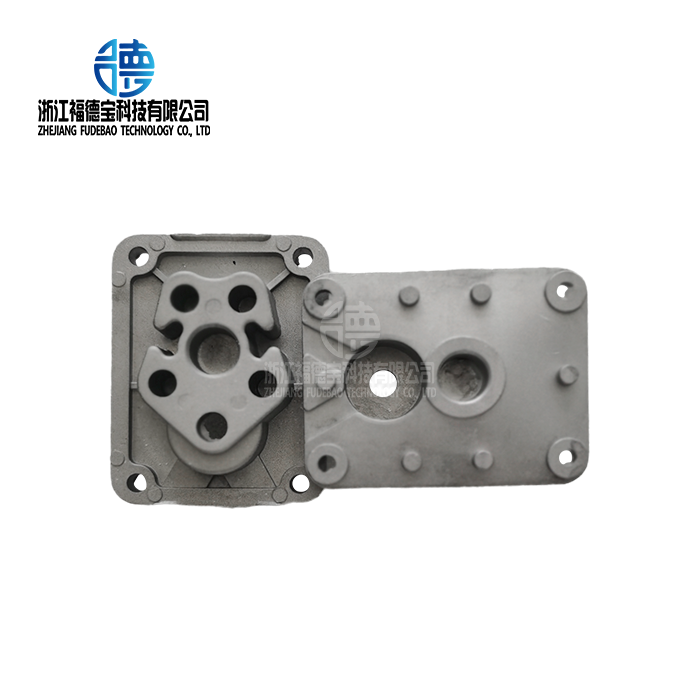
CNC Machining: Process, Materials, Applications, and Cost
2026-04-02
CNC machining is a new subtractive manufacturing technology that uses computerized controls and precise machine tools to remove layers of material from solid workpieces. This makes it possible to make precisely customized parts. In contrast to additive manufacturing or injection molding, this advanced method uses pre-programmed CAM/CAD software to guide automated machinery through precise G-code instructions. This eliminates the need for human error while allowing complex geometry realization and ensuring scalable repeatability across industries that need mission-critical components.
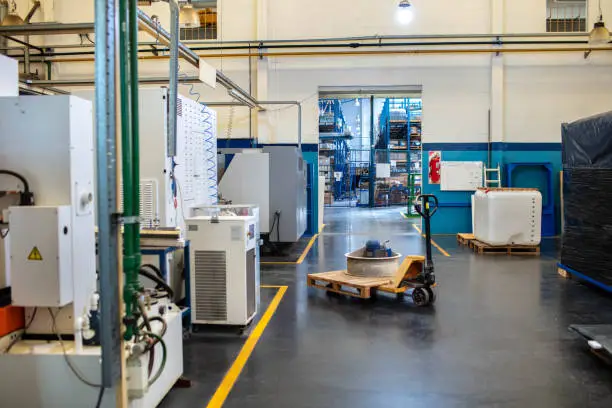
Understanding CNC Machining: Process and Fundamentals
Engineers use computer-aided design (CAD) tools to make accurate 3D models of the parts they want to make before they start CNC machining. Software for computer-aided manufacturing (CAM) turns these digital plans into specific G-code directions that control every part of the machining process.
Core Process Steps and Machine Setup
There are several important steps in the making process that make sure the quality is always the same. The first step in preparing materials is to choose the right stock pieces. Next, the item must be securely fixed within the machine's coordinate system. Choosing the right tool depends on the qualities of the material and the finish that needs to be achieved on the surface. Carbide tools are good for working with harder metals, while high-speed steel tools are better for soft materials.
Simulation software checks the programming, which stops mistakes that cost a lot of money before the real cutting starts. Operators of machines load the checked G-code, measure the tool offset, and set up work coordinate systems that show how the machine's reference points relate to the shape of the workpiece.
Precision Standards and Tolerance Capabilities
The level of accuracy reached by modern CNC machining is truly amazing. For most uses, margins stay within 0.005mm (0.0002 inches). Even tighter standards can be reached by more advanced systems. For example, some specialized processes can reach tolerances of 0.0025mm. There are different levels of surface finishes, from Ra 3.2µm for normal machined surfaces to Ra 0.4μm for precise uses that need better seals or looks.
Geometric Dimensioning and Tolerancing (GD&T) compliance makes sure that parts meet strict standards for straightness, cylinder shape, and true position. This feature is very important for parts of transmissions in cars, aircraft structures, and medical device housings where accuracy in dimensions affects safety and performance directly.
Materials and Design Considerations for CNC Machining
Choosing the right material for CNC machining has a big effect on how well the machine works, how much it costs, and how well the end part works. Knowing the grades for machinability and the properties of the material lets you make the best design choices that balance the ability to make the product with the needs of the business.
Metal Materials and Their Applications
Some aluminum alloys, like 6061-T6 and 7075-T6, are very easy to machine and have good strength-to-weight ratios. When these materials are machined with clean, sharp tools, they don't work harden much and keep their shape during the process. Aluminum's thermal conductivity makes it easier for heat to escape during grinding, which means that tools last longer and can be used at higher speeds.
Grades of stainless steel like 316L are very good at resisting rust, which is important for medical implants and naval uses. But because they harden when they work, speed and feed must be carefully optimized to keep tools from getting damaged. Ti-6Al-4V and other titanium metals are hard to machine because they don't conduct heat well and react easily with chemicals. This means that you need to use special tools and coolants.
Engineering Plastics and Composite Materials
Polymers with a lot of efficiency, like PEEK (Polyetheretherketone) and POM (Polyoxymethylene), have special benefits for some uses. PEEK is great for medical device parts because it doesn't react with chemicals or living things, and it's also good for motor parts that need to work smoothly without oil.
Design-for-manufacturability (DFM) principles make sure that the shape of a part is optimized so that it can be machined efficiently while still meeting its useful requirements. Sharp internal corners cause stress to build up and need smaller tools, which slows down production. Larger curves make parts easier to machine and last longer.
Applications and Use Cases Across Industries
Precision, dependability, and the ability to work with a wide range of materials are still very important in many industries that use CNC machining. Because it is subtractive, it can make complicated shapes that would be hard to cast and keep the surface quality better than additive manufacturing methods.
Automotive and Transportation Components
Automakers depend on CNC machining for parts of engines, transmission housings, and suspension systems. For these uses, tight tolerances are needed to make sure that everything fits and works right. For example, many parts need to be accurate to within 0.011mm to work at their best. A lot of work goes into engine blocks to make sure the cylinder bores are exact, and transmission cases need accurate bearing surfaces and hydraulic system openings inside them.
CNC machining is very helpful for custom car development because it lets engineers try exact production materials and make sure they like design ideas before they spend a lot of money on expensive tools. Electric vehicle makers really like being able to make lightweight metal parts that keep the vehicle's structure intact while lowering its total weight.
Aerospace and Defense Applications
The aircraft business is one of the toughest places to use precision machining because a broken part could have disastrous effects. When superalloys like Inconel 718 are used to make turbine blades, they have to be able to withstand temperatures above 1000°C while still having precise mechanical shapes that affect how well the engine works.
Titanium alloys and advanced aluminum types are used because aircraft structure parts need to be very strong for their weight. These materials are hard to machine, but they have performance properties that can't be reached with other manufacturing methods. As part of the certification process, full traceability and paperwork must be kept throughout the whole production process.
Medical Device Manufacturing
For medical uses, biocompatible materials must be made to strict standards and have very smooth surfaces that don't let germs grow. Precision machining is used to make surgical tools with sharp cutting edges and precise mechanical connections. On the other hand, implantable devices need to have perfect surface quality and accurate measurements so they can work properly with the body.
When made from titanium metals, orthopedic implants must be able to survive years of repeated loading while still being biocompatible. Being able to make complicated internal shapes lets people come up with new implant designs that help bone grow and stay stable over time.
Cost Factors and Procurement Tips for CNC Machining Services
By understanding what causes costs to go up or down, buying pros can find the best specifications while still meeting quality standards. The costs of materials, the difficulty of the machining, and the amount of output have a big effect on the general economics of the project.
Primary Cost Drivers and Optimization Strategies
The most changeable cost factor in CNC machining is machining time, which is affected by how fast material is removed, how often tools need to be changed, and how long it takes to set up. Complex shapes that need to be set up more than once raise the cost of work and the chance of alignment mistakes. Choosing the right material affects both the cost of the raw materials and the effectiveness of the machine. For example, harder materials need to be cut at slower speeds and need to have their tools replaced more often.
Costs are directly affected by tolerance requirements, since tougher requirements mean more money spent. Specialized tools, slower feed rates, and more quality control steps are needed for 0.01mm. Costs are also affected by the surface finish needed. For example, smooth surfaces need extra steps that take longer to make.
Supplier Evaluation and Quality Assurance
Reliable CNC machining providers show consistent quality through full quality management systems that are usually certified to ISO 9001 or standards specific to the industry, such as AS9100 for aircraft uses. Capability reviews should look at how accurate the tools is, how the measurements are made, and how the process is controlled.
Communication that works well is essential for complicated projects that need people to work together on the plan or clear up the specifications. Suppliers with experienced engineering help can make designs more easily manufactured while still meeting useful needs. This could lower costs and improve quality.
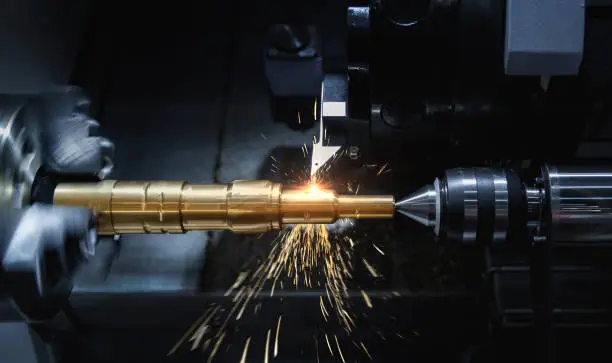
Top CNC Machining Companies and Supplier Insights
To find the right manufacturing partners, you need to carefully look at their skills, quality processes, and past success. Leaders in an industry set themselves apart by coming up with new technologies, making sure high standards are met, and providing quick customer service.
Supplier Selection Criteria and Performance Metrics
Industry 4.0 technologies, such as real-time tracking systems, automated quality control, and predictive repair programs, are used in advanced manufacturing facilities. These skills make quality consistent, improve production efficiency, and shorten wait times.
Quality certifications show that a seller is committed to structured quality management. Customer reviews and case studies show how well the supplier actually did. On-time supply rates, responsive contact, and the ability to solve problems are often what set great providers apart from average ones.
Emerging Technology Trends
Digital manufacturing integration lets you keep an eye on production and get feedback on quality in real time, which improves both quality and speed. Applications that use artificial intelligence (AI) find the best cutting settings for each material and shape, which cuts down on cycle times and increases tool life.
Sustainable manufacturing practices are becoming more and more important in choosing a provider. For example, energy-efficient tools and programs to cut down on trash are becoming competitive differentiators. These kinds of projects often lead to better business efficiency, which helps customers save money and get better delivery times.
Conclusion
CNC machining keeps getting better as a key technology for making precise products in fields that need high quality and dependability. Its unique ability to work with a wide range of materials, maintain accurate measurements, and be scaled up or down makes it essential for uses in medical devices and aircraft parts. Knowing the basics of the process, important things to think about, and cost factors helps procurement pros make smart choices that improve project results while keeping costs low. The technology will still be useful in the business world of the future because it is always getting better by using digital tools and environmentally friendly methods.
FAQ
What distinguishes 3-axis from 5-axis CNC machining capabilities?
Three-axis machines have straight axes that run along X, Y, and Z. They can handle simple shapes and common cutting tasks. Five-axis systems allow rotation around the A and B axes, which makes it possible to make parts with complicated shapes, take less setup time, and have better surface finishes on parts that have more than one side. With the extra axes, cutting tools can approach workpieces from more than one point, which cuts down on mounting changes and improves accuracy.
How does surface treatment affect machined part tolerances?
The anodizing process adds metal layers that make the part bigger. Most of the time, Type II anodizing adds 5 to 10 microns of thickness, and Type III hardcoat can add up to 50 microns. For precise uses, you need to mask important surfaces or make holes that are a little bigger than needed to allow for coating thickness and keep the end size requirements.
Which factors most significantly impact CNC machining costs?
Cost is mostly affected by the choice of material, the difficulty of the cutting process, and the need for tight tolerances. Titanium and other rare materials are more expensive than metal and need to be cut more slowly. Labor costs go up when there are a lot of setups needed because of complex shapes, and output rates go down when tolerances are below 0.01mm because of the need for special tools.
Partner with Fudebao Technology for Precision CNC Machining Solutions
Fudebao Technology stands as a premier CNC machining manufacturer, delivering exceptional precision components for automotive, aerospace, medical, and industrial applications. Our state-of-the-art facility features high-speed machining centers, advanced CNC lathes, and comprehensive quality control systems achieving ±0.05mm accuracy standards. We specialize in aluminum alloy, copper alloy, and stainless steel machining with complete traceability and certification support. Contact hank.shen@fdbcasting.com to discuss your precision machining requirements and discover how our expertise can optimize your next project.
References
Smith, J.R. "Advanced CNC Machining Technologies and Industrial Applications." Manufacturing Engineering Quarterly, Vol. 45, No. 3, 2023.
Thompson, M.K. "Material Selection and Design Optimization for Precision Machining." Journal of Manufacturing Science and Engineering, 2024.
Chen, L.W. "Cost Analysis and Procurement Strategies for CNC Machining Services." International Journal of Production Economics, Vol. 287, 2023.
Rodriguez, A.S. "Quality Control and Tolerance Management in Computer Numerical Control Operations." Precision Manufacturing Review, 2024.
Anderson, P.T. "Industry 4.0 Integration in Modern CNC Manufacturing Systems." Automation and Manufacturing Technology, Vol. 62, 2023.
Williams, K.D. "Sustainable Manufacturing Practices in Precision Machining Operations." Green Manufacturing Journal, Vol. 18, No. 4, 2024.



YOU MAY LIKE
_1756361323684.webp "column guide sleeve")
_1756346613780.webp "Aluminum tent base Casting")
_1756346144394.webp "aluminum die casting hinge")
_1756345858191.webp "Aluminum casting crafts")