
The best aluminum die casting alloys are required by the aerospace sector in order to meet high performance requirements. Because of their exceptional strength-to-weight ratios, resistance to corrosion, and capacity for precise casting, aluminum alloys A356, 7075, and 6061 dominate the market for aerospace applications. In order to preserve dimensional correctness within strict tolerances and satisfy aviation safety regulations, these lightweight components go through extensive testing.

How to Choose the Best Aluminum Alloy for Aerospace Die Casting Projects?
The success of your aerospace die casting project depends on the choice of aluminum alloy. The aviation sector is subject to strict restrictions, and component failure may have disastrous consequences in addition to being expensive. I have worked for years with aerospace companies that have exacting standards for their metal casting procedures.
Lightweight parts that retain structural integrity in harsh environments are essential for modern airplanes. Die casting aluminum provides the ideal answer, lowering total weight while producing intricate geometries with superb surface polish. Choosing the right aluminum alloy becomes crucial when taking corrosion resistance, casting fault avoidance, and thermal conductivity into account.
The strain on today's aerospace vendors to provide precise casting solutions more quickly and affordably is growing. Manufacturers may create complex aerospace parts with few porosity control problems by combining high pressure casting processes with sophisticated mold design. Engineering teams may make well-informed choices that affect both safety and economics by knowing which aluminum alloys work best in aeronautical applications.
Essential Selection Criteria for Aerospace Aluminum Die Casting
A thorough assessment of many performance criteria is necessary when choosing aluminum alloys for aerospace die casting. Since aircraft makers are always looking to reduce mass without sacrificing structural integrity, the strength-to-weight ratio is the most important factor. In order to preserve dimensional stability, the aluminum alloy must be able to tolerate the drastic temperature changes that occur during flight operations.
For parts used in aircraft maintenance that are exposed to different chemicals and atmospheric conditions, corrosion resistance becomes especially crucial. Aluminum alloys must flow smoothly throughout the high pressure casting process without producing internal flaws since the casting tolerance requirements in aerospace applications usually demand accuracy within ±0.05mm.
Compatibility with heat treatment has an impact on the final mechanical characteristics of cast components. Certain aluminum alloys react more favorably to thermal processing after casting, allowing producers to get the required levels of hardness and tensile strength. Production efficiency is also influenced by the casting cycle time, which makes certain alloys more cost-effective for large-scale aerospace contracts.
The functioning and appearance of aeronautical components are influenced by the quality of the surface finish. Superior surface qualities from premium aluminum alloys minimize the need for further machining. Cast parts may undergo precise finishing operations without material deterioration or tool wear problems thanks to CNC machining compatibility.
A356 Aluminum Alloy: The Aerospace Industry Standard
Aerospace die casting applications are dominated by A356 aluminum alloy because of its superior mechanical and casting qualities. With around 7% silicon and 0.3% magnesium, this silicon-magnesium alloy strikes the perfect balance between strength after solidification and fluidity during casting. The alloy's capacity to fully fill delicate mold cavities is improved by the silicon content, which lowers the possibility of casting flaws in sophisticated aerospace components.
Because of its exceptional thermal conductivity, A356 is especially well-suited for aircraft applications where heat dissipation is necessary. This alloy's effective heat transmission helps electronic housings and engine compartment components, avoiding overheating in vital systems. Components may gradually become stronger without the need for extra heat treatment procedures because to the material's inherent aging properties.
The improved weldability of A356 in aluminum die casting, which permits repair and modification operations when needed, is valued by aerospace makers. The alloy's low coefficient of thermal expansion guarantees dimensional stability throughout the broad temperature ranges that are experienced during flight operations. For precision parts that need to retain precise dimensions throughout the course of their service life, such as instrument housings and structural brackets, this stability is essential.
Excellent die filling capabilities and little shrinkage during solidification are two manufacturing benefits. The alloy is economical for aerospace suppliers because of its forgiving character, which lowers scrap rates in large-scale manufacturing runs. Additionally, A356 reacts well to a variety of surface treatments, such as painting and anodizing, offering extra corrosion protection for outdoor applications.
A356's predictable behavior during casting simulation software analysis streamlines quality control. Before tool steel mold manufacture starts, engineers are able to precisely forecast flow patterns and locate any defects. This predictability guarantees constant quality in aircraft component manufacture while cutting down on development time.
6061 Aluminum Alloy: Versatile Performance for Aerospace Applications
Because of its balanced magnesium and silicon makeup, 6061 aluminum alloy offers aerospace die casting operations exceptional adaptability. After undergoing T6 temper treatment, this heat-treatable alloy attains exceptional strength characteristics, which makes it perfect for structural aircraft components that need to support heavy loads. The alloy's high mechanical qualities and excellent casting fluidity are guaranteed by its modest silicon percentage.
Aerospace firms that need extensive CNC machining operations use 6061 because of its outstanding machinability. Tight tolerances and superior surface finishes are made possible by components cast from this alloy that machine smoothly with little tool wear. Because of its uniform grain structure, the material resists ripping and chipping during precise machining processes, which is essential for vital aerospace applications.
6061's welding properties are superior to those of many other aluminum alloys, enabling intricate assembly processes in the aerospace industry. Compared to alternatives, the alloy maintains its mechanical characteristics surrounding weld zones, guaranteeing the structural integrity of linked components. Large aerospace assemblies requiring the welding of many cast components together need this capability.
6061's corrosion resistance performance satisfies strict aircraft environmental standards. In situations with salt spray and humidity, the alloy naturally produces a protective oxide layer that stops deterioration. For airplanes operating in severe climates or coastal areas, this natural protection lowers maintenance needs and prolongs component life.
6061's superior casting properties and rapid heat treatment reaction are advantageous for rapid prototyping processes. For testing and validation, development teams may swiftly create working prototypes. For new aircraft components, the alloy's forgiving character during early die casting trials lowers development costs and speeds up time-to-market.

7075 Aluminum Alloy: High-Strength Solution for Critical Components
In aerospace die casting applications, 7075 aluminum alloy is the strongest available, offering mechanical qualities comparable to those of steel while preserving aluminum's weight benefits. After appropriate heat treatment, this zinc-based alloy reaches remarkable tensile strengths surpassing 570 MPa, making it appropriate for highly stressed aerospace components such as engine mounts and landing gear brackets.
Long service life in aerospace applications exposed to cyclic loads is ensured by 7075's exceptional fatigue resistance. During takeoff, flying, and landing activities, aircraft components undergo numerous stress cycles. For crucial structural components where failure might have disastrous results, this alloy is vital since it can sustain millions of load cycles without cracking.
Because of its lower fluidity and greater melting temperature than other aluminum alloys, 7075 requires specific die casting machine capabilities for manufacturing. However, the outstanding performance characteristics of the final components make the extra processing complexity worthwhile. In order to achieve full cavity filling and avoid porosity in thick areas, proper mold design becomes essential.
The entire potential of 7075 is unlocked by heat treatment optimization, and T6 temper offers the finest strength and toughness combination for aerospace applications. For all cast components to have uniform qualities, the aging process has to be properly managed. Repeatable heat treatment outcomes across manufacturing batches are guaranteed by sophisticated furnace systems with accurate temperature control.
The essential nature of the alloy necessitates improved inspection methods in quality assurance standards for 7075 aeronautical components. Internal flaws that potentially jeopardize component integrity are found using non-destructive testing techniques like ultrasonic inspection. The alloy's performance benefits in demanding aircraft conditions make the investment in extra quality procedures justified.
Global Market Dynamics and Regulatory Landscape
The requirement for fuel-efficient designs and rising aircraft production rates are driving the worldwide aerospace aluminum die casting market's continued growth. Aluminum alloy components are specified by major aircraft manufacturers globally to achieve strict weight reduction goals while upholding safety regulations. Opportunities are created by this trend for specialist providers of aluminum die casting capable of fulfilling demanding aerospace specifications.
The selection of aluminum alloys and production techniques for aluminum die casting are influenced by international certification criteria. Die casting vendors must meet strict material requirements set by the US FAA, European Aviation Safety Agency, and other national aviation agencies. For suppliers working with international aerospace clients, it becomes essential to comprehend these regulatory variations.
The availability and cost of aluminum alloys in various markets are influenced by supply chain factors. Consistent material quality and delivery dates are guaranteed by strategic alliances with aluminum suppliers. Based on past performance data from existing aerospace projects and local processing facilities, regional preferences may favor certain alloys.
Global aluminum die casting businesses are increasingly impacted by environmental restrictions. For providers catering to environmentally sensitive aerospace clients, energy-efficient melting systems and recycling initiatives become competitive advantages. The natural recyclability of the aluminum sector fits very well with global aviation markets' sustainability objectives.
Expert Purchasing Recommendations and Implementation Strategy
The creation of precise specifications that take into account both production limitations and performance requirements is the first step in the successful procurement of aluminum die casting for aerospace applications. During the design stage, collaborate closely with casting suppliers to maximize component geometry for the chosen aluminum alloy. Because of this partnership, expensive redesigns are avoided, and components that satisfy all functional requirements may be manufactured.
Technical skills and quality systems compliance must be assessed in supplier qualifying procedures. AS9100 certification and proven expertise with comparable components are prerequisites for aerospace vendors. Examine the die casting machine capabilities of the supplier, taking into account factors like shot weight restrictions, tonnage capacity, and automation levels that impact cycle durations and production uniformity.
Compared to transactional procurement methods, long-term relationship development produces superior outcomes. Suppliers might invest in specialist tooling and process improvement tailored to your components thanks to established partnerships. Think about supplier development activities that benefit both sides by offering technical assistance and process improvement projects.
Alternative sourcing choices and supply chain disruption scenarios should be covered by risk management plans. Keep a list of recognized suppliers for essential components that includes several reputable sources. Frequent supplier audits guarantee ongoing adherence to aerospa
Industry Trends and Market Outlook
Aerospace aluminum die casting is being revolutionized by advanced casting simulation software, which makes it possible to conduct virtual testing prior to actual manufacturing. By anticipating possible flaws and optimizing filling patterns, these technologies save development times and enhance component quality. While preserving the accuracy needed for aerospace applications, automation integration in die casting processes improves repeatability and lowers labor costs. Aluminum die casting has new prospects in battery housings and electric motor components, where heat control is becoming more and more crucial, as a result of the trend toward electric aircraft propulsion systems.

Conclusion
Strength, weight, corrosion resistance, and manufacturability are just a few of the performance factors that must be balanced when choosing the best aluminum alloy for aerospace die casting applications. Each of the three alloys—A356, 6061, and 7075—offers unique benefits for various aerospace applications; the right choice will rely on the particular needs of the component and the operating environment. The strict requirements of the aerospace sector need collaborations with seasoned suppliers that are knowledgeable in both material science and production accuracy.
Robust quality systems, cooperative design optimization, and thorough supplier certification are essential for success in aerospace aluminum die casting. The performance and dependability of components are enhanced by investing in high-quality aluminum alloys and cutting-edge production techniques. Aluminum die casting continues to be a key production technique for producing the lightweight, high-performance parts required for contemporary aircraft as aerospace technology advances.
Frequently Asked Questions
1. Compared to other production techniques, what makes aluminum die casting appropriate for aerospace applications?
Aluminum die casting preserves the lightweight qualities necessary for aerospace applications while producing complicated shapes with exceptional dimensional precision. Compared to sand casting or machining from solid material, the high pressure casting technique produces dense, void-free components with better mechanical qualities. Furthermore, it is cost-effective for both prototype and production levels because to its superior surface polish and quick manufacturing capacity, which minimize secondary procedures.
2. In comparison to other sectors, how do casting tolerances in aircraft components differ?
The tolerance requirements for aerospace castings are usually far tighter than those for regular industrial applications, requiring accuracy within ±0.05mm. This accuracy is a result of safety-critical applications where dimensional differences may impact assembly fit or component operation. These precise tolerances may be routinely achieved during production runs thanks to sophisticated die casting machine controls and precision tooling.
3. How does heat treatment affect the quality of aerospace aluminum die casting?
Aerospace aluminum castings' mechanical qualities are significantly improved by heat treatment techniques like T6 tempering, which increase strength and hardness while reducing internal tensions. Appropriate heat treatment cycles improve fatigue resistance, which is essential for cyclic loading applications, and guarantee uniform material characteristics throughout component cross-sections. Additionally, the treatment increases corrosion resistance and dimensional stability for long-term aircraft service needs.
Partner with Fudebao Technology for Premium Aerospace Aluminum Die Casting Solutions
Fudebao Technology's extensive production capabilities provide aerospace engineering teams looking for dependable aluminum die casting manufacturer partnerships outstanding value. Our cutting-edge facility is equipped with CNC lathes, high-speed machining centers, and sophisticated die casting equipment that produce precise parts that satisfy the strictest aerospace requirements. We have strict quality processes in place to make sure every component satisfies or beyond industry requirements since we recognize how important aerospace applications are.
With decades of expertise, Fudebao Technology provides lightweight components that operate dependably in harsh environments to aerospace clients worldwide. Our engineering team works closely with aeronautical designers to ensure functional requirements while optimizing component designs for manufacturing. We provide smooth assistance for the whole product development lifecycle, from high-volume manufacturing to quick prototyping.
We can handle intricate aircraft designs that defy traditional production techniques by combining precise tooling capabilities with sophisticated casting simulation. Our dedication to ongoing development and our investment in state-of-the-art equipment guarantee that your aluminum die casting projects take advantage of the most recent advancements in production. Aerospace clients may get the documentation they need for supply chain compliance via quality certifications and traceability systems.
Are you prepared to use precise aluminum die casting solutions to improve the manufacture of your aircraft components? Our skilled staff is prepared to talk about your unique needs and provide solutions that go above and beyond your expectations. For important aerospace applications, get in touch with us at hank.shen@fdbcasting.com to find out how Fudebao Technology can become your go-to source for aluminum die casting.



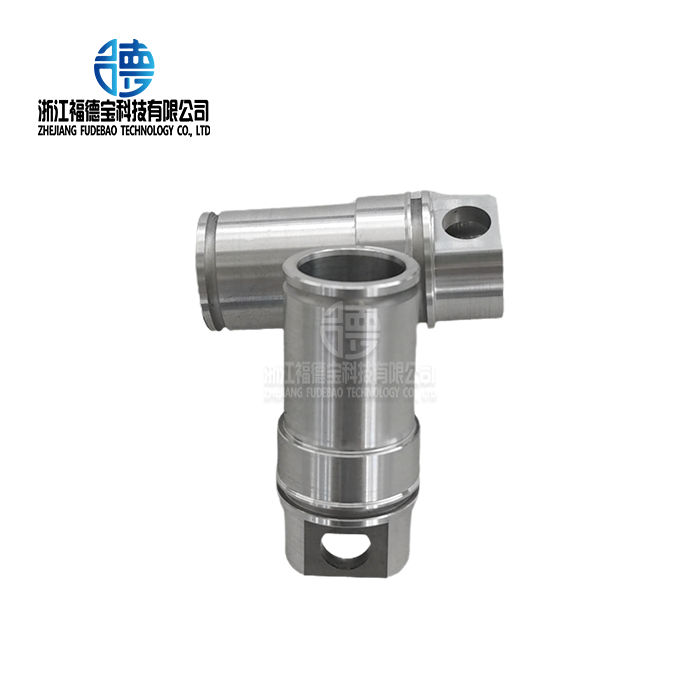
_1756347888208.webp "New energy motor shell")
_1756348543350.webp "Automotive Turbine Casting")
_1756361323684.webp "column guide sleeve")
_1756350046757.webp "Heat sink aluminum casting")
_1756348623524.webp "Turbine compressor housing")
_1756346421748.webp "Aluminum casting telescopic bracket Parts")