Aluminum Die Casting for Aerospace Components: Materials, Processes, and Standards
2026-06-22
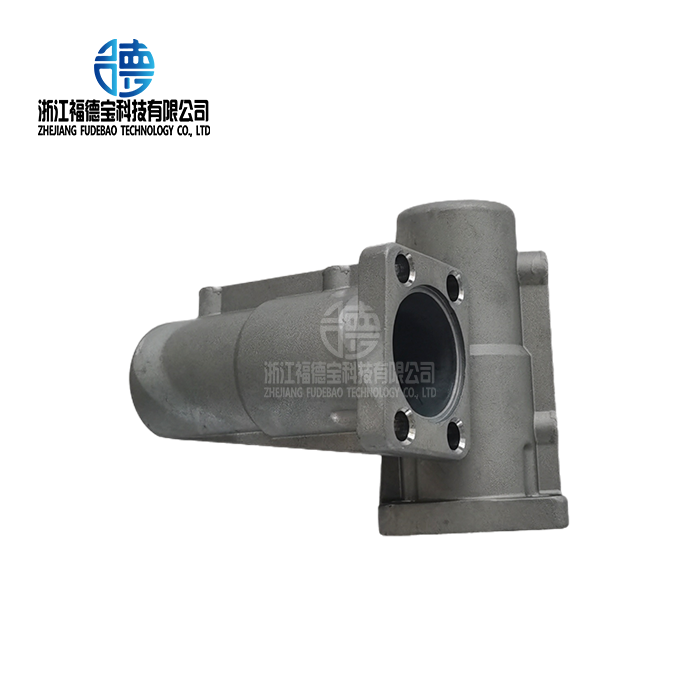
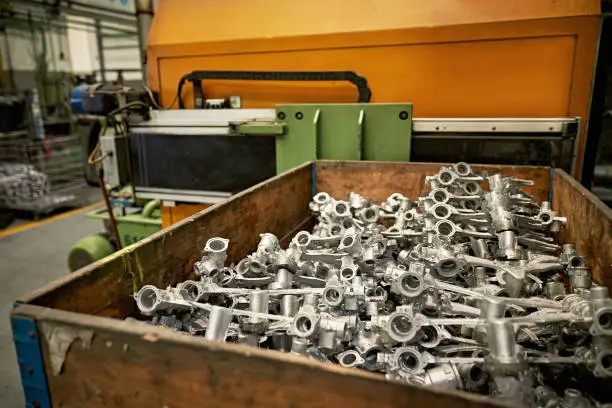
Aluminum die casting for aerospace parts is a revolutionary way to make things. Molten aluminum alloy is poured into precise steel molds under very high pressure (10,000 to 30,000 psi) to make parts that are light but strong enough to meet the strict requirements of flight safety and performance. For aircraft uses where every gram counts and failure is not an option, this high-pressure die casting method is essential. It allows for very accurate measurements, complex geometries in a single piece, and consistent quality across production runs.
Understanding Aluminum Die Casting in Aerospace
Why Aerospace Engineers Choose Aluminum Alloys
For aerospace uses, materials need to be strong while also being light, resistant to corrosion in a wide range of atmospheric conditions, and stable in temperature under working stress. The specific gravity of aluminum alloys is about 2.7 g/cm³, which gives them a strength-to-weight ratio that is much better than steel while still keeping structural integrity. The natural oxide layer that forms on metal surfaces makes them resistant to rust. This is very important for parts that are exposed to water, salt spray, and changes in temperature during flight operations.
Aerospace-Grade Aluminum Alloys
When we look at aerospace-grade aluminum alloys, A380 comes out as a reliable material that is easy to cast, has good mechanical qualities, and is less likely to crack when heated. A360 has better pressure tightness, which makes it perfect for parts of hydraulic systems and fuel systems that need to be completely leak-proof. These metals have carefully controlled amounts of silicon, copper, and magnesium that make them easy to cast and meet performance standards for aircraft. The silicon content makes it easier to fill molds and lessens shrinking, and the copper content makes it stronger and easier to work with after casting.
Precision Manufacturing for Critical Applications
Aluminum die casting is used in the aircraft business to make parts like gearbox covers, actuator housings, structural brackets, and electronics boxes. These parts have to be able to handle high rates of shaking, changes in temperature between ground level and high altitude, and mechanical loads that would break down weaker materials. The process makes wall widths as thin as 1.5 mm while keeping dimensional standards that allow straight assembly without a lot of extra machining. This cuts down on weight and production costs.
The Aluminum Die Casting Process for Aerospace Components
Mold Design and Preparation
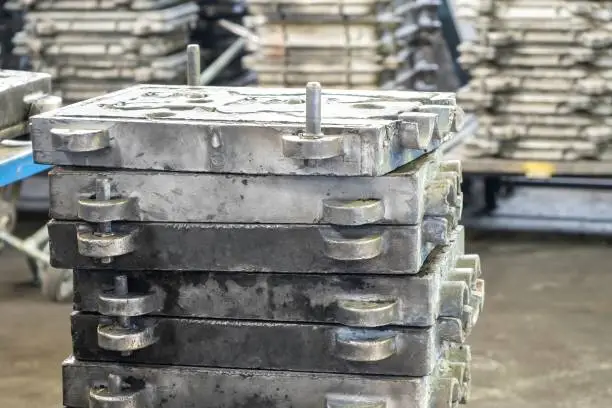
Mold engineering is the first step in making casts that are good enough for aircraft. We make dies out of strong H13 tool steel that can stand up to hundreds of thousands of injection cycles without losing its shape. The mold has cooling lines that are placed to control the rate of solidification. This stops flaws like porosity and makes sure that the grain structure is the same all the way through the casting. The placing of ejector pins is carefully thought out to keep surfaces from getting marked up in places that are important for looks while still providing enough force to free complex shapes without distorting them.
Controlled Melting and Injection
The first step in the casting process is to melt aluminum alloy in precise ovens that keep the temperature between 650°C and 700°C, based on the type of alloy used. Temperature control within ±5°C keeps the viscosity stable and stops the mixture from solidifying too quickly or oxidizing too much. The molten metal moves to the shot chamber, where a hydraulic plunger speeds it through gates and runners and into the mold hole at more than 40 meters per second. This fast injection reduces turbulence and air trapping, which are important for making sure that aircraft structure parts are internally sound.
Quality Control and Inspection Protocols
Aerospace casting needs to be checked at several steps of production. We use real-time process tracking to keep an eye on the injection pressure, mold temperature, and cycle time so that we can spot changes before they cause problems. Post-casting inspection includes checking the dimensions using coordinate measuring machines that are accurate to ±0.01mm, using X-rays to find internal holes, and using dye penetrant tests to find cracks on the surface. Each casting comes with paperwork that can be used to connect it to specific production factors, lots of raw materials, and inspection results. This is necessary for aircraft certification standards.
Addressing Common Defects
Even with improved rules, aluminum die casting can still have some flaws. Porosity is a problem that happens when gas gets caught or when solidifies and shrinks, which weakens its mechanical properties. We keep this to a minimum by using vacuum-assisted filling methods and better gate designs. By keeping the injection temperatures and speeds at the right levels, you can avoid cold shut flaws, which happen when metal streams don't bond properly. Flash, the thin layer of material at the splitting lines, can be controlled by making sure the mold is lined up correctly and using the right amount of pressing force. Knowing about these possible problems helps buying teams set reasonable limits and set up the right review procedures.
Comparing Aluminum Die Casting to Other Casting Methods in Aerospace
Die Casting Versus Sand and Investment Casting
Sand casting is flexible for both small and large parts, but the surface finish is rougher and the size errors are greater than with die casting. The lost-wax method for investment casting makes surfaces very smooth and allows for fine details, but it takes longer to make and costs more per piece. Aluminum die casting is the best way to make medium to large amounts of aircraft parts because it gives you near-net-shape accuracy and surface finishes that usually don't need much cutting. Cycle times that are very short—usually 30 to 90 seconds per part—allow production to be scaled up in a way that sand and investment methods can't.
Material Comparison: Aluminum Against Other Metals
Even though zinc die casting is better for accuracy in measurements and magnesium has an even lower density, aluminum is still the best choice for aircraft. Zinc's bigger density (7.1 g/cm³) means it doesn't save weight, and its lower melting point means it can't be used in high-temperature situations. Even though magnesium is lighter, it is harder to work with because it can catch fire, and it doesn't fight corrosion as well without protection coatings. Copper metals are very good at conducting heat and electricity, but they are three times heavier than aluminum. This comparison of materials shows why aluminum alloys are used so much in aircraft casting, where the strength-to-weight equation has a direct effect on fuel economy and payload capacity.
Cost Efficiency and Production Economics
Precision models are a big expense that needs to be made up front for die casting, but the cost is spread out over many production runs. For aerospace projects, production runs usually range from a few hundred to tens of thousands of units per year. This is the volume range where die casting is more cost-effective than cutting from solid metal. The near-net-shape feature cuts down on waste, which is important when dealing with aerospace-grade aluminum alloys. Lead times from order to delivery are usually 8 to 12 weeks for initial tooling and sample approval. Once methods are proven, lead times for production runs drop to 4 to 6 weeks.
Industry Standards, Environmental Impact, and Future Trends
Certification Requirements for Aerospace Suppliers
The aerospace quality control standard, AS9100, sets standards that go beyond those in ISO 9001. This standard calls for strict configuration management, procedures for inspecting the first item, and ongoing process validation. The National Aerospace and Defense Contractors Accreditation Program (NADCAP) certifies companies that do heat treatment, non-destructive testing, and other unique processes. Aerospace procurement teams should make sure that any possible casting sources have up-to-date certifications and can show proof that they follow the rules. These approvals aren't just paperwork; they're organized ways to stop the kinds of catastrophic failures that aerospace uses can't stand.
Sustainability in Aluminum Casting Operations
Environmental duty is playing a bigger role in the choices made in the aerospace supply chain. Aluminum is naturally environmentally friendly because it can be recycled; the metal can be broken down and used again and again without losing any of its properties. Modern foundries use closed-loop systems that reuse materials by putting gates, runners, and discarded parts back into the heating process. This makes it possible to use more than 95% of the materials that are made. Melting processes leave less of a carbon impact when they use energy-efficient furnace technologies and heat return systems. Now, aerospace companies don't just look at providers' quality and price; they also look at their environmental management systems and efforts to cut carbon emissions.
Emerging Technologies Shaping the Future
When Industry 4.0 is added to aluminum die casting processes, they become more digital. Every time a production cycle happens, sensor networks gather real-time data that is fed into artificial intelligence systems that figure out what repair is needed and how to make the best use of process parameters. Before cutting steel for molds, advanced modeling software models how metal flows, how it reacts to heat, and how it solidifies. This cuts down on the number of trial-and-error steps. New alloy formulas offer better high-temperature strength and better castability, pushing the limits of what is possible. These new technologies look like they will make aircraft aluminum castings even better in terms of quality, accuracy, and value for money.
Choosing the Right Aluminum Die Casting Partner for Aerospace Needs
Critical Supplier Qualification Criteria
To find a casting partner that can meet the needs of the aerospace industry, you need to carefully consider many factors. Find out if the provider has experience with aerospace projects and knows how to follow the rules for industry-specific paperwork like PPAP (Production Part Approval Process) and FAIR (First Article Inspection Report). Check out their quality infrastructure. For example, do they keep their testing tools calibrated? Can they do the necessary non-destructive tests themselves or by working with approved third parties? Look at how their suppliers are rated by current aircraft customers and ask for examples from projects that are similar to yours.
Manufacturing Capabilities That Matter
The full value stream is included in the production potential, not just the casting tools. Integrated processes that combine casting with CNC cutting, surface treatment, and assembly make the supply chain simpler and make it easier to control the dimensions. Find out how possible partners make molds. Do they use advanced CAD/CAM tools and flow simulation? Can you tell me about their history of meeting the standards for first-sample approval? It's also important that the supplier can handle different batch sizes. For example, aircraft projects often need small numbers for prototypes followed by mass production. The best supplier can handle both without affecting quality or delivery.
Building Collaborative Partnerships
For aerospace aluminum die casting projects to work, they need more than just business relationships with vendors. The best results come from relationships where suppliers are involved early on in the planning process and offer manufacturing knowledge that raises the performance of parts while lowering their costs. Clear communication rules, regular quality checks, and working together to solve problems build trust, which is very important when parts have a direct effect on flight safety. Making thorough RFQs that include not only sizes and materials, but also quality standards, testing requirements, and delivery times is the first step to building good relationships with suppliers.
At Zhejiang Fudebao Technology, we've built our reputation serving aerospace, automotive, and industrial equipment sectors by combining advanced manufacturing capabilities with rigorous quality systems. Our facility integrates high-speed machining centers, CNC lathes, low-pressure casting equipment, and die casting machines covering the complete production chain from melting through finishing and surface treatment. We maintain dimensional accuracy to ±0.05mm, meeting the exacting standards aerospace components demand, and our experience serving international brands like HAAS and ESS demonstrates our capability to meet Western quality expectations.
Conclusion
Aluminum die casting provides the special mix of strength, weight, and production speed needed for aerospace uses. Procurement experts can make choices that balance performance needs with program costs when they know about material properties, process capabilities, quality standards, and supplier qualifications. As space projects keep trying to make things more fuel-efficient and useful, advanced aluminum castings will play a bigger part. This means that working with suppliers and having production knowledge will become more and more important to the success of the program.
FAQ
What tolerances can aluminum die casting achieve for aerospace parts?
Aluminum die casting limits are usually between ±0.15mm and ±0.30mm, but this can change based on the size and position of the feature. Precision tools and post-casting machining can help with better control, which is often needed in aerospace uses. Critical measurements are usually kept to within 0.05 mm by using CNC processes that are built in. You can control the flatness and perpendicularity to within 0.1 mm for most aircraft component sizes.
How does aluminum die casting compare in strength to machined billet?
Tensile strengths for die-cast aluminum alloys like A380 are usually between 310 and 330 MPa, which is a little lower than those for worked alloys used in billet cutting. When you think about the benefits of a near-net shape and how weight can be optimized through casting design, the difference is almost meaningless. During design confirmation, aerospace engineers take into account the properties of the material and often add local reinforcements to areas that need the most power.
What lead times should aerospace programs expect for die-cast components?
It usually takes 8–12 weeks to create and make the first set of tools, and then another 2–3 weeks to make and approve the first product. Depending on the number of parts and how complicated they are, production lead times for approved parts are usually between 4 and 6 weeks. Sometimes, rush programs can shorten these timelines by using specialized tools and faster processing.
Partner with Fudebao Technology for Your Aerospace Casting Needs
Aerospace engineering teams are under more and more pressure to keep quality standards high while reducing the weight of parts. We understand these problems because we've dealt with them for decades while working with tough businesses. As an aluminum die casting manufacturer, we can do precise casting, advanced CNC milling, and a wide range of surface processes all in one place, which makes managing the supply chain easier. The tight tolerances your aircraft parts need are met by the precision we provide (consistent ±0.05mm). Our quality systems that are in line with AS9100 and full tracking paperwork give you the peace of mind that your certification processes need. Get in touch with our technical team at hank.shen@fdbcasting.com to talk about your specific aircraft casting needs and find out how our engineering knowledge can help you make your part design better for performance and ease of production.
References
American Foundry Society. (2021). Aluminum Casting Technology: Principles and Applications. Des Plaines, IL: American Foundry Society Publications.
Campbell, J. (2015). Complete Casting Handbook: Metal Casting Processes, Metallurgy, Techniques and Design (2nd ed.). Oxford: Butterworth-Heinemann.
Kaufman, J. G., & Rooy, E. L. (2004). Aluminum Alloy Castings: Properties, Processes, and Applications. Materials Park, OH: ASM International.
North American Die Casting Association. (2019). Product Specification Standards for Die Castings Produced by the Semi-Solid and Squeeze Casting Processes (4th ed.). Arlington Heights, IL: NADCA.
SAE International. (2020). Aerospace Material Specification AMS2770: Heat Treatment of Aluminum Alloy Parts. Warrendale, PA: SAE International Standards.
Vinarcik, E. J. (2003). High Integrity Die Casting Processes. New York: John Wiley & Sons.



YOU MAY LIKE
_1756352400994.webp "chassis enclosure")
_1756348489473.webp "Automobile intake valve")
_1756348300182.webp "Aluminum die-cast housing")
_1756346310015.webp "Aluminum castings Crane bracket")