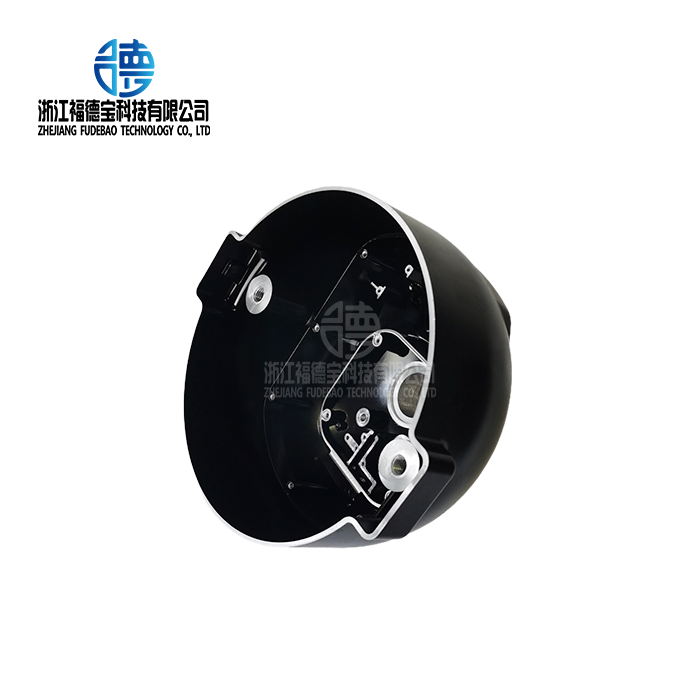
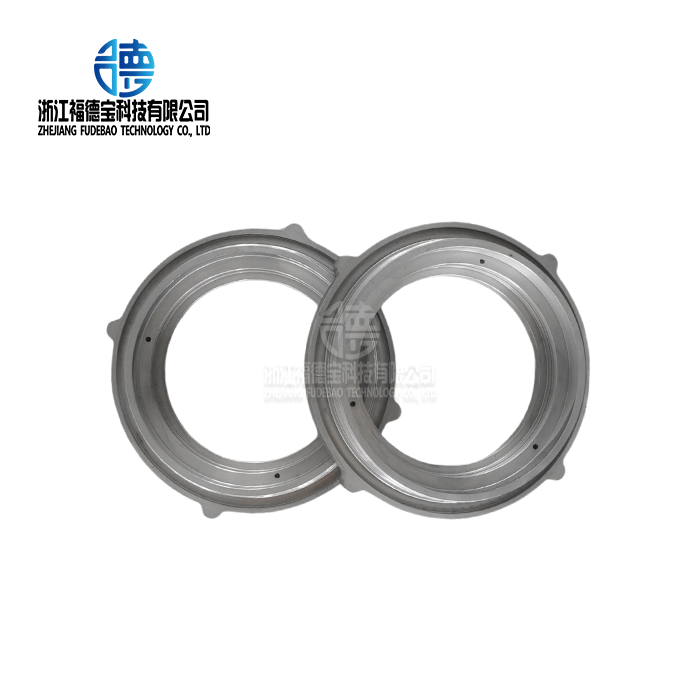
Aluminum Die Casting Explained: 5 Must-Know Facts
2026-05-28
If you need to find high-precision metal parts for your production line, you need to know about aluminum die casting. In this method of making things, liquid aluminum metal is injected into hardened steel molds at pressures higher than 10,000 psi. This makes parts that are very accurate in size and have smooth surfaces. This high-pressure die casting (HPDC) method is different from traditional casting methods because it can quickly make complex geometries as single units. This cuts down on expensive assembly steps and keeps tolerances as low as ±0.05mm, which are important for making powertrain housings, electrical enclosures, and structural parts for spacecraft.
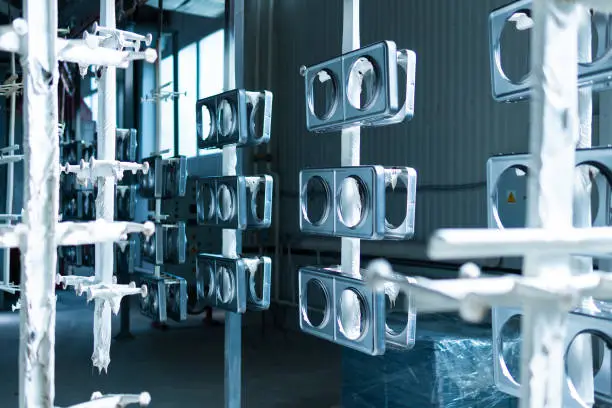
Fact 1: What Is Aluminum Die Casting and How Does It Work?
The Core Process Behind Precision Metal Manufacturing
Die casting is an advanced way to shape metal. Molten aluminum alloy is pushed into steel molds that can be used again and again at speeds of up to 100 feet per second. This method is very different from sand casting or gravity casting because it uses hydraulic pressure to fully fill complicated mold holes. The end result is nearly net-shape parts that don't need much extra cutting, which cuts your production costs and lead times directly.
The first step in the process is preparing the mold. This is done by applying release agents and heating the die to the best temperature range of 300–500°F. The shot barrel is then filled with molten aluminum that has been cooked to about 1,250°F. Within milliseconds, a hydraulic pump forces this liquid metal into the die opening. Pressure is kept up during solidification to avoid holes. Cooling ducts inside the mold speed up the process of removing heat, which makes cycle times for smaller parts as short as 30 seconds. Once the casting is set, ejector pins remove it, and the process starts all over again.
Common Aluminum Alloys and Their Strategic Properties
Choosing the right materials has a big effect on how well the end part works. Due to its good die-filling properties and moderate strength, A380 alloy is mostly used in car uses in North America. This metal has 8.5% silicon, which makes it easy to shape and gives it a tensile strength of 46,000 psi after it hardens. ADC12, which is commonly used in Asian markets, has similar qualities but a slightly better resistance to corrosion for electrical housings that are used outside.
It is perfect for hydraulic valve bodies and gearbox parts that can't have any holes inside them because Alloy 413 is very good at keeping pressure inside. On the other hand, A356 alloy is sometimes used in die casting jobs that need very good flexibility and weldability, even though it is mostly used in low-pressure permanent mold casting. When we suggest metals for client projects, we look at their mechanical qualities, such as their final tensile strength, yield strength, elongation percentage, and thermal conductivity.
Fact 2: Advantages of Aluminum Die Casting Over Other Methods
Speed and Precision That Transform Production Economics
When you compare output numbers between different ways of making things, it's easy to see why die casting is better at competing. Patterns for sand casting take two to four weeks to make, and each casting cycle lasts a few minutes. Die casting, on the other hand, makes finished parts every 30 to 90 seconds once the mold is finished. When you make more than 5,000 pieces, which is usually when your investment in tools pays off, this shorter cycle time directly turns into lower per-unit costs.
The level of the surface finish is another important factor. Die-cast aluminum comes out of the mold with Ra values between 1.6 and 3.2 micrometers, so it doesn't always need a lot of work to be done to finish it. Most of the time, sand-cast parts need a lot of cutting to get the same surface quality. Dimensional accuracy is also better. Over thousands of rounds, die casting can keep tolerances of ±0.1mm, while sand casting can't keep them at ±0.5mm without a lot of quality control work.
Material Efficiency and Lightweight Engineering
With a mass of 2.7 g/cm³, aluminum is about one-third the weight of steel or zinc while still having strong mechanical qualities. This trait solves important problems in efforts to make cars lighter. For example, lowering a car's mass by 10% can make it 6–8% more fuel-efficient. Electric car makers love this weight loss because every kilogram saved increases the battery's range.
Over 80% of the material used in the aluminum die casting process is reused, with runners and spills being the main waste products. In CNC cutting from solid billets, on the other hand, 60–70% of the raw material is turned into chips that need to be recycled. When your buying strategy focuses on both controlling costs and being environmentally friendly, these material efficiency measures become important factors in making decisions. We keep closed-loop aluminum recycling systems that turn internal scrap straight into new production batches. This cuts down on waste and material costs even more.
Fact 3: Typical Applications and Industry Sectors Using Aluminum Die Casting
Automotive and Electric Vehicle Powertrain Components
Aluminum die casting is used by automakers for many important structural and useful parts in all of their vehicles. Aluminum's ability to transfer heat helps engine blocks, transmission housings, and oil pans keep cool while lowering the weight of the whole system. Electric vehicle battery casings have extra strict requirements. These structural cases need to protect the batteries from impact during crashes, remove heat from the lithium-ion cells, and keep electromagnetic interference at bay.
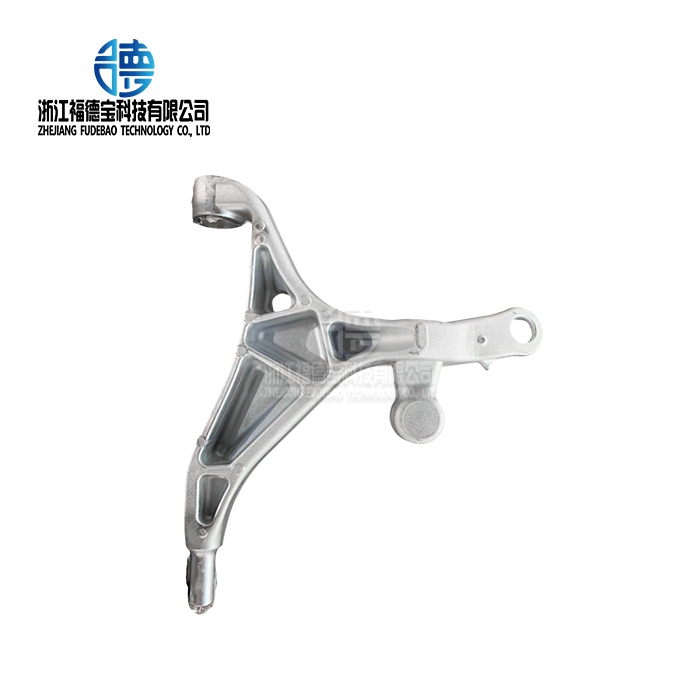
Single die-cast parts are replacing systems that used to need 70 or more pressed steel parts. This consolidation makes production easier and requires less money to buy welding tools. Die casting is also useful for making steering knuckles, suspension parts, and brake calipers because it can include mounting bosses, ribs, and complicated shapes that would need more than one step to make with other methods.
Electronics Thermal Management and EMI Shielding
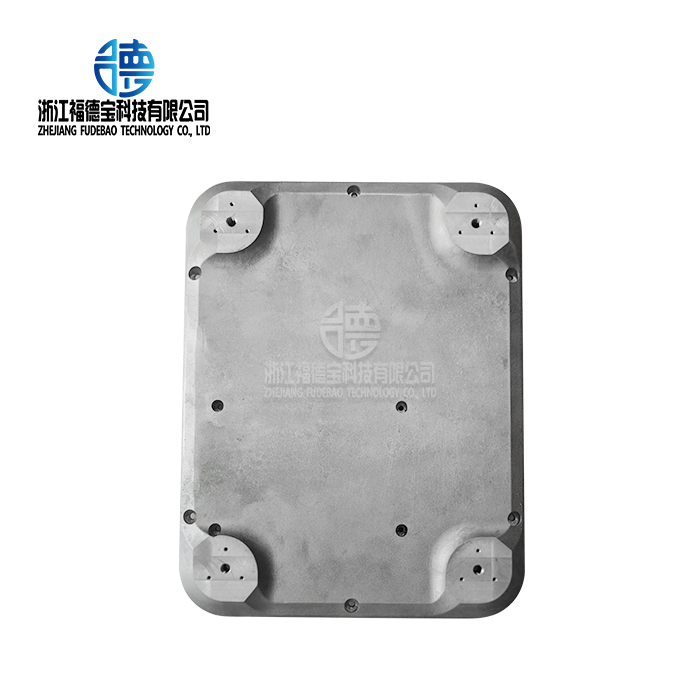
The communication equipment that supports 5G networks creates a lot of heat, so it needs good thermal control solutions. Die-cast aluminum is used for base station equipment housings because it has two useful properties: it efficiently moves heat to external fins thanks to its 150 W/m·K thermal conductivity, and the conductive metal shell blocks electromagnetic interference, which keeps signals from getting weak. Outdoor phone boxes that we've sold have built-in heat sink shapes that get rid of the need for separate thermal management systems.
Manufacturers of consumer electronics choose die-cast aluminum for laptop cases, camera bodies, and smartphone frames where high-end looks go well with functionality needs. The process makes it possible to have thin walls as thin as 1.5 mm while still keeping the structural strength needed to protect the sensitive electronics inside. Then, the anodizing and powder finishing steps give the parts resistance to corrosion and brand-specific color finishes.
Industrial Equipment and Renewable Energy Systems
Die casting consistently provides the physical stability and pressure tightness needed for gearbox covers, compressor housings, and pump bodies used in industrial machinery. These parts often work in places where the temperature changes by 150°F or more. Because aluminum has a low thermal expansion coefficient, sealing problems are avoided and bearing alignment is maintained for decades.
Wind turbine nacelle parts and solar panel fixing frames use aluminum because it doesn't corrode when they are installed outside where they will be exposed to UV light, changing temperatures, and water. The oxide layer of the material naturally protects against atmospheric corrosion, making it much better than uncoated steel in coastal areas where it is exposed to salt spray.
Fact 4: Common Defects and Quality Control in Aluminum Die Casting
Understanding Porosity and Its Prevention
The most common type of flaw in die casting is porosity, which shows up as small holes in the structure of the casting that weaken its mechanical qualities and ability to keep pressure inside. When hydrogen that was dissolved in molten aluminum crystallizes during solidification, this is called gas porosity. On the other hand, shrinking porosity happens when liquid metal isn't fed in enough to make up for the volumetric contraction. Both types of defects lower the final tensile strength and make ways for pressure-containing parts to leak.
The first step in preventing problems is to treat melts correctly. We use nitrogen or argon lancing for degassing to get the amount of dissolved hydrogen below 0.15 ml per 100g of aluminum. Vacuum-assisted die casting gets rid of even more trapped air by emptying the die hole before the metal is injected. Controlling the temperature of the die is also very important. Molds that are too cold cause solidification to happen too quickly and filling to be unfinished, while dies that are too hot cause gas to be absorbed and cycle times to be lengthened. During production runs, our process experts keep the temperatures of the die surfaces within ±10°F of what is required.
Surface Defects and Dimensional Control
When two metal flow fronts meet but don't bond fully because the temperature isn't right, cold shuts show up as lines on the casting surface. These breaks in the structure make it less stable and less attractive. By adjusting the injection speed and gate placement, you can make sure that the metal gets to all of the hole areas before they cool down too much. During the die design phase, flow modeling software helps us find and get rid of possible cold shut sites.
Uneven cooling rates or too many leftover forces locked into the casting during solidification can cause it to warp and lose its shape. Multi-point cooling channel designs take out heat evenly, and exact time of ejection keeps thin-walled parts from warping. We check the accuracy of the dimensions using coordinate measuring tools with a precision of 0.001 mm. This makes sure that all of your parts meet the limits that were set for them in every production batch.
Quality Systems and Inspection Protocols
In order to meet the standards of the Automotive PPAP, thorough paperwork and inspection processes are needed. Our quality management system is based on IATF 16949 standards and uses statistical process control to keep an eye on important factors like key dimensions, mechanical properties, and surface finish. X-ray checking finds internal holes without damaging the part, and pressure testing makes sure that hydraulic and gas parts don't leak.
Our combined center is where secondary operations like CNC machining, tapping, and surface processes happen. This keeps trackability throughout the production sequence. For aerospace uses, screening standards are even stricter. These include tests with fluorescent penetrants and material licenses that can be linked to specific melt batches. These quality control steps give your engineering teams the peace of mind they need to choose aluminum die casting parts for important projects.
Fact 5: How to Choose the Right Aluminum Die Casting Supplier for Your Business?
Evaluating Technical Capabilities and Equipment
Before choosing a supplier, you should look at their production skills to make sure they can meet your component needs. Die casting machines have holding forces ranging from 400 to 4,000 tons. Bigger machines can make parts with deeper holes and bigger parts. High-speed machining centers with fourth- and fifth-axis features make it easy to do extra operations on shapes that aren't simple. We use HAAS CNC machine centers and low- and high-pressure die casting equipment that weighs between 800 and 2,500 tons. This gives us the ability to make a wide range of parts in different sizes and quantities.
Having in-house creation and maintenance skills for your tools has a big effect on how long the job takes and how much it costs. When design changes happen, suppliers who keep EDM machines, wire EDM machines, and precise grinding equipment can quickly change dies instead of having to wait for outside tool makers to do the work. During the design-for-manufacturing phase, our mold development team works with your experts to make sure that the part shape is optimized for casting while still meeting the functional requirements.
Certifications and Industry Experience
Quality system certificates show that providers follow the same standards for processes and paperwork. ISO 9001 is the standard certification for quality management, and IATF 16949 is special to the car industry and includes PPAP submission procedures. For aerospace uses, you need AS9100 approval that shows you can strictly track things and do advanced inspections.
When dealing with specific application problems, industry-specific knowledge is important. Suppliers to the automotive industry know how important it is for parts to stay the same size across a range of temperatures and know what tests need to be done on parts that connect to safety-critical systems. Manufacturers of electrical tools need to know about guidelines for conductivity, the efficiency of EMI protection, and environmental sealing. We've made parts for powertrains in cars, setups for green energy, and industrial automation systems, so we know how to meet a wide range of performance needs.
Partnership Approach and Supply Chain Integration
When looking at possible providers, you should not only look at their technical skills but also how they work together to solve problems and make improvements all the time. Clear communication about limitations on capacity, material wait times, and quality problems allows for proactive problem-solving instead of reactive crisis management. Our project management team keeps thorough capacity planning and weekly production updates to make sure that delivery promises are kept.
After recent world problems, supply chain stability became more important. Suppliers who keep a strategic stock of popular aluminum alloys and extra capacity on their backup tools show that they are committed to delivering on time. Long-term partnerships are built on contract manufacturing agreements with clear quality standards, pricing frameworks, and safeguards for intellectual property. We help with everything from making a prototype to mass production, and we can change how we do things as your product goes from the initial design approval stage to market maturity.
Conclusion
Aluminum die casting technology is the best way to make aluminum parts because it combines accuracy, speed of production, and efficient use of materials. Knowing the basics of the process, its inherent benefits, possible uses, quality control needs, and criteria for choosing a provider gives you the power to make smart procurement choices. Whether your project needs structural parts for cars, housings for electrical equipment, or parts for industrial machinery, the technical information in this article will help you look at your manufacturing choices and find suitable partners. For implementation to go well, your engineering teams need to work together with experienced casting experts who can turn design ideas into reliable, low-cost production solutions.
FAQ
What minimum order quantities make die casting economically viable?
Around 5,000 pieces per year, die casting can compete on price, but this number can change depending on the size and complexity of the part. Investing in tools is the main set cost, and it can range from small amounts for simple single-cavity dies to large amounts for complicated multi-cavity tools. We help our customers find the best hole count and production schedules. For lower-volume jobs, we may combine multiple part numbers into a single tool package to save money. Aluminum-safe steel dies can be used for prototypes and pre-production runs because they require less money up front and have a good enough tool life for confirmation numbers.
Can die cast aluminum match the strength of machined billet aluminum?
Die cast aluminum alloys have 75–85% of the compressive strength of worked aluminum alloys. This is because their microstructures are different. The tensile strength of A380 die cast material is about 46,000 psi, while the tensile strength of 6061-T6 raw aluminum is only 45,000 psi. A lot of what makes the comparison possible relies on the alloys used and how they are heated. When solution heated and aged, heat treatable die casting alloys like A356 can reach strengths that are close to those of worked metals. Geometry optimization, such as adding ribs and adjusting wall thickness, is often used in component design to make up for lost weight when compared to machined options.
How does surface finishing affect corrosion resistance?
Raw die-cast aluminum forms a natural oxide layer that protects against atmospheric corrosion in a way that is good for indoor use. Extra surface treatments are needed for things that will be outside or in harsh settings. Powder coating is a great way to protect something while still letting you choose how it looks. Anodizing, on the other hand, makes a thicker, harder metal layer that makes something more resistant to corrosion and wear. Chemical conversion coats offer lighter layers of protection that are good for painted parts. We look at the elements of your surroundings and suggest the best surface finishing methods that meet both your performance needs and your budget.
Partner with a Trusted Aluminum Die Casting Manufacturer
Zhejiang Fudebao Technology has become a leading aluminum foundry by offering a wide range of services, including melt preparation, casting, precise cutting, and surface treatment. Our integrated center works with suppliers in the aircraft, automobile, and industrial equipment industries that need parts to be accurate to within 0.05 mm in size. With high-speed machining centers, CNC lathes, and aluminum die casting tools that can hold between 800 and 2,500 tons, we can make parts for everything from testing prototypes to mass production. Working directly with foreign names, such as American HAAS automation, proves that we meet high technical and quality standards. Email our technical team at hank.shen@fdbcasting.com to talk about the parts you need and find out how our one-stop production can help you speed up product development and cut down on overall supply chain costs.
References
North American Die Casting Association. (2021). Product Specification Standards for Die Castings Produced by the Semi-Solid and Squeeze Casting Processes. NADCA Technical Publication.
Kaufman, J. Gilbert & Rooy, Elwin L. (2004). Aluminum Alloy Castings: Properties, Processes, and Applications. ASM International.
Society of Automotive Engineers. (2019). SAE J452: General Information—Chemical Compositions, Mechanical and Physical Properties of SAE Aluminum Casting Alloys. SAE Technical Standard.
Lumley, Roger. (2011). Fundamentals of Aluminium Metallurgy: Production, Processing and Applications. Woodhead Publishing in Materials.
American Foundry Society. (2020). Aluminum Casting Technology: Second Edition. AFS Technical Publication.
Davis, Joseph R. (1993). Aluminum and Aluminum Alloys: ASM Specialty Handbook. ASM International Materials Park.



_1756361423150.webp "Cryopump body")
_1756352625880.webp "plug stainless")
_1756352400994.webp "chassis enclosure")
_1756345858191.webp "Aluminum casting crafts")