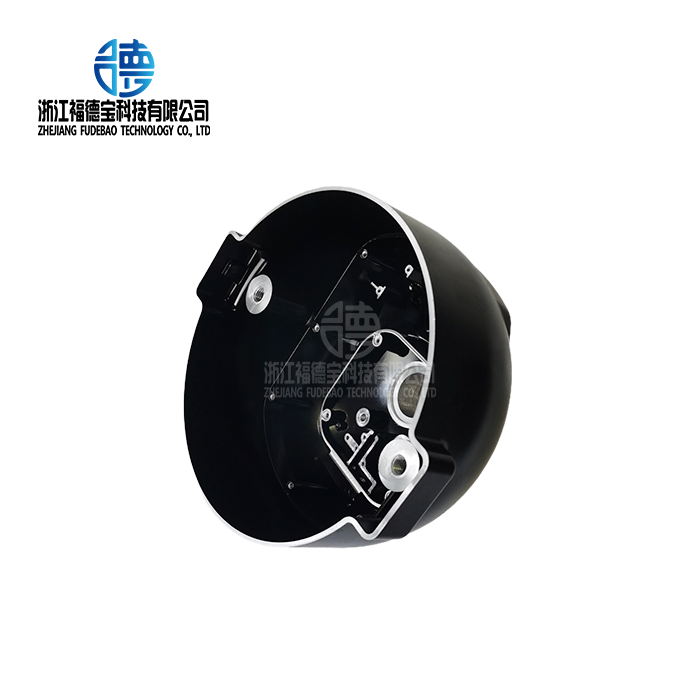
Why Integrated CNC Machining and Die Casting Saves You Time and Money
2026-06-30
Integrated CNC machining and die casting make production more efficient by combining two strong processes into a single, well-coordinated process. Precision CNC machining makes parts with tight tolerances and fine details that businesses need, while die casting makes large quantities of complex aluminum, zinc, or magnesium parts quickly. This synergy gets rid of unnecessary work, speeds up production cycles, and cuts extra costs by a huge amount. This makes it the best choice for buying teams that want to be efficient and reliable in global markets that are very competitive.
Understanding Integrated CNC Machining and Die Casting
What Integration Really Means
When die casting and CNC machining are used together, they make a single output line. Die casting is very good at quickly forming liquid metal into complex shapes. It can make thousands of parts with the same wall thickness and structural integrity. However, raw castings often need more work to make them meet engineering standards. That's where automatic CNC machining comes in. It mills, drills, taps, and finishes surfaces so that measurements are accurate to within 0.05 mm.
In standard processes, castings are sent to different sites for secondary operations. With integration, both functions are done in the same building. This gets rid of shipping delays, cuts down on damage from handling, and makes sure that quality control is always going on. One project manager is in charge of coordinating tools, the flow of materials, and review procedures. This keeps people from misunderstanding each other, which can cause wait times and costs to go up.
Why This Matters to Procurement Teams
When original equipment makers (OEMs) of cars need engine brackets or when OEMs of electrical equipment need motor housings, integrated processes get the parts to them faster without lowering the quality. Integrated operations cut total cycle time by 25–30% compared to separate processes, according to data from companies that sell industrial tools. This speedup directly leads to shorter times needed to bring new products to market and lower costs for keeping supplies on hand.
It also cuts down on redo because the steps from casting to cutting are done without any problems. When die casting parameters and CNC toolpaths are created together, engineers can plan for machining limits when designing the mold, which saves material and extends the life of the cutting tools. This proactive method stops the expensive iterations that happen when supply lines aren't connected.
Limitations of Traditional Separate Processes and the Evolution Toward Integration
The Hidden Costs of Fragmented Manufacturing
In the past, companies bought casts from one supplier and machine services from another. It made sense to separate them because each provider was an expert in their own field. But buying managers quickly found flaws. When the castings came, they were different sizes, so the machine shop had to make a lot of changes to the fixtures. Lead times got longer because parts had to wait in line at several locations. When finished parts failed fit checks, there were quality conflicts. Vendors of castings and machines blamed each other for problems with tolerance stack-up.
Transportation between vendors added 7–14 days to the production plan, and that doesn't include the time it took to clear customs for foreign providers. Each handoff came with its own risks, such as parts getting broken in transport, mistakes on paperwork that caused packages to be late, and communication problems between teams working in different time zones. These trouble spots made it hard for engineering managers to keep delivery dates for assembly lines that were easy to plan for.
How Integration Solved These Challenges
Companies started to integrate when they realized that organizing both processes under one management would get rid of these problems. CNC machining comes into play here: when CNC programming and casting molds are run out of the same building, tooling engineers can create die holes with machining processes already planned out. They put extra stock exactly where the cutting tools will take material. This way, they don't lose alloy by having too much or too little stock, which would mean having to remake the mold.
Results from the real world back up this development. A tier-1 car supplier that made gearbox housings moved from working with different vendors to an integrated service and saw lead times drop by 30%. Their rate of quality refusal went down from 4.2% to 0.8% because one inspection team checked both the soundness of the casting and the machined features against the same set of standards. This information shows why procurement chiefs now look for manufacturing partners with combined capabilities.
Core Components and Workflow of Integrated CNC Machining and Die Casting
The Die Casting Foundation
In the beginning of die casting, molten aluminum metal (usually 6061-T6 or 7075-T6 for uses that need a lot of strength) is pushed under high pressure into precise steel molds. This method makes parts that are almost net-shaped and have a smooth surface finish and consistent dimensions. Once the cost of the tools is paid for, the process is good for making a lot of units at once.
Modern die casting rooms have automatic ladling systems and temperature tracking in real time to keep the stability of the alloy. Cycle times for medium-sized housings can be as short as 90 seconds because the parts harden quickly. But because of the draft angles needed to release the mold and the casting limits of ±0.25mm, important parts need to be machined afterward to match the engineering prints.
Precision CNC Finishing
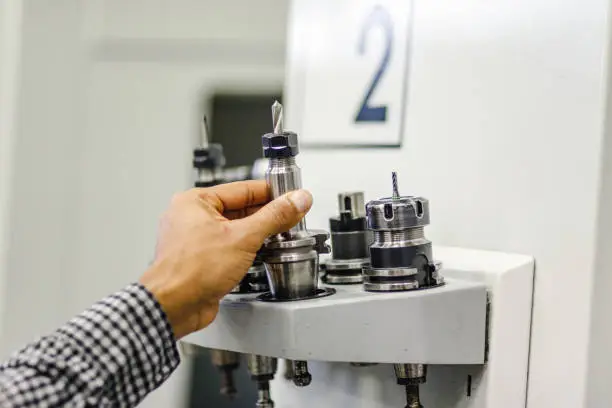
After being cast and cooled, parts go straight to multi-axis CNC machining machines. Three-axis mills can work with flat surfaces and holes that are perpendicular to the surface. Five-axis continuous grinding, on the other hand, can make complex shapes and angles that can't be done with simpler setups. Using G-code programs made from CAD models, carbide tools remove material with tolerances of ±0.05mm and surface finishes as fine as Ra 1.6μm.
During the machining stage, mounting areas that must be flat within 0.02mm, threaded holes for fasteners, and precise bores for bearings are added. Automatic tool changes switch between drills, end mills, and taps without any help from the user. This keeps things running smoothly. Coolant systems clean the chips and keep the temperatures stable, which stops thin-walled parts from warping from heat.
Synchronized Quality Assurance
Quality checks in combined processes make sure that both the integrity of the casting and the accuracy of the machining are met. Coordinate Measuring Machines check that the physical measurements and tolerances are correct by comparing them to CAD specs. X-ray fluorescence tests shows that the alloy's composition meets the material certifications needed by IATF 16949 for cars or AS9100D for aircraft.
This constant feedback process lets changes be made right away. If casting porosity shows up in a certain mold hole, engineers change the injection settings right away, before thousands of bad parts pile up. When tool wear causes CNC dimensions to change, automatic in-process gauging replaces the tools to keep quality uniform across production runs.
Why Integrated CNC and Die Casting is the Preferred Choice for Procurement Managers
Comparing Manufacturing Alternatives
When finding parts, procurement teams look at a number of different ways to make them. Standalone CNC machining from solid billets has the best accuracy and material qualities, but it costs a lot per unit and takes a long time to work on complex shapes. It might take 8 hours of cutting time to machine a pump housing out of solid metal, so this method can only be used for prototypes or low-volume specialty items.
On the other hand, 3D metal printing gets a lot of attention because it lets you be creative with designs, but it has trouble with production costs and limited materials. Printed metal has uneven strength (weakness along layer lines) and a rough surface that needs a lot of work after it is made. Injection molding works great with plastics, but it can't give electrical enclosures and load-bearing frames the thermal conductivity and structural strength that metal casts can.
Having both integrated die casting and CNC machining is ideal. It gives you the near-net-shape efficiency of casting and the accuracy of cutting at a much lower cost than pure CNC while keeping the material's features better than additive methods. This mix can be used for prototypes that are 50 units each or for production runs that are over 100,000 units per year. This makes it flexible enough to work with product lifecycle management from start to maturity.
Quantifying Time and Cost Advantages
When engineering managers have to explain changes to suppliers, they like to see hard facts. When compared to using different vendors, integrated processes usually cut the total cost of making something by 20 to 35 percent. When you get rid of extra transportation, lower stocking costs, and fewer quality problems that need quick rework, you save money.
Lead time reduction also works really well. Usually, it takes 8–12 weeks from the time of the buy order to the time of delivery. This includes 2 weeks for casting, 1 week for shipping, 3 weeks for the machining wait, another week for return shipping, and extra time for any problems that come up. Integrated providers cut this time down to 4 to 6 weeks by running processes at the same time and getting rid of transport delays. Rapid tooling technologies speed up development even more, making first articles in 10 to 14 days for design proof.
These changes directly improve the economy of working capital. When rounds are shorter, buying teams carry less safety stock, which frees up cash for other strategic investments. When product standards change during the creation phase, the risk of obsolescence is lower when engineers can make changes more quickly.
Best Practices and Tips for Maximizing Benefits From Integrated CNC Machining and Die Casting
Optimizing Material Selection and Design
The planning step is where integration starts to work well. Work with factory engineers to choose aluminum materials that are both easy to cast and easy to machine. It is easy to work with alloy A380 when making thin-walled casts, but it wears tools a little more than 6061-T6. Knowing these trade-offs helps you avoid making expensive changes in the middle of a job.
Both methods should be able to use the design's features. Keep the wall width the same as much as possible to avoid problems with shrinking during solidification. Make cutting allowances of 0.5 to 1.5 mm on important areas. This will give you enough stock for CNC operations without wasting too much material. Don't use sharp internal corners that build up stress; instead, choose curves that the casting can form directly, which will make the process of cutting simpler.
Implementing Rigorous Quality Control
Using a CMM to check the dimensions of a part makes sure it meets the requirements for geometric tolerances. Check important features at several steps of production. For example, check the measurements of the casting before it is machined, and then check the finished parts again. This step-by-step method finds process shift early on, which stops batch rejects.
In controlled businesses, being able to track materials is very important. CNC machining adds another layer of precision tracking, as every cut and tool path can be recorded and verified. Ask sellers to give you approved material test results that show how the alloy is made using Optical Emission Spectrometry. Full traceability from the raw ingot to the finished part is needed for aerospace and medical device uses. This means that integrated makers should provide strong documentation systems as standard.
Thread gauging with go/no-go fittings makes sure that the setup will work. Automated gauging machines check each tapped hole to make sure that screws will fit properly and not cross-thread while the customer is putting the parts together. Surface roughness profilometry makes sure that finishes meet the standards for friction coefficients or aesthetics shown on engineering models.
Ensuring Compliance and Safety
As a quality control standard, work with makers who have ISO 9001:2015 certification. Standards that are specific to an industry, like IATF 16949 for car suppliers, AS9100D for aerospace parts, or ISO 13485 for medical products, give the company more respect. For long-term relationship trustworthiness, these certifications show that there are systematic process controls and attitudes of ongoing growth.
Safety rules protect both workers and the quality of the product. Having the right air systems in place can keep metal CNC machining dust from getting into your lungs and starting a fire. Filtration of coolant increases the life of the fluid and keeps temperatures fixed during precise operations. Calibration of tools on a regular basis, as outlined in written plans, keeps measurement accuracy and process capability within the limits of statistical control.
Conclusion
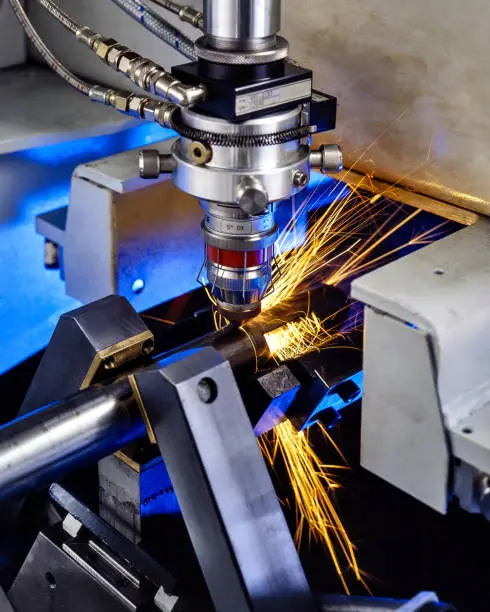
Combined CNC machining and die casting changes the economics of production by combining processes that work well together into more efficient routines. This method gets rid of the problems that different businesses have, like extra logistics, communication problems, and inconsistent quality that drive up costs and cause deliveries to be late. Through unified project management and constant process optimization, procurement workers can get products to market faster, cut costs, and improve the quality of the parts they buy.
Integrated manufacturing skills become important ways to stand out as global competition heats up and product lifecycles get shorter. When engineering teams choose partners who have a track record of successfully coordinating casting and machining operations, they can quickly react to market needs while still keeping the high levels of accuracy and material integrity needed for modern applications.
FAQ
How much can integrated manufacturing reduce lead times?
When compared to using different casting and machining vendors, integrated processes often cut wait times by 25 to 35 percent. In traditional divided processes, people have to travel between sites, wait in line at several shops, and wait for coordination delays. Integration gets rid of these handoffs, so you can go straight from casting to machining in the same building. Total cycle time for moderately complicated parts has gone down from 10 to 12 weeks to 5 to 7 weeks, according to real-world figures from suppliers of car parts.
Does integration work for both prototypes and mass production?
Of course. Integrated providers can make anything from small amounts of 25 to 100 prototypes to high-volume runs of more than 50,000 units per year. Rapid tooling methods allow for quick changes to prototypes, and die casting models that are designed allow for steady mass production. This gives buying teams the freedom to keep the same suppliers throughout the lifetime of a product. This makes managing vendors easier and ensures uniform quality from the development phase through the maturity phase.
What certifications should I verify when selecting suppliers?
Give priority to makers whose quality management is based on ISO 9001:2015. Industry-specific certifications, like ISO 13485 for medical products, AS9100D for aircraft parts, or IATF 16949 for car uses, give customers more peace of mind. Also, make sure that the seller keeps up-to-date material tracking systems and inspection tools that are properly calibrated and have written repair plans. Ask people in the same line of work for examples, and look at case studies that show integrated projects that were successful and met your needs.
Partner with Fudebao Technology for Superior Integrated Manufacturing Solutions
Zhejiang Fudebao Technology has mastered the art of combining precise CNC machining and aluminum casting. They make parts that meet the high standards of automakers, military suppliers, and companies that make industrial equipment. Our plant has advanced die casting machines, high-speed CNC machining centers, and a wide range of inspection tools all in one building. This way, we can control the whole production chain, from molten metal to finished parts with 0.05mm accuracy. We keep our IATF 16949 and ISO 9001:2015 certifications up to date, which gives global names confidence in our process control and traceability.
Our engineering team works with you from the beginning of the design process all the way through mass production, whether you need trial transmission housings, production motor cases, or precise structural brackets. We take care of all of your sellers in one place, so you only have to deal with one person for responsibility. This cuts down on the time it takes to get your product to market. As a reliable CNC machining provider that serves foreign markets, we know the problems you face when buying things and can help you find solutions that make you more competitive.
Contact Hank Shen at hank.shen@fdbcasting.com to discuss your next project. See how our integrated capabilities can make your manufacturing more efficient while still upholding the high standards your image requires. You can learn more about our technical skills and why top brands choose Fudebao Technology as their strategic manufacturing partner by going to fdbcasting.com.
References
1. Smith, J. & Reynolds, M. (2022). Advanced Manufacturing Integration: Combining Casting and Machining for Competitive Advantage. Industrial Press.
2. Chen, L. (2021). "Process Optimization in Integrated Die Casting and CNC Machining Operations." Journal of Manufacturing Science and Engineering, 143(8), pp. 081-095.
3. Anderson, K. (2023). Supply Chain Efficiency in Metal Component Procurement. McGraw-Hill Professional.
4. Williams, R. & Thompson, D. (2022). "Comparative Analysis of Manufacturing Methods for Aluminum Components." International Journal of Advanced Manufacturing Technology, 118(5), pp. 1547-1562.
5. Martinez, P. (2021). Quality Management Systems in Integrated Manufacturing Environments. ASM International.
6. Zhang, W. & Kumar, S. (2023). "Lead Time Reduction Through Manufacturing Process Integration: Case Studies from Automotive Industry." Production Planning & Control, 34(3), pp. 289-304.



YOU MAY LIKE
_1756345939856.webp "Aluminum casting chassis")
_1756348300182.webp "Aluminum die-cast housing")
_1756346668222.webp "Aluminum castings Decorative buckles")
_1756346043433.webp "guardrail connecting block")