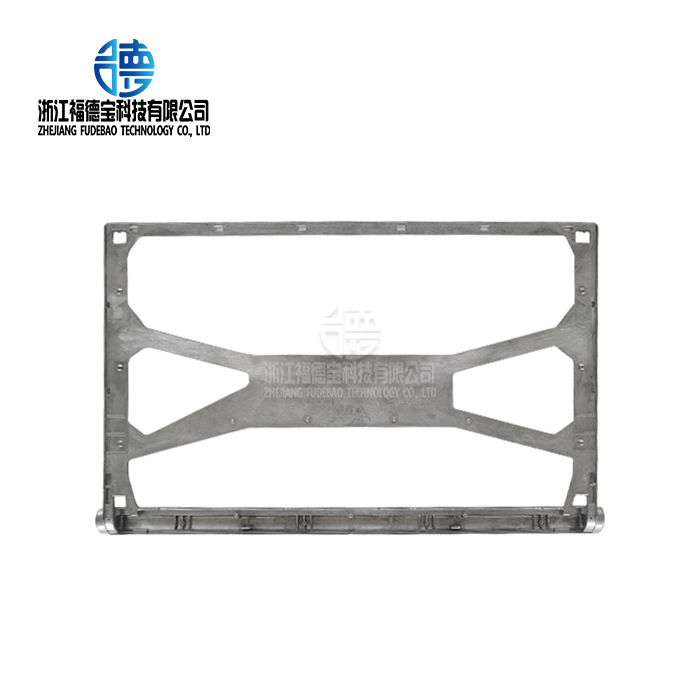
Why Automotive Suppliers Choose Aluminum Die Casting for Gearboxes
2026-05-26
More and more, automakers are using aluminum die casting to make gearboxes because this high-pressure metal making method gives them very accurate measurements, a big weight reduction, and the ability to easily make more gearboxes at a lower cost. Using this method, liquid aluminum alloy is pushed into solid steel molds at pressures higher than 10,000 psi. This makes complex near-net-shape parts with accuracy up to ±0.05mm. This method gets rid of the need for multiple-part assemblies and secondary machining. It also meets important industry needs for fuel efficiency and electric vehicle performance while keeping the mechanical strength needed for transmission systems that work under heavy loads and temperature changes.
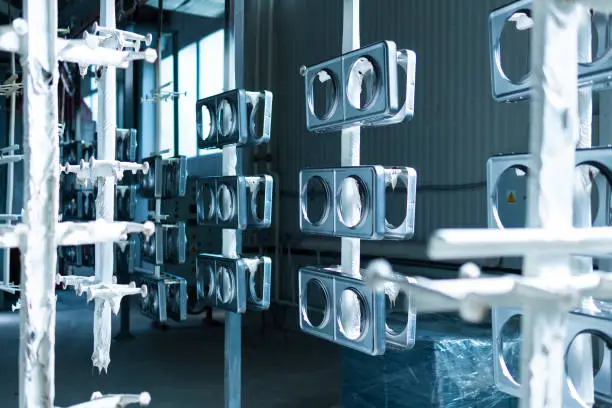
Understanding Aluminum Die Casting in Automotive Gearbox Production
Manufacturing methods that can handle both geometric complexity and structural stability are needed to make car gearbox housings and other transmission parts. For modern engine designs, features like mounting bosses, cooling channels, sensor pockets, and support ribs need to be built into a single component so that there are fewer steps needed to put it together and fewer places where it could fail.
The High-Pressure Die Casting Process
High-Pressure Die Casting (HPDC) works by carefully pushing liquid aluminum alloy into steel dies that have been carefully made. The first step in the process is to prepare the metal. Automotive-grade materials like A380 or ADC12 are often used because they have good mechanical and castability qualities. Once the molten metal hits the right temperature, which is usually between 650°C and 700°C, it goes into the shot chamber. There, a hydraulic piston speeds it up to almost 40 meters per second as it moves through controlled runners into the mold hole. The part hardens in seconds thanks to rapid cooling, which lets cycle times be often less than 60 seconds per component. This speed advantage directly translates to production volumes that meet the needs of car tier-1 suppliers, where part quantities yearly often go over 100,000 pieces.
Material Properties That Solve Industry Challenges
Aluminum alloys have a mass of about 2.7 g/cm³, which means they are lighter than standard cast iron gearbox housings by about 65%. Lightweighting has a direct effect on how much fuel a vehicle uses and how far an electric vehicle can go. Both of these factors are under a lot of pressure from regulators and the market. In addition to being light, aluminum's thermal conductivity of 96–120 W/m·K makes it easier for gear meshes and oils to get rid of heat. This lowers working temperatures that would otherwise speed up wear and viscosity breakdown. The natural oxide layer of the material naturally resists rust, which is important for parts that will be exposed to road salt, water, and harsh transmission fluids over the course of a vehicle's life, which can be more than 150,000 miles.
Meeting Automotive Quality Standards
When aluminum die casting gearbox parts, the dimensions are usually within ±0.1mm for important mounting surfaces and bearing bores. After primary CNC cutting, the specs are tightened to ±0.05mm when shaft alignment calls for it. This accuracy helps ensure the right gear meshing shape and lowers worries about noise, vibration, and harshness (NVH). Parts are carefully checked using a coordinate measuring machine (CMM), an X-ray to look for holes, and pressure tests to make sure the structure is solid. Following the IATF 16949 quality control standards and the Production Part Approval Process (PPAP) paperwork rules makes sure that all production lots are consistent and can be tracked. This helps OEM engineering teams meet their risk mitigation goals.
Comparing Aluminum Die Casting with Other Manufacturing Methods for Gearboxes
When purchasing managers look at different ways to make gearbox parts, they come across a number of competing technologies. Each one has its own pros and cons when it comes to cost, technical performance, and production freedom.
Sand Casting and Investment Casting Alternatives
Melten metal is put into disposable sand molds by gravity, which makes aluminum parts. This method can handle bigger parts and costs less to make the tools, but the surface finish isn't as good (12.5-25.3 Ra roughness vs. 3.2-6.3 Ra for die casting) and the standards for size aren't as tight, so it usually needs a lot of secondary cutting. Investment casting, which uses clay shells around wax models, gets better detail and tolerances than sand casting, but it has much longer cycle times and higher unit costs, which means it can't be used for mass production of cars. Because the solidification rates are slower in both gravity-fed processes, the parts they make have lower mechanical qualities. This is because the solidification rates make the grains bigger and the pores bigger.
Alternative Die Casting Alloys
Zinc die casting has better dimensional accuracy and lasts longer for the die, but it has almost three times the material density of aluminum, which makes it impossible to meet the goals of lightweighting that are important for current engine efficiency. The weight decrease with magnesium die casting is even greater—about 35% lighter than aluminum. However, it comes with problems like higher material costs, more fire hazards during processing, and poor corrosion resistance that needs lots of protective coats. When looking at the balance between weight, strength, thermal management, and cost, automotive providers always find that aluminum alloys are the best choice for gearbox uses.
Machined and Fabricated Assemblies
CNC machining from billet aluminum produces very high levels of accuracy and material qualities, but it also creates a lot of trash (often 60–80% material removal) and needs longer cycle times. When aluminum sheet or extrusions are welded together, they create heat-affected zones with uncertain microstructures and possible stress concentration points that shorten the wear life when the transmission is loaded and unloaded many times. Die casting gets rid of weld joints and combines several made parts into a single piece. This cuts down on assembly work and improves the consistency of the structure.
Design Guidelines and Quality Control for Aluminum Die Casted Gearboxes
To make gearbox parts that are best for aluminum die casting, engineering teams have to find the right mix between geometric complexity and the limitations of what can be made. They also have to set up quality systems that find and stop errors before they get to the assembly lines.
Critical Design Principles
Wall width consistency has a big effect on the quality of the casting and the cost of the cycle. When structural requirements allow, gearbox housing designs should keep parts between 2.5 mm and 5 mm thick, with gradual changes—usually a 3:1 taper ratio—between different thicknesses to stop uneven flow and the porosity that comes with it. Draft angles between 1 and 3 degrees make it easier for parts to come out of the die without damaging it, and fillet radii of at least 1 mm at internal corners lower stress levels and improve metal flow during hollow fills. Designers have to carefully place parting lines so that mold building is easier and flash formation at closing surfaces is kept to a minimum.
Incorporating functional features during casting reduces downstream operations. Mounting bosses, threaded inserts, and bearing pockets can be cast almost in their final shape, so they only need to be finished off by machine rather than having all the material removed. Following rules of rib width being about 0.6 times the neighboring wall and height-to-thickness ratios not reaching 5:1 to avoid sink marks on opposing surfaces, rib patterns provide structural reinforcement without adding too much weight.
Defect Prevention and Inspection Methods
Gas porosity from trapped air or hydrogen absorption, shrinking porosity at thick sections or isolated liquid pockets, and cold shut lines where metal streams fail to properly join are all common die casting flaws that affect gearbox parts. Optimized venting to get rid of air ahead of the metal front, precisely controlled injection speeds and pressures, and smart gate placement to direct flow and reduce noise are some of the process controls that can help with these problems.
Quality assurance uses a number of harmful and non-destructive testing methods. Real-time X-ray screening finds internal porosity before machining processes waste time and money on bad blanks. For sealed transmission uses, leak testing under pressure or vacuum makes sure that the case is solid. Hardness testing proves that the heat treatment worked, and mechanical cross-sections done on the first piece and on a regular basis during checks make sure that the microstructure meets the requirements. Statistical process control monitoring keeps track of measures of dimensions across production runs and takes corrective steps when trends get close to tolerance limits.
Mold Maintenance and Longevity
Production dies require a large amount of money to buy. Depending on the complexity of the part and the number of cavities, they can cost anywhere from tens of thousands to several hundred thousand dollars. With regular cleaning to get rid of buildup, lubrication of moving parts, and thermal stress release, proper upkeep can extend the life of a die beyond 100,000 rounds. Predictive tracking finds patterns of wear that need to be fixed up locally before they lead to a major failure that causes unplanned downtime. Suppliers with strong die repair programs keep production running smoothly and ensure stable part quality over the course of multi-year supply deals.
Procurement Considerations for Automotive Suppliers: Selecting Aluminum Die Casting Partners
Where you buy gearbox parts has long-lasting effects on the dependability of the supply chain, the total cost of ownership, and the quality of the product, all of which have an effect on guarantee claims and the brand's image. Engineering managers and procurement heads need to look at possible partners in more ways than just the price per piece.
Certification and Capability Assessment
Automotive suppliers need partners who keep their IATF 16949 approval, which shows that their quality management system is mature. Check to see if the foundry has customer-specific approvals from target OEMs and a clean audit history in addition to the basic certification. Check the equipment's tonnage capacity to make sure it matches the size of the part needed, the availability of vacuum-assisted or squeeze casting options for uses that need better mechanical qualities, and the machine's ability to do CNC cutting for finishing touches. Facilities that offer combined processes, from melting to surface treatment, make it easier to track things and provide responsibility from a single source.
Request evidence of PPAP completion for similar gearbox components, examining dimensional reports, material certifications, and process capability indices (Cpk values above 1.33 indicating robust processes). Assess engineering support resources available for Design for Manufacturability (DFM) collaboration during development phases, including simulation software for mold flow analysis predicting fill patterns and potential defect locations.
Cost Structure and Lead Time Analysis
The total cost of ownership includes more than just the price per piece. It also includes the cost of shipping, keeping supplies, amortizing tools, and quality-related costs. Compare how much you have to spend on tools and who owns them. For example, some suppliers capitalize dies based on expected numbers, while others give ownership to clients. Look at the time it takes for production to go from when an order is placed to when it is delivered, taking into account both normal production processes and how well suppliers can adapt to changes in volume that come with volatile demand for cars.
Geographic considerations influence landed costs and supply chain resilience. Domestic suppliers may carry price premiums offset by reduced transportation costs, shorter lead times that allow for less safety stock, and simplified communication across time zones. International sources might be cheaper, but they need strong quality systems and clear backup plans for when diplomatic or logistical problems happen.
Supplier Stability and Scalability
Automotive projects that last five to ten years need partners who can keep their finances stable and grow with them. Check the supplier's customer diversification—being too dependent on a few customers or market groups is risky—as well as their capital investment trends to see how committed they are to technology progress. Evaluate production capacity headroom and plans for expansion aligned with projected volume ramps, particularly relevant for electric vehicle components experiencing rapid market growth. References from existing customers provide insights into partnership quality beyond capabilities visible during supplier audits.
Future Trends and Innovations in Aluminum Die Casting for Automotive Gearboxes
As a result of megatrends in the car industry like electrification, autonomy, and environmental requirements, the aluminum die casting industry is still changing through new materials, better process technology, and digital change.
Advanced Alloy Development
Metallurgical study is mostly about aluminum alloys that have better mechanical qualities that are closer to those of wrought materials while still being able to be made into complex shapes. Optimizing the silicon content combines the flow during casting with the strength and ability to be machined later on. Adding copper makes the strength better at high temperatures, which is important for gears where the transmission fluid temperature can reach over 120°C during heavy duty cycles. New metals that contain scandium or other grain refiners make microstructures that are finer and more resistant to wear. This makes parts last longer and allows them to be downsized, which further lowers weight.
Sustainability and Circular Economy Initiatives
Die casting is a good way to help make cars more environmentally friendly because aluminum can be recycled over and over again without losing any of its properties. Closed-loop recycling systems turn production waste and obsolete parts back into casting alloys, which lowers the amount of raw aluminum used and the carbon footprint that comes with it. Emissions from production are lower when melting devices use less energy and waste heat is recovered. Industry studies show that each 10% decrease in vehicle weight improves fuel economy by about 6-8%. Lightweighting has environmental benefits that last throughout a vehicle's service life because it uses less fuel.
Digital Manufacturing Integration
Industry 4.0 technologies change die casting from a skill based on art to a precision production process based on data. Injection pressure, metal temperature, and cycle times are all tracked in real time, and artificial intelligence programs look for oddities and predict flaws before they happen. The use of digital twin models to improve process parameters digitally before they are used in production cuts down on the costs of trial-and-error development. Using machine vision and computed tomography for automated quality checking speeds up the process of finding flaws while creating traceability data that meets the needs of car paperwork. Predictive maintenance systems keep an eye on conditions and the health of equipment, planning when to fix things so that they don't break down without warning.
Electric Vehicle Drivetrain Evolution
The rise of electric vehicles changes the needs for gearboxes and the amount that needs to be made. Many electric vehicles use single-speed reduction gears, which are easier to maintain than multi-speed internal combustion transmissions. However, higher torque rates and constant operation at high speeds make thermal and mechanical stresses worse. Aluminum die casting can adapt to these different load cases by using built-in cooling jackets and targeted strengthening. As electric drivetrains get rid of many mechanical systems, chances to combine parts appear. This could lead to more die casting content per car, even though transmissions are made simpler.
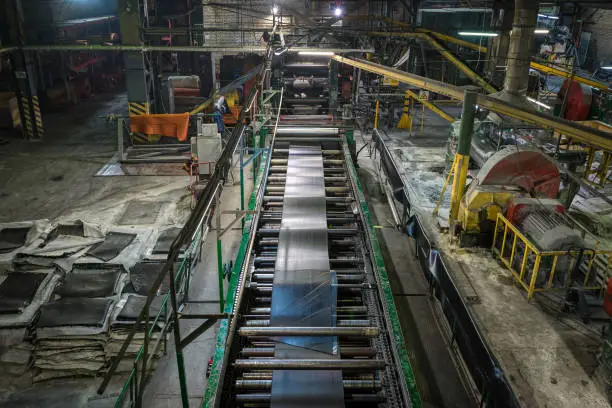
Conclusion
Because it specifically satisfies competing demands for weight reduction, dimensional accuracy, heat management, and cost-effective bulk production, automotive suppliers give aluminum die casting priority when making gearbox components. The method can make complicated near-net-shape parts with built-in features, which cuts down on assembly steps and meets strict car standards for mechanical properties and surface quality. For execution to go well, engineers must work together to make designs that are easy to make, strict quality systems must be in place to stop mistakes, and smart supplier partnerships must be formed to balance cost, capability, and reliability. As rules for making cars more fuel-efficient and electrified get stricter, aluminum die casting will be the most popular way to make next-generation transmission systems.
FAQ
What advantages does aluminum die casting provide over other materials for gearbox manufacturing?
Aluminum die casting is about 65% lighter than cast iron, but it is still strong enough for transmission loads, has better thermal conductivity to keep heat from building up, and is resistant to rust, which makes it last longer. It can make parts with tighter tolerances than sand casting and at faster speeds and lower costs than cutting. This makes it perfect for large-scale car production needs.
How do manufacturers ensure quality and minimize defects in aluminum die cast gearbox components?
As part of quality assurance, process controls like strategic venting and gating, real-time tracking, and optimized injection parameters are combined with inspection methods like X-ray porosity detection, dimensional CMM verification, and leak testing. Suppliers who keep their IATF 16949 approval show that they use PPAP paperwork and statistical process control to avoid mistakes in a planned way.
What are typical lead times for custom aluminum die cast gearbox components?
Lead times are split into stages for making tools and making things. Depending on how complicated the die is, it usually takes 8 to 16 weeks to make, plus time for samples and PPAP approval. Production wait times for standard parts are between 4 and 8 weeks, depending on the number of orders and how full the supplier's capacity is. Faster plans are possible for an extra fee.
Partner with Fudebao Technology as Your Aluminum Die Casting Supplier
Zhejiang Fudebao Technology offers precise aluminum die casting solutions that are designed to work with car gearboxes. Our combined facility has high-pressure die casting machines, modern CNC machining centers, and full surface treatment facilities. This allows us to deliver parts from blanks to finished products all in one place, with tolerances of up to ±0.05mm. We offer quality systems that are IATF 16949-certified and a lot of PPAP documents to global car OEMs and tier-1 providers. Our engineering team works together to make sure that designs are optimized, mold flow is analyzed, and prototypes are made. This makes sure that the products can be made and that they are affordable. Get in touch with Hank Shen at hank.shen@fdbcasting.com to talk about the gearbox parts you need and get specific technical proposals backed by our track record of giving precision parts to international brands like HAAS and ESS energy systems.
References
Kaufman, J. Gilbert, and Elwin L. Rooy. "Aluminum Alloy Castings: Properties, Processes, and Applications." ASM International, 2004.
North American Die Casting Association. "Product Specification Standards for Die Castings Produced by the Semi-Solid and Squeeze Casting Processes." NADCA, 2006.
Lumley, Roger N. "Fundamentals of Aluminium Metallurgy: Production, Processing and Applications." Woodhead Publishing, 2011.
Jorstad, John L., and Dan Apelian. "Pressure Assisted Processes for High Integrity Aluminum Castings." International Journal of Metalcasting, Society of Manufacturing Engineers, 2009.
Hirsch, Jürgen, and Tarek Al-Samman. "Superior Light Metals by Texture Engineering: Optimized Aluminum and Magnesium Alloys for Automotive Applications." Acta Materialia, Elsevier, 2013.
Totten, George E., and D. Scott MacKenzie. "Handbook of Aluminum: Volume 1, Physical Metallurgy and Processes." Marcel Dekker, Inc., 2003.



_1756361423150.webp "Cryopump body")
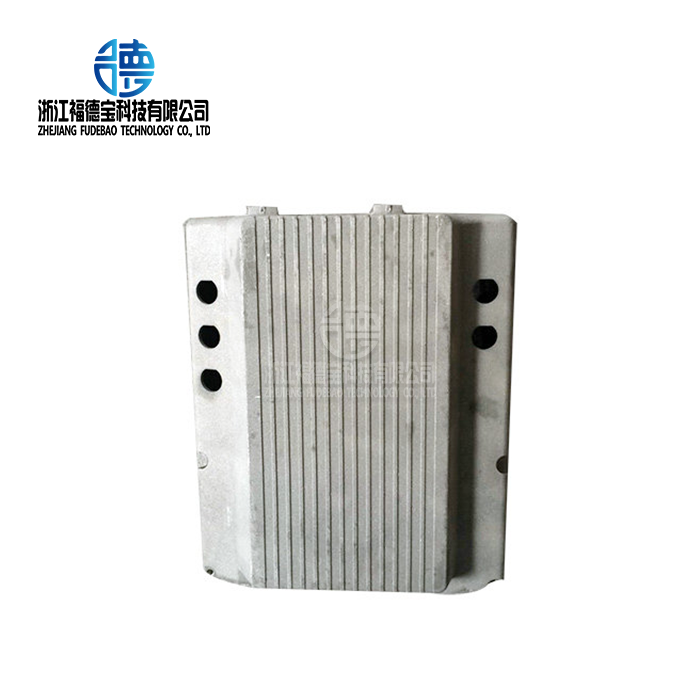
_1756352400994.webp "chassis enclosure")
_1756349957728.webp "metric v belt pulley")
_1756348227989.webp "Aluminum casting movable U frame")
_1756346570305.webp "Bracket aluminum casting")
_1756346043433.webp "guardrail connecting block")