How to Design Parts for Low Pressure Casting?
2026-05-25
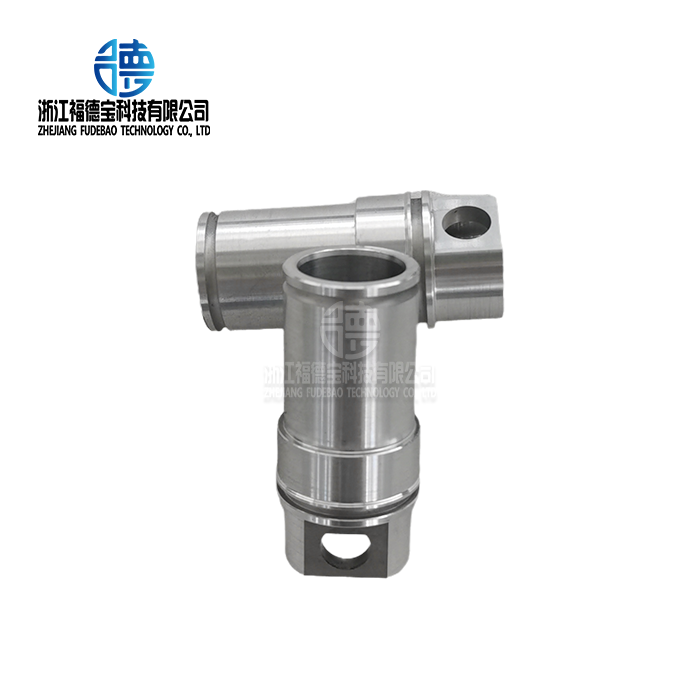
When designing parts for low pressure casting, you need to think strategically about how to balance the qualities of the material, the limitations of the shape, and the need for manufacturing precision. Using controlled pneumatic pressure (usually 20–100 kPa), the process pushes liquid aluminum or magnesium metals into mold holes. This makes parts with excellent metallurgical integrity. This counter-gravity method, unlike gravity casting or high-pressure die casting, reduces turbulence during filling, which greatly lowers oxide inclusions and internal porosity. When sourcing directors and engineering managers focus on uniform wall sections, the right draft angles, and strategic gating, they can get the most out of low pressure casting to make lightweight, pressure-tight parts that meet strict ASTM B618 and ISO 8062 CT6–CT7 standards.
Understanding Low Pressure Casting and Its Design Principles
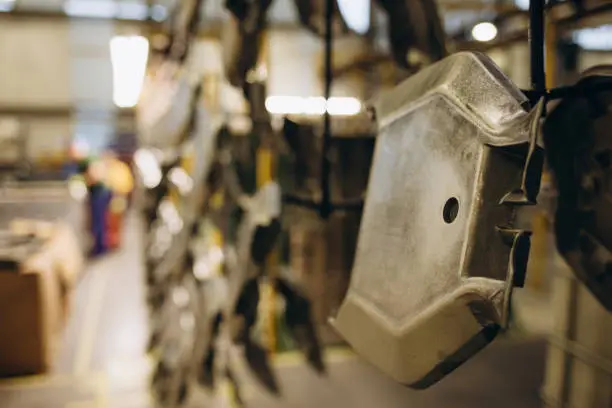
To make a casting job a success, you need to know how the physics of the process affect the quality of the finished part. A riser tube links a pressurized holding furnace to the mold directly in low pressure casting. This lets the molten metal rise easily into the cavity. With this controlled filling, there is no splashing or turbulence like there is with standard gravity pours. Maintaining the pressure during solidification lets the tank below keep feeding, which directly stops shrinking in thick-walled areas where porosity usually forms.
Process Fundamentals and Material Selection
Because they are so flexible and strong for their weight, aluminum alloys like A356 and A380, as well as magnesium variations, are used most often in this way of making things. The controlled environment lets exact chemical makeup management happen, with strict limits on iron content (usually less than 0.15% for high-end uses) and strontium modification to make sure the best elongation qualities. Real-time spectral analysis is used at our plant to check the makeup of each metal before each production run. This makes sure that all batches are the same.
Unique Advantages for Critical Applications
In contrast to the 50-60% typical of gravity methods, the smooth flow characteristic of low pressure casting produces material yields above 90%. This economy directly leads to lower prices and less damage to the environment during remelting. The parts made with this method have thick microstructures that are good for T6 heat treatment. They can reach levels of tensile strength and flexibility that are not possible with high-pressure die casting, which traps gases that cause blistering during thermal processing. These better mechanical qualities are very helpful for parts of cars that control suspension, EV motor housings, and aircraft structural elements.
Design Challenges and Geometric Influence
The shape of a part has a direct effect on how defects form. When the width changes quickly, hot spots form where shrinkage porosity builds up if the feeding routes aren't good enough. Sharp internal corners cause stress concentrations that stop material flow, and draft angles that are too small make it harder to remove parts and wear out tools faster. When designers understand these relationships, they can fix possible problems during the first part of CAD, instead of finding them during expensive prototype iterations.
Core Principles for Designing Parts Suitable for Low Pressure Casting
To make a good component design, you need to know about materials science and the limits of the production process. Engineers have to think about how metal reacts to low pressure casting filling conditions when they are making parts for car housings, industrial pump cases, or electrical enclosures. With this all-around method, you can avoid expensive redesigns and get your product to market faster.
Wall Thickness and Structural Uniformity
For most uses, the best balance is to keep wall thicknesses constant between 2.5 mm and 3.0 mm. Thinner parts run the chance of not being fully filled and cold shutting, while too much thickness leads to shrinking and porosity even when pressure is applied. When different thicknesses are needed for different functions, slow changes over long distances let the solidification front move in a straight line. We suggest that changes in width don't go over a 2:1 ratio in any 50mm span to avoid thermal differences that weaken the structure.
Draft Angles and Surface Accessibility
Using draft angles between 1.5° and 3° makes it easier to remove molds and improves the life of tools. During ejection, vertical walls that don't curve cause friction, which speeds up die wear and could damage delicate features. Most of the time, external areas need less draft than internal spaces, which make tooling extraction more difficult. Collapsible cores or side-action mechanisms help with deep pockets and complicated internal shapes, but they make the tools more expensive and the cycle time longer.
Gating Strategy and Flow Management
Where the gates are placed has a big effect on how the filling works and where the defects are spread. Putting gates at the thickest parts lets molten metal reach areas with thin walls while keeping enough heat energy to fill all the cavities. For big parts, you might need more than one gate, but each extra entry point can cause problems with the flow line if oxide films form on melting fronts that are coming together. Simulation software lets you try out different gate setups before making the actual tool, which saves a lot of money on development costs.
During the design phase, our engineering team works closely with clients and uses decades of foundry knowledge to find problems before they show up in real samples. Automotive tier-1 providers have been able to cut prototype cycles by 40% and get approval rates for the first article that are higher than the industry average thanks to this partnership method.
Comparing Low Pressure Casting Design with Other Casting Methods
Different casting methods have different requirements for design and can do different things. Knowing about these differences helps buying workers choose the best way to make the parts they need and the number of them they need to make.
Process Comparison and Design Flexibility
When you use high-pressure die casting, you can get faster cycle times and walls that are thinner (down to 1.5 mm), but you can't heat treat the metal because the chaotic filling traps gases. Extreme injection speeds make beautiful finishes on the outside, but they make it impossible to use sand cores, which limits the complexity of the inside. Gravity casting can handle complex core assemblies, but it makes microstructures that are rougher, with lower mechanical qualities and lower material yields because it needs a large source.
In the middle are low pressure casting methods, which have average cycle times but better mechanical quality. The soft filling lets standard shell sand or cold box cores be used without crushing them. This lets complex internal paths in cylinder heads and motor housings be made that can't be made safely with gravity or high pressure. Surface finishes of Ra 3.2–6.3 µm can be achieved on parts with little additional grinding needed.
Economic and Energy Considerations
The cost of making tools for low pressure molds is in the middle of those for gravity fixed molds and high-pressure die casting equipment. If you keep the refractory coats on H13 tool steel molds in good shape, they should last between 30,000 and 50,000 rounds before they need major repairs. Because hydraulics aren't needed as much and big casting tools aren't constantly cycling, low pressure casting devices use less energy per kilogram of cast material.
Industry Application Case Studies
This method has been accepted as the standard by wheel makers around the world for safety-critical parts that need to be resistant to impact and seal against pressure. Low pressure aluminum casting is used in the aircraft industry to make lightweight structural braces. T6 heat treatment gives these brackets the strength they need without adding weight. Electrical equipment makers like the process for making motor housings that need to be precisely measured and able to conduct heat well. This is especially true for green energy uses where investing in quality manufacturing methods pays off in the long run.
Overcoming Common Challenges in Low Pressure Casting Part Design
When moving parts to low pressure casting production, even design teams with a lot of experience run into problems. Realizing common problems and using tried-and-true answers cuts down on development time and raises the success rate of the first pass.
Identifying and Preventing Flow-Related Defects
When two melt fronts come together without enough thermal energy to join fully, weak surfaces are made that break under stress. This is called a cold shut. Most of the time, these flaws show up in thin parts that are far from gates or where the filling speed drops below critical levels. By adjusting the pressure-rise slope to keep the gate velocity constant, solidification doesn't happen too soon. Managing the temperature is also very important. For aluminum alloys, warming temperatures between 200°C and 250°C make sure that the flow is good during the filling cycle.
When oxide films form on moving melt fronts, they show up as noticeable surface striations that are flow lines. Even though they are sometimes just for looks, they can show where the metal is breaking down. Most flow line problems can be fixed by changing the fill rate and metal temperature through PID-controlled pressure systems. Real-time process tracking is used in our factories to find problems before they affect the quality of the parts.
Simulation Tools and Virtual Prototyping
Advanced CAE software programs model how molds fill, how solidification progresses, and how stress is distributed before the actual gear is made. Through computational fluid dynamics, these programs can guess where the pores will be, find possible hot spots, and make sure that the closing techniques work. Digitally, engineers can try out dozens of different design versions and choose the best ones based on numbers rather than their gut feelings. With this virtual prototyping, the number of real versions is cut by 60–70%, which cuts development times from months to weeks.
Collaboration Between Design and Manufacturing
For projects to be successful, component designers, manufacturing engineers, and quality teams must keep talking to each other. Having manufacturing experts involved early on in the idea phase stops designs that look good on paper but are hard to make. Our metallurgists and process engineers give feedback on draft shapes at regular design review meetings. These sessions help everyone work together by finding ways to improve castability without affecting functionality. This unified method has helped clients in the industrial machinery sectors get ±0.3mm limits on important features while keeping production running smoothly.
Procurement Considerations for Low Pressure Casting Parts and Equipment
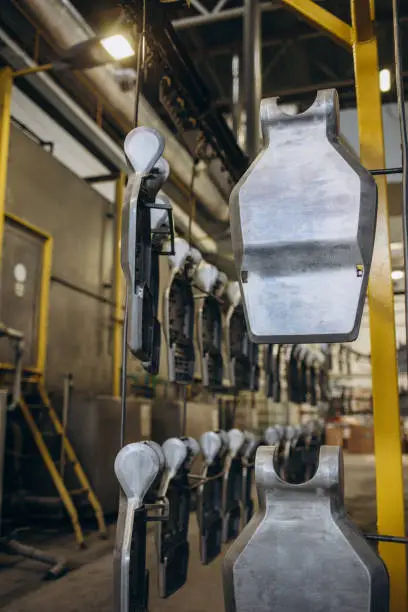
To find the best production partner, you need to look at their technical skills, quality processes, and long-term support infrastructure. Strategic choices about where to get low pressure casting parts affect not only how much they cost, but also how reliable the supply chain is and how well the product works in tough situations.
Manufacturer Evaluation Criteria
Certification methods give people a basic level of confidence in the quality management and process control. Look for foundries that have ISO 9001 and IATF 16949 certifications. Aerospace companies also need to be registered with AS9100. Beyond licenses, you can find out how much output is actually possible by doing facility audits that check the age of the equipment, how it is maintained, and the rules for inspecting it while it is being made. For important structural parts where the internal health can't be compromised, radiographic testing that meets ASTM E155 standards is a must.
The foundry's technical know-how shows in its ability to give feedback on design for manufacturing and process improvement suggestions. Suppliers who give full services, from choosing the metal to finishing the work and treating the surface, are more valuable than those who only do casting. Our building has high-speed machining centers, CNC lathes, and full finishing teams. This means that we can deliver everything from raw castings to precision-machined assemblies with tolerances of up to ±0.05mm all in one place.
Equipment Technology and Investment
Modern low pressure casting tools have servo-driven pressure control, temperature tracking that is done automatically, and data logging so that everything can be tracked. These features allow for stability across production runs and make it easier to find the root cause of problems when they happen. Older pneumatic systems work fine for non-critical parts, but for safety-critical car and aerospace uses, only the newest equipment can provide the accuracy needed.
Buying tools requires a big investment of money. Permanent mold casting made from H13 tool steel is the best at managing heat and lasts the longest, but it costs more at first than options made of aluminum or cast iron. Check the mold design skills of providers and see if they work with reliable tool makers. Defects that can't be fixed with process optimization happen when tools aren't designed or kept properly.
Global Support and Partnership Value
When you buy something from another country, you need suppliers who can handle paperwork, transportation, and contact across time zones. Look for partners who have worked with international companies before and know how to set up export processes. We keep a dedicated technical support team that speaks English as their first language. They help with contact and provide full PPAP documentation that meets North American automotive standards. Our history of working with tier-1 suppliers and aircraft makers shows that we are dedicated to providing consistent quality, no matter where the shipment goes or how many items are ordered.
Conclusion
To design parts for low pressure casting, you need to know a lot about how materials behave, how shapes are limited, and how the manufacturing process works. To be successful, you need to find the right balance between regular wall thickness, the right draft angles, and smart gating to take advantage of the method's natural benefits, such as high material yields, better metallurgical quality, and the ability to heat treat the material. Compared to gravity and high-pressure methods, this controlled-pressure method provides the best cost-to-quality balance for parts of cars that hold the body together, housings for industrial machinery, and electrical structures where dependability cannot be compromised. The final decision on whether or not components meet dimensional tolerances, mechanical property specifications, and long-term performance expectations in demanding operational environments is based on strategic procurement decisions that focus on supplier certifications, technical capabilities, and collaborative design support.
FAQ
What alloys work best for low pressure casting applications?
A356 aluminum alloy is most often used in structural uses that need to be heated to T6. It has a high strength-to-weight ratio and doesn't rust. A380 is good for parts that need a smooth finish, and magnesium metals are good for aircraft parts that need to be very light. Copper alloys are used in electrical wires and heat absorption parts where controlling heat is very important.
How do design factors affect casting quality and defect rates?
Even wall thickness stops localized shrinking, and smooth changes in thickness get rid of hot spots. When draft angles are right, release forces and tool wear are lowered. Filling patterns depend on where the gates are placed; gates that aren't in the right place lead to cold shuts and incomplete cavity packing. When planning is done right, failure rates for low pressure casting drop from 15-20% to below 3%, which makes production much more efficient.
What are typical lead times from design approval to production delivery?
Making tools takes 8 to 12 weeks, based on how complicated they are. Production numbers ship within 4 to 6 weeks after the tool is put to use and the first item is approved, which takes two to three weeks. Parallel processing in rush programs can shorten plans by 30%, but costs go up as a result. Getting suppliers involved early in the planning process speeds up the whole process.
Partner with Fudebao Technology for Superior Low Pressure Casting Solutions
Zhejiang Fudebao Technology is a world-class low pressure casting company that makes precision aluminum parts for the aircraft, automobile, and industrial equipment industries around the world. Our wide range of skills covers the whole production process, from managing the melt to CNC cutting and finishing the surface. This way, we can guarantee dimensions that are accurate to within 0.05 mm and mechanical properties that are better than industry standards. We offer one-stop solutions that eliminate the need to coordinate with multiple providers. We do this by using advanced casting tools, high-speed machining centers, and strict inspection processes that include radiographic testing and pressure decay analysis. Get in touch with our engineering team at hank.shen@fdbcasting.com to talk about the parts you need, get comments on the design for manufacturing, and get cheap quotes. Our engineers have decades of experience in metalworking and have delivered parts to North American markets before.
References
American Foundry Society. Aluminum Casting Technology Handbook, 4th Edition. AFS Publications, 2019.
Campbell, John. Complete Casting Handbook: Metal Casting Processes, Metallurgy, Techniques and Design. Butterworth-Heinemann, 2015.
SAE International. ASTM B618: Standard Specification for Aluminum-Alloy Investment Castings. ASTM Standards, 2021.
Kaufman, J. Gilbert and Rooy, Elwin L. Aluminum Alloy Castings: Properties, Processes, and Applications. ASM International, 2004.
European Foundry Association. Low Pressure Die Casting: Process Parameters and Quality Control. EFA Technical Report Series, 2018.
Society of Manufacturing Engineers. Fundamentals of Metal Casting Process Design and Simulation. SME Technical Papers, 2020.



_1756349071334.webp "HAAS mounting bracket")
_1756346668222.webp "Aluminum castings Decorative buckles")