The Advantages of Low Pressure Casting in Producing Complex Aluminum Parts
2026-07-07
Low-pressure casting is a clever way to make parts out of metal that need to be very strong and fit together perfectly. This controlled counter-gravity process makes parts that are much more solid, have better mechanical properties, and meet uniform quality standards that are hard to reach with gravity or sand casting. Low-pressure casting further enhances these advantages by enabling finer microstructural control, reducing gas entrapment, and improving yield in complex geometries. When purchasing professionals look at different manufacturing technologies, it's important to know about these benefits because they come in handy when they need to find important parts for things like car assemblies, industrial machinery, electrical housings, or flight uses where failure is not an option.
Understanding Low-Pressure Casting Technology
How the Process Works
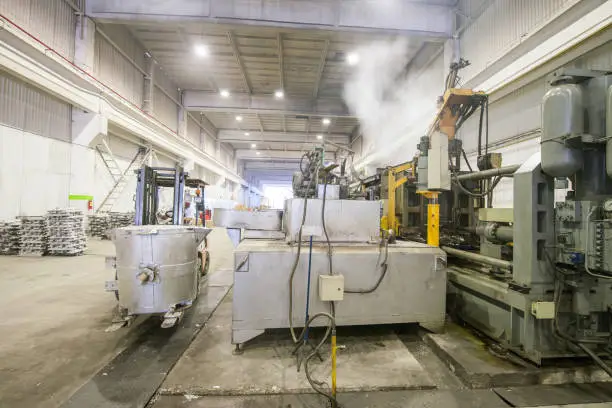
The main thing that makes this method different is that it fills molds in a controlled way. A covered holding oven holds the molten aluminum alloy and is directly linked to the mold hole by a vertical riser tube. The liquid metal is slowly pushed up into the die by pneumatic pressure between 0.02 and 0.1 MPa. It fills the die smoothly from the bottom to the top. This counter-gravity method gets rid of the splashing and trapping of oxides that happen with standard gravity pouring methods.
Since the pressure stays the same during solidification, the liquid container can keep causing the casting to shrink as it cools. When the metal has solidified, the pressure drops, and the metal that hasn't been used runs back into the furnace instead of hardening as scrap feeders. With this closed-loop method, material yields are higher than 90%, while in sand casting with big risers, they are usually between 50 and 60%.
Optimal Aluminum Alloys and Their Properties
Aluminum metals like A356 and A357 work really well with this process because they are very fluid, don't rust, and can be heated to change their shape. These metals have magnesium in them to make them stronger through precipitation hardening and silicon to make them easier to cast. To get the fine eutectic structure needed for better elongation qualities, the iron amount must be kept below 0.15% and strontium must be changed.
Parts made this way don't have many holes in them like parts made by high-pressure die casting do because the trapped gas stops the heat treatment. This allows for full T6 solution and age hardening, which raises the tensile strength to 280–310 MPa and the extension to 6–10%. These kinds of mechanical qualities are very important for safety-rated parts in chassis systems and pressure tanks.
Temperature Control and Quality-Critical Elements
Keeping the metal's temperature within small ranges is very important for process accuracy. For A356 alloy, these ranges are usually 700–730°C. Lower temperatures cause solidification to happen too quickly and cold shuts, while too much heat encourages gas absorption and grain coarsening. Modern machines use PID-controlled pressure curves to change the filling speed on the fly. This keeps the flow smooth so that an oxide film doesn't form on the melt front.
Managing mold temperature has an equal effect on the quality of the end result. By heating permanent steel molds to 250–350°C ahead of time, you can make sure that the metal can flow easily into thin sections and that it solidifies in a way that moves from the edges toward the gate. Regularly applying refractory die coatings protects equipment and makes it easier to release parts, which extends the mold's life to 30,000 to 50,000 rounds before it needs major repairs.
The Key Advantages of Low-Pressure Casting for Complex Aluminum Parts
When manufacturing engineers and quality teams look at casting technologies, they quickly realize that the choice of process is the most important factor in determining whether final parts meet the strict requirements of an application. Here are the main perks this method brings to success and the economy:
- Extremely Accurate Dimensions: Parts regularly meet ISO 8062 CT6–CT7 tolerance grades, staying within ±0.3mm on important dimensions without needing extra work. The controlled filling reduces the differences in size caused by turbulence, giving stability from part to part that makes assembly easier and lowers the number of parts that are rejected during incoming inspection.
- Superior Mechanical Integrity: The thick, fine-grained microstructure that forms when pressure is applied directly leads to higher tensile strength, yield strength, and resistance to wear. Parts go through a strict X-ray check that meets ASTM E155 standards. This makes sure that they meet the internal soundness requirements of aircraft and car OEMs. This structural stability is very important for safety-critical suspension parts and pressure-containing housings, where small flaws could lead to a catastrophic failure.
- Reduced Porosity for Heat Treatment: In high-pressure die casting, trapped air causes cracking during solution heat treatment. This method, on the other hand, makes casts that can be fully heated. T6 aging changes the mechanical properties, which lets designers define higher loads and lower component weight at the same time. This is a huge benefit for projects to improve the range of electric vehicles and reduce the weight of aircraft components.
- Excellent Surface Finish: Achieving a surface roughness of Ra 3.2–6.3 µm straight from the mold cuts down on or gets rid of the need for finishing processes. Auto wheel makers really like this feature because it lowers the cost per unit while still giving customers the quality they expect in terms of looks. In the same way, electrical housing uses gain because they can get conductivity contact areas without having to do a lot of machining.
- Material Efficiency and Sustainability: Getting rid of big feeders and runners cuts down on the amount of energy used for melting and the amount of scrap that needs to be reprocessed. Material utilization rates above 90% directly lead to lower costs for raw materials per casting and less damage to the environment, which is in line with companies' sustainability promises that are being looked at more closely in B2B purchasing decisions.
The technology, low pressure casting, is the best way to make parts that need to be able to handle dynamic loads, keep their integrity under pressure, or meet tight dimensional standards across medium to high production rates because of all of these benefits. The original investment in tools is balanced by better quality per part and lower costs further down the line, resulting in a favorable total cost of ownership estimate that financial stakeholders value.
Low-Pressure Casting Versus Other Casting Methods: A Strategic Comparison
Comparison with High-Pressure Die Casting
High-pressure die casting pushes liquid metal into a mold at speeds of up to 100 MPa and speeds of 40 to 50 m/s. This very high speed quickly fills thin-walled parts, but it also makes a lot of turbulent flow that catches air and oxide films. The resulting porosity stops heat treatment and only allows non-structural parts to be used. Cycle times are shorter, which makes it cheaper for housings for consumer goods and frames that aren't very important.
On the other hand, the managed filling of the low-pressure method gives up speed for better quality inside. Cycle times are longer—2 to 5 minutes instead of 30 to 90 seconds for high-pressure methods—but parts can be heated and are now pressure-tight. For thin-walled cosmetic parts, procurement managers should choose high-pressure methods; for structural, safety-rated, or pressure-containing parts, they should choose low-pressure methods.
Advantages Over Gravity and Sand Casting
In traditional gravity casting, metal is poured into molds using only the hydraulic head to fill and feed the molds. This easy method has trouble with complicated shapes, makes grain structures that are too big, and needs big feeds that lower material output. Sand casting has low tooling costs, which makes it good for making samples. However, the rough surfaces and wide tolerance bands make it bad for making precise parts.
Both of these problems are fixed by the pressure feeding system. It pushes metal into tight spaces and thin sections that gravity alone can't reliably fill. During solidification, it keeps the feeding pressure high to prevent shrinking gaps in thick sections. Surface finish and dimensional accuracy are much better than with gravity casting or sand casting, which cuts down on the costs of machining and checking.
Practical Selection Guidance
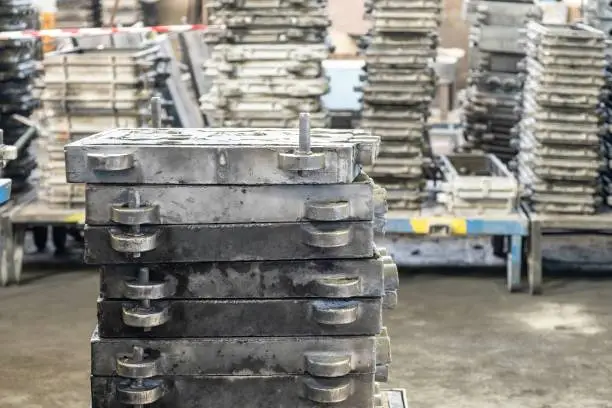
The procurement team should make sure that the casting technology they use fits the needs of the product. This method is best for parts that need to be heated to make them stronger, keep their air or liquid tightness under pressure, have complicated internal shapes with undercuts made by sand cores, or need the same mechanical properties across production lots. The best places to use it are in cylinder heads, motor housings, key suspension parts, and car wheels.
For some situations, other methods are still useful. For example, high-pressure die casting is good for making a lot of thin-walled non-structural parts; sand casting is good for making big parts or prototypes in small numbers; low pressure casting is good for producing components with improved structural integrity and lower porosity, often used for wheels or chassis parts; and gravity casting is good for making simple shapes where mechanical features are not as important. The best way to choose a technology is to weigh these trade-offs against your unique performance needs, output volumes, and quality standards.
Procurement Considerations for Low-Pressure Cast Aluminum Parts
Supplier Evaluation Criteria
When looking for skilled industrial partners, you need to look at more than just prices. Getting ISO 9001 certification shows that you care about quality management systems, and IATF 16949 certification focuses on the needs of the automobile industry, covering things like PPAP paperwork and control plan adherence. For aerospace uses, you need AS9100 approval and material traceability tools that keep track of the alloy's chemistry from the ingot to the finished part.
Manufacturing skill shows up in the abilities of the tools and the knowledge of how the process works. Check to see if possible providers use new computer-controlled casting machines with customizable pressure curves instead of older pneumatic systems that are harder to change. Ask them where they get their alloys. Good providers get certified alloys with tight chemistry tolerances instead of secondary materials with bigger standard ranges that cause property changes.
Total landing costs and the efficiency of communication are both affected by geography. Asian sellers may offer good piece prices, but you should think about longer wait times, higher shipping costs, complicated customs procedures, and possible intellectual property issues. North American and European sources are closer, which is good for making prototypes and working together as engineers, but each unit costs more.
Pricing Structures and Lead Time Expectations
The biggest upfront cost is the tooling. The cost of a fixed model depends on how complicated the cavity is, how many cores are needed, and how much is expected to be produced. When this investment is spread out over the number of units that will be made, the break-even point is usually between 5,000 and 20,000 units, based on how complicated the part is. Suppliers should give clear quotes for tools that break down the costs of design, machining, and trial confirmation.
Prices for each part are based on the cost of materials, the amount of energy used, the cycle time, and the output rate. Ask for quotes that clearly break down the costs of casting from the costs of extra processes like heat treatment, machining, and finishing the surface. Knowing how these costs are organized helps with value engineering, which is the process of finding ways to make designs simpler to make without sacrificing usefulness.
Standard wait times are 8–12 weeks for making the tooling and testing the first item. After that, production runs start 4-6 weeks after the molding is approved. Supply chain problems can be avoided by setting realistic standards for schedules. Strategic agreements with suppliers that include capacity promises and rolling forecasts make it easier for everyone to plan production.
Crafting Effective RFQs
Accurate quotes can be made faster and more often with detailed technical packages. It's important to include 3D CAD models, 2D sketches with GD&T callouts, material specs with needed mechanical properties, production volume estimates, and quality requirements like leak testing parameters or levels of X-ray inspection. Make sure you are clear about the heat treatment needs because T6 age has a big effect on costs and wait times.
Make it clear if you want finished, made parts delivered to you as-is or casting blanks that your team will finish on their own. This choice affects the choice of seller because some casting experts can't do precise cutting but others offer a full range of services. Outline the needs for shipping, packing, and marking to avoid any shocks in the logistics process.
Design Tips and Best Practices for Low-Pressure Cast Aluminum Parts
Wall Thickness and Geometric Considerations
The best designs keep the wall thickness between 2.5 and 6 mm, which balances the need for strength with the limitations of casting. Parts that are thinner run the chance of not filling all the way or cold shutting, while parts that are too thick cause shrinkage porosity even when pressure is applied. When strength calls for thicker parts, use smooth changes and put them close to the gate, which is where feeding works best.
Don't make sudden changes in thickness because they can cause stress concentrations that make solidification harder. Use large radii to blend changes over lengths that are at least three times the difference in thickness. These design practices stop hot tearing while the material is solidifying and improve wear performance in service, which is very important for car suspension parts that are loaded and unloaded millions of times.
Low pressure casting is particularly well‑suited to this context because its controlled fill and directional solidification further reduce the risk of hot tearing and porosity, while also enhancing the wear resistance and structural integrity demanded by such highly cycled suspension components.
Incorporating Fillets, Draft Angles, and Gating
Sharp internal corners put stress in one place and make it harder to machine lasting models. Give corners inside the box at least 1.5 mm of radius and sides outside the box at least 0.5 mm of radius. These features make it easier for metal to move, cut down on mold wear, and improve the mechanical properties of finished casts by getting rid of stress risers that cause fatigue cracks.
Draft angles make it easier for parts to come out of fixed molds. On the outside, the minimum draft should be between 0.5 and 1 degree, and on the inside, it should be between 2 and 3 degrees. When there isn't enough draft, drag marks appear on the surface, ruining the finish. This speeds up mold wear, which raises upkeep costs and rejection rates.
The position of the gate has a big effect on the filling pattern and the spread of sound. Put the gates at the part that is the heaviest so that metal can fill in from the weaker areas up. This setup encourages solidification to move toward the pressure gate, which lets the material keep feeding and removes shrinkage holes in important areas.
Collaboration and Simulation Validation
When design experts and factory partners work together early on, it stops expensive redesign iterations. Before finalizing the drawings, share the original ideas and ask for feedback on worries about castability. Foundry engineers with a lot of experience can find places where defects might be and suggest changes that keep the usefulness while making it easier to make.
Modern modeling software can model how metal flows, how temperatures change, and how solidification progresses. These tools figure out where the holes will be, find feeding lines that aren't working right, and improve gate systems before cutting steel. Virtual validation cuts down on the number of physical trials needed, speeds up development, and boosts trust that production tools will deliver quality on the first try.
Rapid molding or additive manufacturing prototype casting runs test designs in real production settings. Physical models allow for technical testing, making sure that parts fit together properly, and finding problems that were not expected during assembly. This step-by-step method lowers the risk of moving on to full-scale production tools and mass production.
Conclusion
Using this precise manufacturing method for complicated metal parts has strategic benefits that go beyond just comparing costs. Professionals in procurement know that the choice of process is a big part of making sure that finished parts meet the strict quality, size, and structure standards of safety-critical uses. Low pressure casting is the best for making structural parts for cars, EV powertrains, aerospace housings, and industrial equipment assemblies that can't be compromised on performance because it has great mechanical integrity, can be heat treated, is pressure tight, and stays the same size.
Working with manufacturing partners that have a lot of experience and can show that they have both technical know-how and a well-developed quality system will make sure that your supply chain always gets parts that meet standards throughout the lifecycle of a production. Choosing the right process and working with the right provider pays off in the form of fewer guarantee claims, better product performance, and the ability to stand out in competitive markets.
FAQ
What production volumes make this method economically viable?
Depending on the complexity of the parts and the cost of the tools, the break-even point is usually somewhere between 5,000 and 20,000 pieces. The cost of the permanent mold is spread out over many production runs, which makes the cost per part lower than with sand casting for middle to high numbers. When the quantity is low, sand casting might be a good choice even though the features aren't great, and when the quantity is very high and heat treatment isn't needed, high-pressure die casting might be the best choice.
Can this process accommodate complex internal geometries?
With the help of sand cores, the technology is great at making complex internal features. Due to the low pressure (about 1 bar), normal shell sand or cold box cores don't get broken or moved during filling. They stay together. This feature is very important for cylinder heads that have cooling channels inside them or motor housings that need empty parts to handle heat.
What quality certifications should procurement prioritize?
ISO 9001 is a general standard for quality management, and IATF 16949 is more specific to car needs, covering things like PPAP filing and statistical process control. For aerospace uses, you need AS9100 approval along with the ability to track materials and do NDT inspections. Ask for proof that the company follows the ASTM B618 standards for aluminum fixed mold casts and the ASTM E155 radiographic acceptance criteria.
Partner with Fudebao Technology for Precision Aluminum Casting Solutions
With its expertise in precision CNC cutting and castings made of aluminum alloy, copper alloy, and stainless steel, Zhejiang Fudebao Technology has become a leading producer. Our integrated manufacturing plant has high-tech tools like computer-controlled casting machines, high-speed machining centers, and CNC lathes that help with the whole production process, from melting the metal to treating the surface. The finished parts we make can have tolerances as small as ±0.05mm. Automotive OEMs, aerospace manufacturers, industrial equipment makers, and green energy companies are just a few of the tough industries we serve. They need heat-treated, pressure-tight housings and structural components.
Our ISO-certified quality systems make sure that the results of each production run are the same. They do this by allowing for thorough inspections that include chemical analysis and radiography testing. Contacting us personally is the best way for procurement teams to find a dependable source with a track record of success in making difficult aluminum castings. You can email hank.shen@fdbcasting.com to talk about your unique component needs, ask for technical advice, or get thorough quotes for your next project.
References
1. Campbell, J. (2015). Complete Casting Handbook: Metal Casting Processes, Metallurgy, Techniques and Design. Butterworth-Heinemann.
2. American Foundry Society. (2018). Aluminum Casting Technology. AFS Technical Publications.
3. ASM International Handbook Committee. (2017). ASM Handbook Volume 15: Casting. ASM International.
4. Kaufman, J.G. & Rooy, E.L. (2016). Aluminum Alloy Castings: Properties, Processes, and Applications. ASM International.
5. Dispinar, D. & Campbell, J. (2013). Porosity, Hydrogen and Bifilm Content in Al Alloy Castings. Materials Science and Engineering Reports.
6. Bonollo, F., Urban, J., Bonatto, B. & Botter, M. (2019). Gravity and Low Pressure Die Casting of Aluminium Alloys: A Technical and Economical Benchmark. La Metallurgia Italiana.



_1756360265131.webp "Aluminum casting chair legs")
_1756349957728.webp "metric v belt pulley")
_1756346613780.webp "Aluminum tent base Casting")