
Structural Aluminium Die Casting: The Definitive Guide for Engineers and Buyers
2026-07-20
Structural aluminium die casting is a precise manufacturing technique in which molten aluminium alloy is injected into hardened steel moulds while under high pressure—usually between 1,500 and 30,000 psi—to create parts that are accurate in size and strong. This process solves important engineering problems like lowering weight, integrating complex shapes, and making production scalable for fields that need strong, light parts. Engineers and procurement professionals can make smart decisions about how to make parts by understanding this technology and balancing performance needs with cost-effectiveness and delivery dates.
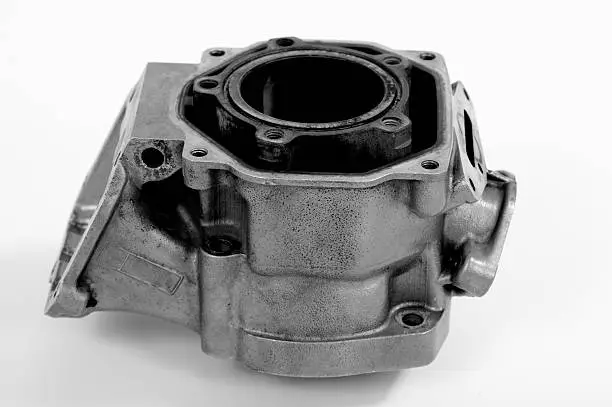
Understanding Structural Aluminium Die Casting: Basics and Benefits
What Makes Structural Aluminum Castings Unique
When used in structural applications, structural aluminium die casting stands out because it can hold a lot of weight while being very strong. Alloys like A380, ADC12, and A356 have a specific gravity of about 2.7 g/cm³, which is about one-third the weight of steel. They also have tensile strengths between 240 and 330 MPa, depending on the alloy and how it is heated. This ratio of strength to weight is very useful for automotive chassis brackets, aerospace mounting housings, and industrial equipment frames, where lowering mass has a direct effect on how well they work or how much fuel they use.
Core Advantages of the Die Casting Process
Die casting technology has many useful advantages that help with building and purchasing issues. The process can get wall thicknesses as low as 1.5 mm while keeping dimensional accuracy at ±0.1 mm, which means that less secondary machining is needed. Aluminium is better than other materials for removing heat from electrical motor housings and power equipment enclosures because it has a thermal conductivity of 96 to 120 W/m·K. The natural oxide layer protects against rust by itself, and anodising or powder coating can make it even stronger. Production cycle times for each part range from 30 seconds to several minutes. This makes it possible to make a lot of them at once at a low cost per unit compared to other methods like machining or forging.
Preventing Common Casting Defects
For quality assurance in structural moulds, you need to know about possible flaws and how to fix them. Porosity happens when trapped air or gas makes holes inside a structure, which weakens it. We solve this problem by making the gate design better, using vacuum-assisted die casting systems, and carefully managing the injection speed. During solidification, defects in shrinkage can happen. These problems can be avoided by designing the cooling channels correctly and increasing the pressure during the solidification phase. Cold shut defects, in which two metal flows don't join properly, can be avoided by controlling the mould temperature properly and simulating the flow during the design phase. Following NADCA standards and keeping the dies in good shape enables uniform output over production runs of more than 60,000 shots per mould.
Environmental and Sustainability Considerations
Modern structural aluminium die casting is in line with global efforts to protect the environment because the materials can be recycled and the process uses less energy. Aluminium keeps its traits even after being recycled over and over again. Making recovered aluminium only takes 5% of the energy that is needed to make new aluminium. When compared to subtractive production methods, the near-net-shape feature cuts down on material waste. Many automakers now need lifetime studies that show lower carbon footprints. Die-cast structural components help meet these environmental goals in a measurable way while maintaining the same performance standards as castings made from virgin materials.
Comparing Structural Aluminium Die Casting with Alternative Methods
Die Casting Versus Sand Casting
Structural aluminium die casting is more precise and has a better finish, but sand casting is more flexible and can be used for both big parts and low-volume production. Even though sand casting can handle complicated internal shapes and different metal compositions, it needs a lot of machining to get to the point where it works. For sand casting, the surface roughness is usually between 6.3 and 25 μm Ra. For die casting, it can be between 1.6 and 3.2 μm Ra. The speeds of production are very different. Parts made by die casting are finished in minutes, while parts made by sand casting take hours each, including setting up the mould. The economic crossover happens when between 1,000 and 5,000 units are produced each year. Above this number, investing in die casting tools leads to lower per-part costs and better dimensional accuracy, which is important for structural uses.
Aluminum Versus Magnesium Die Castings
Even less dense than aluminium, magnesium metals have a density of about 1.8 g/cm³. However, they are more expensive and less resistant to rusting. In most places, magnesium castings need protective coatings, which adds steps to the process and costs money. Aluminium is better than other metals at resisting corrosion, so it is better for outdoor gear, marine uses, and parts that will be wet or salty. Aluminium is 20–40% cheaper than steel, based on the market. Magnesium is great for electronic housings because it blocks electromagnetic waves very well. On the other hand, aluminium is better for heat sinks because it conducts heat better. Dimensional accuracy is about the same for both metals, so the choice of material depends on the application setting and performance objectives.
Die Casting Compared to Forging and Machining
Forged aluminium parts have better grain structure and mechanical properties, but they are much more expensive for parts with complex shapes. Forging is best for parts that need to be very strong and not wear down easily, like structural parts for aeroplanes or safety-critical suspension parts for cars. For complicated forms, die casting is the best way to make brackets, housings, and mounting structures because it gives parts 70–85% of the strength of forged parts at 40–60% of the cost. CNC machining from billet aluminium gives you the most freedom and accuracy, but it gets too expensive to do in quantities larger than prototypes. A machined structural bracket might cost $45-80 per unit when ordered in quantities of 500. On the other hand, the same die-cast part costs only $8–15 per unit when ordered in quantities greater than 10,000, with consistent quality and little need for labour.
The Structural Aluminium Die Casting Process: From Design to Delivery
Design Principles for Optimal Castability
For structural aluminium die casting to work, the design needs to be optimised so that it can be made in the right way. Different cooling rates can cause warping, but wall thickness uniformity stops that from happening. Transitions between sections should be gradual instead of abrupt. Draft angles between 1-3 degrees make it easier to remove parts without hurting their features. Ribs and gussets make the structure more rigid without using too much material. This keeps the strength while keeping the weight low. Undercuts need side-action mechanisms that make tools more complicated and cost more, so designs that keep these features to a minimum are better for the bottom line. During the DFM (Design for Manufacturing) phase, we work together with engineering teams to find potential flaws using flow simulation software, which cuts down on development time and ensures the success of the first product.
Post-Casting Operations and Surface Treatments
Usually, structural castings need extra steps to be finished to the exact specifications. When you use CNC cutting, you can get tolerances as close as ±0.05mm on important mounting surfaces, threaded bosses, and sealing faces. This is needed for assemblies that need to be precise. Some types of heat treatment, like T5 or T6 tempers, change the mechanical qualities of a material. For example, solution heat treatment and artificial ageing with T6 improve the tensile strength by 15 to 25 percent. Surface treatments keep things from rusting and make them look better. For example, powder coating gives things long-lasting, decorative finishes in many colours; chromate conversion coatings protect against chemicals; and anodising (using low-silicon alloys like A360) makes surface layers that are hard and good for wear applications. Each treatment choice is based on the application's operational environment, aesthetic needs, and budget limitations.
Quality Control and Inspection Protocols
Strict quality control makes sure that all of the structure casts meet the performance requirements as they are being made. Coordinate Measuring Machines (CMMs) are used for dimensional inspection, which compares important features to CAD models with an accuracy of 0.01mm. Radiographic or ultrasonic testing can find internal porosity in safety-critical parts, especially for aerospace and automotive uses that need PPAP paperwork. Tensile strength, yield strength, and elongation properties are checked mechanically to make sure they meet alloy specifications. We keep our ISO 9001 certification and use statistical process control to keep an eye on shot weight, cycle time, and fail rates so we can spot trends before they hurt quality. First-article inspection reports, material certifications, and dimensional reports are all pieces of traceability evidence that procurement teams need to qualify suppliers and do regular audits.
Production Planning and Lead Time Considerations
Procurement professionals can better plan projects when they know how long realistic deadlines are. Making the moulds for structural die castings usually takes 8 to 12 weeks, depending on how complicated they are. Making multi-cavity or side-action moulds takes longer. After the tools are finished, production sampling and approval take an extra two to three weeks before mass production starts. Production capacity depends on the size and complexity of the part. Our building has high-speed machining centers and various die casting machines with clamping forces ranging from 180 to 1250 tonnes, which means that every day we can make anywhere from hundreds to thousands of pieces. The minimum order quantities (MOQs) for structural components are usually between 500 and 2,000 pieces. These MOQs are used to balance the costs of amortising tools with the costs of keeping inventory. When you make a lot of something, the cost per unit may go down by 30 to 50 percent as the annual order size goes from 5,000 to 50,000 pieces.
Procurement Guide: Finding and Working with Reliable Aluminium Die Casting Suppliers
Essential Supplier Evaluation Criteria
Choosing the right structural aluminium die casting partner has a big effect on the success of the project and the reliability of the supply chain in the long term. A basic requirement is to have the right certifications. For example, ISO 9001 certification shows that you have quality management systems, and IATF 16949 certification shows that you know how to work in the car business. When an OEM works with tier-one suppliers, it shows that they can meet strict standards for specs and paperwork. The whole process should be able to be manufactured, from melting to finishing. Integrated operations cut down on wait times and quality handoff risks. Ask for tours or virtual audits of the facility to check the condition of the equipment, the controls for the process, and the organization's abilities. Check out customer references and performance metrics like the percentage of on-time deliveries, the number of PPM defects, and how quickly the company responds to requests for engineering changes.
Understanding Pricing Structures and Cost Drivers
Die casting prices are based on a number of different cost factors that procurement teams need to be aware of in order to negotiate effectively. The highest upfront cost is the tooling, which can be anywhere from $8,000 to $45,000 depending on the complexity of the part, the number of cavities, and the side-action needs. Costs per part include material, labour, machine time, and finishing operations. For aluminium alloys, the material makes up 40–60% of the piece price. Volume promises have a big effect on unit prices. Because sellers spread the cost of tools over expected quantities, deals that last longer and cover more volumes lead to better prices. For example, machining costs by setup plus hourly rates, powder coating costs between $1.50 and $4.00 per part, and specialised testing has inspection fees that are added to each piece. Ask for specific cost breakdowns to find ways to save money and get accurate quotes from different providers.
Regional Sourcing Considerations: USA and Global Markets
When choosing a geographic supplier, you have to think about cost, logistics, protecting intellectual property, and how well you can communicate. There are benefits to working with domestic suppliers in the USA, such as shorter wait times, easier site trips, and a simpler way to solve quality problems. Aerospace and defence contractors that need ITAR compliance or domestic content often buy from American manufacturers because they use advanced automation and strict quality systems. European suppliers are very good at precise engineering and coming up with new ways to do things, especially for uses in cars. It's better to build relationships with capable suppliers who show technical proficiency, open communication, and a dedication to continuous improvement than to just look for the cheapest options, which could mean sacrificing quality or delivery reliability.
Building Strategic Supplier Partnerships
Long-term ties with suppliers provide benefits beyond individual transactions. These benefits include working together on technical projects, getting priority capacity allocation when the market is tight, and ongoing efforts to cut costs. Share predictions and product roadmaps to help suppliers plan their capacity and purchases of materials in the best way possible. Set up vendor-managed inventory programs for parts that are used in large quantities to cut down on shipping costs and improve cash flow. Review your business regularly and talk about success metrics, ways to make things better, and how the market is changing supply. Thank people for their hard work by giving them more business and case study options that are good for everyone. Strategic partnerships turn suppliers into extensions of a company's own engineering and operations teams. This speeds up innovation and makes the company more competitive.
Industry Applications and Future Trends of Structural Aluminium Die Casting
Automotive and Transportation Sectors
The auto industry still buys the most structural aluminium die castings, thanks to strict goals to make cars lighter and the electric vehicle trends. To balance out the weight of the batteries and get the most miles out of them, battery electric cars need aluminium for the motor housings, gearbox cases, battery enclosure frames, and suspension braces. Most EVs have 30 to 50 percent more aluminium than regular cars. More and more, crash management systems use energy-absorbing structures made of aluminium, which has both high strength and controlled deformation properties. Autonomous car sensor mounting parts need to be stable in terms of size and resistance to shaking, which die-cast aluminium reliably provides. We provide PPAP-documented parts to tier-one automotive suppliers that meet strict quality standards and just-in-time delivery schedules that keep assembly lines running smoothly.
Industrial Machinery and Heavy Equipment
Aluminium die castings are useful in industry for making pump housings, compressor bodies, gearbox enclosures, and parts of hydraulic systems that need to be lighter for easier handling and better performance. Pressure die casting alloys can withstand temperatures of 200°C or more, which lets them be used in high-temperature settings common in industrial processes. Corrosion resistance is important for tools that will be used for many years in chemicals, water, or outdoor environments. When you can cast mounting bosses, cooling channels, and complicated internal paths as integral parts, you can cut down on assembly costs and possible leak points compared to fabrications that are bonded together. Flexible batch production can meet the different volume needs of industrial OEMs, from small runs of prototypes to large series production of thousands of units every year.
Electrical and Energy Applications
Motor frames, electrical enclosures, junction boxes, and heat sink assemblies for power generation and distribution equipment are all made from aluminium die castings. Aluminium is a great material for getting rid of heat from power electronics because it is a good thermal conductor. This makes components last longer, and systems work more efficiently. The material is good for bus bar housings and connector bodies because it conducts electricity well (about 37–40% IACS for die casting alloys). Outdoor installations, like renewable energy systems and utility infrastructure, benefit from being naturally resistant to corrosion. Aluminium structural castings are being used more and more in the wind turbine and solar tracking mechanisms industries to make towers and support structures lighter while still meeting the 20–25 year service requirements.
Aerospace and Emerging Technologies
For aerospace uses, the highest quality standards are needed. For example, structural castings need to be fully traceable, inspected with advanced NDT equipment, and certified to AS9100 quality management systems. Aluminium is strong for its weight, which is useful for parts inside planes, frames for unmanned aerial vehicles (UAVs), and gear for placing satellites. Every gram can affect how much fuel or cargo can be carried. Die-cast structural frames and joint housings with complex geometry and precise mounting surfaces are being used in new robotics applications. When biocompatibility, sterilisation compatibility, and weight reduction are important, medical equipment makers use aluminium die castings for surgical instrument parts and diagnostic device housings. Real-time tracking, predictive maintenance, and digital twin simulation are some of the ways that process automation and Industry 4.0 technologies improve output consistency. This raises quality while lowering costs.
Conclusion
Structural aluminium die casting delivers an optimal balance of mechanical performance, manufacturing efficiency, and cost effectiveness for engineers and procurement workers in the automobile, industrial, electrical, and aircraft sectors. Other ways of making things aren't as good at making complicated shapes with accurate measurements, high strength-to-weight ratios, and resistance to corrosion. This process can do these things more cheaply when making a lot of them. To be successful, you need to pay close attention to design principles, criteria for choosing suppliers, and quality assurance methods during the whole process of development and production. Figuring out the properties of the material, the processes that can be used, and the current trends in the industry will help leaders use this flexible technology to their advantage in efforts to make things lighter, more environmentally friendly, and more creative.
FAQ
What advantages does structural aluminium die casting offer over alternative manufacturing methods?
When producing in quantities greater than 1,000–5,000 pieces per year, structural aluminium die casting offers dimensional accuracy within 0.1mm, smooth surface finishes (1.6–3.2 μm Ra), and quick production cycles that significantly lower the cost per unit. The method makes parts that are almost net-shaped and have features built right in. This means that no building steps are needed, like there are with soldered or machined parts. Aluminium's 2.7 g/cm³ density makes it stronger for its weight than steel. It also has better resistance to corrosion and better thermal management, which are important for structural uses.
How can I ensure consistent part quality from a die casting supplier?
Quality control starts with choosing a supplier. Check for ISO 9001 certification, industry-specific certifications (like IATF 16949 for automotive), and ask for customer references that show the supplier has a track record of success. Set clear requirements, such as acceptable tolerances for dimensions, required mechanical properties, and inspection procedures. Need PPAP paperwork, like material licenses, measurement reports, and process capability studies. Set up new inspections and regular checks to keep an eye on how things are going. Work with suppliers who communicate clearly and are dedicated to always getting better by using statistical process control and corrective action systems.
What factors influence pricing and lead times for structural aluminum castings?
Initial investment and development time are affected by the complexity of the tools used. Simple single-cavity moulds take 8–10 weeks and cost $8,000–$15,000, while complicated multi-cavity or side-action tooling takes 12 weeks or more and costs $25,000–$45,000. Part shape, wall thickness, and precision requirements all have an effect on cycle time and yield rates, which in turn have an effect on the cost per piece. The number of orders has a big effect on unit prices because of the amortisation of tools and the efficiency of production. For example, if you increase the number of orders from 5,000 to 50,000 per year, costs may drop by 30 to 50 percent. Depending on how complicated they are, secondary processes like grinding and surface treatments take more time and cost more money.
Partner with Fudebao Technology for Precision Structural Aluminium Die Casting Solutions
Zhejiang Fudebao Technology is ready to support your structural aluminium die casting requirements because we can do everything under one roof, including melting, casting, precise machining, and surface treatment. Our factory has high-tech high-speed machining centers, CNC lathes, and die casting machines that can handle loads from 180 to 1250 tonnes. They can achieve tolerances of ±0.05mm, which is very close to what the automotive, aerospace, industrial equipment, and electrical industries need. We are a reliable manufacturer that works with top OEMs around the world. We offer full PPAP paperwork, quality systems that are ISO 9001 approved, and one-stop shipping from blank to finished part. Email our engineering team at hank.shen@fdbcasting.com to talk about the needs of your project, get technical evaluations, or get quotes from other companies for your next structural casting job.
References
1. North American Die Casting Association (NADCA). "Product Specification Standards for Die Castings." 2020 Edition.
2. ASM International Handbook Committee. "ASM Handbook Volume 15: Casting." ASM International, Materials Park, Ohio, 2008.
3. Kaufman, J. Gilbert, and Rooy, Elwin L. "Aluminum Alloy Castings: Properties, Processes, and Applications." ASM International, 2004.
4. Lumley, Roger (editor). "Fundamentals of Aluminium Metallurgy: Production, Processing and Applications." Woodhead Publishing, 2011.
5. Society of Automotive Engineers (SAE). "Aluminum Casting Alloys: Enabling Tools for Improved Performance." SAE Technical Paper Series, 2019.
6. Vinarcik, Edward J. "High Integrity Die Casting Processes." John Wiley & Sons, New York, 2003.



YOU MAY LIKE