
Die-Cast Aluminum Explained: 8 Must-Know Facts
2026-07-20
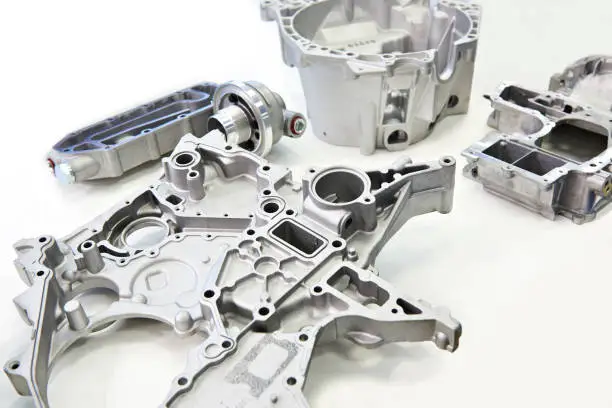
Die-cast aluminum is one of the most important ways to make things in industries that need precision, durability, and efficiency. When molten aluminum alloys (usually A380, A383, or ADC12) go through this high-pressure metal forming process, they are turned into complex shapes that are both strong and lightweight. During the process, liquid metal is injected into sharpened steel dies at pressures higher than 30,000 psi. This makes parts that are very accurate in size and have smooth surfaces. Understanding die-cast aluminum can help people who work in procurement in the automotive, industrial machinery, electrical systems, and aerospace industries cut down on assembly costs, meet goals for lighter products, speed up production times, and keep strict quality standards even during large-scale production runs.
What Is Die-Cast Aluminum and Why It Matters
Defining High-Performance Aluminum Alloys
Choosing the right alloy is the first step in making sure that casting operations go well. The A380 is still the workhorse of the business. It has a tensile strength of about 47 ksi and a yield strength of about 23 ksi, and it only weighs 2.71 g/cm³. This mixture strikes a balance between mechanical strength and fluidity during injection, making it possible to make complex shapes that would be hard to make with traditional tools. The silicon content improves the mold-filling properties, but it also changes how the surface is treated, which is something we'll talk about later.
Core Material Advantages for Industrial Applications
Die-cast aluminum parts solve important technical problems in a number of different ways. The strength-to-weight ratio lowers the mass of a vehicle in automotive applications. This directly saves fuel and increases the range of an electric vehicle. With a thermal conductivity of about 96 W/m-K, housings can be used as active cooling systems, so power electronics don't need separate heat sinks. When combined with the right surface treatments, corrosion resistance can handle harsh environments like being exposed to road salt or industrial chemicals. As required by NADCA standards, dimensional stability keeps tolerances within ±0.002 inch/inch. This makes sure that the assembly fits perfectly across all production volumes. In telecommunications and automotive control systems, electromagnetic interference shielding protects sensitive electronics in a way that plastic enclosures can't.
Strategic Value in Modern Manufacturing
When production volumes go over the initial investment threshold for tools, cost-efficiency sets in. Making a hard tool takes money up front, but after 1,000 to 2,000 pieces, the cost per unit drops a lot. This means that for mass production, high-pressure die casting is cheaper than CNC cutting. Scalability allows for both steady-state production and rapid volume increases without lowering quality. This is a key feature for automotive tier-1 suppliers that need to be able to handle new model launches and changes in demand.
Understanding the Die-Cast Aluminum Manufacturing Process
Step-by-Step Process Mechanics
Process Comparison with Alternative Casting Methods
Sand casting uses cheaper tools, but the finished product is rougher and needs more work to be smooth. It also has trouble with tight tolerances above ±0.030 inches. Investment casting has a better surface finish, but it costs more per piece and takes longer to make, so it's not good for mass production. Low-pressure casting works well for bigger structural parts where cycle speed is less important than the strength of the material, like in aircraft. When it comes to measuring accuracy, surface quality, and production rate, high-pressure die-cast aluminum is the best method. This is why it is used for car housings, electrical enclosures, and parts for industrial equipment.
Quality Control Throughout Production
Today's foundries use real-time monitoring systems that keep an eye on things like cycle consistency, injection pressure, and temperature curves. Vacuum-assist technology removes air from mold holes before metal is injected. This makes pressure-tight housings for hydraulic systems and sealed electrical boxes much less porous. Coordinate measuring tools check that sample parts are the right size during production runs, and X-ray checking finds holes inside important structural parts. This quality framework has many levels and makes sure that parts meet the PPAP documentation requirements that are important for automotive supply chains.
Die-Cast Aluminum vs. Alternative Materials: Making the Right Choice
Material Performance Benchmarking
Zinc die casting has tighter standards and smoother as-cast surfaces than aluminum, but it weighs 2.5 times as much, which limits its use in situations where weight reduction is important for design. Plastic injection molding lowers the cost of materials, but it doesn't have the thermal conductivity and structural rigidity needed for electronics that make heat, or brackets that hold things up. While magnesium is even lighter than aluminum, it comes with higher material costs and concerns about fire safety when it comes to machining. Steel is stronger, but it also makes parts heavier, which defeats the purpose of making things lighter, which is important for meeting fuel economy standards and designing portable tools.
Application-Specific Selection Criteria
When it comes to gearbox housings and inverter cases, where heat absorption directly affects service life, automotive engine components benefit from die-cast aluminum's thermal management properties. In 5G base station enclosures, electromagnetic shielding is provided by aluminum, and integrated cooling fins help handle the thermal loads of power amplifiers. Aluminum is used in explosion-proof motor housings in industrial automation because it is resistant to sparks and can withstand impacts, keeping electrical systems safe in dangerous environments. The strength-to-weight ratio of aluminum is essential for structural brackets and avionics housings, where every gram affects fuel consumption over the lifetime of the parts.
Alloy Selection Within Aluminum Families
A380 is used for a wide range of tasks because it has good mechanical properties and can be cast easily. ADC12 makes parts that are under a lot of stress, like gearbox housings and suspension elements, stronger. A383 makes thin-wall parts in complicated electrical housings more fluid. When making a choice, the tensile requirements, thermal performance needs, and production factors like mold-filling behavior and cycle time optimization are all taken into account. During the design phase, engineering teams work with foundries to make sure that the properties of the alloy meet the needs of the function and the limitations of the manufacturing process.
Key Performance Aspects of Die-Cast Aluminum
Mechanical Properties Under Real-World Conditions
Tensile strength of about 47 ksi supports structural loads in frames and mounting systems for cars. Impact resistance can handle environments with vibrations, such as engine compartments and industrial machinery installations. Testing for fatigue life proves that a part will last under repeated loading. This is especially important for suspension parts and housings for rotating equipment. When these properties are put together, they make parts that keep their shape and function over long periods of time, like years or millions of cycles.
Thermal and Electrical Characteristics
The 96 W/m-K thermal conductivity makes passive cooling possible in power electronics and LED lighting fixtures. The aluminum housings act as the main heat sinks, which increases the lifespan of the parts. Electrical conductivity helps grounding lines in motor housings and electrical covers, which makes them safer and more compatible with electromagnetic fields. Because aluminum is both thermally and electrically stable, it is often used in renewable energy systems where inverters and controllers make a lot of heat and need to block electromagnetic interference (EMI).
Surface Treatment and Finishing Options
E-coating protects die-cast aluminum against corrosion evenly and effectively, even on complex shapes, and it meets the requirements for automotive salt spray testing set by ASTM B117. Powder coating allows for greater design flexibility while improving resistance to environmental exposure. It is commonly used for outdoor communication equipment and building lighting fixtures. Chromate conversion creates a protective layer with strong chemical resistance for commercial applications. The appearance of high-silicon casting alloys may not always remain consistent after anodizing, but these alternative surface treatments can meet both protection and appearance requirements. Proper surface preparation significantly extends service life in corrosive environments, helping protect the investment in the base material throughout the product lifecycle.
How to Source and Procure Die-Cast Aluminum Parts Effectively
Supplier Evaluation Framework
Systematic certifications are basic signs of trust. IATF 16949 certification shows that automotive-specific process controls are necessary for tier-1 supply chains, while ISO 9001 certification shows basic quality management. AS9100 certification lets you find providers that can work with aircraft and have inspection processes that meet flight standards. When figuring out a company's manufacturing ability, tonnage powers are looked at. Machines ranging from 400 tons to 1,600 tons can handle a wide range of sizes, from small electronic housings to big car structural parts. Infrastructure for quality control, such as CMM machines, X-ray inspection, and the use of statistical process control, makes the difference between reliable partners and marginal suppliers.
Procurement Timeline and Volume Considerations
Lead times for making the first hard tooling are usually between 8 and 12 weeks. The sampling and PPAP approval processes add another 3 to 4 weeks before the start of serial production. Due to setup costs, minimum order quantities usually start at 500 to 1,000 pieces. However, this can change based on the complexity of the part and the supplier's abilities. From 5,000 to 500,000 pieces per year is the magic number for production levels where die-cast aluminum is the best value for money compared to other ways of making things. By understanding these factors, you can plan projects and make budget predictions that are fair and in line with when products will be released.
Digital Platforms and Direct Engagement
Online purchasing sites give you access to a lot of suppliers, but you have to be very careful to check their credentials and abilities. Directly working with well-known manufacturers allows for more technical cooperation during the design-for-manufacturing stages, which improves the shape of parts so they can be cast more easily and cheaply. Site audits check the condition of the equipment, the quality of the systems implementation, and the cultural fit that is necessary for long-term partnerships. Balanced sourcing strategies use platforms efficiently for simple parts and direct relationships for important, high-value parts that need ongoing engineering support and supply chain reliability.
Conclusion
Learning the basics of die-cast aluminum gives procurement workers the power to make smart choices that balance performance, cost, and the stability of the supply chain. The material's unique mix of being lightweight, able to handle heat, and being able to be precisely measured solves important problems in the automobile, industrial, electrical, and aircraft sectors. When you know about the high-pressure casting process, how to choose the right alloy, and how to evaluate a seller, you can turn buying parts from one company into a strategic relationship that improves the functionality of the product and the speed of production. As long as industries want parts that are lighter, stronger, and better at keeping heat in, die-cast aluminum will continue to be the best engineering solution for all of these needs.
FAQ
Why choose die-cast aluminum over sand casting for electrical housings?
When you use high-pressure die-cast aluminum, you get a better surface finish and tighter dimensional tolerances, which are important for EMI shielding and gasket sealing surfaces. The process makes cooling fins and complex geometries as single parts, so there are no assembly steps needed like there are with sand-cast parts. Production rates meet the high-volume needs of companies that make telecommunications equipment while keeping quality consistent across thousands of units.
How does aluminum perform in corrosive outdoor environments?
Die-cast aluminum parts can last for decades in wet environments, changing temperatures, and industrial settings as long as they are protected with the right surface treatments, such as E-coating or powder coating. The ASTM B117 salt spray test confirms that the corrosion resistance is greater than 1,000 hours. This means that it can be used for outdoor communications infrastructure and marine applications where the total cost of ownership depends on how long the product lasts in harsh environments.
What factors affect lead times for custom aluminum die-cast parts?
Tool complexity and cavity count determine how long it takes to make the first mold, which can be anywhere from 8 to 12 weeks. The number of sampling steps needed to meet measurement requirements depends on the shape of the part. PPAP documentation rules in the supply chains for cars add more approval steps. Communication between engineering teams and foundries that works well speeds up the process of solving problems during the development stages. This makes choosing a supplier, along with technical manufacturing issues, a key time-related factor.
Partner with Fudebao Technology for Your Die-Cast Aluminum Requirements
Zhejiang Fudebao Technology is a vertically integrated die-cast aluminum company that works with car original equipment manufacturers (OEMs), industrial equipment manufacturers, and electrical systems companies in North America. Along with precision CNC machining centers, our building has high-pressure die-casting tools ranging from 400 to 1,600 tons. This lets us make everything from molten metal to finished parts with tolerances of up to ±0.05mm. Our quality systems meet the strict requirements of PPAP documentation and traceability, as shown by our IATF 16949 and ISO 9001 certifications. These are important for tier-1 supply chains. We help with everything from making prototypes to high-volume mass production, and engineers work together during the design-for-manufacturing stages. Get in touch with hank.shen@fdbcasting.com to talk about the details of your parts, ask for technical feasibility studies, and get detailed quotes that fit your production schedules and quality standards.
References
1. North American Die Casting Association (NADCA). "Product Specification Standards for Die Castings." 2019 Edition.
2. American Society for Testing and Materials. "ASTM B85: Standard Specification for Aluminum-Alloy Die Castings." 2020.
3. Davis, Joseph R. "ASM Specialty Handbook: Aluminum and Aluminum Alloys." ASM International, 1993.
4. Herman, E.A. "Die Casting Process: Technology, Applications, and Quality Standards." Manufacturing Engineering Journal, 2021.
5. International Automotive Task Force. "IATF 16949:2016 Quality Management System Requirements for Automotive Production." 2016.
6. Kaufman, J. Gilbert, and Elwin L. Rooy. "Aluminum Alloy Castings: Properties, Processes, and Applications." ASM International, 2004.



YOU MAY LIKE