
High Precision Aluminum Die Casting Auto Parts Manufacturer
2026-07-16
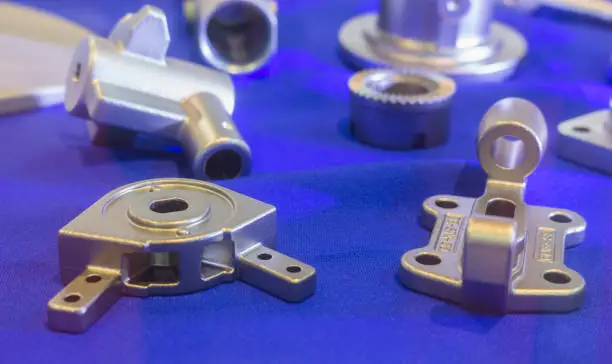
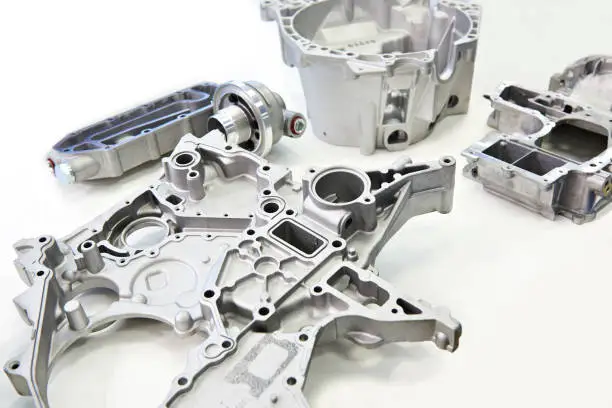
When it comes to finding parts for cars, aluminum die casting auto parts are the best way to get lightweight strength, precise measurements, and the ability to boost production. During this manufacturing process, molten aluminum alloys are pushed under high pressure into hardened steel molds, making shapes with complex shapes and great surface finishes. The technology is now needed to make gearbox housings, engine brackets, structural supports, and electrical casings that meet strict performance standards for cars while also lowering the weight of the whole vehicle.
Introduction
There is more pressure than ever on the auto industry to find a balance between performance and efficiency. Emissions rules, the rise of electric vehicles, and customer demands for better gas mileage have made every gram of weight loss very important. Procurement managers, original equipment manufacturers (OEMs), and design engineers count on the accuracy and dependability of aluminum die casting auto parts when they need to find parts that have a direct effect on how well vehicles work and how quickly they can be made.
This article talks about how high-precision aluminum die casting turns raw materials into important car parts. We look at the technical benefits of this process that make it different from other ways of making things. We also talk about how to choose a supplier and give you useful tips on how to improve designs. Whether you're looking for new suppliers or making your current supply chains better, knowing these basics will help your buying strategy and make your relationships with casting manufacturers stronger in the long run.
Understanding Aluminum Die Casting for Automotive Parts
The High-Pressure Die Casting Process
In ovens with precise controls, aluminum alloys like A380, ADC12, or AlSi9Cu3 are melted to start the high-pressure die casting (HPDC) process. When the material gets the right temperature, it is pushed into a steel die at speeds of more than 50 meters per second and pressures of 10,000 to 20,000 psi. This fast injection makes sure that molten metal fills all of the small holes in the mold before it hardens. This keeps the fine details and exact measurements even after thousands of production cycles.
Advantages Over Competing Manufacturing Methods
Die casting has a better surface finish and more consistent dimensions than sand casting, so it doesn't need as much secondary machining. Forging needs several steps of shaping and makes a lot of wasteful material. Die casting, on the other hand, makes nearly net-shaped parts with almost no waste. The process has a number of clear advantages for use in aluminum die casting auto parts applications, including:
Lightweight Performance: Aluminum's mass of 2.7 g/cm³ makes it about 65% lighter than steel, which directly saves fuel and increases the range of electric vehicles without affecting their structural integrity.
Design Flexibility: In a single operation, complex geometries like integrated mounting bosses, internal ribs, and thin-wall sections can be made. This cuts down on the number of steps needed to put together vehicle systems and the number of parts that are needed.
Production Efficiency: Cycle times between 30 and 90 seconds allow for high output with consistent quality, which is needed for just-in-time deliveries that are a key part of car production schedules.
Cost Effectiveness at Scale: The initial investment in tools is higher than with sand casting, but the cost per unit drops dramatically when production volumes go above 5,000. This makes die casting an economical choice for mass-market vehicles.
Because of these benefits, die casting is the best option for projects that need precise results over long production runs.
Quality Control and Defect Prevention
The most common problems in aluminum casting are porosity and shrinkage. When air and gas are trapped, they can leave holes inside that weaken the structure, and when cooling happens unevenly, the size of the parts changes. Advanced manufacturers use vacuum-assisted die casting to get rid of gas entrapment and make sure that critical structural parts have porosity levels below 0.5%. Real-time tracking systems keep an eye on the temperature of the melt, the speed of the injection, and the rate of cooling. They tweak the settings automatically to make sure they stay in line with the specifications.
X-rays, coordinate measuring machines (CMMs), and leak tests make sure that finished parts meet quality standards for the automotive industry, such as the requirements for PPAP documentation. Statistical process control finds problems that are likely to happen before they do. This makes sure that every shipment meets the high standards of dependability that OEMs and tier-1 suppliers require for safety-critical applications.
Key Factors When Choosing a High-Precision Aluminum Die Casting Manufacturer
Certification and Quality Management Systems
ISO 9001 certification shows basic quality management skills, but stricter standards are needed for aluminum die casting auto parts. The IATF 16949 certification is only for quality systems in the automotive industry. It covers things like creating control plans, analyzing measurement systems, and approving production parts. Manufacturers that work with aerospace clients may also be certified with AS9100, which means they can meet higher standards for traceability and documentation than those found in most cars.
Check if the supplier has accredited testing labs for checking mechanical properties, metallurgical analysis, and dimensional inspection. This is in addition to checking if the seller has certificates. Third-party audit reports from auto OEMs can tell you a lot about how mature a manufacturer's operations are and how quickly they can solve problems during production.
Equipment Capabilities and Technology Integration
Modern die casting shops spend a lot of money on tools that affect both quality and efficiency. Cold chamber die casting tools that weigh between 400 and 4,000 tons can make parts of different sizes and levels of complexity. Manufacturers who have automated trimming cells, robotic part extraction, and integrated CNC machining centers can send you finished parts that are ready to be put together, which makes your supply chain simpler.
Digital production tools, such as simulation software, can predict how molds will fill, find possible flaws before making the tools, and find the best gate sites to improve the mechanical properties. When suppliers use these technologies, they cut down on the number of prototype version changes, speed up time-to-market, and lower production risk.
Comparative Analysis: Die Casting vs Alternative Processes
Magnesium die casting can save even more weight, but the materials are more expensive, and there are concerns about fire safety during the process. Forging has better mechanical properties because the grains are aligned better, but it can't make shapes that are as complex as casting can. CNC cutting from metal gives the highest level of accuracy, but it wastes 60–80% of the material and takes a lot longer.
The best choice for you will depend on your specific needs. Forging may be worth the extra cost for parts that need to be very strong under dynamic loading. Machining might work for parts with simple shapes that are made in small quantities. But when projects need complicated shapes, close tolerances, and more than 10,000 units per year, aluminum die casting usually offers the best balance of performance, cost, and lead time.
Procurement Considerations and Commercial Terms
Lead times depend on how complicated the tools are and how many are being made. Designing and making the mold takes about 8 to 12 weeks, and inspecting the first product takes an extra 2 to 3 weeks. Production runs happen at rates that depend on how complicated the part is and what post-casting steps need to be taken.
The economics of die casting mean that there are minimum order amounts. Because of setup costs, amortization of tools, and production efficiency, MOQs usually start at 1,000 to 5,000 pieces for first orders and go down with each release. Pricing structures take into account the choice of metal, the weight of the part, the need for cutting, and the surface treatment. To correctly compare suppliers and find ways to cut costs, you should ask for specific quotes that list these things one by one.
Design and Engineering Best Practices for Aluminum Die Cast Auto Parts
Critical Design Parameters for Manufacturability
Wall thickness has a direct effect on both the quality of the casting and the cost of production. Keeping parts regular between 2.5 and 4 mm stops solidification before it's time and cuts down on cycle times. To avoid stress clusters and shrinkage flaws, the changes between thick and thin parts should be slow. Draft angles between 1 and 3 degrees make it easier to remove parts without damaging the surface. Radii at the inside corners lower stress risers and increase wear resistance.
Tolerance Specification and Dimensional Capability
With the right process control, standard aluminum die casting auto parts tolerances can reach ±0.1mm on important dimensions. For parts that need to meet stricter requirements, post-casting machining may be needed. Integrated suppliers can do this without adding to the shipping and handling costs. Tolerances must be specified in a way that combines functional needs with manufacturing costs. This way, unnecessary precision that raises costs without better performance is avoided.
Environmental Sustainability and Material Recyclability
Aluminum is much better for the earth than mixed materials and plastics because it can be recycled over and over again. About 90% of the aluminum used in cars is recycled, and remelting only needs 5% of the energy that is needed for primary production. Die casting doesn't make a lot of waste because the runners and gates are recycled right back into production. This creates a closed-loop manufacturing system that saves money on materials and is better for the environment.
Real-World Engineering Solutions
A top supplier working on a battery housing for an electric vehicle had trouble finding the right balance between electromagnetic shielding, thermal management, and structural strength while staying within strict weight limits. The engineering team worked with a specialized die casting maker to find the best wall thickness, add cooling channels, and choose an AlSi10Mg metal that had the right mix of mechanical and electrical properties. Compared to the stamped steel design it replaced, the single-piece casting got rid of 14 fasteners and two assembly steps. This cut down on weight and production costs while also making the thermal performance 18% better.
Market Overview and Leading Suppliers in Aluminum Die Casting Auto Parts
Global Manufacturing Landscape
The aluminum die casting auto parts industry has changed over the years, going from regional suppliers serving local OEMs to worldwide integrated operations supporting international platforms. Leading manufacturers maintain production facilities across multiple continents, providing geographic risk mitigation and localized engineering support. This global presence enables them to support vehicle programs from prototype development through production launch and ongoing series supply.
Essential Supplier Attributes and Capabilities
Comprehensive suppliers offer more than just casting operations. Prototyping services using rapid tooling methods allow design validation before committing to production tooling investment. In-house mold design and fabrication capabilities ensure better communication between design intent and manufacturing execution. Value-added operations, including CNC machining, powder coating, anodizing, and assembly, transform raw castings into ready-to-install components, simplifying your supply chain and reducing total landed costs.
Emerging Trends Shaping Future Capabilities
Vacuum die casting technology reduces porosity to levels previously achievable only through expensive heat treatment, enabling structural applications that demand both high strength and pressure tightness. Digital twin simulations create virtual representations of casting processes, allowing real-time optimization and predictive maintenance that minimizes unplanned downtime.
The electric vehicle revolution drives demand for components with enhanced thermal conductivity and electromagnetic shielding properties. Battery housings, motor cases, and power electronics enclosures require materials and processes specifically developed for EV applications. Forward-looking suppliers invest in alloy development and process refinement, targeting these emerging requirements, positioning themselves as strategic partners rather than commodity vendors.
Conclusion
When looking for a high-precision aluminum die casting auto parts maker, you need to look at their technical skills, quality systems, and pricing, all while keeping your application needs in mind. For automotive parts that need to be strong but light, have accurate measurements, and be able to be made in large quantities, this process has unmatched benefits. By understanding the basics in this guide, procurement professionals will be able to find suppliers who can provide regular quality and help engineers work together during product development and series production. Strategic partnerships with qualified manufacturers translate directly into improved vehicle performance, reduced production costs, and enhanced supply chain resilience across global automotive programs.
FAQ
What aluminum alloys work best for automotive die casting applications?
The A380 metal is the most popular choice for making cars in North America because it is fluid, pressure-tight, and resistant to corrosion. For similar uses, the European market likes AlSi9Cu3 (EN AC-46000). Both alloys have the right mechanical properties and casting properties for making engine parts, gearbox housings, and structural parts. ADC12 makes it easier for parts that are exposed to harsh environments to resist corrosion. When choosing an alloy, it's important to think about the mechanical needs, casting complexity, and post-casting operations that are unique to each part.
How do aluminum die-cast parts compare with plastic alternatives regarding cost and performance?
Aluminum parts can work at higher temperatures, stay the same size over time better than plastic ones, and block electromagnetic waves better than plastic ones. Aluminum is more expensive than industrial polymers, but its thermal conductivity and structural strength make it possible to make shapes that plastics can't. Aluminum's better performance makes up for its higher cost in electronic housings, heat sinks, and structural brackets, where it improves reliability and service life.
What lead times should procurement teams expect for bulk aluminum die casting orders?
New tooling programs require 10-14 weeks from design approval through first article inspection. Production orders on existing tooling typically ship within 4-6 weeks, depending on volume and finishing requirements. Total lead time can be cut to 8–10 weeks with rush programs with expedited tooling and dedicated production capacity, though premium pricing applies. Establishing blanket orders with scheduled releases provides the most predictable delivery performance for ongoing production requirements of aluminum die-casting auto parts.
Partner with Fudebao Technology for Your Aluminum Die Casting Auto Parts Requirements
Zhejiang Fudebao Technology has established itself as a benchmark enterprise in China's aluminum foundry sector, serving global automotive, industrial equipment, and aerospace applications. Our integrated manufacturing approach combines low-pressure casting machines, high-pressure die casting equipment, and advanced CNC machining centers to deliver components meeting the most demanding specifications. We maintain direct supply relationships with international brands, including American HAAS automation machine tools and ESS energy storage systems, demonstrating our capability to meet world-class quality standards. Contact Hank Shen at hank.shen@fdbcasting.com to discuss your project requirements, request technical consultations, or arrange facility audits. As an established aluminum die casting auto parts supplier, we welcome the opportunity to demonstrate how our precision manufacturing capabilities can strengthen your supply chain.
References
1. American Foundry Society (2021). "Die Casting Process: Technical Guidelines for Automotive Applications." Schaumburg: AFS Publications.
2. Kaufman, J.G. & Rooy, E.L. (2018). "Aluminum Alloy Castings: Properties, Processes, and Applications." Materials Park: ASM International.
3. North American Die Casting Association (2022). "Product Specification Standards for Die Castings: Dimensional Tolerances and Draft." Rosemont: NADCA.
4. Totten, G.E. & MacKenzie, D.S. (2020). "Handbook of Aluminum: Physical Metallurgy and Processes, Volume 1." New York: Marcel Dekker.
5. Society of Automotive Engineers (2019). "SAE J452: General Characteristics and Heat Treatments of Steels." Warrendale: SAE International.
6. Lumley, R.N. (2018). "Fundamentals of Aluminium Metallurgy: Recent Advances." Cambridge: Woodhead Publishing.



YOU MAY LIKE