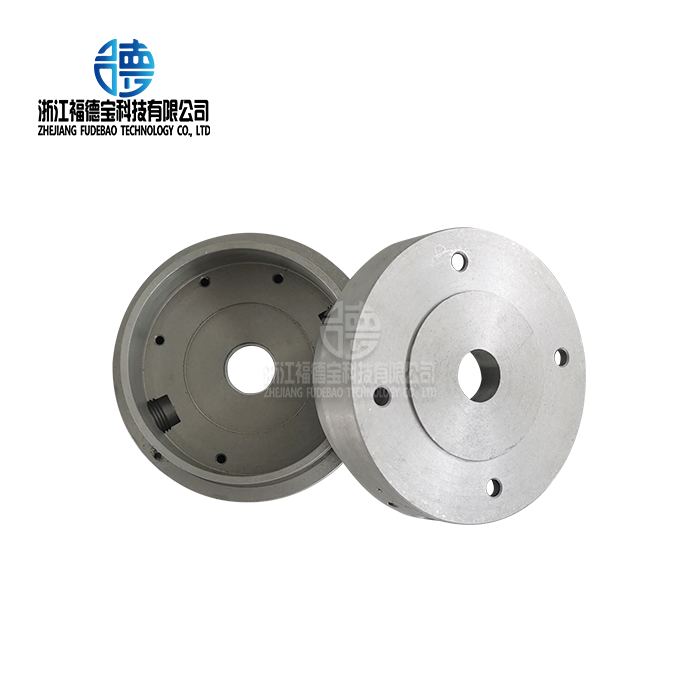
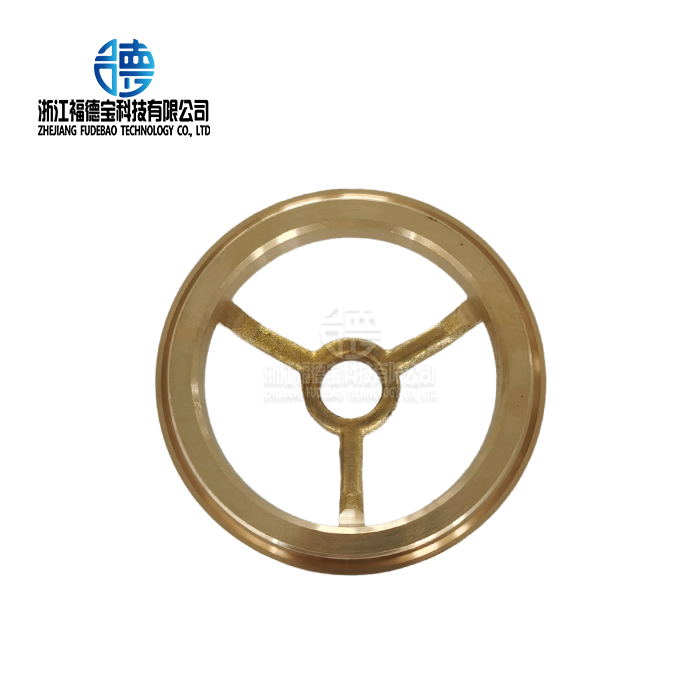
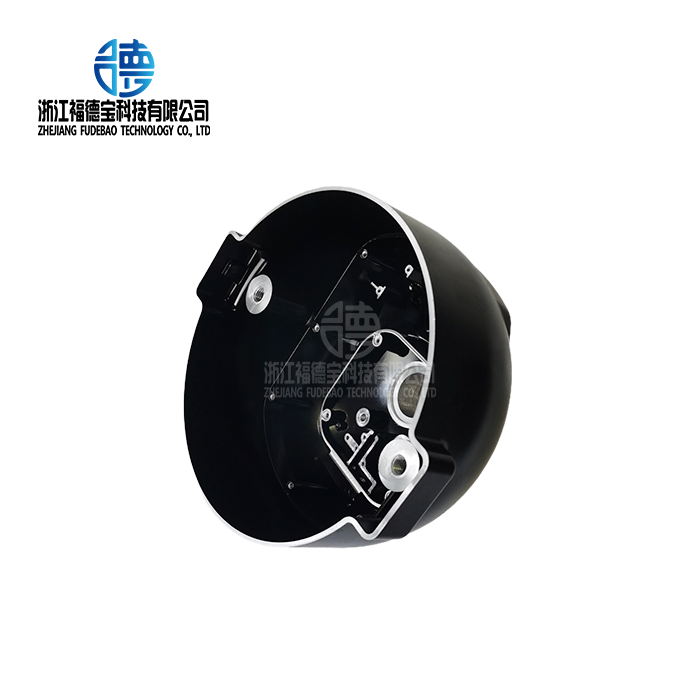
Structural Aluminium Die Casting for Automotive Lightweight Design
2026-07-11
The automotive industry's relentless pursuit of fuel efficiency and emissions reduction has positioned structural aluminium die casting as an indispensable manufacturing solution. This precision metal forming process injects molten aluminium alloy into hardened steel molds under extreme pressure—ranging from 1,500 to over 30,000 psi—creating complex, near-net-shape components that combine exceptional strength with remarkable weight savings. Unlike traditional fabrication methods requiring multiple welded assemblies, die-cast aluminium structural parts emerge as single, integrated units with superior dimensional consistency and surface integrity, directly addressing the automotive sector's critical need for lightweight, durable components.
Understanding Structural Aluminium Die Casting in Automotive Lightweight Design
Defining Structural Aluminium Die Casting and Its Core Advantages
Rapid injection cycles in high-pressure die casting turn molten aluminium into structural parts. This makes it possible to make parts with complicated shapes that would not be possible or cost-effective to make by machining alone. Aluminium alloys with a specific gravity of about 2.7 g/cm³ are used in the process. These alloys have a strength-to-weight ratio that is much higher than that of steel. When engineers in the automotive industry choose structural parts like engine cradles, suspension brackets, and chassis reinforcements, they're looking for materials that are 30–50% lighter than steel parts of the same size and shape while still holding up under heavy loads.
The natural oxide layer that forms on aluminium surfaces makes them resistant to corrosion. This is important for parts that will be exposed to road salt, water, and extreme temperatures over the course of a vehicle's life. This chemical stability makes parts last longer without the need for extra coats to protect them in many situations. Alloys like A380 and A356 are used in modern automotive die casting. These alloys have great thermal conductivity (96–120 W/m·K), which is important for getting rid of heat in powertrain applications and new battery housings for electric vehicles.
Comparing Aluminium to Alternative Structural Materials
When making lightweight vehicle architectures, automakers often think about material trade-offs. Steel has a higher tensile strength, but it is also denser, which lowers its fuel efficiency. For every 10% decrease in vehicle weight, fuel efficiency goes up by about 6-8%. Magnesium alloys are even lighter options, but they cost more to make and are more likely to rust, so they need more surface treatments, which makes the manufacturing process more complicated.
Although zinc die casting has better surface finishes and tighter tolerances for sizes, it doesn't have the same thermal properties as aluminium and isn't as strong for structural uses. Composite materials keep getting better, but they can't keep up with how easily die-cast aluminium can be recycled. Aluminium keeps all of its qualities through an endless number of recycling processes, which is in line with sustainability standards in the car industry. As companies move toward the circular economy, the total lifetime review starts to favour aluminium parts more and more.
The Structural Aluminium Die Casting Process and Design Considerations
Step-by-Step Manufacturing Workflow
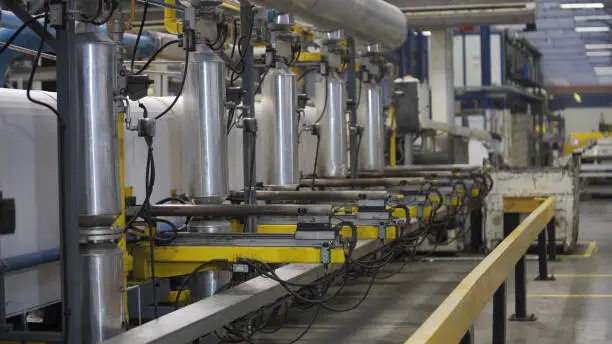
The first step in the structural aluminium die casting process is to melt high-purity aluminium bars in furnaces that are kept at a steady 660°C to 750°C. Precise temperature control stops oxides from forming and makes sure the metal flows smoothly. Operators carefully control the chemistry of the metal by using spectrographic analysis. Before each production batch, they make sure that it meets standards like ASTM B85. Moving to the shot chamber, hydraulic rams push the molten metal into precisely machined steel dies at speeds of up to 100 meters per second.
This fast injection fills complicated mold holes in milliseconds, and the pressure stays the same during solidification to keep flaws like holes and shrinking to a minimum. Cooling channels built into the die take heat out in controlled patterns, allowing solidification times of 20 to 60 seconds, based on the shape of the part and the thickness of the walls. The casting is then released by automated ejector systems, which start a new cycle that can happen every 60 to 90 seconds for medium-complexity car structure parts.
Critical Design Parameters for Defect Prevention
Wall thickness uniformity has a direct effect on the quality of the casting and the cost of production. Wall thicknesses on automotive structural parts are usually kept between 2.5 and 4 mm, balancing the need to save material with flow characteristics and mechanical needs. Thinner parts run the risk of not filling all the way or cold shutting, while too much thickness leads to porosity from uneven solidification. Draft angles of 1-3 degrees make it possible for parts to be ejected without damaging the surface. However, with better mold coatings and release systems, zero-draft designs are now possible.
Ribbing and gusset placement need to be carefully thought out by engineers. These reinforcements make the structure stiffer when it bends without adding much weight, but designers need to be careful not to make hot spots where metal builds up. Now, thermal modelling software can predict how things will solidify during the design phase. This lets engineers find the best gate locations and runner systems before they start making the tools.
Selecting Optimal Aluminium Alloys
It is still the most popular alloy for die casting in the car industry because it is good at filling dies, has good mechanical qualities, and doesn't crack easily when heated. Its silicon content (7.5–9.5%) makes it more fluid while keeping its strength at a good level after T5 heat treatment. The A380 is chosen by procurement teams for non-critical structural parts where cost-effectiveness and ease of casting are more important than ultimate strength.
With the T6 heat treatment, the A356 metal has better dynamic properties and can reach yield strengths of over 200 MPa. This alloy is good for safety-critical uses like suspension parts and structural nodes where the higher cost of the material is worth the higher level of reliability. The amount of copper must be carefully managed—higher percentages make the metal stronger but less resistant to corrosion, so it needs to be treated on the outside for use in public places.
Comparing Structural Aluminium Die Casting to Alternative Manufacturing Methods
Die Casting Versus Sand Casting for Structural Parts
Sand casting is a cheap way to make prototypes or small runs of less than 1,000 units because it can handle bigger parts and lower production numbers without needing expensive steel tools. The process makes surface finishes that are rougher (Ra 6.3–12.5 μm), so they need to be machined a lot to be within functional tolerances. Dimensional consistency changes from batch to batch because the sand mold breaks down. This makes quality control harder for automotive uses that need repeatability within ±0.1mm.
Structural Performance Comparisons
Traditionally, steel stamping and welding were the main ways that structural parts for cars were made. However, this method needs a lot of fixturing, multiple operations, and skilled welding labour. Heat distortion from welding causes variations in shape, and join zones create stress clusters that need extra material for safety. These worries are taken care of by single-piece die-cast aluminium structures, which give the whole part the same material properties.
Plastic injection moulding makes parts that are light, but they aren't as stiff as aluminium, which is better for structural uses. High-performance industrial plastics have tensile strengths that are similar to aluminum's, but they bend much more when loaded the same way. Another problem is thermal stability. Plastics break down above 150°C, but aluminium structural components are often used in 200°C+ settings near powertrains.
Procuring Structural Aluminium Die Casting Services for Automotive Applications
Evaluating Supplier Capabilities and Certifications
Automotive procurement teams need to make sure that foundries follow IATF 16949 quality management standards, which are specific to the needs of automotive production systems. This certification shows that you know how to manage risks, keep processes under control, and make improvements all the time. These are all very important for making sure the supply chain works well. Suppliers should show proof that they have experience with the Production Part Approval Process (PPAP). This can come in the form of dimensional validation reports, material certifications, and statistical process control data.
Manufacturing capacity assessment examines available tonnage across the supplier's machine park. Structural automotive components typically require 600-2500 ton die casting machines, with larger equipment indicating capability for consolidated designs that reduce assembly operations. We evaluate secondary equipment, including CNC machining centers for post-casting operations, coordinate measuring machines for dimensional verification, and X-ray inspection systems for porosity detection per ASTM E505 protocols.
Understanding Lead Times and Prototyping Processes
Die casting projects usually take 10 to 16 weeks from the time the design is approved to the time the first piece is inspected. This is because tooling development takes the most time. For this amount of time, the mold base is bought, the cavities are machined, the mold is heated, and many samples are taken to check the dimensions and mechanical qualities. When procurement managers work with more than one supplier, they often find that the estimated wait times are very different. This is because different suppliers have different shop loads, machining capacities, and engineering support resources.
Using soft tooling or 3D-printed sand molds for prototype sampling speeds up design validation, but it can't fully copy the characteristics of production die casting. Different things affect how materials flow, how fast they cool, and how much stress is still there. This is why initial production tool samples are the most important step in validating the design. As part of their PPAP process, experienced car providers do design verification builds. This way, they can find any problems before they commit to full-rate production.
Cost Drivers and Budget Forecasting
Choosing the right materials has a big effect on the prices of components. Primary aluminium prices change with the price of other commodities on the world market. Using recycled alloys can save you a little money, but only if you make sure the quality is good. For structural aluminium die casting projects, there are prices for different alloy compositions. For example, A356 costs 15-20% more than A380 because it has stricter chemical standards and needs to be heat-treated more. Long-term supply agreements with price adjustments based on London Metal Exchange indices are becoming more important in procurement strategies. This keeps costs stable over multi-year production programs.
Part complexity influences both tooling investment and per-piece manufacturing cost. Features that need side actions, complicated internal passageways, or very thin walls make tools more expensive and cycle times longer. Specifications for dimensional tolerances have a direct effect on the costs of quality control. For example, auto parts that need CMM verification of important features have inspection costs that simpler commercial parts don't have to pay for. When it comes to die casting, the economics of higher numbers (above 10,000 units per year) are still the most important thing to think about. As rates rise to the hundreds of thousands, costs continue to drop.
Future Trends and Innovations in Structural Aluminium Die Casting for Automotive Lightweight Design
Automation and Digital Process Control
IoT sensor networks are now used by smart foundries to keep an eye on die temperature, injection speed, and cavity fill patterns in real time. This information is used by machine learning algorithms to predict when defects will appear and change the process settings automatically to keep quality high without any help from a human. Instead of doing quality checks by hand, automated systems with high-resolution cameras and AI-driven defect spotting are used. These systems can find 99.5%+ of surface flaws and keep digital records for each casting that can be tracked.
Simulation software keeps getting better. For example, computational fluid dynamics modelling can predict how metal will flow and solidify before the actual tooling is built. Engineers make virtual changes to designs all the time, finding the best places for gates and cooling channels to get rid of porosity risks that are found through modelling. This digital prototyping cuts down on the number of physical sampling iterations, which speeds up development by 20–30% and raises quality metrics on the first try.
Sustainability and Circular Economy Integration
Die casting is a good way for automakers to meet their carbon neutrality commitments because aluminium can be recycled over and over again. Closed-loop recycling systems take scrap metal from production, melt it, and then add it back to the alloy mix without changing its properties. Die casting operations leave less of a carbon footprint thanks to heat recovery systems and energy-efficient melting furnaces. Many of the world's largest foundries now get most of their power from renewable sources.
Lifecycle assessment methods are having a bigger effect on the choices of materials. Studies show that the extra energy needed to make aluminium compared to steel is quickly made up for by the fuel savings from lighter weight after 12 to 18 months of use. As the use of electric vehicles grows, lighter structural components directly increase the driving range—an important selling point since every kilogram lost adds about 20 meters of range per charge cycle.
Emerging Design Trends and Material Innovations
Multi-material vehicle architectures use advanced high-strength steels, carbon fibre composites, and aluminium castings to make the structure as strong as possible. The placement of each material is carefully thought out to get the best results. Die-cast aluminium nodes connect different types of materials in this method, which requires advanced joining technologies and design integration. Adhesive bonding and mechanical fastening are replacing welding more and more. They can handle differences in thermal expansion while keeping the structure strong.
New alloys are being made to better absorb crash energy, which is an important thing for automakers to think about as they try to balance the need for lightweight design with the safety needs of passengers. By changing the amount of silicon in the material and improving the grain refinement methods, castings become more flexible during high-strain-rate deformation and better absorb impact energy. These new alloys go through a lot of validation testing, and manufacturers have to finish safety and durability certification programs before they can be used. Adoption times are between 3 and 5 years.
Conclusion
Structural aluminium die casting has changed from a way to cut costs in manufacturing to a key part of driving innovation in the auto industry, providing the lightweight performance needed for the next generation of fuel-efficient vehicles. The process takes the best parts of material science and industrial accuracy and uses them to make complex structural parts that make vehicles lighter while still meeting strict safety and durability standards. As electric vehicles and sustainability become more important in automotive design, die-cast aluminium parts will play a bigger part in all of the different parts that make up a car. This is because process automation and the circular economy are getting better, which helps with both performance and the environment.
FAQ
What wall thickness should I specify for automotive structural castings?
For structural aluminium die castings, the best wall thickness is between 2.5 and 4 mm, which strikes a balance between saving weight and making sure the casts are made correctly. Thinner walls (less than 2.0 mm) can lead to incomplete filling and lower mechanical properties, while walls that are too thick (more than 5.0 mm) can cause gaps from uneven cooling that happens slowly. Ribbing and localised reinforcements make things stiffer without adding uniform thickness. This lets engineers find the best strength-to-weight ratios by strategically placing materials instead of increasing the overall section.
How does porosity affect structural component reliability?
By making stress concentration points in the casting microstructure, internal porosity shortens the fatigue life and load-bearing capacity. Porosity levels in automotive standards are usually limited to ASTM E505 severity levels. This is proven by X-ray fluoroscopic inspection of key load paths. Modern die casting uses vacuum assistance and controlled injection profiles to keep gas from getting trapped. This makes it possible to get porosity levels below 2% by volume in properly designed structural parts that meet the durability requirements for cars with service lives of more than 150,000 miles.
Can die-cast aluminium components be welded for repairs?
Standard die casting alloys, such as A380, have a lot of silicon in them, which makes welding difficult because the heat can make the metal brittle and crack easily. Due to safety certification standards, structural car parts rarely allow repairs to be made in the field using welding. Design strategies focus on preventing damage through the right thickness and shape of materials rather than making them easy to fix. Manufacturers use adhesive bonding, mechanical fastening, or specialised friction stir welding techniques to join die castings during assembly. These methods get around the problems that come with traditional fusion welding.
Partner with Fudebao Technology for Your Structural Aluminium Die Casting Needs
Zhejiang Fudebao Technology is a reliable structural aluminium die casting manufacturer that OEMs and tier-1 suppliers in the automotive industry can find. They can produce precise parts that meet the strictest requirements in the industry. Our integrated facility has high-tonnage die casting machines, advanced CNC machining centers, and full metrology equipment that can achieve ±0.05mm tolerances, which is necessary for safety-critical structural applications. We keep our IATF 16949 certification up to date and go through the PPAP documentation processes. This makes sure that we can easily fit into your supply chain and provide full traceability and quality assurance. Email our engineering team at hank.shen@fdbcasting.com to talk about your needs for a lightweight design and get full technical advice on choosing the right alloy, improving the design, and making sure that production can be scaled up for your next car project.
References
1. North American Die Casting Association. (2021). Product Specification Standards for Die Castings: Aluminum Alloys. NADCA Technical Publication.
2. Kaufman, J. Gilbert & Rooy, Elwin L. (2020). Aluminum Alloy Castings: Properties, Processes, and Applications. ASM International Materials Engineering.
3. Society of Automotive Engineers. (2019). Aluminum Die Castings for Automotive Structural Applications: Design and Manufacturing Guidelines. SAE Technical Paper Series J2784.
4. Totten, George E. & MacKenzie, D. Scott. (2018). Handbook of Aluminum: Physical Metallurgy and Processes, Volume 1. CRC Press Materials Science and Engineering.
5. International Aluminium Institute. (2022). Life Cycle Assessment of Aluminium in Automotive Applications: Sustainability and Recyclability Analysis. IAI Research Report Series.
6. Bonollo, Franco et al. (2020). Aluminum Alloy Die Castings: Properties, Performance, and Process Innovations for Automotive Lightweighting. Springer Advanced Materials Series.



YOU MAY LIKE
_1756352472762.webp "steel threaded plug")
_1756349696500.webp "Pulley aluminum casting")