
Casting vs. Sand Casting: Understanding the Key Differences in Cost and Quality
2026-07-10
When engineers and buying workers look at metal forming choices, it's important to know the differences between the different casting methods so that the project goes well. Sand casting is a flexible type of foundry work in which liquid metal is shaped into exact parts using disposable sand molds. This traditional method has some benefits over fixed mold techniques like die casting when it comes to the versatility of its tools and the consistency of its materials.
However, it is very different in terms of surface finish, dimensional tolerance, and cost per unit. It's important to find the right balance between production volume, design complexity, quality standards, and budget constraints when choosing the right method. This choice has a direct effect on the performance and total cost of ownership of your component.
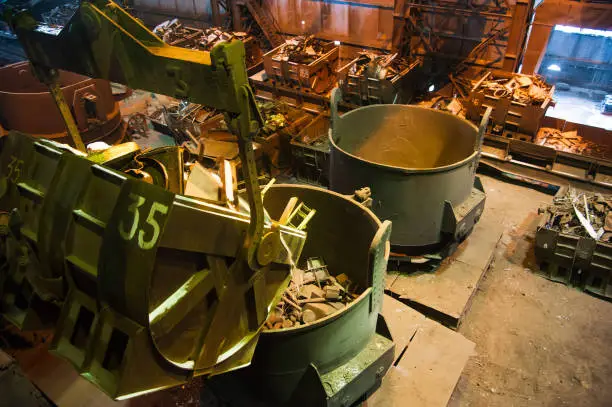
Overview of Casting and Sand Casting
What Defines Modern Casting Processes
By putting liquid material into holes that have already been made, casting turns molten metal into useful parts. This old but always changing way of making things is used in many fields, from car engines to spacecraft structures. Today's foundries use a variety of techniques: die casting quickly makes lightweight aluminum housings by pressing steel molds under high pressure; investment casting uses ceramic shells to make complex geometries; and permanent mold casting balances surface quality with low tooling costs. Each method solves a different set of design problems, material qualities, and cost issues that buying teams need to carefully consider.
Sand Casting Fundamentals and Material Flexibility
To create disposable molds, sand casting uses tightly joined sand mixtures, such as green sand with clay and water or chemically-bonded resin sand. Industry studies show that this process is used for more than 60% of all metal castings done around the world. It can handle high-melting-point alloys like steel, iron, titanium, and special superalloys, as well as very heavy parts weighing anywhere from a few ounces to over 100 tons.
High-refractoriness silica sands are used in the molds, which means they can withstand temperatures above 1600°C without melting. In contrast to permanent molds, sand breaks down when it cools, which stops hot breaking in metals with high solidification shrinkage, which is a very important benefit for heavy-duty uses. For example, aluminum is often used for frames on cars, cast iron for pump housings in factories, and steel for counterweights on building equipment.
Technical Properties That Matter to Buyers
The scientific description is mostly about how the material can be used and how it is built. Bentonite or furan/phenolic resin adhesive methods give the required shear strength while still letting gas escape, which stops interior porosity flaws. Sand casting usually gets surface finishes between 6.3 and 12.5 Ra microns and dimensional tolerances that meet ISO 8062 CT10-CT13 standards. It's rougher than die casting, but it's good enough for many structural uses when mixed with CNC milling. The sourcing leaders can set realistic goals and see where extra work is needed for important mating surfaces or aesthetic needs when they know what these basic skills are.
Cost Comparison: Casting vs. Sand Casting
Tooling Investment and Production Economics
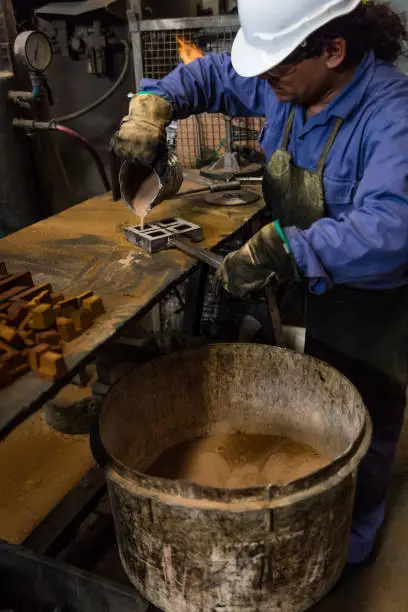
Sand casting is very different from other ways because it takes a lot to make the tools needed for it. Die casting needs hardened steel models that cost tens of thousands of dollars and have wait times that can last for months. It's only cost-effective to do more than 5,000 units a year. On the other hand, sand casting models, which are usually made of wood, plastic, or metal, can be made in two to six weeks for a lot less money.
Sand models are great for testing prototypes, making small to medium-sized batches, and making unique machinery parts where the batch size can be anywhere from one unit to several hundred pieces. This gives industrial equipment makers a lot of freedom when they need to make spare parts or try out different design versions before committing to higher-volume tools.
Variable Cost Factors in Foundry Operations
The direct costs of making something are things like raw materials, work, and the time it takes to make something. When compared to automatic die casting lines, sand molds take more work before each casting. This includes placing the pattern, compacting the sand, setting the core, and shaking out the mold after casting. By reusing bonding agents and base sand through thermal or mechanical processes, sand recovery systems help lower the cost of materials.
The rate of production is still slower; a sand casting line might make 20 to 50 molds an hour, while high-pressure die casting cells can make hundreds of parts an hour. Because of these things, sand casting is less affordable when the number of units made each year goes over 10,000. However, it is perfect for complicated shapes that don't need a lot of tooling amortization over smaller amounts.
Total Cost Analysis for Strategic Sourcing
Instead of looking at individual piece prices, people who work in procurement should figure out the total cost of ownership. The lower production costs of sand casting make it possible to enter new markets more quickly and to create with greater freedom—engineering changes only need to be made to the pattern, not to the dies. Material waste is kept to a minimum because extra sand is reused, which is not the case with cutting, which creates a lot of chip waste.
Lead times are cut down by a huge amount; sourcing heads can get sample casts in weeks instead of months for permanent mold options. These benefits are especially useful in the heavy machinery industry, where part weights are too high for die casting to handle, or when working with special alloy grades that can't be used with fixed mold metallurgy.
Quality and Performance Differences
Surface Finish and Dimensional Precision
Quality standards are very different between casting methods. Die casting makes surfaces that are smooth and have limits of within ±0.1mm. This means that extra machining is often not needed for features that aren't very important. Sand casting usually produces as-cast surfaces that are rougher and need to be finished before they can be put to use. Dimensional precision relies on the quality of the pattern, the consistency of the sand compaction, and the regularity of the cooling process.
Tolerances that can be reached usually run from ±0.5mm to ±2mm, based on the size and complexity of the casting. Green sand systems offer standard accuracy that works for housings and structural frames. Chemically-bonded resin sands, on the other hand, improve accuracy for bigger, heavier parts like gearbox cases. Quality teams have to set the right tolerancing zones, keeping in mind that CNC cutting is almost always needed for precision matching surfaces, no matter what casting method was used in the first place.
Mechanical Properties and Structural Integrity
Castings need to have certain tensile strength, yield strength, flexibility, and hardness numbers that are set by the application. When done correctly, sand casting can achieve mechanical qualities similar to those of worked materials by allowing for controlled solidification through the use of gates and risers. Each melt batch has a witness bar connected to it that goes through damaging tests to make sure the alloy works as it should. Some common flaws are gas porosity from not enough escaping, shrinking holes from not feeding properly, and inclusion flaws from refractory erosion.
Buyers lower these risks by following strict inspection procedures. For example, Optical Emission Spectrometry checks the alloy's chemistry before pouring, Ultrasonic Testing and Radiographic Examination find internal discontinuities, and Coordinate Measuring Machines make sure that the dimensions match the CAD models. These quality control steps make sure that parts for the aerospace industry, the automobile engine, and the energy sector meet very high standards for dependability.
Defect Prevention and Quality Assurance
Manufacturing stability is what sets reputable foundries apart from less-than-stellar sources. Controlling the temperature while melting, degassing to get rid of hydrogen, and exact filling techniques all help keep defects to a minimum. Magnetic Particle Inspection finds cracks on the surface of metal castings, while Dye Penetrant testing finds cracks in alloys that are not made of iron. Minimum wall thickness rules—usually 3–9 mm for steel and 5–3 mm for aluminum—avoid cold shuts, which happen when metal freezes before filling in thin parts fully.
Foundries with a lot of experience keep track of failure rates, mechanical test results, and the ability to make parts in different sizes across production runs using statistical process control. Before committing to long-term relationships, sourcing teams should ask for Capability Study data and look over PPAP documents to make sure that providers can regularly meet the needs of the business.
Application Suitability: When to Choose Casting vs. Sand Casting
Automotive and Heavy-Duty Powertrain Components
Sand casting is still the usual way to make engine blocks and cylinder heads with complicated shapes for commercial cars and heavy machinery. With internal sand cores, you can make cooling and greasing channels that are too complicated to do any other way. Extreme heat cycles and combustion forces must not affect these parts, and their sizes must stay the same across a wide range of temperatures.
The ability of sand molds to be collapsed keeps them from cracking during solidification and shrinking, which is very important for big iron casts. Tier-1 suppliers that make transmission housings, differential cases, and structural suspension frames use sand casting when the complexity, weight, or production volume of the part doesn't make die casting an investment worth it.
Energy Infrastructure and Industrial Equipment
Sand casting is used to make corrosion-resistant superalloys like Duplex Steel, which are used in big valve bodies, pump cases, and compressor housings for oil extraction, petroleum processing, and power generation. These parts work in harsh, high-pressure conditions where the quality of the materials directly impacts operating safety. For deep-sea uses or high-temperature steam systems, sand casting can handle the enormous sizes—often more than 500 kilograms—and specialized metals.
Foundries that work with this industry keep their alloys certified and have the ability to heat treat materials to make sure they meet ASTM and EN standards. Mechanical engineers use sand casting when the shape of the part has thick sections that need to be cooled at controlled rates to get the microstructures and mechanical traits they want.
Heavy Machinery and Construction Equipment
Sand casting can be used to make large parts like bulldozer track frames, engine housings, and excavator counterweights. These large parts add mass to the structure and reduce vibrations. For these parts, longevity is more important than how they look on the outside, so the rougher finish that comes with sand casting is fine, and the lower cost is worth it for small production runs.
The process allows for design features like built-in ribs, bosses, and fixing holes that would need a lot of welding to be made if the product was made from plate steel. OEM project leaders like how sand molds give them design freedom, so they can optimize functionality without having to worry about tooling limitations that limit shape complexity or making expensive mold changes during the development phase.
Electrical Components and Thermal Management
Castings made of aluminum and copper are used to make electrical housings, motor endcaps, bus bar connectors, and heat sink bases for green energy and power distribution systems. In these uses, electrical conductivity, corrosion resistance, and heat cooling are important, along with being able to mount surfaces accurately in terms of size.
Die casting is good for making a lot of motor housings, but sand casting is better for bigger transformer cases, special switchgear parts, and making prototypes when the cost of the tools needs to be kept low. Electrical engineers choose the right metal types by matching how well they carry electricity with how easily they can be made. They do this because they know that CNC machining will set important tolerances for electrical connections and sealing surfaces.
Enhancing Procurement Decisions: Cost-Quality Balance
Evaluating Total Ownership Economics
Return on investment includes more than just the original piece price. It also includes the costs of amortizing tools, keeping supplies, and how well the product performs over its entire lifecycle. Because sand casting is easier to get started with, production can be scaled up in stages. For example, if the amount justifies the investment in tools, fixed molds can be used. This step-by-step method lowers the financial risk of introducing a new product while keeping money for growing the market.
Sourcing directors should make plans that compare the starting costs of tools with the expected volume needs over the next three to five years. They should also take into account the likelihood of design changes and the costs of secondary machining. Parts that need a lot of cutting after casting may not have big price differences between casting methods because the main cost of making is taking away material, no matter what the initial forming process was.
Leveraging Supplier Expertise for Optimized Solutions
Foundries with a lot of experience can help you create something so that it is easy to make. They can find ways to reduce weight, make tools easier to use, or increase output by changing the gates. Suppliers who work together keep application files that show how similar parts worked in different service situations. This information helps with choosing materials and setting quality standards.
Casting modeling software suggests how the solid will behave, which lets virtual optimization happen before the pattern is made. These technical tools are especially helpful for engineering managers who are making new platforms or changing current designs to work with sand casting. Before committing to large-scale production, ask for sample casting trials to physically check the dimensions, surface finish, and mechanical qualities. This will save you money if expensive specification mismatches are found during qualification testing.
Emerging Technologies Improving Capability and Efficiency
With three-dimensional printing, sand molds can now be made straight from CAD models, so complex, low-volume parts no longer need pattern molding at all. This additive method works well for making aircraft brackets, custom machinery housings, and fast prototypes where changes to the design happen often. Robotic handling and built-in quality checking on automated molding lines improve consistency while lowering the amount of work that needs to be done.
Advanced simulations can very accurately predict when defects will appear, which lets process changes stop scrap before the metal is poured. Quality leaders should look at suppliers that are spending in these technologies. They should know that modern foundries mix the benefits of traditional sand casting with the accuracy of digital manufacturing, filling in gaps in the past in terms of size and production efficiency.
Conclusion
When deciding between sand casting and other metal-forming methods, you have to weigh a lot of technical and financial factors along with the needs of the application. When design complexity, material flexibility, or production costs make it more cost-effective to use disposable molds instead of fixed tools, sand casting excels.
Understanding the underlying quality characteristics, cost structures, and suitability for application helps procurement pros make smart choices that align manufacturing methods with performance standards and budget facts. Partnering with experienced foundries that offer a wide range of services, from knowledge of alloys to precision cutting, makes sure that parts meet strict requirements while lowering the total cost of ownership over the duration of a product.
FAQ
What distinguishes green sand from resin sand casting systems?
Clay and water fillers are used in green sand to make it cheaper to make larger amounts that meet standard tolerance requirements. Chemical binders are used in resin sand to make a better surface finish, more accurate measurements, and stronger molds for bigger, heavy parts, but the material costs are higher. The choice is based on the size of the part, the quality you want, and how much it costs to make for your specific use.
How do foundries prevent gas porosity defects?
Controlling the permeability of the sand, planning the right venting paths for the mold, and adding degassing methods to the hot metal all get rid of the dissolved hydrogen, which stops bubbles from forming. Reputable providers keep tight process controls on pouring temperature, mold moisture content, and metal cleanliness to make sure that the inside is always sound, which can be checked using Ultrasonic or Radiographic inspection procedures.
Can sand castings achieve aerospace quality standards?
Of course. Aerospace parts use high-quality sand systems, special superalloys, and thorough inspections that include Chemical Analysis via Optical Emission Spectrometry, mechanical testing of witness bars, and Non-Destructive Testing to find flaws inside the part. For flight-critical uses, certified foundries keep tracking records and process controls that meet AS9100 quality management standards.
Partner With Fudebao Technology for Precision Casting Solutions
Zhejiang Fudebao Technology is a leading sand casting company that makes parts out of aluminum alloy, copper alloy, and stainless steel for use in cars, industry equipment, spacecraft, and energy plants. Our building is fully integrated and includes low-pressure casting, die casting, high-speed CNC machining centers, and full surface treatment capabilities. This means that we can handle everything from molten metal to finished parts with tolerances of up to ±0.05mm.
Our experienced engineering team works closely with your needs, whether you need concept testing, medium-volume production, or precision-machined parts that meet strict PPAP documentation standards. Get in touch with our technical experts at hank.shen@fdbcasting.com to talk about how our proven foundry skills and advanced production capabilities can help you get the most out of your parts while keeping your total cost of ownership low.
References
1. American Foundry Society. (2021). Casting Process Selection Guide: Technical and Economic Considerations for Metal Component Manufacturing. Schaumburg: AFS Publications.
2. Campbell, J. (2015). Complete Casting Handbook: Metal Casting Processes, Metallurgy, Techniques and Design (2nd ed.). Oxford: Butterworth-Heinemann.
3. ASM International Handbook Committee. (2018). ASM Handbook Volume 15: Casting. Materials Park: ASM International.
4. Brown, J. R. (2019). Foseco Ferrous Foundryman's Handbook (12th ed.). Oxford: Elsevier Science.
5. Beeley, P. R., & Smart, R. F. (2017). Investment Casting: Sand Casting and Die Casting Comparative Analysis. London: Institute of Materials.
6. Society of Manufacturing Engineers. (2020). Fundamentals of Metal Casting Technology: Process Economics and Quality Optimization. Dearborn: SME Publications.



YOU MAY LIKE
_1756348543350.webp "Automotive Turbine Casting")
_1756361423150.webp "Cryopump body")
_1756360265131.webp "Aluminum casting chair legs")
_1756352822273.webp "Stainless steel plugs")
_1756348489473.webp "Automobile intake valve")
_1756344684491.webp "Explosion-proof lamp housing aluminum casting")