
Sand Casting Advantages for Large Parts Make It Ideal for Low-Volume Industrial Components
2026-08-06
When manufacturing large-scale industrial components in limited quantities, sand casting advantages large parts become immediately apparent. This time-tested metal forming process offers unmatched flexibility, enabling production of massive components—from 50-pound valve bodies to 20-ton gearbox housings—without the crippling tooling expenses associated with die casting or forging. The expendable mold nature of sand casting permits extraordinary design freedom while maintaining economic feasibility for runs ranging from single prototypes to several hundred units, making it the preferred choice for industrial machinery manufacturers, automotive tier-1 suppliers, and heavy equipment OEMs facing the dual challenge of complexity and cost control.
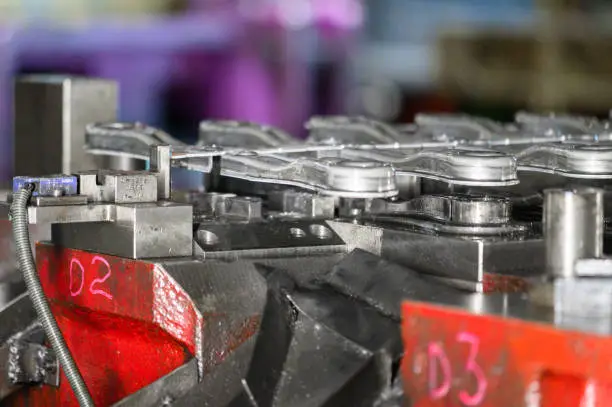
Understanding Sand Casting and Its Relevance for Large Parts
The idea behind sand casting is simple but complex: tightly bonded sand mixtures make moulds that can be used more than once and can withstand high temperatures while shaping molten metal into complex shapes.
The Fundamental Process Behind Sand Casting
The first step is making a pattern, which is usually a copy of the part in metal or wood. These designs are put inside moulding boxes, also called flasks, and sand that has been carefully prepared is put around them. Clay and water are used as binders in green sand systems, which make production cheap for standard uses. Resin-bonded sand uses chemical binders like furan or phenolic resins to give it better control over dimensions and a smoother surface, which are important for precision applications. The design is taken off, leaving a hole in the sand mixture after it has been rammed and packed down. Metal that is molten, like aluminium alloys, malleable iron, or other special materials, pours into this hole at temperatures that are often higher than 1600°C.
Material Versatility and Size Capabilities
It's beautiful that sand casting can be used with a lot of different materials, and one of the key sand casting advantages large parts is its ability to produce massive components with complex shapes and excellent structural integrity. Highly flammable silica sand can handle the heat of very hot metals, and the bonding systems keep the structure strong while pouring, while still being porous enough to let gas escape. This stops the porosity problems that happen in other methods. We've been able to cast metallic metals like steel and grey iron as well as non-ferrous metals like bronze, copper alloys, and aluminium. It can hold anything from a few ounces to more than 100 tonnes, so it can be used for everything from electrical motor housings to huge pump cases used in offshore fishing platforms.
Why OEMs Choose Sand Casting for Large Components
Procurement managers and engineering teams are aware of an important economic fact: investing in tools for permanent mould processes becomes too expensive when making small numbers of parts (less than 500 units). Patterns for sand casting are much cheaper than steel dies (often 70–85% less) and can be quickly changed or copied as designs change. This flexibility is very helpful when making new products or serving niche markets where demand changes often. Over 60% of all metal castings made in the world are made using this method, showing that it will still be useful even though other technologies have improved.
Core Advantages of Sand Casting for Low-Volume and Large Part Manufacturing
Sand casting advantages large parts go far beyond initial cost savings and cover the entire lifecycle of the production of large components.
Exceptional Design Freedom Without Tooling Constraints
Unlike forging or machining from solid billets, sand casting can make internal passages, undercuts, and complex geometries that would need to be put together from different pieces otherwise. Cooling lines in engine blocks, complex ribbing designs for strength, and compound shapes are all made from the same casting. This fusion cuts down on the time it takes to put the parts together, gets rid of any possible leak paths between areas that are joined together, and makes the structure stronger overall. With internal sand cores, hollow parts and passages can be made, and the wall thickness can vary from 5 mm to 50 mm within the same component. This is almost impossible to do with other methods that cost about the same.
Lower Initial Investment and Scalable Economics
The cost of sand casting makes it a great choice for low-volume production. Pattern costs are still reasonable, even for complicated shapes, and changes can be made without having to throw away expensive tools. During test stages, we've seen engineering teams go through three design changes while staying on budget. If die casting were used in this situation, the project would lose a lot of money. Instead of needing minimum batch sizes to amortise tooling, material costs go up in a straight line. This means that runs of 10 units are almost as cost-effective per piece as runs of 100 units.
Material Versatility Matched to Mechanical Requirements
Buyers can choose from a wide range of alloys based on specific performance needs. For strength in a light package, automotive engine parts often use aluminium alloys like A356; heavy machinery, on the other hand, needs ductile iron or high-strength steel alloys for longevity. When corrosion resistance is needed in chemical processing or marine settings, bronze or certain types of stainless steel are needed. These material choices also highlight the sand casting advantages large parts can achieve, as manufacturers can select suitable alloys to balance strength, durability, weight, and environmental resistance. Because the material is so flexible, it can be changed from batch to batch to meet changing requirements. This makes sure that the best performance features are always maintained.
Reduced Lead Times for Project Acceleration
Pattern fabrication usually takes two to six weeks, depending on how complicated it is. This is a lot less time than the three to five months needed for die casting tooling. Time-to-market is sped up by this timeline shortening, which also lets you respond quickly to customer needs. When a big company that makes industrial equipment needed new gearbox housings because of a problem with design obsolescence, sand casting got them to them in eight weeks instead of the six months that forged alternatives were supposed to take. Being responsive in this way protects revenue streams and keeps relationships with customers strong.
Comparing Sand Casting to Other Manufacturing Methods for Large Parts
Procurement workers can make better buying choices based on technical and economic facts when they understand comparative benefits.
Sand Casting Versus Forging
Forging is the best way to perfect the grain structure and improve the mechanical qualities of metals, making parts with great strength-to-weight ratios. Forging big parts, on the other hand, needs huge hydraulic presses and pricey dies that can handle a lot of force. The geometry restrictions are important because complicated internal features can't be made. For similar part quantities under 200 units, understanding sand casting advantages large parts can help manufacturers reduce costs, as sand casting can save you 60–75% on costs while still letting you make designs that forging can't. Forgings usually have better surface finishes than as-cast surfaces, but important mating surfaces can be quickly fixed after casting.
Sand Casting Versus CNC Machining from Solid Billet
When making large hollow parts, machining creates a lot of waste material even though it produces accurate measurements and smooth surfaces. If you want to make a gearbox case that weighs 150 pounds as a casting, you might need a 400-pound billet, and 250 pounds of that would be expensive scrap chips. Lead times and labour costs go up because of the time it takes to machine for this kind of cleanup. Sand casting makes parts that are almost perfectly round and only need finishing polishing on the most important areas. This cuts down on material waste by 70–80% and processing time by a large amount.
Sand Casting Versus Welding and Fabrication
Making big structures or housings from steel plate and structural shapes gives you options but also comes with challenges. Welded joints produce possible places where stress builds up, and ways for the joint to break that don't exist in monolithic casts. Different mechanical traits may be found in heat-affected zones compared to the base material, which makes quality control more difficult. To control the dimensions of large welded assemblies, a lot of fixtures and skilled labour are needed. In contrast, one of the key sand casting advantages large parts is that sand casts make the material properties the same all the way through, get rid of a lot of weld gaps, and keep the component's dimensions more uniform. Scalability also works in favour of casting—making more complex fabrications needs proportional labour growth, but making more casts only requires filling more moulds.
Quality Considerations and Common Challenges in Sand Casting Large Parts
To get consistent quality in large sand-cast parts, you need to have tight process control and know-how from your suppliers.
Typical Defects and Preventative Strategies
There are three main types of flaws that can affect the quality of sand casting: porosity from trapped gases, measurement errors from mould movement or heat distortion, and surface flaws like sand inclusions. We deal with gas porosity by controlling how permeable the sand is, designing gates in a way that reduces turbulence during filling, and degassing the molten metal before pouring it. Resin-bonded sand systems offer better mould stiffness, exact pattern cutting to account for metal shrinkage, and controlled cooling rates that stop warping. These systems also improve the accuracy of measurements. Finer sand grains, uniform sand preparation methods, and proper mould coats that stop metal and sand from mixing all improve the quality of the surface.
Critical Inspection and Testing Protocols
Quality control starts before the metal even hits the mould. Optical Emission Spectrometry checks the chemistry of liquid metal to make sure that the alloy's makeup meets ASTM or EN standards. Understanding sand casting advantages large parts is also important during the quality evaluation process, as sand casting is often selected for heavy and complex components where dimensional accuracy and material integrity must be carefully controlled. Once the casting has hardened, tensile strength, yield strength, and elongation properties are checked mechanically using witness bars that were cast separately. For internal soundness, non-destructive testing is very important. Ultrasonic screening finds holes or shrinkage below the surface, and X-rays show problems inside that can't be seen from the outside. Magnetic particle screening can find cracks on the surface of ferrous materials, and dye penetrant tests can do the same thing for non-ferrous alloys. Coordinate Measuring Machines check that the dimensions match up with CAD models and record casting tolerances that are usually within ISO 8062 CT10–CT13 grades.
Evaluating Supplier Qualifications and Capabilities
The qualifications that a foundry has should be carefully looked at by procurement teams. ISO 9001 certifications show basic quality management, while industry-specific certifications like IATF 16949 for automotive providers show advanced skills. It's important that foundries have enough production ability to handle the size and weight of your parts while keeping the quality the same across all batch sizes. Having technical support during the design process is very helpful, and experienced foundries can help with design-for-manufacturing, which keeps costly mistakes from happening. Pattern-making tools, in-house machining resources, and surface treatment choices show if a provider provides complete packaged solutions or needs to coordinate with multiple vendors.
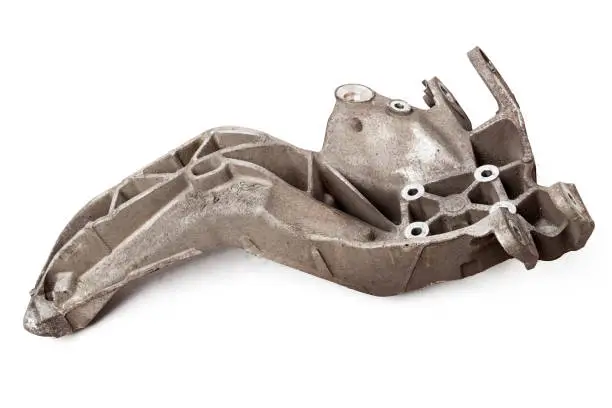
Procurement Guide: Ordering Large Sand Cast Parts for Industrial Use
Getting things bought quickly and cheaply is important for making sure that a project succeeds.
Understanding Cost Drivers and Pricing Structures
Casting prices depend on a number of things. Choosing the right material has a direct effect on the price. For example, aluminium alloys usually cost less than heat-resistant superalloys or specialised copper alloys, but prices can change depending on the base metal market. Pattern and moulding labour costs are affected by how complicated the part is. For example, complicated core work or tight standards can make costs go up. Through pattern amortisation and setup efficiency, batch size affects unit costs. However, the curve flattens quickly, and the difference in cost between 20 and 50 units is often less than expected. For manufacturers producing oversized components, understanding sand casting advantages large parts can help explain why this process remains cost-effective for heavy and complex castings. Finishing needs have a big effect on the total cost. As-cast surfaces may be fine for non-critical areas, but precision machining, heat treatment, and surface coatings cost more and add value to the processing.
Effective Supplier Communication Strategies
Misunderstandings and expensive changes can be avoided by communicating clearly in technical areas. Give full CAD models instead of just drawings so that suppliers can look at the geometry and find early on any problems that might arise with casting. Make sure you clearly state the important measurements, surface finish needs, and useful performance standards. Talk about your material choices with other people. Foundries with a lot of experience can often suggest other metals that work just as well but cost less. Set clear standards for quality from the start, including the certifications, review records, and testing procedures that must be followed. Documentation needs, such as PPAP files for car uses, should be shared during quoting, not after production starts.
Managing Lead Times and Logistics
Making the patterns takes the most time and needs to be planned for realistically in the beginning orders. Rush charges can shorten wait times but make costs go up a lot. Plan ahead for repeat orders—agreements to store patterns let you make more quickly without having to retool, which is one of the key sand casting advantages large parts can benefit from when managing long-term production needs. Shipping heavy things in small amounts needs special handling when it comes to logistics. Coordinate the packaging needs to keep complicated shapes safe during transport, and make sure the shipping methods are right for the size and weight of the items. To avoid customs delays, international packages must have the right paperwork and a harmonised tariff rating.
Customization Opportunities and Value-Added Services
In addition to simple casting, many providers offer other services that add value. With precise CNC machining, rough casts can be turned into finished parts whose key measurements are held to within 0.05 mm. When you heat treat metals, like T6 for aluminium or normalising for steel, the mechanical properties get better. Surface treatments, such as powder coating, anodising, or plating, make things resistant to rust and give them a nice look. Finding sellers with a wide range of skills cuts down on the work that needs to be done to coordinate and the chance of quality problems at places where products are handed off between different vendors.
Conclusion
The sand casting advantages large parts manifest across economic, technical, and operational dimensions, making this traditional process remarkably relevant for modern industrial manufacturing. It solves problems in the automobile, industrial machinery, energy, and aircraft sectors by requiring little investment in tools, giving designers a lot of freedom, letting them choose from a wide range of materials, and being able to make small quantities. Quality concerns mean picking the right supplier and keeping an eye on the whole process. However, problems can be solved with well-established inspection protocols and partnerships with experienced foundries. Because sand casting is naturally flexible, it can be used as a strategic manufacturing option that delivers both performance and value as industrial markets demand more customised solutions and shorter development cycles.
FAQ
What distinguishes green sand from resin sand casting?
Green sand systems use clay and water as binders to make things cheaply. They can handle higher numbers as long as standard limits are met. Resin sand uses chemical fillers to give the finished product a better finish, better accuracy in measurements, and higher mould strength, which is needed for bigger, heavy parts, but the cost of the materials is higher.
How do you achieve tight tolerances with sand casting?
When sand casting, errors are usually within the range of ISO 8062 CT10 to CT13 grades. After casting, important surfaces are given precise CNC machining. Controlled cooling, pattern adjustments for shrinking, and resin-bonded moulds for rigidity all work together to keep the as-cast difference to a minimum. Coordinate Measuring Machine verification checks that the dimensions are correct before the final cutting.
What minimum wall thickness is achievable in sand cast parts?
Non-ferrous metals, like aluminium, usually need walls that are at least 3–5 mm thick. On the other hand, ferrous materials need walls that are at least 5–9 mm thick to avoid cold shut defects, which happen when metal solidifies before filling thin sections completely. Design consultation with foundries helps find the best wall thickness by balancing the need to reduce weight with the ease of production.
Can sand castings serve in high-stress applications?
Of course. Castings that meet strict mechanical requirements are made by choosing the right alloy, controlling the solidification process, treating them with heat, and inspecting them thoroughly with NDT. Sand castings are frequently used in mission-critical applications where failure would have very bad effects, such as automotive engine blocks, offshore valve bodies, and aircraft structural components.
Partner with Fudebao Technology for Superior Sand Casting Solutions
Zhejiang Fudebao Technology has become one of the best aluminium foundries in China. It provides precision sand cast and machined parts to clients in the energy, industrial equipment, and automotive industries around the world. Our integrated facility includes all stages of manufacturing, from melting metal to low-pressure casting, precise CNC machining on high-speed HAAS centers, and a full range of surface treatments. This means that we can deliver your blanks to finished products all in one place, with dimensional accuracy of up to ±0.05mm. As direct suppliers to foreign names like American HAAS automation machine tools and ESS energy storage systems, we can show that we can meet high-quality standards. Whether you need long-lasting pump housings, complicated gearbox parts, or specialised electrical casings, our expert team works with you throughout the whole design and buying process to make sure the best performance and ability to be manufactured. Get in touch with our engineering expert Hank Shen at hank.shen@fdbcasting.com to talk about your large part sand casting needs and find out how our knowledge can turn difficult specifications into reliable, low-cost manufacturing solutions.
References
1. American Foundry Society. (2021). Casting Design and Performance. Des Plaines: AFS Publications.
2. Campbell, John. (2015). Complete Casting Handbook: Metal Casting Processes, Metallurgy, Techniques and Design. Oxford: Butterworth-Heinemann.
3. Beeley, P.R. (2001). Foundry Technology (2nd ed.). Oxford: Butterworth-Heinemann Scientific.
4. ASM International Handbook Committee. (2008). ASM Handbook Volume 15: Casting. Materials Park: ASM International.
5. Brown, John R. (2000). Foseco Ferrous Foundryman's Handbook (11th ed.). Oxford: Butterworth-Heinemann.
6. Stefanescu, Doru M. (2019). Science and Engineering of Casting Solidification (3rd ed.). New York: Springer Publishing.



YOU MAY LIKE