
Custom Aluminum Die Cast Parts Improve Manufacturing Efficiency and Product Reliability
2026-08-06
Manufacturing leaders face mounting pressure to deliver precision components faster without compromising quality. Custom aluminum die cast parts have emerged as a strategic solution, combining lightweight durability with exceptional dimensional consistency. These components leverage high-pressure die casting processes using proven alloys like A380 and ADC12, enabling manufacturers to consolidate multiple parts into single net-shape designs. This approach eliminates secondary assembly steps, reduces material waste, and accelerates production cycles—directly addressing the cost and timeline challenges that plague traditional manufacturing methods.
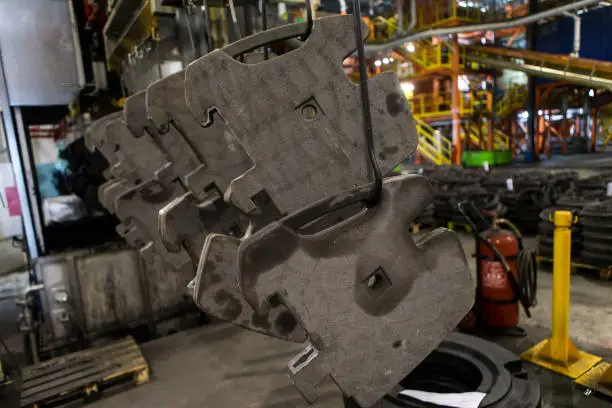
Understanding Aluminum Die Cast Parts and Their Manufacturing Process
What Defines High-Quality Aluminum Die Castings
A high-precision protective cage made of aluminum die casting is made using High-Pressure Die Casting (HPDC), a process in which liquid aluminum alloys are poured into hardened steel molds at pressures of up to 30,000 psi. Die cast parts are different from machined or pressed parts because they start as liquid metal that hardens into complicated shapes with built-in features like mounting bosses, cooling fins, and ribbed structures. Alloys like A380 have a tensile strength of about 47 ksi and a yield strength of about 23 ksi. They are also very light, with a density of about 2.71 g/cm³. The process meets important industry needs by giving better protection against electromagnetic interference than plastics, working well as temperature management systems for high-power electronics, and combining features into single parts that require less assembly work.
Aluminum die cast housings are essential for tough jobs because of the way the material works. When the thermal conductivity is around 96 W/m-K, the housing itself acts as a cooling element, removing heat from sensitive electronics and providing good electrical conductivity for grounding uses. Manufacturers regularly reach tolerances of within 0.002 inch per inch, which is in line with NADCA standards. Dimensional stability is still very high. When surface treatments are done, high-quality housings must meet ASTM B117 for corrosion protection and ASTM B85 for chemical makeup proof. These parts are the standard for handling structural rigidity, weight loss, and unit cost in high-volume production settings because they have a high strength-to-weight ratio and can reliably block EMI/RFI.
The Die Casting Manufacturing Journey
The first step in the HPDC process is mold creation. This is where engineering teams work together to make steel dies that take into account how metal flows, how fast it cools, and how much it shrinks. To make undercuts and internal cavities, mold designers use ejector pins, slides, and cores. During injection, molten aluminum near 1,200°F fills the die cavity in milliseconds under high pressure, making sure that the metal reaches every detail before it hardens. Cooling channels machined into the die remove heat in a planned way while controlling the rate of solidification to keep internal stresses and porosity to a minimum. This precise manufacturing process is one of the main reasons aluminum die cast parts are widely used in automotive components, electronics housings, industrial equipment, and lightweight structural applications.
There are clear benefits to die casting when compared with other manufacturing methods. For small runs, sand casting is flexible, but it does not provide the exact dimensions and smooth surface finish required for high-precision aluminum die cast parts. With reusable steel molds, permanent mold casting fills the gap, but it works at lower pressures, resulting in longer cycle times and lower detail resolution. Die casting is ideal for mass production because each part can be produced in 60 to 90 seconds, allowing tens of thousands of aluminum die cast parts to be manufactured every month from a single die. Mechanical properties can be improved through post-processing methods such as T6 heat treatment, while critical mating surfaces can achieve tolerances of ±0.05mm through CNC machining. Surface treatments such as powder coating and e-coating protect aluminum components from corrosion and provide an attractive appearance without the uneven visual effects that anodizing may create on high-silicon aluminum alloys. These advantages make aluminum die cast parts a reliable choice for high-volume production, lightweight metal components, precision casting applications, and cost-effective aluminum manufacturing solutions.
Critical Quality Standards and Technical Specifications
Optical Emission Spectroscopy is used to check the material for quality. This makes sure that the amounts of iron, copper, and zinc stay within the acceptable ranges to avoid brittleness. Real-time X-ray inspection finds internal holes and trapped air that could weaken the structure or make the seal less effective. Manufacturers use vacuum-assist die casting to get rid of air from molds before injection. This makes pressure-tight housings much less porous. Squeeze pins are used to put extra pressure on thick parts where shrinkage voids usually form while they harden.
Coordinate Measuring Machines are used for dimensional precision verification to check complex geometries against Geometric Dimensioning and Tolerancing specifications. This makes sure that parts fit perfectly into automated assembly lines. For structural stability, the minimum wall thickness is usually 2.5 mm, but in some places it can reach 1.5 mm if the framing is set up correctly to allow metal to flow. Cross-Hatch Adhesion Tests (ASTM D3359) and salt spray tests (ASTM B117) on the surface for 500 to 1000 hours show that it is resistant to rust and environmental damage. Standard H13 steel dies can usually handle 50,000 to 100,000 shots before they need to be repaired. Investing in tooling becomes economically viable when production volumes reach over 1,000 to 2,000 units, as the cost per unit drops significantly below alternatives like CNC machining.
How Custom Aluminum Die Cast Parts Boost Manufacturing Efficiency
Solving Common Production Bottlenecks
Long cycle times are a problem for traditional manufacturing methods because they slow down time to market and raise the cost of keeping supplies. Custom die cast solutions get rid of these problems by designing tools in a way that speeds up the process so that each part is made in less than two minutes. The near-net-shape process requires very little machining, so a lot less material is wasted. Also, scrap aluminum can be fully recycled back into the production stream. Part consolidation is another big step forward in efficiency. What used to require putting together five different stamped and machined parts can now be done with just one die cast housing, which gets rid of the need for bolts, welding, and quality checks at each stage of assembly.
In response, the industrial footprint gets smaller, which frees up important plant floor space and lowers the cost of buying new equipment. Die casting machines can work partially on their own thanks to robotic part extraction and trimming. This lets skilled operators keep an eye on several cells at once. Overall Equipment Effectiveness goes up because of this automation flexibility, which cuts down on unplanned breaks and keeps output quality constant. Customization even goes as far as die design. Using rapid prototyping with aluminum prototype tools to test designs before committing to production steel dies shortens the time it takes to develop new products from months to weeks.
Real-World Performance Improvements
When automakers use special die-cast gearbox housings instead of sand-cast ones, cycle times drop by 40%. This makes just-in-time shipping possible, which lowers warehouse costs. A company that makes industrial equipment combined seven machined parts into two die-cast parts to make a pump housing assembly. This cut the amount of work needed to put it together by 60% and made the pressure containment more reliable. In these situations, the weight savings were usually between 25 and 30 percent compared to similar steel fabrications. This directly helped meet fuel economy goals in transportation and cut down on the work needed to set up heavy machines.
Being able to increase production is especially helpful when demand goes up. Longer shift patterns allow die casting setups to handle increases in volume without corresponding rises in failure rates. This keeps the same dimensions across production runs. Material traceability from ingot to finished part meets the standards for car PPAP documentation, and lot tracking lets you quickly find the root cause of problems in the field. These real improvements lead to a measurable return on investment (ROI), which procurement teams take into account when judging the skills of suppliers and the overall cost of ownership over the lifecycle of a product.
Enhancing Product Reliability Through Precision and Quality
Material Performance Advantages
Aluminum die casts are more reliable than other materials in a number of ways that are important for demanding uses. Aluminum has a higher strength-to-weight ratio than zinc alloys, and it keeps its mechanical qualities at high temperatures, while zinc starts to creep under long-term loads. Magnesium castings save a little more weight, but they need to be handled in a certain way because they can catch fire, and they rust more easily in damp places. Steel fabrications are very strong, but they are also very heavy. This makes system designs heavier, which means that mounting structures and actuators have to be bigger.
Plastic housings may seem cheap at first, but they don't have the thermal conductivity needed to get rid of heat, so designers have to add different heatsinks and fans, which makes the building process more difficult. Aluminum is naturally resistant to rust, and surface processes can make it even more resistant. This means that it can be used outside for decades, even in places where the temperature changes and it gets wet. The material stays the same size across a wide range of temperatures, which stops it from warping and creeping as polymers do. This keeps precise tolerances at the points where parts meet, which is important for sealing and aligning.
Minimizing Defects Through Process Control
Porosity and warping are the main types of defects that manufacturers try to fix by making design and production improvements. When air or hydrogen gets trapped during solidification, gas porosity forms. This creates weak points that can fail under mechanical stress or prevent hermetic sealing. Vacuum-assist systems empty mold cavities before injection, reducing the amount of trapped gas by 80–90%. Shrinkage porosity develops in thick sections that cool more slowly. This issue can be controlled with strategically placed gates that guide molten metal flow and squeeze pins that apply pressure during solidification. These quality control methods are essential for producing reliable aluminum die cast parts with consistent strength and dimensional accuracy.
When uneven cooling creates internal stresses that change the shape of a part after ejection, the result is called warping. Optimized cooling channel placement balances heat removal rates, while stress-relieving cycles during heat treatment maintain dimensional stability before final machining. Uneven cooling can also be reduced when part geometry maintains consistent wall thickness, and properly positioned ejector pins prevent thin-wall sections of aluminum die cast parts from deforming during removal. With these proactive manufacturing strategies, first-pass yield rates can reach over 98% in mature production environments. Any remaining defects are identified through pressure-decay leak testing and CMM inspection before shipping. Surface finishes on aluminum die cast parts typically achieve Ra 3.2μm directly from the die, eliminating the need for additional finishing processes in most applications. Additional machining is only required for critical sealing areas that require Ra 1.6μm or finer. These advanced defect prevention methods help ensure high-quality aluminum components, precision aluminum casting performance, and long-term reliability in automotive, aerospace, and industrial applications.
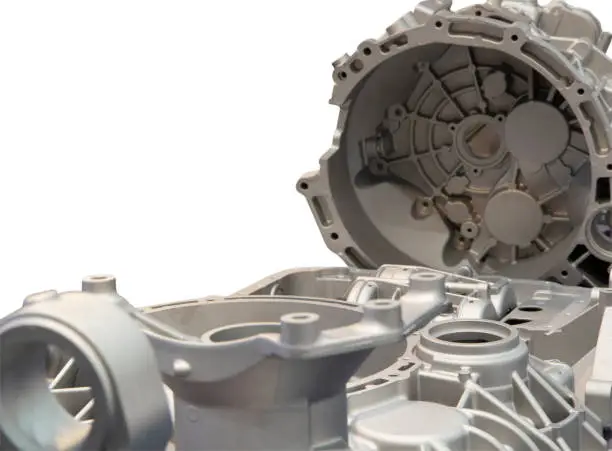
Making Informed Procurement Decisions for Custom Aluminum Die Cast Parts
Supplier Evaluation Criteria
When choosing die casting partners, procurement workers have to look at a lot of factors. Approval systems, like ISO 9001 for quality management and IATF 16949 for car suppliers, offer basic peace of mind. However, AS9100 approval is necessary for aerospace uses that need full traceability and advanced inspection tools. Manufacturers can do more than just list their equipment. Looking at their in-house mold design skills, how they use modeling software, and their prototype development services can show you if they can help optimize designs or just follow your instructions.
Geographical factors weigh the advantages and disadvantages of being close to each other. Domestic providers have shorter wait times, make it easier to communicate across time zones, and make operations simpler. This is especially helpful during development stages where changes need to be made often. But when you compare total landed costs, you need to take into account things like amortizing tools, price per unit, quality consistency, and protecting intellectual property. When you visit a factory, you can see how the equipment is maintained, how clean the place is, and how engaged the workers are. These are all signs of practical success that are linked to reliable delivery.
Cost-Benefit Analysis Across Material Choices
Aluminum die castings require more expensive tooling than injection-molded plastics, but they have better mechanical and thermal properties that get rid of the need for extra parts. Zinc die casts have lower melting points, which makes the die last longer, but they are not as strong or good at transferring heat as aluminum. In aircraft uses, magnesium is lighter than aluminum because it has a 30% lower density, which makes the higher material costs and special processing needs worth it.
Lifetime value assessments look at how often the system needs to be maintained and replaced, and how much the whole system costs. An aluminum motor housing that runs 20°C cooler increases bearing life, lowers lubricant breakdown, and delays replacement, saving a lot of money compared to plastic alternatives that need cooling fans. This idea is shown by the gearbox cases in cars: aluminum die castings can survive decades of temperature changes and vibrations, which is the same amount of time that a car is used, but manufactured steel parts could develop leaks caused by rust that would need guarantee repairs.
Industry-Specific Application Requirements
Manufacturers of cars and new energy vehicles use die cast ECU enclosures, inverter housings, and structural battery mounts that need to be able to handle heat, vibration, and corrosion from road salts. For these uses, you need PPAP paperwork, records on measurements, and material approvals that can be linked to specific alloy heats. Impact resistance and physical stability across a wide range of temperatures are important for industrial machinery. For example, explosion-proof motor housings need pressure-tight seals that can be proven through hydraulic testing.
In 5G infrastructure, the electrical and energy sector requires die-cast parts for remote radio unit casings. These enclosures have cooling fins and IP67-rated sealing surfaces to protect RF devices from harsh weather outside. For important flight parts, aerospace uses need statistical process control documents, first-article inspection reports, and non-destructive testing proof. By knowing these sector-specific needs, procurement teams can quickly find sellers whose skills match what the application needs. This cuts down on qualification risks and speeds up the sourcing process.
Designing Custom Aluminum Die Cast Parts for Optimal Performance
Design-for-Manufacturing Best Practices
For die casting design to work, the wall thickness of aluminum die cast parts should always remain consistent, usually between 2.0 and 4.0 mm. Any sudden changes in thickness should be avoided because they can create metal flow problems or shrinkage defects. Draft angles between 1–3 degrees make it easier to remove parts from the die without damaging the surface, while fillet radii at internal corners reduce stress concentration and improve molten metal flow. Rib structures increase strength without adding unnecessary weight. They are typically designed to be 50–60% thicker than the surrounding wall and properly spaced to prevent deformation. These design principles help improve the durability, precision, and performance of aluminum die cast parts used in automotive, electronics, and industrial applications.
Design-for-Manufacturing rules aim to eliminate undercuts whenever possible, but slides and lifters inside the die can create small undercuts when they are required for functional requirements. Coring creates internal passages that reduce weight and provide cooling channels, making aluminum die cast parts more lightweight and efficient. For structural stability, core diameters must maintain minimum 2:1 depth-to-diameter ratios. Bosses designed for threaded inserts require sufficient wall thickness around the insert and proper draft angles to prevent core damage during ejection. Simulation software is widely used in aluminum die casting development to predict metal flow, identify potential porosity areas, and optimize gate locations before tooling production begins. This advanced design approach shortens development cycles, reduces prototype requirements, and improves the overall quality of precision aluminum components, high-pressure die casting products, and customized aluminum die cast parts.
Specifying Critical Tolerances and Finishes
Die casting tolerances are usually ±0.005 inch per inch of measurement. These can be made even tighter to ±0.002 inch through secondary machining on areas that need to be precise. Surfaces used for sealing must be flat across a width of 0.002 inches, which can be confirmed by inspecting the surface with a surface plate or using a CMM. The surface finish straight from the die can be anywhere from 3.2μm to 6.3μm, depending on how well the die is maintained and how hot the metal is. Machined surfaces can get Ra 1.6μm or better.
Solution heat treatment followed by fake aging (T6 condition) improves the mechanical qualities of a material by 30–40% while also making it more stable in terms of its dimensions. When positional standards stay within ±0.1mm, machining processes focus on important features like mounting surfaces, bearing bores, and threaded holes. Surface treatments like powder coating (60–80μm thickness), e-coating (uniform coverage in complex geometries), and chromate conversion coating (maintaining electrical conductivity while protecting against corrosion) can all be used to protect against corrosion.
Emerging Technologies Shaping the Future
Newer die materials, like H13 steel that has been heat treated and coated, make tools last 50 to 100 percent longer by making them less likely to wear out and better at handling thermal fatigue. Conformal cooling channels made with additive manufacturing fit the shape of the die cavity better, removing heat more evenly and cutting cycle times by 15 to 20 percent. So well do high-vacuum die casting systems get rid of cavities that parts can handle heat treatment and welding operations that weren't possible with regular die casts.
Inline CT scanning for automated quality inspection finds internal flaws without damaging the product, allowing for 100% inspection at production speeds. In real time, artificial intelligence algorithms look at process parameters and change injection speeds, pressures, and temperatures to keep things running at their best, even if the outside environment changes. These new ideas make component designs more reliable for the future by allowing lightweighting efforts and performance improvements that keep up with changing industry needs in areas like electric vehicles, renewable energy infrastructure, and next-generation industrial automation.
Conclusion
Custom aluminum die cast parts make manufacturing more efficient by cutting down on cycle times, getting rid of material waste, and combining parts in a way that makes assembly easier. The superior strength-to-weight ratio, thermal management, and dimensional stability that aluminum maintains in harsh service environments all make products more reliable. When making a purchase choice, it helps to know what the supplier can do, the trade-offs between efficiency and cost, and the total cost of ownership over the lifecycle of a component. Design optimization based on DFM principles makes the most of die casting's benefits, while new technologies keep pushing the limits of performance. Because of these things, aluminum die casting is a good way to make things.
FAQ
Can decorative anodizing be done on die cast aluminum housings?
Die cast metals like A380 have a lot of silicon in them, which makes anodizing look dark and blotchy. This means that the process can't be used for cosmetic reasons. E-coating and powder coating are normal options in the business. They protect against corrosion and give uniform color finishes on complicated shapes.
How do manufacturers make sure that pressure-tight applications have hermetic sealing?
Before injection, vacuum-assist die casting gets rid of the air in the mold holes, and squeeze pins press down on thick parts while they solidify. Resin impregnation fills in any remaining microporosities in critical housings, making parts that are tightly sealed and pass pressure-decay leak testing.
At what production volumes does die casting start to make economic sense?
When compared to CNC machining options, the breakeven point is usually between 1,000 and 2,000 units because of the high cost of the original tools. After this point, the cost per unit drops a lot because of fast cycle times and little material waste. This means that the die's return on investment (ROI) keeps going up over its 50,000 to 100,000 shot service life.
Partner with a Proven Aluminum Die Cast Parts Manufacturer
Zhejiang Fudebao Technology Co., Ltd. is a world-class aluminum foundry that works with companies around the world in the automotive, industrial equipment, and aerospace industries. Our plant has high-speed machining centers, CNC lathes, low-pressure casting machines, and die casting tools that cover the whole process, from melting the metal to treating the surface. We offer complete solutions, from the blank to the finished product. Our machining accuracy is up to ±0.05mm, which meets the strict needs of automotive precision parts, medical equipment housings, and industrial machinery parts. We have decades of experience working with metals and use advanced quality systems to make sure that the aluminum die cast parts we supply are of the highest quality. Some of the foreign names we work with are American HAAS automation machine tools and ESS energy storage systems. Get in touch with our engineering team at hank.shen@fdbcasting.com to talk about how unique die-cast solutions can help you make your manufacturing more efficient and your products more reliable.
References
1. American Foundry Society. (2021). "Metalcasting Process and Design Guidelines for High-Pressure Die Casting." Des Plaines: American Foundry Society Publications.
2. North American Die Casting Association. (2020). "Product Specification Standards for Die Castings: Dimensional Tolerances and Draft." Wheeling: NADCA Technical Publications.
3. ASM International. (2019). "Casting Design and Performance." Materials Park: ASM International Handbook Committee.
4. Society of Automotive Engineers. (2022). "Aluminum Die Casting Alloys for Automotive Applications: Properties and Performance Standards." Warrendale: SAE International Technical Papers.
5. Materials Research Society. (2021). "Advanced Manufacturing Processes for Lightweight Structural Components in Transportation." Cambridge: MRS Symposium Proceedings.
6. International Journal of Metalcasting. (2023). "Process Optimization and Defect Reduction in High-Pressure Die Casting Operations." Des Plaines: American Foundry Society Journals.



YOU MAY LIKE