
Die Casting Aluminum Alloys Support Lightweight Solutions Across Multiple Industries
2026-08-06
Die casting aluminum alloys have become indispensable for modern manufacturing, offering a strategic pathway to weight reduction without compromising structural integrity. Through high-pressure injection of molten aluminum into precision steel molds, manufacturers produce complex, near-net-shape components that eliminate welding and assembly while achieving dimensional tolerances critical for automotive, aerospace, industrial, and energy applications. This manufacturing approach addresses escalating demands for fuel efficiency, electric vehicle range optimization, and sustainable material choices, positioning aluminum die casting as a cornerstone technology for industries navigating stricter environmental regulations and performance expectations.
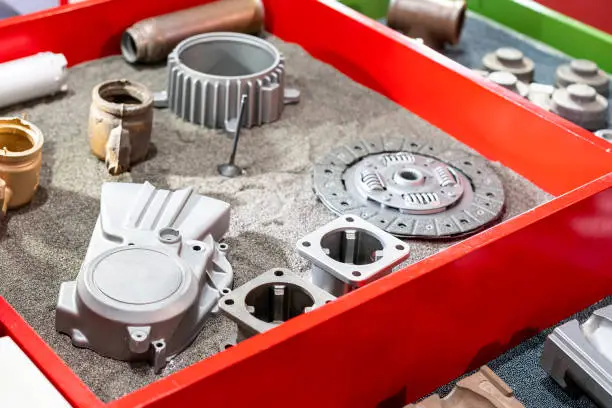
Understanding Die Casting Aluminum Alloys and Their Core Properties
What Makes Aluminum Die Casting Unique
Die casting aluminum alloys are now an important part of modern manufacturing because they allow for weight reduction without affecting the strength of the structure. By injecting molten aluminum under high pressure into precise steel molds, makers make complex, nearly net-shaped parts that don't need to be put together by welding and meet the tight dimensions needed for uses in aircraft, energy, automotive, and other industries. Aluminum die casting is a key technology for businesses that need to deal with stricter environmental rules and performance standards. It meets rising demands for fuel efficiency, extending the range of electric vehicles, and environmentally friendly materials.
For precise metal shaping, aluminum die casting involves pressing molten aluminum alloy into hardened steel molds at pressures higher than 1,500 psi. In high-pressure die casting operations, these pressures can reach up to 30,000 psi. This process solves a number of important problems in manufacturing. As single-piece castings, complex shapes can be made, so there is no need for welded structures that can fail. The method gives very accurate measurements over hundreds of thousands of production runs, and it meets NADCA accuracy standards that make sure parts can be swapped out. Wall thicknesses can be lowered to 1.5 mm while still keeping structural integrity. This makes it possible to use methods for weight reduction that have a direct effect on fuel use and operating efficiency.
Mechanical and Physical Properties That Matter
One of the technical benefits of aluminum alloys used in die casting is that they have a specific gravity of about 2.7 g/cm³, which makes them stronger for their weight than many industrial materials. The thermal conductivity of these alloys is between 96 and 120 W/m·K, which makes them very useful for getting rid of heat in power electronics and motor housings. The oxide layer that forms naturally on aluminum surfaces protects them from corrosion. Anodizing or powder coating treatments can make this resistance even stronger. Tensile strength varies by alloy grade. For example, A380 has a strength of about 324 MPa, and A356 can be heat-treated to a strength of 283 MPa after T6 treatment, making it a good choice for structural parts that are loaded and unloaded many times.
Industry-Specific Advantages
Automotive engineers use aluminum die casting to make vehicles lighter, which has a direct effect on the EPA's fuel economy ratings and increases the range of electric vehicles per charge cycle. A normal engine bracket made of steel weighs 3.2 kg, but it can be made of aluminum die casting and weigh only 1.1 kg while still being able to hold weight. The material is good for aerospace uses because it doesn't wear down easily and can handle temperature changes from -40°C to 150°C without losing its shape. Manufacturers of industrial equipment like how easy it is to cut and shape this material, which lets secondary CNC processes achieve very precise measurements on important connecting surfaces. Aluminum is great at EMI/RFI shielding and transferring heat, which is used in electrical housings to protect sensitive electronics in outdoor telecommunications infrastructure.
Comparing Die Casting Aluminum Alloys with Alternative Materials
Aluminum Versus Magnesium and Sand Casting
When purchasing teams look at different types of materials, die casting aluminum alloys are clearly better than magnesium alloys and sand-cast aluminum. Magnesium has a smaller density, but it can catch fire when it's being machined and doesn't hold up well against corrosion in salty or wet places. Die casting aluminum gives a better surface finish right out of the mold, with Ra values of 1.6–3.2 μm compared to 12.5–25 μm for sand casting. This means that much less extra finishing is needed. Die casting is faster than sand casting because each turn takes 30 seconds to two minutes, while sand casting takes hours per part. When production rates go over 5,000 pieces, this speed means lower costs per unit, which makes die casting the most cost-effective choice for mass production.
Popular Alloy Grades and Their Applications
In North America, A380 is the most commonly specified aluminum die casting alloy. It has great flow properties for filling complex thin-wall sections and good corrosion resistance for general-purpose parts. Its silicon content of about 8.5% lets it solidify quickly, but it makes cosmetic anodizing hard. The Japanese counterpart, ADC12, is used in a lot of different places, like in car engine parts and consumer electronics housings. A356 is a magnesium-based alloy that can be heated and shaped. It is used in aerospace applications that need higher strength and elongation, but it needs more careful process control to avoid porosity. AlSi9Cu3 makes it easier to machine parts that need a lot of secondary CNC operations, which are common in precision industrial equipment.
Cost and Performance Analysis
To figure out the total cost of ownership, you have to look at more than just the price of raw materials. Even though aluminum die casting alloys may cost more per kilogram than iron or steel, the lifetime cost factor changes in a good way because they don't need to be put together again, they're lighter, and they last longer because they don't rust. Tooling investment is a high one-time cost, and die costs can be modest to high, based on how complicated the part is and how many shots are expected to be made from it. But this investment pays for itself quickly over many production runs, giving you lower costs per part than cutting or manufacturing.
Procurement Insights: Buying and Sourcing Die Casting Aluminum Alloys Effectively
Identifying Qualified Suppliers
Successful sourcing of die casting aluminum alloys requires using more than just price to judge a provider. If a company is certified to ISO 9001 quality management standards, it can be sure that the process is being controlled. If a company is certified to IATF 16949, it can meet the special needs of the car industry, such as providing PPAP documentation and FMEA protocols. Compliance with ASTM B85 shows that the alloy's chemical makeup falls within certain areas. A review of a company's manufacturing capabilities should confirm that they have the skills to create dies, make tools in-house, and use CNC machine centers for secondary tasks. Suppliers that offer full "melting-casting-finishing-surface treatment" processes make it possible to have a single point of responsibility, which makes planning easier and reduces the variability of lead times.
Managing Custom Orders and Bulk Purchasing
For custom die casting jobs, it's important to be able to clearly explain the required surface finish, useful performance, and size tolerances. Engineering managers should give 3D CAD models in STEP or IGES format along with detailed drawings that show features that are important for quality and how to inspect them. Setting up blanket purchase orders with planned releases is a good way to buy in bulk because it lets sellers optimize production schedules while buyers secure capacity and keep prices stable. Lead times are usually 8–12 weeks for making the first set of tools and inspecting the first product. Once dies are confirmed, lead times drop to 4–6 weeks for repeat orders.
Pricing Trends and Supply Chain Planning
The price of aluminum changes depending on the London Metal Exchange rates, the cost of energy for smelting, and the way supply and demand change in different areas. Setting up long-term relationships with suppliers that include price reviews every three months guards against the wild swings of the spot market. Geographic variety lowers risk, and buying from makers in more than one area keeps things running even when there are problems in one area. When suppliers know what orders are coming in, they can make sure they have enough raw materials and production capacity, which keeps schedule delays from spreading to other parts of the assembly process.
Addressing Common Challenges and Defects in Aluminum Die Casting
Understanding Typical Production Issues
The most common flaw in die casting aluminum alloys is still porosity, which shows up as hollow spaces inside the metal that weaken its mechanical properties and make it less resistant to pressure. When hydrogen dissolved in liquid aluminum crystallizes during solidification, this is called gas porosity. On the other hand, when metal isn't fed enough during cooling, this is called shrinking porosity. Cold shuts show up on the part's surface as lines or folds where two metal flow fronts didn't join properly. This is usually because the injection speed wasn't fast enough or the metal solidified too soon. When the metal cools unevenly, it leaves behind residual stresses that change the shape of the casting after it comes out of the die. This is called warping.
Heat Treatment and Process Optimization
Modern methods for heat treatment greatly improve mechanical qualities. Solution heat treatment followed by artificial aging is what the T6 temper does to alloys like A356 to make them stronger and harder. Vacuum-assisted die casting gets rid of air from the die cavity before metal is injected, which lowers the amount of porosity by a large amount in critical applications. Using flow modeling software to improve gate design and runner systems stops turbulence and ensures smooth metal filling, which lowers the chance of a cold shut. Controlled die temperature keeps the temperature balance, which helps solidification patterns stay the same from one production run to the next.
Quality Control Best Practices
By using strict inspection protocols, problems with parts can be found before they are put together. X-ray radiography shows internal flaws without damaging the material, so all safety-critical parts can be checked. Coordinate measuring tools check the correctness of the dimensions against technical standards, keeping records of conformance for the approval process with the customer. When you work together with your suppliers, you can do things like failure mode analysis and corrective action protocols together. This creates feedback loops that keep the process improving. Setting acceptance criteria based on practical needs instead of cosmetic beauty strikes a balance between high quality standards and the facts of the economy.
The Future and Strategic Advantages of Aluminum Die Casting in Industry
Emerging Industry Trends
Lightweighting acceptance is still being sped up by regulatory forces. In the US, Corporate Average Fuel Economy rules require fleet-wide efficiency gains. This forces automakers to design vehicles with a lot of aluminum. Manufacturers of electric vehicles have to deal with range anxiety, so losing even one kilogram of weight is helpful for making batteries last longer. More and more, renewable energy infrastructure, like wind turbine generators and solar tracking systems, is using aluminum castings for structural parts. This is because rust resistance and weight optimization have a direct effect on the cost of installation and the overall cost of the system's life.
Innovations in Alloy Development
Metallurgical studies look into how to make alloys that have better qualities. High-silicon metals with more than 10% Si content make ultra-thin-wall molds more fluid while still being strong enough. Adding rare earth elements improves the structure of the grains, making the material more flexible and resistant to pressure. When you combine die casting with later forging operations, you can get properties that are similar to those of forged metal in complex shapes that aren't possible to make normally. Because these new ideas allow for more design options, aluminum die casting can replace materials and methods that were once thought to be technically better.
Strategic Procurement Positioning
Forward-thinking procurement strategies for die casting aluminum alloys choose suppliers based on their technological abilities instead of just price. Partners who put money into Industry 4.0 technologies like digital twin modeling, real-time process tracking, and predictive maintenance get better quality consistency and shorter development cycles. When you build long-term relationships with suppliers that can do research and development, you can work together to come up with better designs for parts that make the most of the unique properties of these alloys. This way of working together changes buying from a way to cut costs to a way to help make products stand out and get them to market faster.
Conclusion
In conclusion, die casting aluminum alloys are lightweight solutions that have been used for a long time in the automobile, industrial, electrical, and aircraft sectors. They are efficient for high-volume production, accurate in size, and can be made from a variety of materials. The manufacturing process meets important needs for lowering weight, combining complex shapes, and expanding without spending a lot of money. Instead of just looking at price, strategic sourcing means judging providers based on their certifications, process capabilities, and willingness to work together. As businesses deal with stricter environmental rules and higher performance standards, aluminum die casting helps them meet these changing needs while keeping their competitive edge through new material science discoveries and advanced manufacturing techniques.
FAQ
What criteria matter most when selecting aluminum die casting alloys for automotive applications?
When choosing automotive parts, the alloy's fluidity for filling thin-wall sections, its dimensional stability across temperature cycles from engine heat exposure, and its resistance to rust for underbody uses are the most important factors. A380 is used for general braces and housings, and A356 is used for structural parts that need to be stronger after being heated to T6. The supplier's ability to meet car quality standards is proven by PPAP paperwork and IATF 16949 certification.
How do aluminum die castings compare cost-wise to magnesium alloys?
Aluminum usually costs less per kilogram than magnesium, and die casting aluminum alloys are better at resisting corrosion and being welded. Magnesium's mass advantage of about 1.8 g/cm³ over aluminum's 2.7 g/cm³ makes it useful in situations where every gram counts. However, fire control systems and special tools are needed to machine magnesium. When processing difficulty and durability are taken into account, total lifetime costs often favor aluminum.
What certifications should suppliers possess?
ISO 9001 gives basic assurances about quality management. IATF 16949 talks about standards that are specific to cars, like PPAP and control plans. ASTM B85 shows that the alloy's formula is correct. AS9100 certification shows that you can handle traceability and inspection protocols for aerospace. Having these standards validated by a third party lowers the risk of procurement.
Partner with Fudebao Technology for Precision Die Casting Aluminum Alloys
Since it can do melting, casting, CNC machining, and surface treatment all in-house, Zhejiang Fudebao Technology has become a leading aluminum die casting supplier. Our building has high-speed machining centers and low-pressure casting equipment that can make parts with tolerances of 0.05mm, which is necessary for precision automotive parts and industrial parts. We help engineering managers and sourcing directors buy reliable die casting aluminum alloys that come with full PPAP paperwork, IATF 16949 approval, and delivery from blank to finished product all in one place. Our team is ready to help you with any project, whether it needs custom tooling, large production runs, or technical advice on choosing an alloy. We can do this because we have direct supply relationships with American HAAS automation platforms. Get in touch with hank.shen@fdbcasting.com to talk about how our knowledge can help you get the most out of your next aluminum die casting project while keeping quality standards high.
References
1. North American Die Casting Association. "Product Specification Standards for Die Castings Produced by the Semi-Solid and Squeeze Casting Processes." NADCA Technical Publication, 2021.
2. American Society for Testing and Materials. "ASTM B85-03: Standard Specification for Aluminum-Alloy Die Castings." ASTM International Standards, 2019.
3. Kaufman, J. Gilbert and Elwin L. Rooy. "Aluminum Alloy Castings: Properties, Processes, and Applications." ASM International Materials Park, 2004.
4. Lumley, Roger N. "Fundamentals of Aluminium Metallurgy: Production, Processing and Applications." Woodhead Publishing Series in Metals and Surface Engineering, 2011.
5. Bonollo, F. et al. "Gravity and Low Pressure Die Casting of Aluminium Alloys: A Technical and Economical Benchmark." La Metallurgia Italiana Journal of Materials Science, 2005.
6. Automotive Industry Action Group. "Production Part Approval Process (PPAP) Manual." AIAG PPAP-4 Fourth Edition Requirements for Automotive Suppliers, 2006.



YOU MAY LIKE