
Sand Casting Advantages for Large Parts Include Flexibility and Cost Efficiency
2026-08-08
When your industrial project demands large metal components—whether a massive pump housing, a heavy-duty gearbox casing, or a complex engine block—sand casting advantages large parts cannot be overstated. This time-tested manufacturing method delivers exceptional dimensional flexibility alongside remarkable cost efficiency, especially for components weighing anywhere from several pounds to over 100 tons. Unlike die casting or forging, sand casting eliminates prohibitive upfront tooling expenses, accommodates intricate geometries, and works seamlessly with a vast range of alloys including cast iron, steel, aluminum, and specialty metals. This unique combination makes it the practical choice for procurement managers and engineers seeking reliable, budget-conscious solutions for sizable metal parts without compromising on performance or delivery timelines.
Understanding Sand Casting for Large Parts
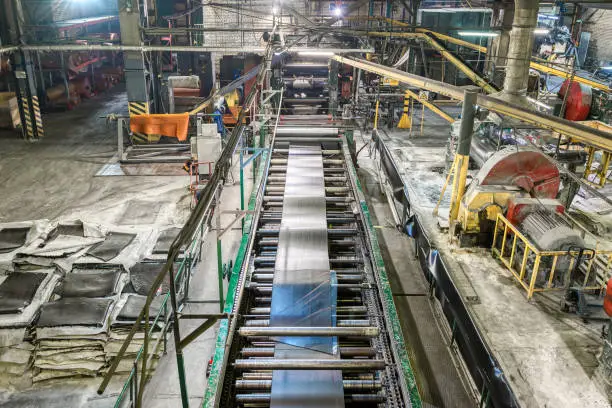
The basic rules for sand casting are simple but strong. We make disposable moulds out of bonded sand mixes, like green sand with clay and water in it or chemically-bonded resin sand, which are then filled with molten metal. After the metal hardens, the sand mould is broken off to show the final casting. This ability to collapse is very important for big parts because it stops hot tearing while cooling, which happens a lot with metals that have a high solidification shrinkage.
Materials and Scale Capabilities
The process works with a wide range of materials. Cast iron is still used for big machinery parts because it is cheap and good at reducing vibrations. Steel castings are used in high-stress places like oil and gas valve bodies, where strength and resistance to rust are essential. Aluminium alloys are used to make lightweight parts for cars and aeroplanes, and special metals like duplex steel are used in energy structures to handle harsh conditions. High-refractoriness silica sand allows sand moulds to withstand temperatures above 1600°C without melting. This means that they can be used with almost any engineering alloy.
Design Considerations for Large Castings
Quality of casting is directly affected by part size, weight distribution, and mould design. To keep shrinkage flaws to a minimum, engineers must take solidification trends into account. Wall thickness usually falls between 5mm and 9mm for ferrous metals and 3mm to 5mm for non-ferrous alloys. If you go thinner, the metal could freeze before it fills the mould cavity completely, which is called a cold shut. Placement of risers and gating systems in a planned way makes sure of even metal flow, which is more important as the sizes of the parts increase. We've successfully made castings that weigh more than 50 tonnes for companies that make construction equipment. This shows how well the process can be scaled up.
Core Advantages of Sand Casting Large Parts
In the world of manufacturing, there are many ways to make big metal parts, but sand casting always stands out for practical and financial reasons that buying teams care about.
Unmatched Design Flexibility
Sand casting allows for the creation of intricate shapes that would otherwise be impossible to produce. Sand cores can be used to make internal holes, undercuts, and complex cooling tunnels. After casting, the cores dissolve or break away. This feature is very helpful when designing complex water jackets for engine cylinder heads or pump housings for industrial use that need to have flow channels inside them. Engineering teams like that design changes don't have to cost a lot of money to make to the tools—pattern adjustments are much cheaper than die casting mould changes.
Superior Cost Efficiency for Medium to Low Volumes
One of the biggest differences between industrial manufacturing methods is the cost of tooling. Hardened steel molds are required for die casting, which can cost tens of thousands of dollars and usually only make economic sense for production runs of several thousand units or more. In contrast, sand casting patterns can be produced from metal, plastic, or wood at a much lower cost. This economic advantage is one of the key sand casting advantages large parts, especially for heavy components, oversized castings, and projects that require flexible production quantities. This cost structure benefits buyers who need anything from a single prototype to several hundred units per year. Material expenses also remain low because molding sand is widely available, reusable, and can be recycled through proper reconditioning processes. Many foundries reuse and restore sand multiple times before disposal, further reducing production costs and environmental impact. These sand casting advantages large parts make the process highly suitable for large industrial components, custom machinery parts, low-volume manufacturing, and complex castings where expensive tooling investments are not practical. By combining low tooling costs, material efficiency, design flexibility, and large-scale casting capability, sand casting provides a cost-effective solution for manufacturers seeking reliable and economical metal production.
Accelerated Time to Production
Pattern making usually takes two to six weeks, depending on how complicated it is. Die casting mould making, on the other hand, takes months. This advantage in terms of time is useful when project deadlines are tight or when trying different design options before committing to mass production. We work with a tier-1 automotive supplier that often uses sand casting to make prototype engine parts. This lets them test their functionality months before they have to start making die castings.
These operational gains lead straight to advantages in terms of strategy. By making parts closer to when they are needed, businesses can respond faster to market opportunities, try out more design ideas without taking a financial hit, and keep their inventory levels low. Modern lean manufacturing and just-in-time delivery standards are great for sand casting because it is very flexible.
Comparing Sand Casting with Other Large Part Manufacturing Methods
To make choices about what to buy, you need to know how different ways of making things compare in a number of performance areas.
Sand Casting Versus Die Casting
Die casting is great for making medium-sized parts with tight tolerances and smooth surfaces; these parts usually meet ISO 8062 CT4–CT6 grades. Most of the time, sand casting gives you CT10–CT13 limits and a surface roughness of 6.3–12.5 Ra microns. Die casting equipment, on the other hand, can't handle the huge parts that sand casting usually does. The breaking point usually happens around 50 pounds. Any heavier than that, die casting is no longer practical technically and economically. Another problem is choosing the right materials. Die casting works best with alloys that have a lower melting point, like aluminium and zinc, while sand casting can easily handle high-temperature metals like steel and iron.
Forging Compared to Casting
Compressive forces are used in forging to produce parts with refined grain structures and excellent mechanical properties. Forged components usually achieve tensile strengths that are 10–20% higher than cast parts made from the same material. However, forging has limitations when dealing with geometric complexity. It is difficult or impossible to manufacture asymmetrical shapes, hollow structures, or parts with highly complex internal features through traditional forging methods. There are also size restrictions because forging presses capable of producing extremely large components require significant investment and are only available in specialized facilities. In applications where both complex designs and oversized dimensions are required, the sand casting advantages large parts provide a more practical manufacturing solution. Sand casting can produce large, heavy, and intricate components with greater design flexibility, while avoiding the extremely high tooling and equipment costs associated with large-scale forging. Although sand casting may offer slightly lower mechanical properties compared with forged parts, its ability to handle large castings, complex geometries, various engineering alloys, and low-to-medium volume production makes it an ideal choice for heavy machinery, industrial equipment, energy components, and custom metal casting applications. These sand casting advantages large parts highlight the process’s value when size, flexibility, and cost efficiency are critical factors.
Integration with Secondary Machining
Not many casts can be used as-cast without further preparation. To meet practical requirements, CNC cutting is needed for mating surfaces, threaded holes, and precise fits. Integrated processes let casts go straight from the floor of our foundry to our machining centers, which have high-speed spindles and the ability to work on multiple axes. This one-stop method cuts down on shipping delays, lowers the risk of damage during handling, and makes quality control easier because all the measurements are taken in one place. Before cutting starts, our CMM scanning equipment compares the measurements of the casting to the CAD models. This keeps costly mistakes from happening later on.
Quality Assurance and Environmental Considerations
To deliver big castings that meet strict industry requirements, strict quality standards and care for the environment are needed.
Testing and Inspection Standards
Optical Emission Spectrometry is used to check the chemical makeup of each pour, making sure that the metal meets all ASTM or EN standards. To make sure that mechanical properties are correct, witness bars are cast along with production parts and tested for tensile strength, yield strength, elongation, and Brinell hardness. Internal integrity assessment uses non-destructive testing methods like Ultrasonic Testing to find holes below the surface, Radiographic Examination to see holes caused by shrinking, and Magnetic Particle Inspection to see cracks on the surface that can't be seen with the naked eye.
Defect Prevention Strategies
The most common flaws in casting are holes and shrinking. We carefully control how permeable the sand is, balancing the need for gas to escape with the need to keep the mould strong. If the gates are designed correctly, the molten metal will move easily without any bumps that would trap air bubbles. When placed correctly, risers create pools of molten metal that help the casting shrink as it hardens. When degassing agents are added to the melt, they get rid of the hydrogen that dissolves and makes tiny holes. These preventative steps work better and cost less than relying only on inspections after the concrete has been poured.
Heat Treatment for Enhanced Performance
A lot of big casts are heated to improve their mechanical qualities. Stress relief annealing gets rid of any remaining pressures caused by uneven cooling. This makes it less likely that the dimensions will change when the metal is machined. Aluminium alloys become stronger after being treated with a solution and then aged. Normalising improves the stiffness and machinability of steel products by smoothing out the grain structure. Specifications for heat treatment are changed depending on the use. For example, the qualities of a counterweight for an excavator need to be different from those of a part for a pressure tank.
Sustainability Practices
The environmental benefits of sand casting are greater than those of many other manufacturing methods. Sand is widely available, reusable, and can be recycled through proper treatment processes. In fact, our plant reuses about 90% of molding sand after testing its properties and correcting mechanical issues. These sustainability features are important sand casting advantages large parts, especially for oversized components that require significant material resources during production. Compared with cutting or milling large parts from solid stock, sand casting usually consumes less energy per pound because it reduces unnecessary material removal and minimizes machining waste. A closed-loop material system is created by melting down scrap metal from gates, risers, and rejected castings and returning it to production. These sand casting advantages large parts make the process more suitable for heavy machinery, industrial equipment, energy systems, and large custom castings that require both efficiency and environmental responsibility. Selecting foundries with ISO 14001 environmental management certification ensures better control of emissions, waste reduction, resource recovery, and continuous improvement of sustainability performance. With benefits including recycled materials, lower energy consumption, reduced waste, and efficient large component manufacturing, sand casting provides a sustainable solution for modern metal casting applications.
Procuring Large Sand Cast Parts: What B2B Buyers Should Know
A successful procurement process includes more than just technical specifications. It also includes evaluating suppliers, setting up clear communication channels, and finding value-added services that make your operations run more smoothly.
Supplier Evaluation Criteria
Foundry certifications give you basic peace of mind about the quality of the systems. ISO 9001 certification means that methods are written down and there is a mindset of ongoing improvement. IATF 16949 certification is important for automotive suppliers because it shows that they can follow the PPAP process and make sure that their production parts are approved. For specialised processes, aerospace buyers should check both AS9100 certification and NADCAP certification. In addition to licenses, you should read real customer reviews and ask for references from businesses that have similar needs. The foundry's technical skills are very important. Does it have the right metallurgy knowledge for your alloy? Can they use finite element analysis to make locking systems work better? Do they keep up-to-date measuring tools that can be calibrated to national standards?
Optimizing the Ordering Process
Don't let misunderstandings cost you money; talk clearly. Give detailed engineering drawings with GD&T callouts, material specifications that use well-known standards (ASTM, SAE, EN), and any other needs, like heat treatment or surface finishing. Talk about production numbers in a realistic way. For example, foundries can optimise processes differently for 10 pieces a year compared to 1000 pieces a year. If you have needs that keep coming up, look into framework deals. They can often get you better prices and more space. Plan for acceptable lead times and keep in mind that rushing production generally hurts quality or makes costs go up for no reason.
Value-Added Services
Integrated suppliers that do both casting and machining have big benefits. Instead of having to deal with multiple vendors and coordinate dimensional interfaces, the parts come ready to be put together. Some foundries offer kitting services, which means they put together casts and bought parts and send them to you all put together. You can plan for surface processes like powder coating, anodising, or plating, which again makes your supply chain stronger. Having engineering help during the design phase makes it easier to make sure that the parts are optimised for production. For example, a factory that knows your industry well can suggest changes that lower costs or boost performance based on what they've learned from previous projects that are similar.
Conclusion
Sand casting offers sand casting advantages large parts by providing a compelling combination of geometric freedom, material versatility, and cost-effectiveness that other manufacturing processes cannot easily match for medium- to low-volume production. The process can produce very large components, support almost any engineering alloy, and avoid the expensive tooling investments required by die casting. These sand casting advantages large parts make the process ideal for heavy machinery components, industrial equipment, energy systems, aerospace structures, and custom metal castings. Reliability is maintained through strict inspection procedures and quality assurance systems used across automotive, industrial gear, energy, and aerospace sectors. When selecting a manufacturing partner, companies should focus on foundries that demonstrate strong technical expertise, advanced casting capabilities, quality certifications, and integrated services that simplify procurement. The strategic value of sand casting advantages large parts extends beyond individual part costs by improving product development speed, reducing inventory requirements, supporting design flexibility, and increasing the ability to respond quickly to changing market demands. With benefits such as large-scale casting capability, alloy flexibility, reduced tooling costs, and efficient production for low-volume manufacturing, sand casting remains a valuable solution for complex and oversized metal components.
FAQ
What distinguishes green sand from resin sand casting?
Green sand casting uses clay and water as binding and is a cheap way to meet standard spec requirements and make more things. For better accuracy in measurements, a smoother surface, and stronger moulds that can hold bigger, heavier castings, resin sand uses chemical binders like furan or phenolic resins. The cost of materials is higher when you use resin sand, but the better quality often makes it worth it for important jobs.
How do foundries prevent gas porosity defects?
Keeping pores from forming requires more than one strategy to work together. Controlled sand permeability lets gases that are trapped get out of the mould through the walls. Venting systems that are properly built let air move out of the space as molten metal fills it. Dissolved hydrogen is taken out of the liquid metal by degassing it before pouring. Controlling the pouring rate and temperature is very important. If it's too hot, too much gas is made, and if it's too cold, it solidifies too soon.
Can sand castings be used without additional machining?
Non-critical areas usually work fine as-cast, especially for covers that are only there to look good or structural parts that don't need to be exact in terms of size. Because sand casting tolerances run from ±0.5mm to ±3mm based on size, mating surfaces, bearing bores, and threaded holes almost always need to be machined. However, precision of ±0.05mm is usually needed for assembled parts. Rather than casting limitations alone, functional efficiency generally determines what needs to be machined.
Partner with Fudebao Technology for Your Large Casting Needs
Zhejiang Fudebao Technology can help you with your large component needs because they are experienced in casting aluminium alloy, copper alloy, and stainless steel. Our integrated facility has low-pressure casting, modern CNC machining centers, and full finishing services. This means that we can help you with everything from melting metal to putting together parts. Our dedication to accuracy is what made us a leading aluminium casting business, and it's what we use to serve original equipment manufacturers (OEMs), industrial equipment makers, and machinery builders. Our engineering team helps you get the best design possible, our quality systems make sure that strict testing rules are followed, and our delivery performance keeps your production plans on track. We can scale our processes to meet your volume needs in a cost-effective way, whether you need a prototype for validation testing or a steady supply of parts for production. Get in touch with our technical team at hank.shen@fdbcasting.com to talk about your needs with an experienced sand casting advantages large parts seller who knows both the science behind manufacturing and the business realities that affect your buying choices.
References
1. American Foundry Society (2021). Casting Design and Performance: Principles and Best Practices for Sand Casting. Schaumburg, Illinois: AFS Publications.
2. Campbell, J. (2015). Complete Casting Handbook: Metal Casting Processes, Metallurgy, Techniques and Design (2nd ed.). Oxford: Butterworth-Heinemann.
3. Brown, J.R. (2019). Foseco Ferrous Foundryman's Handbook (11th ed.). Oxford: Butterworth-Heinemann.
4. ASM International Handbook Committee (2018). ASM Handbook Volume 15: Casting. Materials Park, Ohio: ASM International.
5. Beeley, P.R. & Smart, R.F. (2017). Investment Casting and Sand Casting: Comparative Analysis of Large Component Manufacturing. International Journal of Metalcasting, 11(3), 456-472.
6. Stefanescu, D.M. (2020). Science and Engineering of Casting Solidification (3rd ed.). New York: Springer International Publishing.



YOU MAY LIKE