
Aluminum Die Cast Parts Support Automotive, Electronics, and Industrial Applications
2026-08-07
When sourcing reliable components that balance precision, durability, and cost-efficiency, aluminum die cast parts have emerged as the backbone of modern manufacturing. These lightweight yet robust components are created through high-pressure die casting (HPDC), where molten aluminum alloys—commonly A380, A383, or ADC12—are injected into hardened steel molds under pressures reaching 30,000 psi. This process delivers net-shape components with exceptional dimensional accuracy, thermal management capabilities, and structural integrity, making them indispensable across automotive, electronics, and industrial sectors where performance under demanding conditions is non-negotiable.
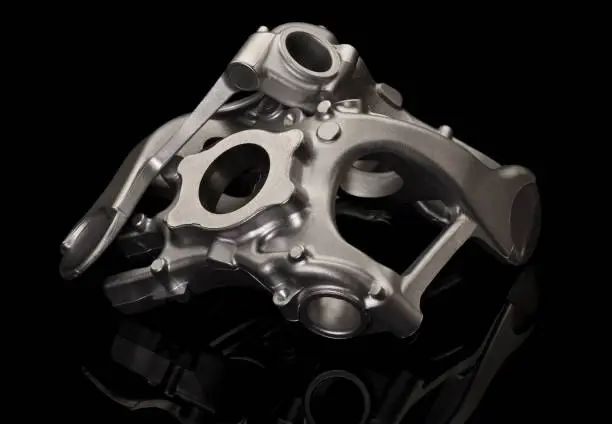
Understanding Aluminum Die Cast Parts and Their Manufacturing Process
Precise mold engineering is the first step in making aluminum die cast parts. Working with global OEMs and tier-1 suppliers for years at places like Zhejiang Fudebao Technology has helped us get better at this art.
From Molten Metal to Precision Component
The first step in our production process is choosing the right metal for the job. The A380 metal has a tensile strength of about 47 ksi and a lightweight density of about 2.71 g/cm³. It is commonly used in the housings of cars and electronics. We use controlled furnaces to melt the aluminum and follow strict temperature rules before injecting it. Within milliseconds, the molten metal fills the die hole, making complex shapes like mounting bosses, cooling fins, and threaded inserts that would need more than one operation to make with standard machining.
With vacuum-assist technology, air is sucked out of the mold before filling, which greatly lowers the risk of holes. This is very important when making pressure-tight housings for industrial pump cases or ECU housings for cars. Once the casting has hardened, it is removed automatically by ejection systems. Next, flash is cut off, and secondary operations like drilling or tapping are done on our high-speed CNC machining centers.
Finishing Techniques That Extend Component Life
Surface treatment turns rough casts into parts that are ready to be used. We specialize in other protective coats because standard anodizing is hard to do on die-cast metals because they contain a lot of silicon, which makes the finishes dark and uneven. When used on parts of an automobile's undercarriage that are exposed to road salt and water, e-coating makes them more resistant to corrosion. Industrial enclosures can look good and be protected mechanically with powder coating. It has been tested for adhesion according to ASTM D3359 standards and for corrosion resistance using 500–1000 hours of salt spray testing according to ASTM B117.
Our facility is fully integrated and handles the whole process, from melting to finishing. This allows for one-stop delivery and allows for tolerances of up to ±0.05mm. This vertical integration gets rid of the planning delays that come up when you work with a lot of different freelancers. This speeds up your time to market while keeping quality control high at every stage of production.
Applications of Aluminum Die Cast Parts in Automotive, Electronics, and Industrial Fields
Procurement teams can find the best answers if they know how these aluminum die cast parts solve technical problems in the real world.
Automotive Lightweighting and Thermal Management
There is a lot of pressure on automotive experts to make cars lighter without sacrificing safety or speed. When compared to traditional iron castings, die-cast aluminum gearbox housings, engine mounts, and structural brackets are more than 40% lighter. This directly makes cars use less petrol and put out less pollution, which are both very important as global CAFE standards get stricter.
In the electric vehicle market, which is growing very quickly, die-cast housings for inverters and battery management systems need to be able to get rid of heat from high-voltage electronics and block electromagnetic interference (EMI). Because aluminum alloys are very good at transferring heat (about 96 W/m-K), the housing itself acts as a heat sink, so you don't need separate ones. We've given makers of electric vehicles inverter housings with built-in cooling fins that keep junction temperatures within safe working ranges, even during fast-charging cycles.
Electronics Protection in Harsh Environments
Telecommunications infrastructure needs tough cases that keep delicate equipment safe from harsh environments. For 5G base stations, remote radio units (RRUs) need to be sealed with an IP67 rating to keep water out and have complex outward fin shapes for passive cooling. Die casting combines these features into a single part, which cuts down on the time it takes to put together and the number of possible leak paths.
Aluminum die-cast housings are used as the main heat sinks in high-bay industrial fixtures by companies that make LED lighting. The structure of the case protects against mechanical damage in factory settings and moves heat away from the LED drivers, which increases their useful life from 30,000 hours to over 50,000 hours. Because we can do precise machining, we can make sure that mounting areas are flat, which is important for good heat transfer.
Industrial Durability Under Mechanical Stress
When dimensional stability under pressure cycles is very important, pump makers choose die-cast aluminum valve bodies and manifold blocks. The material's strength-to-weight ratio lets designs be small while still keeping the structure stable while it's in use. When aluminum is exposed to condensation and changing humidity levels in pneumatic systems, it doesn't rust. This is good for compressor housings.
OEMs of heavy equipment are replacing manufactured steel frames with aluminum die castings more and more. This saves money because the parts can be combined into one casting, and welding isn't needed as often. A single die-cast bracket can be used instead of multiple parts that need to be stamped, fastened, and welded. This makes the system more reliable by getting rid of possible weak spots.
Key Considerations When Choosing Aluminum Die Cast Parts
To properly specify a component, you need to find a balance between the needs of the design and the realities of production.
Design Guidelines for Optimal Performance
Consistency in wall thickness stops flaws and makes sure that the filling can be predicted during the injection phase. For most uses, we suggest keeping walls between 2.5 mm and 4 mm thick. However, with the right ribbing support, you can get thin sections down to 1.5 mm. Draft angles, which are usually between 1 and 3 degrees, make ejection easier without hurting delicate parts.
Keeping internal edges from being too sharp lowers stress and improves metal flow. Generous curves also make dies last longer, which lowers your long-term costs for tool upkeep. When creating mounting bosses or threaded features, putting them in places that can be reached by secondary cutting operations makes the post-casting process easier.
Material Selection and Alternative Comparisons
When you compare die-cast aluminum to magnesium metals, you should think about what's most important for your purpose. Magnesium has a slightly better strength-to-weight ratio, but it is harder to keep from rusting and costs more to work with. Plastic injection molding works well for low-stress tasks, but it can't provide the EMI protection or heat transfer that power electronics need.
It is still possible to use sand casting for very small quantities or very large parts, but the tolerances for size are usually around ±0.5mm, while die casting allows for ±0.2mm. We can fill this gap with our low-pressure casting skills, which allow us to make bigger industrial parts like gearbox housings and compressor manifolds in middle quantities.
Supplier Credibility and Partnership Value
Certifications provide a basic level of confidence, but true delivery success depends on manufacturing capability, process control, and consistent product quality. Our facility uses HAAS machining centers and specialized die casting equipment, allowing us to produce aluminum die cast parts with complex geometries, tight tolerances, and strict performance requirements without relying on external suppliers. We maintain full material traceability by testing every melt with optical emission spectroscopy (OES) to ensure that the chemical composition meets ASTM B85 standards. These quality control processes help guarantee the reliability, strength, and dimensional accuracy of aluminum components used in automotive, electronics, industrial equipment, and precision manufacturing applications.
Sustainability practices are also becoming increasingly important when selecting a manufacturing partner. Our closed-loop aluminum recycling system converts scrap aluminum directly back into reusable material, reducing environmental impact while helping control raw material costs. This approach supports the production of aluminum die cast parts with improved sustainability, resource efficiency, and long-term supply stability. It is especially valuable for automotive manufacturers that monitor Scope 3 emissions throughout their supplier networks and require environmentally responsible partners. By combining advanced die casting technology, precision machining, material inspection, and sustainable production methods, manufacturers can deliver high-quality aluminum die casting solutions that meet both technical and environmental standards.
Cost, Lead Time, and Procurement Insights for Aluminum Die Cast Parts
Understanding the economics of die casting production is important for making the business work.
Breaking Down Cost Drivers
Tooling is the most expensive thing to buy up front, and die costs depend on how complicated the cavities are, how big they are, and how much you expect to make. Standard H13 tool steel dies can usually handle 50,000 to 100,000 shots before they need to be fixed up. This spreads the costs of one-time engineering (NRE) over many production runs. Cycle time is directly related to the complexity of the part. Geometries that are easier may cycle every 60 seconds, while complex housings with many slides need 90–120 second cycles.
Finishing the surface of something costs a little more, but it protects against rust and makes the surface look better. Powder coating processes don't add much to the cost per unit when used in large quantities, but they greatly increase the life of parts in corrosive environments. Instead of just looking at the piece price, procurement teams should look at the total cost of ownership, which includes warranty claims and failures that could have been avoided with better finishes.
Volume Economics and MOQ Considerations
Between 1,000 and 2,000 pieces, when amortized tooling costs cross over with total machining costs, die casting becomes economically competitive with CNC machining. Higher amounts allow more cost savings. For example, making 10,000 units a year instead of 50,000 units can cut costs per piece by 30 to 40 percent by improving production timing and lowering the number of times the machine needs to be set up.
We can do batch production in a way that is flexible to meet the changing needs of the industrial equipment market. Low-pressure casting works well for middle quantities where the cost of die casting tools is still too high. It can be used as a temporary fix until your product is ready for higher volumes.
Rapid Prototyping and Development Acceleration
Speed to market is becoming more and more important in modern buying. Our CNC cutting skills allow us to make fast prototypes out of billet aluminum. Within two weeks, we can make working prototypes to test the design before committing to making production tools. This continuous method finds better designs early on, so expensive changes to the die after the tool is finished are avoided.
Collaborative engineering reviews help make ideas better so they can be made. Our technical team looks at CAD models to find possible casting flaws and suggests changes to the draft angle and feature relocations that make tooling easier while keeping functionality. This partnership approach speeds up the development process and raises the chances of getting a first article published.
Quality Assurance and Surface Finishing Options to Enhance Aluminum Die Cast Parts
Quality that stays the same is what separates reliable aluminum die cast parts suppliers from those who cause problems in production further down the line.
Defect Prevention and Detection Methods
In pressure-tight uses, porosity is still the main quality issue. When gas is trapped during filling, tiny holes are made that weaken the structure and let leaks happen. We use real-time X-ray inspection on important parts to find problems inside that can't be seen with the naked eye. Before they are shipped, IP-rated electronic enclosures are tested for sealing performance using pressure decay leak testing.
Coordinate measuring machines (CMM) that have been programmed with GD&T specifications from your engineering drawings are used for dimension verification. Statistical process control keeps an eye on important factors during production runs and takes corrective actions before tolerances get too far outside of what is allowed. This proactive method keeps the ±0.002 inch/inch dimensional stability that is needed by the PPAP documents for the car industry.
Surface Treatment Options for Extended Durability
The electrophoretic deposition (E-coating) method covers complicated shapes evenly and can reach places that powder coating can't. The process uses electricity to cast layers of protective polymer, making a film that is the same thickness all the way around, even on sides that are sharp. Manufacturers of cars require e-coating for parts that are exposed to conditions under the body, where corrosion protection is important for guaranteed performance.
Powder finishing lets you choose from more colors and textures, so it can meet both practical and branding needs. The thermally cured finish is very resistant to contact and UV light, making it perfect for outdoor uses like LED lighting housings. Our powder coating line can match colors to your specifications, which helps with brand identity requirements for products that people will see.
Environmental Stewardship and Compliance
Sustainability measures are becoming more and more important in B2B purchasing decisions. Our efforts to recycle aluminum keep scrap from ending up in dumps and lower the amount of energy needed to make aluminum in the first place. We keep track of how much material is used and keep improving the shape of the dies to cut down on runner and gate scrap.
Following the rules for RoHS (Restriction of Hazardous Substances) and REACH (Registration, Evaluation, Authorisation, and Restriction of Chemicals) makes sure that parts can be sold in all countries. Our material certifications and proof of third-party tests help you meet your regulatory responsibilities in foreign markets.
Conclusion
Because they are strong, lightweight, and excellent at heat management, aluminum die cast parts provide significant advantages across a wide range of industries, including automotive, electronics, aerospace, and industrial manufacturing. These components offer a strong combination of durability, dimensional accuracy, corrosion resistance, and cost efficiency, making them ideal for high-pressure die casting applications and lightweight engineering solutions. Finding the right manufacturing partner requires more than comparing prices; companies must evaluate technical expertise, quality management systems, production capabilities, and collaborative engineering support. Through years of experience serving demanding industries where component failure can create major operational impacts, manufacturers have developed advanced skills in aluminum casting, precision machining, and surface treatment processes. Integrating casting, CNC machining, finishing, and inspection services under one roof creates a more efficient supply chain while maintaining strict quality standards. This approach helps ensure that aluminum die cast parts meet performance requirements, improve product reliability, and protect brand reputation while delivering long-term value to customers in automotive components, electronic housings, and industrial equipment markets.
FAQ
Can die-cast aluminum housings accept anodizing for aesthetic finishes?
Standard die-cast alloys, such as A380, have high levels of silicon, which makes the finish look dark and mottled when it's anodized. This finish isn't good for cosmetic uses. E-coating and powder coating give better visual effects and do a great job of protecting against rust. These alternatives offer consistent color and long-lasting performance that meets functional needs and brand appearance standards in markets such as electronics, cars, and factories.
How do manufacturers ensure leak-tight performance in pressure-sensitive applications?
To achieve hermetic sealing, you need to use multiple quality methods. Vacuum-assist die casting gets rid of air before injecting metal, which makes the inside much less porous. Putting squeeze pins in the right places on thick sections helps the structure of sound materials. An X-ray check confirms the internal integrity, and a pressure decay test proves the real sealing performance. When absolute zero-leak performance is needed, resin impregnation fills in tiny holes. This makes sure that pressure-tight assemblies are made for hydraulic parts and sealed electronic enclosures.
At what production volume does die casting become cost-effective compared to machining?
Most of the time, the breakeven point is between 1,000 and 2,000 units, when the total cost of cutting exceeds the cost of die casting tools plus the cost of making each piece. Higher numbers make economic benefits bigger. For example, if you run 50,000 units a year instead of 10,000 units, you can cut the cost of each piece by 30–40%. The complexity of the part, the tolerance standards, and the secondary processes all affect this estimate. Teams in charge of buying things should ask for specific cost models that compare different options across expected lifetime numbers.
Partner with Fudebao Technology for Precision Aluminum Die Cast Parts
Zhejiang Fudebao Technology can help you with your next project because they can make a wide range of aluminum die cast parts. Our facility has both modern die casting tools and HAAS CNC machining centers, so we can provide complete solutions from the prototype stage all the way through production. As a leading aluminum die cast parts supplier, we've won your trust by keeping tolerances as tight as ±0.05mm and working with complicated assemblies that need precise geometric controls.
Email our engineering team at hank.shen@fdbcasting.com to talk about the specifics of your program. We can help you make structural parts for cars that meet PPAP standards, electronic housings with built-in thermal management, or parts for industrial machinery that need to be made in small batches. Our manufacturing know-how and quality systems are in line with global standards. Visit fdbcasting.com to learn more about what we can do and how our "one-stop manufacturing" method can help you get your product to market faster.
References
1. North American Die Casting Association (NADCA). "Product Specification Standards for Die Castings," 2019 Edition.
2. American Society for Testing and Materials. "ASTM B85-19: Standard Specification for Aluminum-Alloy Die Castings," 2019.
3. SAE International. "J2534: Die Cast Aluminum and Magnesium Alloys for Automotive Applications," Technical Standard, 2018.
4. Kaufman, J. Gilbert and Rooy, Elwin L. "Aluminum Alloy Castings: Properties, Processes, and Applications," ASM International, 2004.
5. European Aluminium Association. "Environmental Profile Report: Life-Cycle Inventory Data for Aluminium Production and Transformation Processes in Europe," 2018.
6. International Organization for Standardization. "ISO 8062-3:2007 – Geometrical Product Specifications (GPS) – Dimensional and Geometrical Tolerances for Moulded Parts," 2007.



YOU MAY LIKE