
Precision Structural Aluminium Die Casting for Industrial Applications
2026-07-27
Structural aluminium die casting represents a transformative manufacturing technique that addresses critical demands across multiple industrial sectors. This high-pressure metal forming process injects molten aluminium alloys—typically A380, ADC12, or A356—into precision-engineered steel molds at pressures exceeding 1,500 psi, creating load-bearing components with exceptional dimensional consistency and mechanical integrity. Industries facing challenges in weight reduction, production scalability, and component complexity increasingly turn to this method to manufacture housings, brackets, structural frames, and mechanical assemblies that meet rigorous performance standards while optimizing production economics.
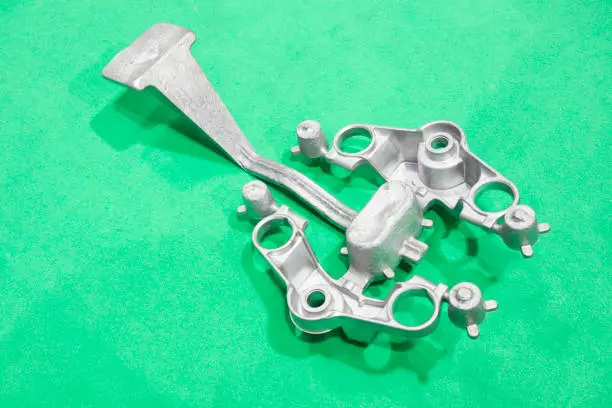
Understanding Structural Aluminium Die Casting: Process, Benefits, and Applications
The Core Manufacturing Process
The first step in the structural aluminium die casting process is choosing a material based on its mechanical properties. Next, precise tools are made. Within milliseconds, molten metal kept at temperatures between 600°C and 700°C runs through gated runners and into the die hole. This fast injection keeps oxidation to a minimum while filling complex shapes that can't be done with traditional methods. When the pressure stays high for a long time, the metal structure gets packed down, and there are fewer empty spaces inside. After the casting has cooled, ejector pins lift it out of the mould, and it goes through stages of cutting, machining, and surface treatment.
Quantifiable Performance Advantages
The best thing about aluminium alloys is their strength-to-weight ratio. They have tensile strengths of up to 320 MPa and a specific gravity of only 2.7 g/cm³, which is about one-third the density of steel versions. These parts are great for getting rid of heat in electrical systems and power tools because they have a thermal conductivity of between 96 and 120 W/m·K. The formation of the natural oxide layer makes the metal naturally resistant to corrosion, which is very important for parts that are exposed to harsh chemicals, water, or extreme weather. Average production cycle times of 30 to 90 seconds per part allow for scale scaling that can't be done any other way.
Cross-Industry Applications
Manufacturers of cars use structural die-cast metal for parts of the frame, engine mounts, gearbox housings, and crash management systems. Less weight means better gas mileage and a longer range for electric vehicles. Manufacturers of industrial machinery use these casts for parts that need to last under repeated loads, like gearbox housings, compressor bodies, and heavy equipment frames. When electromagnetic compatibility and thermal management are important, the electrical industry uses aluminium die castings in motor housings, switchgear enclosures, and transformer parts. Aerospace uses the material's high strength retention and wear resistance in non-critical structural parts, but they need to follow different approval rules.
Comparing Structural Aluminium Die Casting with Alternative Manufacturing Methods
To choose the best way to make something, you need to know how structural aluminium die casting compares to other technologies in a number of different performance areas.
Although sand casting requires less initial investment in tools and can handle larger component sizes, it has rough surface finishes that need a lot of machining, wider dimensional tolerances (usually ±0.5mm), and slower production cycles that mean it's only cost-effective for low-volume needs below 500 units per year. When you make more than 2,000 units, die casting is the most cost-effective way to make things because it can hold tolerances of ±0.1mm across most features and achieve surface finishes of 1.6 to 3.2 Ra without any other operations.
While machining from billet stock gives you the most control over dimensions and material flexibility, it also creates a lot of waste (often more than 70% material removal) and takes a long time to make. Die casting is the best way to make parts where near-net-shape geometry gets rid of most machining processes. For example, a complicated housing that would take 4 hours of CNC machining can be made in less than 2 minutes.
Even though steel castings are stronger, they are also heavier—about 2.8 times heavier than aluminium for the same amount, and for structural aluminium die casting, this weight disadvantage translates into higher transportation, assembly, and operational costs, while steel's susceptibility to corrosion adds protective coating requirements that further increase processing complexity and ongoing maintenance. This adds costs to the process of putting them together, moving them, and running the business. Because steel is easily corroded, it needs protective coatings that make the process more difficult and upkeep more difficult.
Die casting magnesium has a slightly lower density than die casting aluminium, but it costs 30–40% more and can catch fire during melting operations. It also doesn't hold up as well against corrosion in damp places. For most industry structural uses, aluminium is the best choice because it is the best mix of performance, cost, and ease of processing.
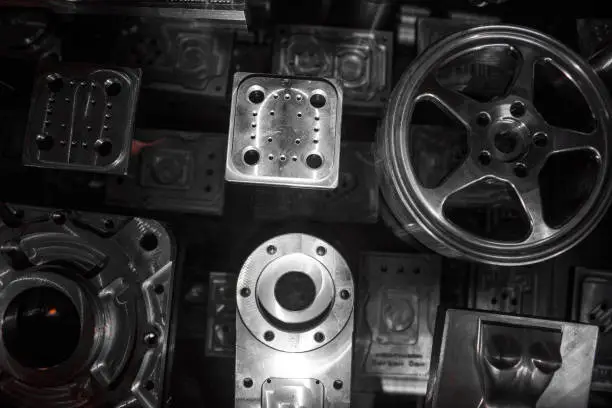
Best Practices and Design Tips for Structural Aluminium Die Casting
Strategic Alloy Selection
Picking the right aluminium material has a direct effect on how well the structure works and how well the making goes. For general structural parts that need moderate strength, A380 alloy is a good choice because it has good mechanical properties and is fluid enough to fill complex geometries. ADC12, which is widely used in Asian production, has similar features but can fill dies a little better. When heated to the T6 state, A356 alloy becomes stronger. Its tensile strength is close to 280 MPa, and its elongation value can reach 8%. This makes it perfect for safety-critical car uses and parts that are loaded and unloaded quickly.
Critical Design Parameters
Even wall thickness stops thermal stress from building up during solidification. Keeping sections between 2.5 and 4 mm strikes a balance between the rigidity of the structure, the way metal flows, and how well it cools. Thinner walls can lead to cold shuts and partial filling, while too thick walls can cause shrinkage porosity and longer cycle times.
Draft angles help parts come out without damaging the surface. For deep pockets or tall bosses, draft angles of 3 to 5 degrees are best, and 1-2 degrees is the bare minimum. Undercuts that need side actions make tools more complicated and expensive, so getting rid of them through different design methods is better for the bottom line.
Ribs that are placed in a way that is perpendicular to the main stress directions make the structure stiffer without adding any weight. Keeping the rib thickness between 50 and 70% of the nearby wall thickness and limiting the rib height to three times the wall thickness stops sink marks and ensures that the cooling is even.
Defect Prevention Strategies
Porosity from trapped gases or shrinking gaps weakens the structure and makes it less resistant to pressure. Using vacuum-assisted die casting for important tasks, adjusting the location of the gate to encourage solidification from the edges toward the feed points, and applying intensification pressure during the solidification phase are all good ways to stop porosity from forming.
Cold shuts, which are lines that can be seen where metal streams meet without properly joining, happen when the metal isn't hot enough or solidifies too soon during cavity filling. These breaks can be fixed by speeding up the injection, raising the temperature of the die in the damaged areas, and moving gates to change the flow patterns.
Different parts of the shape cool at different rates, which causes warpage and physical distortion. Post-casting deformation can be kept to a minimum by adding conformal cooling lines to die parts, changing the time of ejection, and creating stress-relief features.
Procurement Insights: How to Source Custom Structural Aluminium Die Casting Services?
Supplier Qualification Criteria
Certification files show how mature a manufacturing process is and how strong a quality system is, and for structural aluminium die casting, ISO 9001 provides a baseline quality management framework, while IATF 16949 is essential for automotive applications, requiring PPAP documentation, process capability studies, and full traceability, and AS9100 certification is maintained by aerospace suppliers for strict material control and inspection protocols. ISO 9001 certification sets basic rules for quality management, while IATF 16949 certification covers the needs of the automotive industry, covering things like PPAP documentation, process capability studies, and traceability systems. Aerospace manufacturers usually keep their AS9100 approval, which shows that they follow strict rules for controlling materials and inspecting them.
Assessing a company's manufacturing capacity is more than just looking at its press mass. It also looks at its die design skills, metallurgy labs, precision machining options, and surface treatment choices. Suppliers who offer combined services from development to mass production and secondary operations make the supply chain easier to manage and hold accountable.
Project Timeline Expectations
The part that takes the most time to make is the tooling development, which usually takes 8 to 12 weeks for complicated structure dies with many slides and complicated core setups. Tooling may be finished in 6 to 8 weeks for simpler shapes. One to two weeks are added before production permission for the first piece check and dimensional validation.
Volume production schedules depend on how complicated the parts are and how many are needed. Production runs of 5,000 to 10,000 parts usually take two to four weeks, which includes quality checks. For larger volumes, production is split into several blocks so that equipment maintenance and quality checks can be done at different times.
Cost Structure Considerations
The main set cost is the investment in tools, which is affected by the size and shape of the parts, the expected amount of production (which affects the tool's life), and the level of accuracy needed. When you spread the cost of the tools out over the number of items that will be made, you can find the rate level at which die casting is more cost-effective than other options.
Costs per unit depend on the metal chosen—premium alloys cost 15–25% more than normal A380. The complexity of the shape affects cycle time, the number of inspections needed to meet tolerances, and the surface treatments that are required. Depending on how complicated the operation is and how close the tolerances need to be, secondary machining and assembly operations raise unit costs by a similar amount.
Future Trends and Performance Optimization in Structural Aluminium Die Casting
Technology Advancement Trajectories
Rapid casting technologies that use advanced CNC machining strategies and additive manufacturing for conformal cooling plugs shorten the time it takes to make a die by 30 to 40 percent, which speeds up the time it takes to introduce a new product. These innovations in cooling make it easier to control temperature, which speeds up cycle times and makes it easier to keep dimensions stable.
Robotic part extraction, automated cutting, and in-line measurement verification using coordinate measuring systems and vision inspection are all examples of automation integration. These changes cut the amount of work that needs to be done by 40 to 60 percent while also making things more consistent and letting output go on during off-shifts.
Real-time process monitoring systems record changes in the metal temperature, the pressure inside the cavities, and the heat distribution on the die during each cycle. Statistical analysis finds process drift before it leads to defects. This makes predictive maintenance and quality improvement possible by letting you change parameters based on data.
Sustainability and Lightweighting Imperatives
Because aluminium can be recycled over and over again without losing any of its properties, structural die casting is environmentally friendly. Only 5% of the energy needed to make primary aluminium is used to make secondary aluminium from recovered materials. This gives it strong lifespan benefits.
Lightweighting rules for vehicles encourage more adoption. For every 10% reduction in weight, gas mileage goes up by about 6–8% in regular cars, and the range of electric cars goes up by the same amount. Using structural die-cast parts instead of fabricated steel assemblies helps reach these goals while lowering the number of parts and making the assembly simpler.
Component consolidation is a new way of thinking about design in which big structural die castings are used instead of multi-part systems that are welded together. New developments in the auto industry include single-piece rear underbody castings that combine more than 70 stamped and welded parts into one. This makes production a lot easier while also improving structural performance and lowering vehicle weight.
Conclusion
In conclusion, for industrial uses requiring precision, longevity, and production efficiency, structural aluminium die casting offers unrivalled value. The technology solves basic problems in the automotive, industrial machinery, electrical systems, and aerospace sectors related to reducing weight, making parts that are easier to make, and making parts that can be made on a large scale. Aluminium die casts are the best way to meet the needs of modern engineering because they have great strength-to-weight ratios, are highly resistant to rust, and can handle high temperatures well. Procurement teams can get the most out of this way of making things by carefully choosing suppliers, improving designs, and coming up with new ways to do things. This helps them stay on schedule and within budget. As sustainability and performance optimisation become more important in the business world, structural aluminium die casting keeps changing through automation, digitisation, and the creation of new materials to keep up with rising industry needs.
FAQ
What advantages do aluminium die-cast structural components offer compared to steel alternatives?
Aluminium die casts are about 65% lighter than steel parts that are the same size and shape. This means that they are easier to put together, cost less to ship, and use less energy. Steel doesn't need a protective covering because it doesn't corrode naturally. This means that it needs less upkeep over its lifetime. Aluminium is 400% better at transferring heat than steel, which makes it a better choice for electrical and mechanical assemblies. Absolute strength values are still lower than those of steel, but the strength-to-weight ratio is often better in situations where reducing mass has multiple benefits.
What lead times should procurement teams anticipate for custom structural die casting projects?
Custom tooling development usually takes 8 to 12 weeks, but this depends on how complicated the geometry is and how busy the supplier is. Two to three weeks are added for prototype sampling and measurement checking. The schedule for volume production depends on how many parts are needed, but normally runs of 5,000 to 10,000 parts are finished in two to four weeks. From the purchase order to the first delivery of the finished product, most projects take 12 to 16 weeks to complete. Once tool approval is done, setting up blanket orders with planned releases is the best way to handle inventory.
Can aluminium die castings perform reliably in high-temperature industrial environments?
Standard aluminium casting alloys keep their mechanical qualities up to 150°C, which is hot enough for most commercial uses. Specialised high-temperature metals, like A390, keep their strength up to 200°C, so they can be used for things like engine parts and gearbox housings. Design changes, such as adding ribs to make it stiffer and adding heat isolation features, make performance limits bigger. For continuous exposures above 200°C, most of the time, you need to use a different material. However, aluminium solutions can often work with the right thermal management strategies and component geometry optimisation.
Partner with a Trusted Structural Aluminium Die Casting Manufacturer
Zhejiang Fudebao Technology is one of the best places to get solid aluminium die castings because it can do all of these things under one roof: alloy melting, precision casting, CNC milling, and surface treatment. Our building has high-tech machines like high-pressure die casting machines, high-speed machining centers, and automated finishing systems that can achieve dimensional accuracy of 0.05mm. This meets the exacting requirements of automotive precision parts, industrial equipment housings, and electrical system assemblies. While working with global OEMs in the aircraft, automobile, industrial machinery, and electrical equipment sectors, we keep our ISO 9001 and IATF 16949 certifications. From the first design consultation to PPAP documentation and mass production, our engineering team works closely with clients to make sure that parts meet technical requirements while also being as easy to make as possible and as cost-effective as possible. Whether you need small quantities for a prototype or large amounts for mass production, our flexible manufacturing method can meet the needs of any project. Get in touch with our expert team at hank.shen@fdbcasting.com to talk about your structural aluminium die casting needs and find out how our unified capabilities allow us to create high-quality parts that you can trust.
References
1. North American Die Casting Association (NADCA). "Product Specification Standards for Die Castings." NADCA Standards Publication, 2019 Edition.
2. Kaufman, J. Gilbert, and Rooy, Elwin L. "Aluminum Alloy Castings: Properties, Processes, and Applications." ASM International Materials Park, Ohio, 2004.
3. Society of Automotive Engineers (SAE). "Aluminum Casting Alloys: Enabling Tools for Improved Performance." SAE Technical Paper Series, 2018.
4. American Foundry Society. "Metalcasting Forecast and Trends: Aluminum Die Casting Market Analysis." AFS Research Reports, 2021.
5. Campbell, John. "Complete Casting Handbook: Metal Casting Processes, Metallurgy, Techniques and Design." Butterworth-Heinemann, Second Edition, 2015.
6. International Journal of Metalcasting. "Advances in High-Pressure Die Casting Technology and Structural Applications." Volume 15, Issue 3, Springer Publishing, 2021.



YOU MAY LIKE