
How Does Die-Cast Aluminum Improve Product Performance?
2026-07-27
Die-cast aluminum improves product performance through its exceptional strength-to-weight ratio, superior thermal management capabilities, and precise dimensional consistency. The high-pressure die casting process enables manufacturers to produce complex geometries with tolerances within ±0.002 inch/inch per NADCA standards, eliminating secondary operations while maintaining structural integrity. Components manufactured from alloys like A380 deliver tensile strength of approximately 47 ksi alongside impressive thermal conductivity of 96 W/m-K, making die-cast aluminum housings function as both protective enclosures and active cooling elements. This dual functionality proves invaluable in automotive ECU enclosures, industrial motor housings, and telecommunications equipment, where heat dissipation directly impacts operational lifespan and reliability.
Understanding Die-Cast Aluminum and Its Core Properties
What Makes Die-Cast Aluminum Different from Other Manufacturing Methods?
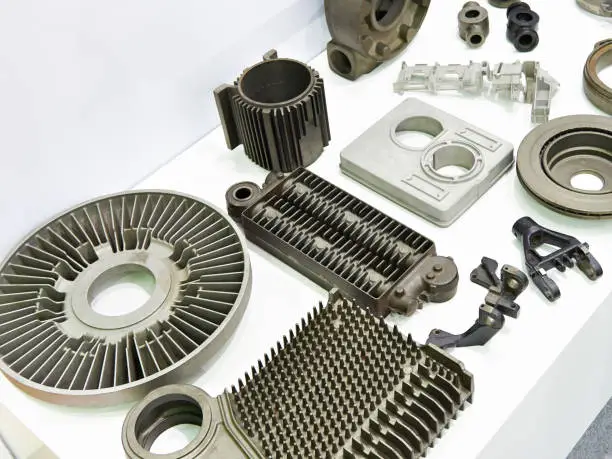
By injecting material into hardened steel molds at pressures of up to 30,000 psi, high-pressure die casting turns liquid aluminum into precise parts. This method is very different from sand casting or investment casting because it makes net-shaped parts with a better finish and tighter tolerances all in one step. We've seen that procurement managers like this method because it combines features like mounting bosses, built-in cooling fins, and support ribs into a single component. This cuts down on assembly time and gets rid of possible weak spots in multi-part structures.
Die casting makes sure that each batch is the same, which is very important for car tier-1 suppliers who have to keep track of PPAP documentation standards. Machined parts lose material and need to be set up more than once, but die-cast aluminum parts come out of the mold almost completely finished and only need a few finishing steps.
Core Material Properties That Drive Performance
Aluminum alloys that were made to be used in die casting have properties that help solve real problems in the industrial world. The density of A380 and ADC12 metals is about 2.71 g/cm³, which means they are 40% to 60% lighter than iron-based options while still having enough mechanical strength for load-bearing uses. This feature is very important for car engineers who are trying to meet goals for fuel economy and range for electric vehicles.
Another important benefit is its ability to conduct heat. Aluminum die-cast housings actively get rid of the heat that high-power electronics, LED drivers, and electrical motors produce, at a rate of about 96 W/m-K. We worked with companies that make industrial equipment, and they switched from pressed steel cases to die-cast aluminum ones. This made the motor housings 15-20°C cooler when they were running all the time. This temperature control makes parts last longer and keeps them working well even when they're under a lot of stress.
When parts are exposed to harsh environments, corrosion protection is very important. Die-cast aluminum can withstand salt spray testing for more than 500 hours if the surface is properly treated according to ASTM B117 standards. This means it can be used in marine applications, automotive systems that are exposed to road salt, and outdoor telecommunications infrastructure.
Alloy Selection Based on Application Requirements
Depending on the technical needs, each type of aluminum alloy has its own unique performance qualities. A380 is still the most commonly used metal because it has the best mix of castability, mechanical qualities, and cost-effectiveness for making general-purpose brackets and housings. Because of how it's made, it can fill molds very well, even ones with complicated shapes and thin walls as thin as 1.5 mm in some places.
Because A383 is more fluid when it's being cast, it's better for complicated patterns with long flow lines or fine surface details. Manufacturers of industrial machinery use this alloy when designing parts with complicated internal passages for fluid routing or built-in channels for managing cables.
The ADC12, which is often chosen in Asian markets, has similar properties to the A380 but a slightly different silicon content. This gives buying teams more supplier options across regional production bases. When working with global supply chains, engineering teams like having a number of alloy choices that all meet the same performance standards. This lets them choose the best seller based on factors like closeness and lead time.
How Die-Cast Aluminum Solves Manufacturing and Product Challenges?
Weight Reduction Without Compromising Structural Integrity
OEMs in the auto industry are constantly under pressure to make cars lighter while still meeting standards for safety and reliability. Die-cast aluminum parts are real answers to this problem. Aluminum alloys are used to make gearbox housings, engine brackets, and structural battery cases that are 40–60% lighter than standard cast iron or steel constructions while still meeting the same load requirements.
We've helped automotive engineering teams switch from stamped steel assemblies made of multiple pieces to die-cast aluminum structures made of a single piece. One reworking of the gearbox bracket got rid of 14 stamped parts and 23 fasteners, which cut the weight of the unit by 3.2 kg per car and increased torsional stiffness by 18% by placing the ribs more efficiently and adding reinforcements. This consolidation cut down on assembly work, got rid of possible failure modes for fasteners coming loose, and made sure that all output amounts had the same dimensions.
Electric car makers really like it when non-powertrain parts lose weight because every kilogram saved immediately means a longer driving range. Battery enclosures, inverter housings, and motor mounts are all great places to cut down on weight without sacrificing electromagnetic shielding or thermal management.
Enhanced Thermal Management for High-Power Applications
Modern electronics produce heat densities that are hard for traditional materials to handle. Die-cast aluminum solves this problem because it is naturally a heat-conducting material and can be designed in a way that lets it release heat. Outdoor telecommunications equipment has to keep its internal temperatures under control while still meeting IP67 standards. This creates thermal design challenges that are well met by aluminum die-cast housings.
The material quickly moves heat from inside to outside surfaces, where cooling fins built in make more surface area for convective heat transfer. We've made housings for remote radio units with fin densities of up to 3 mm apart spread out over big surface areas. These designs aren't possible to make cheaply through machined fabrication or stamped assembly. Real-world thermal testing shows that these housings keep the electronics inside within their working range, even when they are exposed to full sunlight in desert environments.
The same is true for industrial motor housings. Continuous-duty motors produce steady heat loads that shorten the life of the windings if they are not controlled properly. Die-cast aluminum motor housings act as built-in heat sinks, moving heat from the stator windings to the outside, where air flow cools the parts. When mechanical engineers switch from stamped steel to die-cast aluminum constructions, motor performance and service life get better in a measured way.
Dimensional Consistency and Quality Repeatability
To support automated assembly processes and the need for interchangeable parts, automotive tier-1 suppliers and industrial OEMs need consistent dimensions across production volumes. Due to the accuracy of hardened steel tools and process controls, die-cast aluminum components can meet these requirements.
Coordinate measuring machine data from production runs show capability indices (Cpk) higher than 1.67 on key dimensions, which means the process is well controlled and there is little variation. This regularity gets rid of the need to sort and lowers the number of items that are rejected during the customer receiving check. Quality teams like how dimensional stability helps with statistical process control efforts and lowers the overall cost of quality.
The material's dimensional stability lasts for the whole span of the product. Die-cast aluminum keeps its shape over time, while thermoplastics change shape when they are exposed to long-term loads or high temperatures. Even after years of thermal cycle and mechanical stress, the positions of mounting holes, sealing surfaces, and interface measurements still meet the requirements. This is very important for parts that need to be serviceable in the field or interchangeable over time.
Comparing Die-Cast Aluminum With Alternative Materials and Processes
Die-Cast Aluminum Versus Magnesium and Zinc Alloys
When people talk about choosing materials, they often compare magnesium and zinc die-casting alloys to die-cast aluminum. Each has its own benefits. Magnesium has the lowest density, at about 1.8 g/cm³. This means it can reduce weight the most in aerospace and portable electronics. However, magnesium needs special defense against rust and is more expensive, so it can only be used in weight-sensitive situations where cost is an issue.
Zinc metals are better at being made and can have thinner walls than aluminum. This makes them good for small, complicated parts like connector housings and decorative gear. Because zinc is denser and has a lower strength-to-weight ratio, it is not as good for structural parts or big housings, where aluminum is a better choice.
For commercial uses, aluminum is the best choice because it is the right weight, strong, resistant to rust, and affordable. Its well-established supply chain infrastructure and wide availability of alloys give buyers advantages by giving them a number of qualified suppliers and competitive sourcing options. When working with mechanical engineers in the electrical, industrial gear, and car industries, they always choose aluminum as the standard material. They only use other alloys for specific tasks that have specific needs.
Die Casting Versus Sand Casting and Low-Pressure Casting
When purchasing managers look at casting processes, they need to think about the amount that will be made, the required surface finish, the production volume, and the cost of the tools. Sand casting has lower tooling costs and is good for making prototypes or small amounts of products. However, the finished product has a rougher surface and looser tolerances, which means it needs to be machined a lot. Die casting is a better way to make parts that need to fit perfectly, have smooth surfaces for closing, or have a lot of complicated internal features. This is because it cuts down on secondary processes and speeds up cycle times.
Low-pressure casting is a compromise between sand casting and die casting. It has better qualities than sand casting, but costs less to make the tools for. This method works well for making a lot of bigger parts, like pump housings or gearbox cases, where small differences in size are not as important. We keep the ability to do all three processes, so engineering teams can choose the best one based on technical needs and the cost of production.
When you make more than 1,000 to 2,000 units a year, die casting is the most cost-effective method because you save money on each piece because you don't have to machine it as much, and the production cycle is shorter. Die casting is a good way to make parts that need tight specs, a smooth surface, or thin walls, even if the amount is small.
Die Casting Versus CNC Machining and Fabrication
Machined parts give you the most design freedom during the development phase and work well for low-volume specialty uses, but they are very expensive when you need to make a lot of them. For complicated shapes, especially when starting from plate or bar stock, material waste from machining processes can be more than 60%. Die casting gets rid of this waste by making parts that are almost net-shaped and only need minor finishing work on important areas.
Fabricated assemblies are made up of several stamped or formed parts that are joined together with fasteners or welding. The joining process introduces quality variations and possible failure modes at the connection points. Die-cast parts combine these assemblies into a single piece, which makes them more reliable while reducing the amount of work needed to put them together and the number of parts that need to be kept in stock.
A lot of the time, engineering teams use a mix of die-cast main elements and machined precision features or pieces. This approach gets the best of both cost and performance by using the geometric freedom of die casting for the general shape and selective machining to get tight tolerances.
Selecting the Right Die-Cast Aluminum Supplier and Manufacturer
Essential Certifications and Quality Systems
Checking the basic quality control systems is the first step in evaluating a supplier. ISO 9001 certification shows basic quality infrastructure, but for use in the car and aircraft industries, more certifications are needed. The IATF 16949 certification covers the quality management needs for the automotive industry in detail. It includes PPAP paperwork, production part approval processes, and controlled shipping methods that are necessary for tier-1 and tier-2 automotive suppliers.
For aerospace and defense uses, AS9100 certification is needed for traceability requirements that cover everything from the chemistry of the raw materials to the paperwork from the final inspection. When quality leaders look at sources for aerospace parts, they should make sure that the certification covers die-cast aluminum operations. This is because some makers only have certifications that cover machining or assembly processes.
During source checks, procurement teams should look at more than just certifications. They should also look at the real quality control infrastructure. We have quality labs that are just for that purpose. They have coordinate measuring machines, optical emission spectrometers for checking alloys, X-ray inspection systems for finding holes in materials, and environmental rooms for testing rust quickly. This system allows for full incoming, in-process, and final review procedures as well as real-time process control.
Manufacturing Capabilities and Process Integration
To evaluate technical skills, you need to know about the whole process, from making the tools to assembling the finished parts. Suppliers who can do everything from designing and making molds to casting, cutting, and surface treatment make it easier to control the supply chain and hold suppliers accountable.
We have high-speed machining centers, CNC lathes, low-pressure casting machines, and die-casting equipment that weighs between 280 and 1250 tons. This gives us the ability to make a wide range of parts, from small electrical connectors to large industrial housings. This variety of equipment allows for small-scale prototypes to high-volume production without switching suppliers as projects move from research to full production.
The ability to clean the surface has a direct effect on how well and how long a component works. Powder coating, e-coating, and chromate conversion coating that are done in-house get rid of the need for outside processing. This cuts down on wait times and keeps process control. Early participation in design-for-manufacturing discussions is helpful for engineering teams. This is because our applications engineers can give advice on draft angles, wall thickness optimization, and feature placement that improves the quality of the casting and lowers costs.
Geographic and Logistical Considerations
The position of a supplier affects lead times, logistics prices, and how well people can communicate. Sourcing leaders who have to balance lowering costs with making sure the supply chain is stable are using regional diversification methods more and more, which means they are looking for sources from a lot of different areas. We back this method by having formed logistics relationships that give us control over transit times and make customs paperwork easier for shipments going to customers in North America.
Regional production has benefits that go beyond just logistics. Being close to customer engineering teams makes it easier to work together to solve problems during the design optimization and new product introduction stages. Mechanical engineers and quality teams like it when technical support is responsive and works with their work hours. This way, they can communicate in real time instead of sending emails that are delayed by time zones.
Best Practices to Maximize Product Performance Using Die-Cast Aluminum
Design Optimization for Manufacturing and Performance
The shape of a component has a big impact on both how well it works and how well it is manufactured. Wall width is an important factor that balances the flow of the material during casting with the needs of the structure and the cooling process. For most industrial uses, the standard wall thickness is between 2.5 mm and 4 mm. This gives enough strength while still allowing for proper mold filling and suitable cooling times. In some places, parts can get as thin as 1.5 mm if they are supported by the right rib structures.
Draft angles affect the quality of the surface finish and make it easier for parts to come out of molds. Most of the time, a minimum draft of 1 to 2 degrees on vertical surfaces is enough. However, increasing the draft to 3 degrees on deep pockets or tall bosses makes ejection more reliable and increases tool life. During the early stages of idea development, engineering teams often forget to draft requirements, which causes costly tool changes during the testing phase.
Strategies for reinforcement, like ribbing and geometry optimization, make things stronger without adding extra weight. Ribs that are 3 to 5 times the standard wall thickness and spaced correctly stop sink marks from showing up on opposite sides and make the wall much stiffer. During the concept phase, our applications engineering team works with customer design engineers to use finite element analysis to find the best places for ribs and predict how the structure will perform before the tool is made for die-cast aluminum.
Surface Finishing for Enhanced Protection and Appearance
Surface treatments make parts last longer and let them work in settings that are chemically or corrosively hostile. Powder coating gives housings with visible exteriors long-lasting, nice-looking finishes that are more consistent in color and more resistant to impact than liquid paint systems. We have a lot of powder coating options that can be used for both practical and aesthetic reasons. The finishes meet ASTM D3359 standards for bonding and ASTM B117 standards for salt spray protection that lasts more than 1,000 hours.
E-coating is the best way to protect against rust for uses under the hood of cars and industrial equipment that is exposed to chemicals or weather. With this electrodeposition method, even coverage is achieved over complicated shapes, such as deep areas and internal passages that are hard to coat with regular spray techniques. Automotive tech managers choose e-coating for parts that need to last a long time in tough situations.
Chromate conversion coating is a cheap way to treat metal that needs some corrosion resistance and better paint adhesion when powder coating or e-coating costs too much. This chemical process makes a thin layer of protection that can be used indoors or on parts that need extra topcoat protection.
Quality Control Methodologies for Critical Applications
Strict checking procedures make sure that the quality is the same no matter how much is made. Using coordinate measuring tools to check measurements gives statistical process control data that shows what can be done and finds trends before measurements go beyond what is expected. We use 100% automated visual review on important aspects for car projects, which gets rid of the subjectivity of humans and gives customers electronic proof for their quality systems.
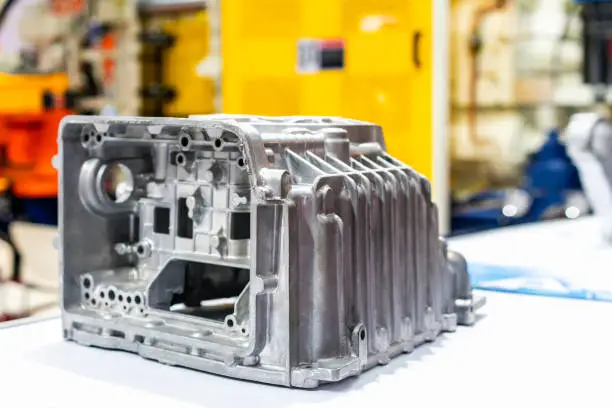
The number of holes in a housing that protects sensitive equipment or holds fluids has a direct effect on how pressure-tight it is. An X-ray shows internal holes and gas pockets that can't be seen from the outside. During process development, we use real-time X-ray to find the best injection settings and gate locations. During production, we use random sampling to make sure the process is stable. Vacuum impregnation fills microporosities in parts that need to be completely sealed. The glue then hardens to make structures that are leak-proof and meet IP67 or IP68 standards.
Before each heat, laser emission spectroscopy is used to check the material and make sure that the alloy's chemistry meets the requirements. This keeps expensive parts from being made that don't meet specifications and have to be thrown away after a lot of cutting and cleaning. Documentation of chemical makeup allows for traceability and helps aircraft and defense uses that have strict material needs.
Conclusion
Die-cast aluminum improves performance in many areas, including automotive, industrial machinery, electrical, and aerospace. This is because it is lightweight, good at managing heat, and very accurate in terms of size. The manufacturing process allows for complex geometries that combine multiple parts into a single structure. This lowers the cost of assembly and increases reliability. Material properties like high strength-to-weight ratio, resistance to corrosion, and electrical conductivity solve real engineering problems in tough situations. The best results will come from choosing skilled sources who can do everything from making tools to finishing. To get better performance and lower costs, we encourage engineers and sourcing teams to look into die-cast aluminum for uses that currently use heavier materials, different casting methods, or multi-piece fabrications.
FAQ
Why should die-cast aluminum be used instead of stamped steel for car housings?
Die-cast aluminum is 40–60% lighter than steel and has better heat conductivity, which is important for power systems and electronic control units. Single-piece die-cast designs get rid of the need for multiple stamped parts and fasteners. This makes assembly faster and less likely to fail because of loose hardware or joint strain.
When it comes to industrial tools, how does die-cast aluminum stack up against sand casting?
With die casting, tolerances are closer to ±0.002 inch/inch than with sand casting, which is usually ±0.030 inch. This means that extra machining processes can be cut down or eliminated. The surface finish from die casting is much smoother, so it can be used to seal surfaces without any extra work. Die casting has shorter production cycles and can handle more than 1,000 to 2,000 units per year, even though it costs more to buy the tools at first.
What lead times should we expect for custom die-cast aluminum components?
Making tools usually takes 8 to 12 weeks, but this depends on how complicated the parts are and how big the mold is. The extra time for production sampling and PPAP paperwork is two to four weeks. To make something, you have to wait between 3 and 6 weeks, depending on how many you need and how you want them finished. We keep our capacity flexible so that we can meet the needs of both sample orders and high-volume production plans.
Partner with Fudebao Technology for Your Die-Cast Aluminum Manufacturing Needs
Zhejiang Fudebao Technology has a lot of experience with precise machining and making aluminum alloys. They work with automakers, electrical equipment makers, and other companies in North America. Our integrated production method includes the whole process, from making the mold to finishing the surface. This allows us to deliver everything in one place, from blank castings to fully finished parts with tolerances of ±0.05mm. We have many quality certifications and use high-tech tools like CNC lathes, high-speed machining centers, and die-casting machines that can hold up to 1250 tons. Our engineering team is ready to help you make your designs better for performance and ease of production, whether you need complicated housings for cars, parts for industrial machinery, or electrical enclosures. Get in touch with our team at hank.shen@fdbcasting.com to talk about your needs with an experienced die-cast aluminum source that is dedicated to providing accuracy, quality, and a trustworthy relationship.
References
1. American Foundry Society (2021). "Die Casting Process Fundamentals and Quality Standards for Aluminum Alloys." Des Plaines: American Foundry Society Publications.
2. North American Die Casting Association (2020). "Product Specification Standards for Die Castings: Dimensional Tolerances and Surface Quality." Rosemont: NADCA Technical Publications.
3. ASM International (2019). "Aluminum Die Casting Alloys: Properties, Processing, and Applications." Materials Park: ASM Handbook Series, Volume 15.
4. Society of Automotive Engineers (2022). "Material and Process Requirements for Aluminum Die-Cast Components in Automotive Applications." SAE Technical Paper Series J2534.
5. Kaufman, J.G. and Rooy, E.L. (2018). "Aluminum Alloy Castings: Properties, Processes, and Applications for High-Performance Components." Materials Park: ASM International Publishing.
6. International Journal of Metalcasting (2023). "Advances in Die Casting Process Control and Quality Assurance for Precision Aluminum Components." Volume 17, Issue 2, pp. 1142-1158.



YOU MAY LIKE