Optimizing Copper Casting Processes: Preventing Common Defects and Enhancing Casting Quality
2026-03-26
To make copper casting methods work better, you need to know a lot about metallurgy principles, how to stop defects, and how to improve quality. To keep porosity, shrinkage, and surface irregularities to a minimum, modern production needs exact control over temperature management, mold preparation, and cooling cycles. To optimize things effectively, you need to set up advanced tracking systems, choose the right casting methods based on the shape of the part, and create strict quality control routines that make sure the parts are made correctly and with the right dimensions throughout the production cycle.
Understanding Copper Casting and Its Common Defects
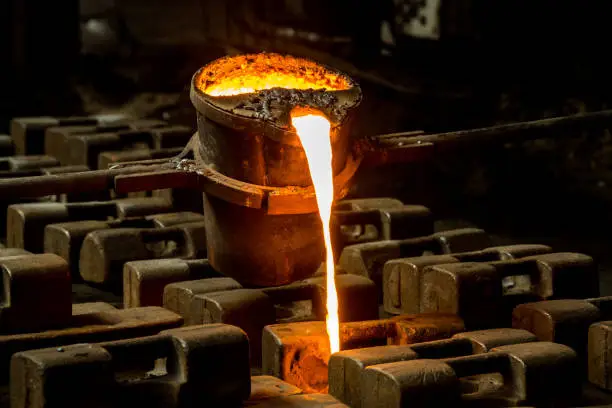
Copper alloy casting uses controlled solidification processes to shape liquid metal into complicated shapes. Investment casting makes sure that parts are exactly the right size and shape, while sand casting is flexible for making large parts and small batches. Centrifugal casting makes structures that are thick and regular, which are perfect for cylinder-shaped parts that need to have good mechanical qualities.
Primary Defect Categories and Root Causes
There are a few major types of defects that manufacturing teams run into that hurt the quality and usefulness of castings. Porosity happens when gas gets trapped during filling or when degassing isn't done properly, leaving holes inside the structure that weaken its strength. When there isn't enough feeding during solidification, especially in thick areas where thermal gradients cause volumetric contraction, shrinkage flaws happen.
When melted metal streams don't properly fuse, which usually happens because the filling temperature is too low or the flow patterns are too limited, cold shuts happen. If rust, oxide films, or foreign materials get stuck inside the casting structure, they can cause inclusion flaws. Surface cracks appear when there is heat stress, fast cooling, or metallurgical mismatches between alloys of different makeup.
By understanding how these defects happen, engineering teams can come up with specific ways to stop them. During the casting process, temperature tracking systems keep an eye on the thermal profiles, and improved filtration gets rid of impurities before the metal goes into the mold. When gates are designed correctly, they keep flow patterns smooth and reduce the chance of gas getting stuck.
Material Considerations and Alloy Selection
Based on their metallurgical properties, different copper metals are more or less likely to have casting flaws. Copper that conducts electricity well needs to be handled carefully so that it doesn't rust. Bronze types are easier to work with, but they need to be kept at a specific temperature. Brass mixtures are very easy to work with, but zinc may be released when the temperature rises.
Key Process Steps and Optimization Strategies for High-Quality Copper Castings
To get uniform copper casting quality, each step of the manufacturing process needs to be carefully monitored. To control the temperature, you must first melt things the right way, using induction furnaces that have accurate pyrometric tracking. Keeping the right amount of superheat in the system makes sure that the fluidity is just right and stops too much gas pickup or metal segregation.
Advanced Melting and Temperature Control
Modern foundries use complex methods for managing temperature that go beyond simple pyrometric readings. Thermal analysis methods watch cooling curves to find changes in the metal in real time. This lets workers change the parameters of the pouring process before flaws happen. Inert gas protection during melting lowers the amount of oxidation and inclusion formation.
Controlled oxygen melting systems make safe places that keep the alloy's chemistry and get rid of sources of contamination. These methods work especially well for high-conductivity copper types, where even small impurities have a big effect on how well the electricity works. Degassing methods get rid of residual gases that would make solidification less stable otherwise.
Mold Preparation and Design Optimization
The shape of the mold has a direct effect on the quality of the casting by changing the flow patterns, temperature differences, and how the metal solidifies. When gate systems are set up correctly, they encourage laminar flow and include screens to remove oxides and inclusions. Rising estimates make sure that there is enough food to make up for the shrinking that happens during solidification.
When using investment casting models, you need to pay close attention to the qualities of the ceramic shell, such as how permeable it is and how much it expands when heated. For sand casting, modern binding methods are helpful because they keep the shape stable while letting controlled gas escape. To avoid rapid solidification or thermal shock, precise temperature control is needed for permanent mold casting.
Several foundry companies have found that the following optimization methods work well:
- Advanced simulation software predicts how the material will solidify and finds possible flaw sites before production starts. This lets designers make changes to the design that get rid of trouble spots before they happen.
- Real-time monitoring systems keep an eye on important factors like pour rate, metal temperature, and mold filling patterns to ensure consistent process execution across production runs.
- Statistical process control methodologies analyze historical data to identify trends and establish control limits that trigger corrective actions before quality issues develop.
These improvements in technology for copper casting have made it possible for foundries to keep production efficiency high while lowering failure rates to below 2%. Implementation takes an initial investment in training and tools, but the quality changes that come from it make up for the costs by lowering the amount of waste and making customers happier.
Comparing Copper Casting with Alternative Metal Casting Processes
Comparative analysis is necessary to make the best choices about what to buy because the materials you choose have a big effect on how well your products turn out. Copper casting has special benefits in situations where better electrical transfer, temperature management, or corrosion protection are needed. Pure copper is the only material that can carry electricity up to 100% IACS, so it can't be replaced for high-performance electrical parts.
Performance Characteristics Across Metal Types
Aluminum metals are very strong for their weight, but they can't compare to copper when it comes to electrical qualities or performance at high temperatures. Although steel castings are very strong mechanically, they are prone to rusting and don't conduct heat well. As a result of their good casting properties and high wear resistance, bronze metals are perfect for use in bearings.
There are more than just basic mechanical qualities that go into the choice matrix for choosing a material. Copper's antibacterial properties make it useful in medical and food processing settings where it's important to stop germs from growing. Because it brazes and welds so well, it makes building tasks easier that would be hard to do with other materials.
Manufacturing Process Comparisons
Whether to cast or machine depends on the difficulty of the part, the amount that needs to be made, and the cost. Copper casting is a cost-effective way to make parts with complicated internal shapes, undercuts, or many crossing paths that would need a lot of machining. For low-volume jobs, cutting from wrought stock may be better for simple geometric forms.
Lead times are very different between methods. For example, casting takes longer to set up at first but can produce quickly once the tools are made. Machining lets you make changes to designs, but it costs more as the design gets more complicated. The method choice is also affected by the surface finish needs, since casting may need more machining for important areas.
Procurement Insights: Choosing the Right Copper Casting Supplier
Long-term success in copper casting buying depends on supplier selection. Quality standards like ISO 9001, AS9100, or TS 16949 show that you can handle quality in a systematic way. However, certifications do not ensure success; a detailed audit shows what the real manufacturing skills are and how well the quality systems work.
Essential Evaluation Criteria
A technical capability review looks at how well the equipment works, the process control systems, and the metalworking knowledge. To make sure quality is always the same, modern foundries use statistical process control, coordinate measuring machines, and non-destructive testing tools. Capacity analysis checks to see if providers can meet number needs while still meeting quality standards.
The review of financial security guards against the risk of supply disruption. When suppliers are struggling with money, they might lower the quality of their goods to save money, or they might have to deal with working breaks that cause delays in deliveries. Credit records, building visits, and checking with customers' references can help you figure out how reliable a seller is.
Location affects the cost of transportation, the time it takes to get something, and how well people can talk to each other. Local providers are better at responding quickly and managing relationships, but foreign sources may be cheaper for high-volume needs. Cost savings must be weighed against the possibility of supply chain delays in risk assessment.
Partnership Development Strategies
Relationships with suppliers that work well go beyond simple transactions and include strategic partnerships that drive ongoing growth. Through joint development projects, both customers and providers can learn more about the limitations of the manufacturing process. Performance reviews that happen on a regular basis find ways to improve things and deal with problems before they affect production.
Long-term deals give suppliers stability, which makes them more likely to spend in improving their capabilities. Investments in tools and process improvements that help both parties are justified by promises to a certain volume. But the terms of the deal must include performance standards and goals for growth so that the company can stay competitive.
Conclusion
To get the most out of copper casting methods, you need to know a lot about metallurgical concepts, how to stop defects, and how to control quality. To make implementation work, you need to use organized methods for controlling temperature, making molds, and keeping an eye on the process. These methods should get rid of common mistakes while keeping production running smoothly. To make sure the supply chain works reliably, the factors used to choose suppliers must look at their technical skills, quality processes, and the chance of forming long-term partnerships. Automation, digitalization, and sustainable production will continue to improve casting quality while lowering their effect on the environment. This will make strategic supplier relationships more valuable for gaining a competitive edge.
FAQ
What temperature range prevents defects in copper casting operations?
Pouring temps for copper casting are usually best between 1150°C and 1200°C, but this depends on the metal and how complicated the casting is. Pure copper needs temperatures close to 1200°C to be fluid enough, but bronze alloys can be made successfully at temperatures lower than that, around 1150°C. Keeping the right superheat, which is 50–100°C above the liquidus temperature, stops solidification before it's time and stops too much gas pickup, which causes porosity flaws.
How can companies find trustworthy copper casting suppliers for bulk production?
To find a reliable supplier, you need to carefully look at their quality certifications, technical skills, and output ability. Basic quality management systems are shown by ISO 9001 approval, while advanced skills are shown by industry-specific standards like AS9100 or TS 16949. Facility checks show how the manufacturing really works, how advanced the equipment is, and how well the process controls work. Customer references can tell you a lot about how well you deliver, how consistent your quality is, and how quickly you respond to technology problems.
What distinguishes casting from machining regarding cost-efficiency and product quality?
Casting is great for making shapes that are hard to machine because they don't need to be smooth or have a lot of internal holes or undercuts. When making more than 100 pieces, casting is usually the best option because the tools last longer. Machining gives you better surface finishes and more accurate measurements, but it's too expensive to do for complicated forms. Lead times vary a lot. For example, casting takes longer to set up at first but can produce quickly once the tools are made.
Partner with Fudebao Technology for Superior Copper Casting Solutions
Zhejiang Fudebao Technology Co., Ltd. stands as your trusted copper casting manufacturer, delivering precision-engineered components that meet the demanding requirements of automotive, industrial equipment, and aerospace applications. Our comprehensive manufacturing capabilities encompass the complete production cycle from melting through finishing, utilizing advanced equipment including high-speed machining centers, CNC lathes, and precision casting systems that achieve tolerances up to ±0.05mm. With extensive experience serving international brands and direct supply partnerships, we provide reliable copper casting solutions backed by rigorous quality control systems and responsive technical support. Contact hank.shen@fdbcasting.com to discuss your specific requirements and discover how our expertise can optimize your supply chain performance.
References
Campbell, John. "Complete Casting Handbook: Metal Casting Processes, Metallurgy, Techniques and Design." Butterworth-Heinemann, 2015.
Brown, John R. "Foseco Non-Ferrous Foundryman's Handbook." Butterworth-Heinemann, 1999.
Beeley, Peter R. "Foundry Technology." Butterworth-Heinemann, 2001.
American Foundry Society. "Casting Design and Performance Guidelines for Copper Alloys." American Foundry Society Technical Publications, 2018.
Flemings, Merton C. "Solidification Processing in Metallurgy and Materials Science." McGraw-Hill Education, 1974.
Davis, Joseph R. "Copper and Copper Alloys: ASM Specialty Handbook." ASM International, 2001.



YOU MAY LIKE
_1756347888208.webp "New energy motor shell")
_1756352712247.webp "stainless steel hex plug")
_1756348780785.webp "porting turbo compressor housing")