How Does Low Pressure Casting Work?
2026-03-28
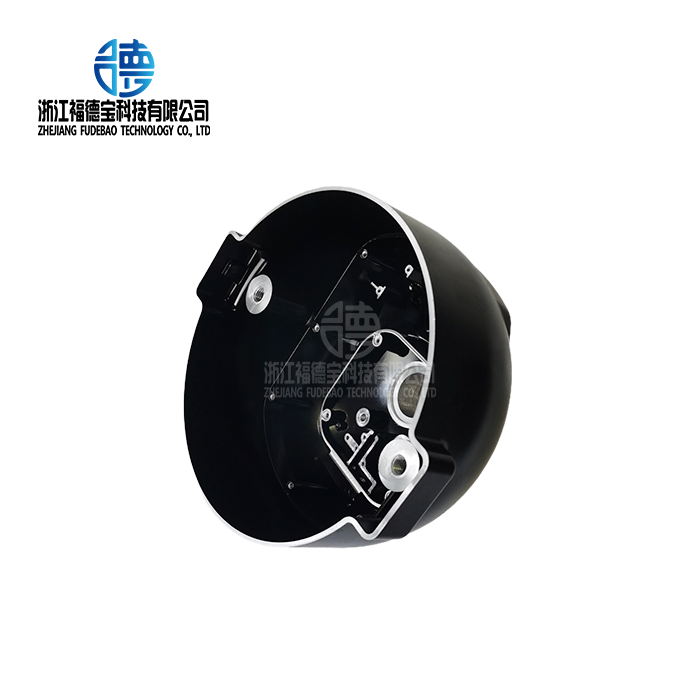
Low pressure casting is a precise way to shape metal. Melting metal, usually a combination of aluminum or magnesium, is pushed into a mold hole by controlled air pressure between 20 and 100 kPa. This low pressure casting method uses a riser tube to connect a pressured holding furnace directly to the mold. This creates a counter-gravity filling method that gets rid of turbulence and lowers the number of flaws. Controlled pressure ensures laminar flow, which stops oxide inclusions and keeps feeding efficiency high during solidification. This makes it perfect for making high-integrity parts for aircraft, automobile, and industrial uses.
What Is Low Pressure Casting and How Does It Work?
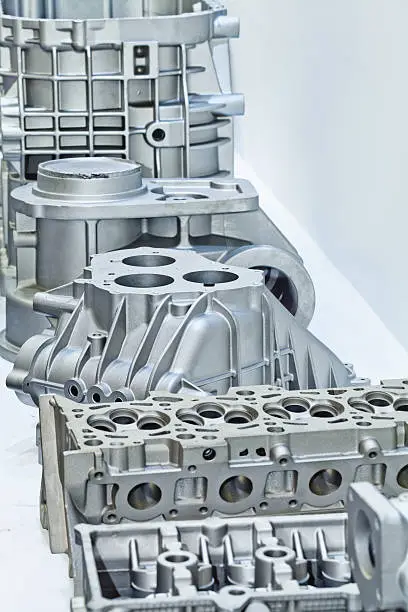
Low pressure casting is a more advanced way to shape metal that falls between gravity casting and high-pressure die casting. Using controlled pneumatic pressure, this method forces molten metal into mold holes. This makes better parts with better mechanical features and more accurate measurements.
The Fundamental Process Steps
To start the process, steel molds are heated up and covered with refractory wash to make sure the metal flows smoothly and parts come out easily. The holding furnace keeps the liquid metal at the right temperature, which for aluminum alloys is usually between 700°C and 750°C. The furnace is linked to the mold body by a covered riser tube, which makes a straight path for pressure metal transfer.
When the production process starts, controlled air pressure pushes the liquid metal into the mold through the riser tube. This upward flow happens slowly and steadily, usually at pressures of 0.02-0.1 MPa. This makes sure that there is smooth, laminar flow without any turbulent flow. During solidification, the pressure stays the same, so continued feeding from the reservoir below can make up for parts with thick walls that shrink.
Critical Process Parameters
Controlling the temperature is a very important part of casting. Temperature of the metal affects how flexible it is and how it fills, while temperature of the mold affects how fast it cools and what the end part is made of. Pressure curves can be set up to keep the speed steady at gates, which stops flow lines and makes sure the whole space is filled.
Some things that go into mold design are where the gates go, how the cooling channels are laid out, and the draft angles that make it easier for parts to come out. This process is different from high-pressure ways because it can use sand cores, which lets it create complicated internal geometries like cooling passages in engine parts.
Advantages of Low Pressure Casting for Industrial Applications
For modern production to work, casting methods like low pressure casting must be able to consistently produce high-quality parts while also being cost-effective. These needs are met by low pressure casting, which has many technical and cost benefits that make it ideal for safety-critical uses.
Enhanced Metallurgical Properties
When compared to gravity casting, the controlled filling process makes parts that are more structurally sound on the inside. Continuous pressure feeding during solidification lowers the porosity levels, and the lack of turbulence stops the formation of oxide films that can weaken the mechanical qualities. Parts have better stretch and tensile strengths, especially after being heated to T6.
One big advantage over high-pressure die casting is that it can be treated with heat. Because there isn't much trapped gas, the full solution and age treatment can be done without worrying about burning. This feature lets you get the strongest possible aluminum alloys, which means the process can be used for structural parts in cars and in spacecraft.
Economic and Production Benefits
Because the process doesn't need big feeders and steps like gravity casting does, material yield rates often go over 90%. When the pressure is released, the metal that is still in the riser tube runs back into the furnace. This greatly lowers the cost of remelting compared to traditional ways, which usually only get a 50–60% return.
The protected burner system cuts down on heat loss and metal oxidation, which makes the system more energy efficient. Even though cycle times are longer than those for high-pressure die casting, they are the best way to balance quality and efficiency for medium-sized production runs.
Industrial Application Examples
Automotive metal wheels are the most common use for this process, which makes it possible to make lightweight designs with complicated looks that are also very resistant to impact. The thick microstructure keeps air out and keeps the structure strong under conditions of wear stress that gravity casting can't always do.
Sand cores can be used in this process to make complex cooling channels inside motor housings for electric vehicles. For battery thermal management systems to work, these parts need to have zero leaks and good thermal conductivity.
Comparing Low Pressure Casting with Other Casting Methods
Procurement workers can make smart choices based on specific component needs when they know the relative benefits of different casting methods. Each method has its own strengths and weaknesses when it comes to part complexity, production volume, and quality.
Gravity Casting Comparison
Gravity casting uses hydrostatic head to fill molds, which means that the finished product has more holes and weaker material qualities than low pressure casting. The pressurized feeding system makes the metal stronger and allows for smaller wall parts while still keeping the structure strong. The cost of the tools stays the same, but the material outputs are much better when the process is compressed.
High-Pressure Die Casting Analysis
High-pressure die casting has shorter cycle times and thinner walls, but it causes rough flow that holds gas and stops heat treatment from happening. Extreme injection pressures break sand cores, which limits the number of shapes that can be made. The quality of the surface finish may be better, but the failure to fully heat treat the material limits its use to non-structural parts.
Sand Casting Evaluation
Although sand casting gives you a lot of design freedom and low tooling costs, the finished product has a rougher surface and larger size variations. In low pressure casting, the fixed mold method improves the quality of the surface and lets you control the size, but you can still use sand cores for complex internal features.
Investment and Vacuum Casting Considerations
Investment casting has a better surface finish and more accurate dimensions, but it costs more and takes longer to make. Porosity is reduced by vacuum casting, but it needs special tools and costs more to run. Low pressure casting is a good choice for situations where you need a smooth surface, accurate measurements, and low costs.
Common Challenges and Defect Solutions in Low Pressure Casting
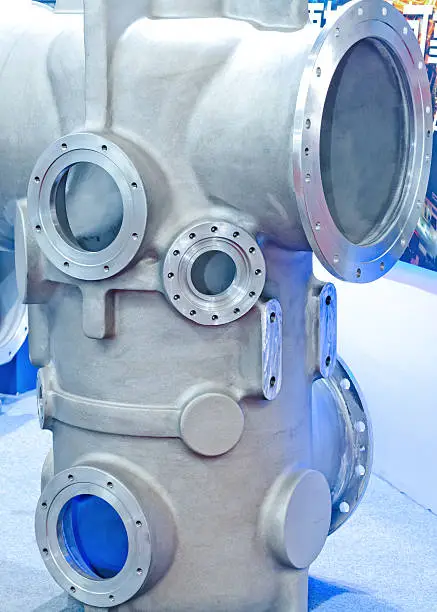
Even though low pressure casting makes parts much better than gravity methods, flaws can still happen if the process isn't controlled properly and the mold isn't designed well. Understanding these problems and putting the right answers in place guarantees consistent quality in output.
Porosity and Gas-Related Defects
If the feeding pressure isn't high enough during solidification, shrinkage porosity may appear in thick areas. Some solutions are to make the pressure curves as good as they can be so that there is enough flow throughout the cooling cycle and to create the right cooling channel layouts so that the solidification process can be controlled. Gas porosity happens when mold coats don't degas properly or have too much moisture, so they need to be maintained and applied according to strict rules.
Flow-Related Issues
Misruns and cold shuts in low pressure casting happen when the temperature of the metal falls below what it should be or when the speed of filling slows down too much. To improve the process, the pressure-rise curves need to be changed so that the speed at the gates stays the same and the metal stays at the right temperature throughout the casting cycle. These problems can be avoided with better mold preheating and temperature control.
Surface Quality Concerns
Flow lines usually happen when an oxide film forms on the fronts of melts when they fill slowly or when the metal is not hot enough. Controlling the temperature correctly and finding the best pressure patterns keep the flow of metal smooth and stop surface flaws. Surface problems caused by gas can be avoided by keeping mold coats in good shape and making sure vents are set up correctly.
Quality Management Strategies
To set up full quality control systems, radiographic testing must be done according to ASTM E155 standards. This testing should focus on gate areas and thick parts, which are the places where shrinking is most likely to happen. Leak testing makes sure that manifolds and housings work properly without letting air in, and chemical spectral analysis checks that the alloy's makeup stays the same. Mechanical tests of coupon bars cut straight from castings proves that the heat treatment worked and that the properties were met.
Selecting Reliable Low Pressure Casting Suppliers and Partners
Picking the right industrial partner has a big effect on the success of the project, the quality of the work, and the reliability of the supply chain in the long run. A thorough review of suppliers makes sure that they meet technical needs, quality standards, and business goals.
Technical Capability Assessment
Check how much knowledge the supplier has with similar parts and the needs of your business. Look at what the tools can do, such as burner technology, pressure control systems, and knowledge of how to make molds. Getting certified for relevant quality standards shows that you are dedicated to managing quality in a structured way and always making things better.
The ability to prototype and develop for low pressure casting shows how flexible and able to help with engineering the provider is. More value is added by being able to offer design improvement advice and process parameter development in addition to basic production services.
Quality System Evaluation
Check out the checking tools that can be used, such as metallurgical labs, radiographic testing equipment, and coordinate measure machines. Look over the methods for collecting data and implementing statistical process control that make sure quality delivery is always the same. Suppliers with quality management certifications that are important to the businesses they want to work with can be trusted to use systematic quality methods.
When strict standards for material pedigree and process documentation are met in aircraft and automobile uses, traceability systems become very important. Check to see if the seller can keep full production records and material certificates.
Cost and Commercial Considerations
Ask for detailed quotes that break down the costs of tooling, development, and production so that you can make an exact budget for the job. Learn about the minimum order amounts, expected lead times, and strategies for allocating capacity that affect supply security. Logistics prices and contact speed may be affected by how close two places are to each other.
Fudebao Technology Capabilities
Zhejiang Fudebao Technology Co., Ltd. has become a top company for precision casting services, working with companies in the aircraft, automobile, and industrial equipment industries around the world. Our factory has high-tech tools like high-speed machining centers, CNC lathes, and specialized low pressure casting machines that can do the whole process of making something, from melting to finishing.
Our quality systems can achieve precise limits of up to ±0.05mm, which meets the high standards needed for medical device housings and precision parts for cars. The unified method, from the blank to the finished product, gets rid of the complexity of the supply chain and makes sure that quality control stays the same throughout production.
Conclusion
Low pressure casting is a great option for companies that need to make parts that are of high quality and have good mechanical features and accurate dimensions. The controlled pressure feeding method gets rid of a lot of the flaws that come with gravity casting while still letting parts be made with complex shapes. Procurement experts can use this technology successfully for tough tasks in the automotive, aerospace, and industrial sectors if they understand the process factors, quality standards, and supplier capabilities. To get the best results, execution needs to be carefully planned with the right suppliers, with thorough quality planning and ongoing process tracking.
FAQ
What pressure levels are used in low pressure casting?
Low pressure casting typically operates at pressure levels between 0.02 to 0.1 MPa (approximately 0.2 to 1.0 bar). These managed pressure levels give enough force to fill all mold holes while keeping the flow smooth, which stops turbulence and the formation of defects.
Which metals work best with low pressure casting?
Alloys made of aluminum, especially A356 and A357, are the most popular materials because they are very flexible and strong. This method also works well with magnesium metals, and copper alloys can be cast easily if the temperature and pressure are set correctly.
How does low pressure casting compare to high-pressure die casting for heat treatment?
Low pressure casting produces parts with minimal entrapped gas, making them fully suitable for T6 solution and aging heat treatment without blistering concerns. When you use high-pressure die casting, the flow is rough, which traps gas and makes heat treatment less effective, which limits the power potential.
What wall thickness capabilities does low pressure casting offer?
Depending on the flow distance and how smooth the metal is, the minimum wall thickness is usually between 2.5 mm and 3 mm. This method can control the thickness better than most sand casting methods, but it can't make parts as thin as high-pressure die casting.
Partner with Fudebao Technology for Superior Low Pressure Casting Solutions
Fudebao Technology stands ready to support your precision component requirements with our advanced low pressure casting capabilities and comprehensive manufacturing expertise. Our skilled engineers can help you with everything, from making a sample to producing a lot of them. They'll make sure your needs are met with the highest quality and dependability. We are a reliable low pressure casting provider, and our services include melting, casting, cutting, and surface treatment with an accuracy of up to ±0.05mm. Contact hank.shen@fdbcasting.com right away to talk about your project needs and find out how our proven skills can help you improve the quality of your parts and the efficiency of your supply chain.
References
Campbell, John. "Complete Casting Handbook: Metal Casting Processes, Metallurgy, Techniques and Design." Butterworth-Heinemann, 2015.
Flemings, Merton C. "Solidification Processing in Manufacturing." Materials Science and Engineering Research Laboratory, MIT, 2018.
American Society for Testing and Materials. "ASTM B618-14: Standard Specification for Aluminum Alloy Permanent Mold Castings." ASTM International, 2019.
Kaufman, J. Gilbert and Elwin L. Rooy. "Aluminum Alloy Castings: Properties, Processes, and Applications." ASM International, 2017.
Beeley, Peter R. and Richard F. Smart. "Investment Casting and Low Pressure Casting Technologies." Institute of Materials, 2016.
International Organization for Standardization. "ISO 8062-3:2007 Geometrical Product Specifications - Dimensional and Geometrical Tolerances for Moulded Parts." ISO Publications, 2020.



YOU MAY LIKE
_1756346310015.webp "Aluminum castings Crane bracket")
_1756346259673.webp "heavy duty hinges")
_1756344684491.webp "Explosion-proof lamp housing aluminum casting")