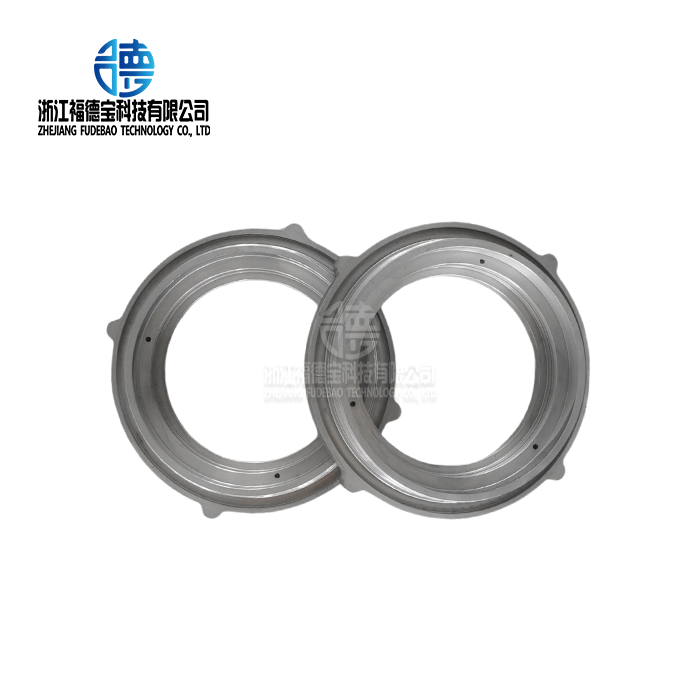
Mastering the Process of Sand Casting for Intricate Industrial Designs
2026-07-01
When producing parts with complicated shapes and hidden details, sand casting is one of the most flexible metal making techniques currently available. Using bonded sand mixes, this one-time mold method can make molds that can hold anywhere from a few ounces to over 100 tons of metal. Understanding this basic manufacturing method can give engineering managers and procurement workers in the automotive, industrial machinery, energy, and aerospace sectors big competitive advantages when they're looking for low-cost options for low to medium-volume production runs.
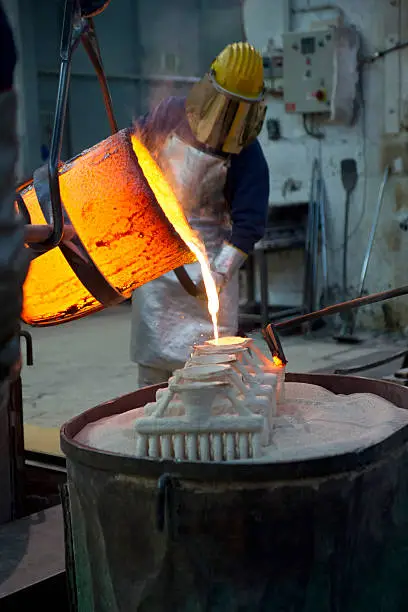
Understanding the Fundamentals of Sand Casting
Even though production is always changing, casting work is still very important. At Fudebao Technology, we've seen how this tried-and-true way keeps fixing problems that newer methods can't do as cheaply.
What Makes Sand Casting the Preferred Choice
Sand casting uses tightly packed sand mixtures to make models that can be thrown away after use. Melting metal drips into the molds. Over 60% of all metal casts made in the world are made using this method, showing that it is useful in industry. Instead of die casting, which needs very expensive tools for small production runs, this method gives you a lot of options. The method can handle weights ranging from small pieces to huge engine housings that weigh several tons.
The technical description is mostly about how adaptable the material is. High-refractoriness silica or manmade sands can handle temperatures above 1600°C without melting. When making high-melting-point metals like steel, iron, and titanium—which are hard to work with in fixed molds—this thermal stability is very important. The mold's ability to collapse while it cools stops hot tearing, which is an important feature for metals that solidify and shrink quickly.
Sand Types and Their Impact on Component Quality
In industrial settings, there are three main types of sand systems, and each one performs differently. When green sand is mixed with bentonite clay, it lets gas escape very well while still having enough shear strength. This choice is good for high-volume production where a modest surface finish is enough.
Chemically bonding sands with furan or phenolic resins makes them more stable in terms of their dimensions. When clients need tighter standards close to ISO 8062 CT10-CT11, we've put these methods in place at our Zhejiang facility. The stiffer mold catches finer details in designs, which means less machining is needed after casting.
The best sands are those that are treated with resin. These materials are very easy to work with and become very strong after being heated. When making explosion-proof housings with walls that are thicker than 6 mm or parts that need to be rated IP66/67 for environmental protection, resin sand molds give the structure the strength to handle hot metal pressures without breaking down or changing shape.
Core Advantages Driving Industrial Adoption
This casting method is essential in many fields for a number of strong reasons. The most important thing is design freedom. Internal sand cores make it possible to make complicated cooling paths, lubrication channels, and weight-reduction holes that can't be made by machining alone. Engine blocks in cars use complex core structures to make water jackets and oil ducts, which is an example of this skill.
In addition to aluminum alloys, other materials that can be used are copper alloys for electrical uses and superalloys that don't rust, such as Duplex Steel, for valve bodies in the energy industry. The process works well for making prototypes and can be scaled up to make thousands of units a year without the need for large investments in capital that fixed mold methods need. This ability to grow is very helpful when product lifecycles aren't clear or when serving replacement part markets that need steady low-volume availability.
Step-by-Step Process of Sand Casting for Intricate Designs
Taking engineering ideas and turning them into working metal parts takes close attention at many stages of production. Each step has a direct effect on the end part's quality and conformance to its dimensions.
Pattern Making and Mold Preparation Techniques
Making a pattern is the first step in making a successful sand casting. Patterns made of wood are no longer used as much because metal and plastic patterns are more stable in terms of size across production runs. The pattern includes shrinkage allowances that account for metals shrinking during solidification. For aluminum alloys, these allowances are usually 1.3%, and for steel, they can be up to 2.1%.
For fast prototyping, advanced makers now use models that are 3D printed. With this new technology, wait times are cut from weeks to days, so engineering teams can test ideas before committing to making the tools. At our plant, we use both traditional craftsmanship and computer production to make patterns. Depending on how complicated they are, patterns are made in 20 to 30 days.
The first step in making a mold is choosing a flask that is the right size for the part. Different types of sand need different ways to be packed down. For example, green sand needs to be rammed with mechanical or hydraulic equipment to get a uniform density, while resin sands cure through a chemical reaction or heat activation. Making the core is done separately, with precision-molded sand pieces placed inside the mold to define the inside features.
Metal Pouring and Solidification Control
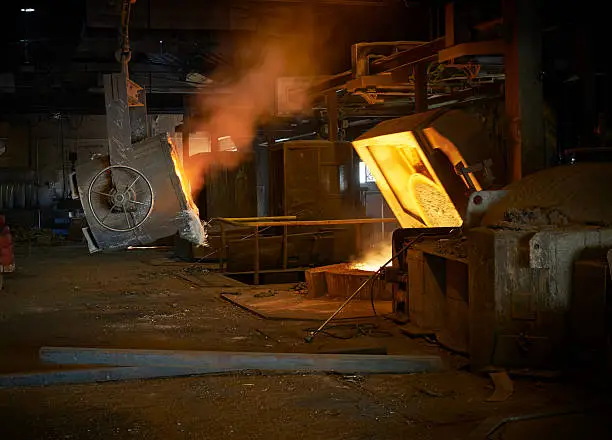
The rate and temperature of pouring have a big effect on the quality of the casting. Computer simulation tools can now predict how metal will move, finding areas where there might be turbulence that could lead to sand erosion or oxide inclusion. The network of tubes that feed liquid metal into the mold is called the "gating system design." It balances the fill speed with the differences in temperature.
We use thermocouples and infrared tracking to make sure that the temperature stays the same during pours. The next step is controlled cooling. Parts that are thick need longer solidification times. Risers put carefully around the cast give liquid metal to make up for shrinkage and keep the inside from having any holes. Because the sand mold is permeable, gases that are made when metals touch each other can escape instead of getting stuck as porosity flaws.
Post-Casting Finishing and Quality Validation
The model is thrown away during shakeout, which happens after the casts have cooled. By burning away any remaining sand and rust scale, the base metal surface can be seen. Coordinate measuring tools are used for dimensional inspection to make sure that the parts meet engineering standards. In modern foundries, CNC machining can achieve accuracy of ±0.05mm on key features.
When required, heat treatment can improve material qualities. The tensile strength of A356 aluminum alloy can be raised above that of normal die-cast materials through T6 processing, which includes solution treatment and fake aging. This heat processing also makes the material more flexible, which is important for parts that are going to be vibrated or shock-loaded. Surface treatments like chromate conversion coating and epoxy-polyester powder coating make things resistant to rust in hard working conditions; they regularly pass 1000-hour salt spray tests.
Common Challenges in Sand Casting Intricate Parts and How to Overcome Them
When pushing the limits of geometric complexity, even foundries with a lot of experience run into problems. Recognizing these problems and putting in place ways to fix them is what sets good manufacturing partners apart from good providers.
Surface Defects and Dimensional Inaccuracies
Surface flaws show up as a rough roughness, veining, or metal going through the sand grains. These flaws usually happen because the mold wasn't packed down enough or the filling temperature was too high, which caused the sand to sinter. By using finer grain sands or ceramic wash coats, you can make the mold surface smoother and less likely to let metal through.
Dimensional drift happens when cores move because of heat expansion during filling or when the mold wall moves because of lack of support under metallostatic pressure. Chaplets, which are metal supports built into the block, keep the cores in the right place. Better gate design lowers turbulence, which lowers the wear and tear on mold surfaces during hollow filling.
Porosity and Internal Defect Mitigation
When metals come into touch with water or organic contaminants, the contaminants evaporate and gases are caught when the metals harden. This is called gas porosity. In sand casting, keeping tight sand moisture content and binding ratios stops gas production from getting too high. Vacuum impregnation after casting seals micro-porosity in situations where hydraulic or gas housings need to be pressure-tight.
When separate areas of liquid metal harden without getting enough feed from risers, shrinkage porosity forms. During design review, computer-aided casting modeling finds these hot spots. This lets engineers move dangerous parts or add more feeding lines. This proactive method gets rid of the need for expensive rounds of trial and error during production launch.
Real-World Resolution Strategies
When we were making monitor enclosures for naval navigation screens, we ran into recurring porosity where mounting bosses met. Simulations showed that the linear solidification wasn't good enough. We set up the right temperature gradients by moving the parting line and adding chill plates to speed up cooling in thick parts. The updated casting typically met IP67 standards, meaning it could withstand salt spray and cool down high-brightness screens without needing air holes that would compromise environmental protection.
Heavy machinery customers who were making backhoe counterweights at first had problems with different production lots not being the same size. Root cause analysis showed that changes were caused by different amounts of wetness in the sand, which changed the compaction density. Mold properties were standardized by putting in automatic sand conditioning equipment that could watch moisture levels in real time. The dimensional spread shrunk from ±3mm to ±1mm, which got rid of the need for post-casting adjustment costs.
Innovations and Advanced Techniques Enhancing Sand Casting Precision
When technology is added to traditional casting methods, they are raised to levels of precision making that were once only possible with more expensive methods.
Advanced Bonding Systems and Mold Materials
These days, chemically bound sands use thermosetting phenolic and furan resins that give them better strength-to-weight ratios. When liquid metal contacts these systems, they keep their shape and create great hot strength. The better dimensional stability cuts down on pattern wear during mold making, which extends the life of the tools and keeps the shape of the parts the same over thousands of rounds.
Zircon and chromite are examples of synthetic sands that can be used instead of silica when high refractoriness is needed or when making unstable metals. These special materials stop metal-mold processes that change the chemistry of the surface or add spots. The higher cost of materials is justified by the higher first-pass return, which calls for investments in high-value parts.
Digital Integration and Process Monitoring
Automation changes the way foundries work from being based on handiwork to being based on data. Robotic filling systems keep the metal supply rates and temperatures exact, so there is no room for error. Digital twin technology makes virtual copies of the casting process so that engineers can test changes without stopping output.
During every step of the manufacturing process, real-time monitoring tools keep an eye on important factors. Statistical process control finds patterns before they become problems, which allows changes to be made before they happen. This ability to predict the future lowers the number of parts that need to be thrown away and keeps quality records that are needed for PPAP submissions in the car industry or traceability standards in aircraft.
3D Printing Revolution in Pattern Development
Additive manufacturing completely changed how much it costs to make prototypes for sand casting. Patterns that used to take weeks of skilled handwork can now be printed in just one day. Changes to designs that used to need making new patterns now only need file changes and reprinting. This flexibility shortens the time it takes to get a product to market by speeding up the product development cycle.
In addition to testing, 3D printing lets you make sand molds directly. Binder blasting technology puts layers of liquid binder on top of sand, making models that are completely solid and don't have any patterns. This method works well for one-time production or making extra parts when the cost of the tools can't be spread out over a large enough number of items. Even though the rate of production is still slower than with old methods, the end of pattern investment has created new market possibilities.
How to Select the Right Sand Casting Supplier for Your Industrial Needs
When making purchases, people don't just look at unit prices; they also look at skills, dependability, and the ability to work together. A structured review strategy helps you find partners whose technical needs and business goals are in line with yours.
Technical Capability Assessment Criteria
The collection of foundry tools shows what can be made. High-speed CNC cutting centers and multi-axis lathes show that the company is serious about finishing with tight tolerances. Low-pressure casting tools and die-casting equipment show how flexible processes can be for making the best parts. Our "melting-casting-finishing-surface treatment" process at Fudebao Technology allows us to deliver raw alloys and final parts all in one place.
Certification of quality control systems gives you a basic level of peace of mind. Registration with ISO 9001 confirms documented processes and a mindset of ongoing improvement. Automotive clients need to see proof that you understand PPAP documents, control plans, and measurement system analysis in order to be IATF 16949 compliant. For aerospace uses, you need AS9100 approval that lets you fully track the materials you use and offers advanced inspection tools like X-ray and ultrasonic tests.
Expertise in metalworking is what sets good providers apart from great partners. Before filling, the chemistry of the alloy is checked with in-house spectrometry tools. Tensile strength, hardness, and impact resistance are all checked by mechanical testing labs. When suppliers help with design early on in the development process, costly redesigns are avoided after the promise to make the tools.
Cost Structure and Lead Time Considerations
Pattern costs are broken down separately from per-piece casting charges in transparent price structures. This helps buying teams figure out how much the whole program will cost based on how many units are expected. Tooling costs for sand casting designs are usually 40–60% less than die-casting molds, and delivery times of 20–30 days speed up project plans.
Production lead times depend on how complicated the parts are and how many are ordered. Standard parts with known patterns can be shipped within a few weeks, but it takes 8–12 weeks to build new tools. Suppliers who keep safety stock plans for parts that are used often cut down on emergency situations that cause problems with production planning.
Working cash needs are affected by payment terms and minimum order amounts. When a new product is first released, established sellers usually take smaller orders at first. As market demand becomes clearer, production is increased. This freedom lowers the risk of running out of goods while keeping the supply going.
Building Long-Term Manufacturing Partnerships
Relationships that work well go beyond simple transactions and include working together on long-term goals. When suppliers take the time to understand your application needs, they give you technical ideas that are worth more. By comparing your capacity planning to your growth estimates on a regular basis, you can make sure that resources are available when demand goes up.
Being responsive to communication during the quoting and production stages is a sign of business growth. Suppliers with customer-focused attitudes give regular reports on the state of their work and warn of possible delays before they happen. Logistics costs and contact speed are affected by where something is located, but modern foundries that serve markets around the world have expert support staff who speak multiple languages to help with communication.
Conclusion
Sand casting will always be useful because it can be used to meet a wide range of industry needs. It's hard to get the same level of geometric complexity, material freedom, and mass scalability with other ways. Your company can make good use of this basic technology if you understand basic principles, spot quality signs, and choose manufacturing partners who are skilled. Partnerships with foundries that have a lot of knowledge are becoming more and more valuable as new technologies improve accuracy and efficiency. When companies master these manufacturing partnerships, they gain a competitive edge through better part design, shorter development processes, and reliable supply lines that help their businesses grow in global markets.
FAQ
Why choose sand casting over die casting for explosion-proof housings?
Sand casting can make wall pieces that are thicker than the 6 mm needed for Ex d flameproof grades. Because it costs less to make the tools, it's a good option for small to medium production runs where die-casting models wouldn't make economic sense. Instead of being limited to die-castable compositions, material selection freedom lets you use alloys that are designed for mechanical strength.
How do you manage porosity to ensure housings pass pressure tests?
We use resin sand systems that give molds a lot of strength, and we use computer simulations to create gates and risers that make metal filling easier. When standards call for total pressure stability, vacuum impregnation seals micro-porosity. When these two methods are used together, they always get the IP66/67 outdoor scores that electrical equipment needs.
What is the typical lead time for tooling and sample production?
Depending on how complicated the shapes are, making a pattern for an aluminum sand mold casting usually takes 20 to 30 days. This schedule includes making the design, taking the first samples, and checking the sizes. Production tools are made more quickly than die-casting molds, which speeds up the start of projects while still allowing for design changes during the approval stages.
Partner with Fudebao Technology for Precision Sand Casting Solutions
This is the end of your search for a trustworthy sand casting company. Zhejiang Fudebao Technology serves clients around the world in the automobile, industrial equipment, and energy sectors. They blend decades of foundry experience with current manufacturing skills. Our integrated facility has high-speed machining centers, CNC lathes, and advanced casting tools that can achieve accuracy of ±0.05mm, which is exactly what your projects need. We've worked with foreign names like American HAAS automation and ESS energy storage to build direct supply relationships based on consistent quality and working together on technical issues.
Our engineering team is ready to turn your component problems into manufacturing successes, whether you need a pilot, medium-volume production, or long-term supply partnerships. Send us an email at hank.shen@fdbcasting.com to talk about your unique needs and get a quote that is tailored to your project. You can see all of our services at fdbcasting.com and learn why top makers choose Fudebao Technology as their sand casting provider of choice.
References
1. American Foundry Society. (2021). Casting Design and Performance. Des Plaines: AFS Publications.
2. Campbell, J. (2015). Complete Casting Handbook: Metal Casting Processes, Metallurgy, Techniques and Design. Butterworth-Heinemann.
3. Brown, J.R. (2018). Foseco Ferrous Foundryman's Handbook (11th ed.). Elsevier Science.
4. Beeley, P.R., & Smart, R.F. (2017). Investment Casting and Sand Casting: Advanced Manufacturing Processes. Institute of Materials.
5. Stefanescu, D.M. (2019). ASM Handbook Volume 15: Casting. ASM International.
6. Society of Manufacturing Engineers. (2020). Fundamentals of Metal Casting Technology. SME Technical Publications.



YOU MAY LIKE
_1756345939856.webp "Aluminum casting chassis")
_1756346613780.webp "Aluminum tent base Casting")
_1756344684491.webp "Explosion-proof lamp housing aluminum casting")