
How to Source Copper Fabrication Services for Custom Electrical Busbars?
2026-11-17
Get a good idea of what you need for the copper fabrication job before you choose a company to make your custom electrical busbars. This should include the amount, the current rate, the grade of copper, the thickness of the material, the size tolerances, the surface finish, and any other information. Next, make a short list of companies that have the quality systems and production skills to cut, punch, bend, machine, plate, and inspect copper parts. Do not compare only the unit price when evaluating copper fabrication providers. Instead, think about the value as a whole, the lead time, the technical support, and how consistently the products are made. It is also important to get written approval of the first sample before starting to make a lot of them. A proper look at the prototype can help find errors in the drawings, issues with the sizes, or issues with the way the product is made before they become too costly to fix. You can better explain your needs, lower output risks, and find a reliable manufacturing partner who can be open and honest at every stage by setting up a clear process for copper fabrication.
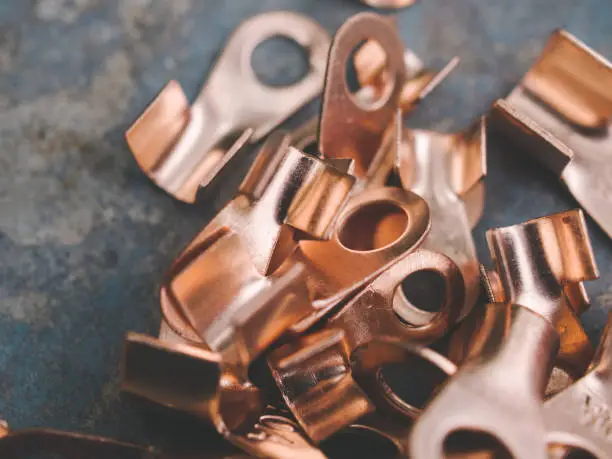
Define Your Custom Copper Busbar Requirements Before Requesting Quotes
Start With the Electrical and Mechanical Inputs
They can't give you a good quote until they know what the electrical duty is. I need to know the voltage, frequency, duty cycle, short-circuit current, maximum current, and highest temperature that something can reach before someone buys it. Then I look at the technical features, like the surface finish, the radius of the bend, the holes' shape, and the width. In an outdoor generator cover, the temperature and humidity of a busbar are different from those in a battery box with a lid. So, where the work is done is also important. These are the things that set the cross-section. After these are put in, the price and weight of copper are set. Name the set of rules you want to follow in the first message. NEC and UL rules must be followed by many parts made in the U.S. For example, UL 508A rules must be followed for industrial control screens.
Pick the Right Copper Grade and Temper
This is most of the busbar work that needs to be done. At least 100% of electricity can flow through the C11000 tough pitch, and it works with most bolted busbars. Both the C10200 and the C10100 have at least 101% IACS, even though the C10100 doesn't use oxygen. Also, oxygen-free grades are easier to join or braze than C11000, which can become weak when heated in a reducing atmosphere because hydrogen makes it weaker. When you get angry, you act differently. Iron that is heavier will be stronger and less likely to break when bent, while iron that is lighter will be stronger and less likely to break when bent. You can follow the rules better if you put the standard number ASTM B152 on your picture. Copper plate, strip, and sheet can all be used.
Prepare Drawings and Files That Remove Guesswork
Incomplete or unclear design files are a major reason why quotes are late. There should be clear instructions on how to do the work, a full list of parts, and 2D CAD drawings with standards, datums, dimensions, tolerances, and inspection points for a copper fabrication project. There should also be 3D CAD files in STEP format. Write down the needed tolerances for the sizes of each important part so the supplier knows which measurements, like the general size, hole locations, and bend angles, need the most attention. It's also important to write down the lengths between parts that are needed for copper fabrication, as well as any insulating and shielding zones that might be needed. If the files are complete and clear, manufacturers can find issues like a hole being too close to a bend line before they cut or shape the copper. Early technical feedback can help fix design flaws before it goes into production. This could cut down on the number of changes or prototypes that need to be made. Giving full information at the start of a copper fabrication job helps providers make more accurate prices, stay true to the standard design, and keep quality high while the job is being made.
Match the Fabrication Method and Material to Your Busbar
Cutting, Punching, and Machining Copper Sheet and Plate
Each process is chosen based on the thickness and accuracy of the copper. Copper moves heat quickly, and laser light bounces off it. By making loops out of holes in sheet and thinner bar, you can make punching suits. Bigger plates with holes and slots that are close to each other can be worked on with saws, waterjets, and CNC mills. CNC cutting can also be used to add parts that are drilled and tapped and stay in place. The burr has to be removed. Sharp edges can focus electric fields and tear insulation covers, so I make sure they are broken. The lead time and cost for each method are different. You can save money by getting more cutting tools, but CNC machines don't need tools for tests or small batches.
Bending, Forming, and Joining
The step that gives bus bars the most trouble is the one that goes up and down. Copper can be bent back into shape, so it's important to test the press brake program on a sample. You need to plan the bend axis before you cut the blanks because the risk of cracking changes based on the grain direction. Based on the thickness and temper, the inside radius has to be very small. Do not put holes near bend lines. If you do, they will bend and not fit with other parts. With more than one leg, this order checks to see if the tool can reach all the bends on a finished piece. When you join two pieces of metal together, make sure the joint is still stiff. Silver that doesn't have air in it is best for joints.
Compare Copper With Aluminum and Brass, Then Pick a Busbar Type
It is about 61% IACS and weighs about a third as much as copper. It takes about 60% more cross-section to get the same amount of resistance, and oxide films make joint nuts more fragile. Brass is easy to shape and work with because it doesn't let electricity flow through it. This makes it better for connecting parts than for main power lines. If you want to save room and keep the heat down, copper is always the best choice. Busbars come in four different styles: plain, laminated, insulated, and plated. Simple busbars are solid; insulated ones keep the gaps between wires smaller, and plated ones keep the surfaces safe to touch. For heavy-duty joints and parts that let heat escape, cast copper is better. It is better to use wrought copper for flat busbars.
Evaluate Suppliers and Build a Clear RFQ Process
Check Capabilities Beyond Cutting and Bending
A good partner does more than just cut and bend metal. In the full copper fabrication process, CNC machines can precisely cut and shape copper sheet metal, drill, tap, deburr, plate, mark, put it together, and check it to make sure it meets the standards. People who want to buy copper fabrication should ask the company for a list of the tools they use and some model parts. Then, they should give the engineering team a drawing job to see how well they understand difficult plans and how much they know about technology. They should not only give you a fair price quote, but they should also tell you how to change the design so that production goes smoothly and reliably. Complex copper fabrication jobs can be done in-house by a company with HPMs, CNC lathes, low-pressure casting machines, and die-casting machines. These tools can melt, cast, machine, finish, and treat the surface. The provider can keep an eye on the whole process, from the first blank to the finished part, thanks to this built-in feature. This gives them more control over quality and wait times. With an accuracy of as little as 0.05 mm, the company can machine iron, copper, and stainless steel alloys. This means they can be used in a wide range of industrial settings. The ability to cast or machine copper parts, like heat sinks, connectors, terminals, and other precise parts, is very helpful for copper fabrication. People can make the buying process easier and get more consistent results during the copper fabrication process if they choose a provider with a lot of tools and good technical support.
Verify Quality Systems and Traceability
A trustworthy store is different from a shady one because it has all the right paperwork. Make sure that the measuring tools are accurate and that you can keep track of a lot of things, from the raw materials to the shipping. There should be a mill certificate for every lot of copper. Talk to the shop about how they handle test results, reports of items that don't meet standards, and first item checks. Take a look at this inspection record to get an idea of what you will learn about real sales. It also helps to have knowledge. If a supplier has worked on projects with switchgear, battery systems, charging stations for electric vehicles, or data centers before, they will know right away what clearance and joint needs there are. Make sure you look over the references you are given when you apply.
Send a Complete RFQ and Compare Quotes Fairly
It takes less time to get quotes when you send a full RFQ package. This list should have part numbers, revision levels, plans, CAD files, material needs, annual and per-order amounts, shipping location, start dates, finishes, packing, test needs, and so on. Don't just look at the unit price when you get quotes. It's important to compare things like freight, taxes, payment terms, minimum order amounts, setup fees, planning fees, wait time, and the way of getting the tools. For example, CNC lines work best for small lots, while shaping works best for big amounts. You need to use the right method for each type of job. It is easier to make an objective choice when you use a weighted scorecard that looks at technical skill, quality, response time, export experience, capacity, and supply continuity.
Control Design, Quality, and Compliance Risks
Spot Design Risks Before Prototyping
Most of the time, the busbar's failure is due to how it was made. Watch out for too small a cross-section, too small a bend radius, sharp edges, holes that aren't straight, weak support, short gaps, and standards that don't match the assembly. As the metal grows and shrinks, a hot joint can come loose over time. Parts that are too small cause this. Read the plan first before you order a sample. Then, make some good standards that can be used to check things like size, pitch, twist, hole location, bend angle, conductivity, smoothness, and how well the parts fit together. When both sides read the same inspection report, they can agree on what needs to be checked.
Choose Surface Treatments and Confirm Compliance
The parts that touch things are protected by plates, and each metal is good for a certain job. Tin is better for welding because it doesn't rust. Nickel is strong enough to handle heat and wear. Silver has the lowest contact resistance and is best for connecting things that need to move a lot of electricity. It costs more, though. Pick the right finish by looking at how it will touch, conduct electricity, and rust. If the finish works in a dry battery cabinet, it might not work in a cabinet near water outside. Make sure that the finished item follows all the rules that it needs to, like IEC 61439-1 for low-voltage switchgear assemblies, UL listings, NEC rules, RoHS, and REACH. Do some tests and make sure everything is clear before you ship it.
Validate Prototypes and Approve Production
During the copper fabrication process, test prototypes to see how they fit, how easy it is to get to the tools, and the order of the bends and holes. To get accurate results, it's best to ask for the same tools, materials, and finishes that were used to make the item. To find out if something can carry current, check the resistance of the contacts, see how much they shake, and see if the pins stay in place; you can use functional tests. These tests are very important in copper fabrication because accurate measurements, good conductivity, and strong connections can have a direct effect on how well the finished product works. You should look at the list of checks, material certificates, closing data, and test records in the first one before you make a lot more. As soon as you get permission, make sure that the process checkpoints, sampling plans, and steps for rolling out packages don't change. If the copper fabrication process is well run, these records should stay the same from prototypes to mass production. Also, keep in touch with the seller to see how things are going. The copper fabrication process should be checked often to make sure it stays stable and that the correct materials, sizes, finishes, and inspection standards are being used. It finds drift early on, before the parts get to the line where they are put together.
Estimate Cost and Select a Long-Term Partner
Understand What Drives Cost
Busbar prices depend on both the source of the metal and the way it was made. To do this, you need to know what kind of copper it is, how much it costs, how thick it is, and how heavy it is. Part of the process is setting up, polishing, checking, packing, sending, and the time spent cutting, grinding, bending, and rolling. Quotes for copper will likely have end dates or a price change clause that is tied to a public copper index because the price of copper changes every day. To save money, you can use standard thicknesses and hole sizes, loosen limits that don't change how they work, make it easier to bend sequences, and nest parts without changing them. The finishes should also stay the same. To save money, you should never skimp on product or transportation.
Look at Total Cost of Ownership
Low quotes can hide bugs that cost a lot of money. When there are problems in the field, installation takes longer, and experts have to do more work; it costs more than the part saves. On the job site, teams sometimes have to ream holes because the holes in a busbar aren't straight. Heat and touch resistance can also go up if the finish is bad. I add up the unit cost, the expected rework, freight, duties, and support work when I look at different offers. After some time, it will cost less if quotes are clear, wait times are fine, and change control is simple to understand. When engineering plans need to be changed, what do the different suppliers do? Who is in charge of your daily work?
Follow a Practical Sourcing Workflow for Long-Term Supply
Put the steps in the right order. You need to make rules about loads, shapes, sizes, tolerances, finishes, and amounts. Write down a few companies that can assist you. Before you start making things, send out a full RFQ, look over the business and technical plans, and then make sure the samples and first things are good. It is important to know where to get raw materials, extra tools, space, inventory rules, export packing, and customs paperwork so that you have enough for a long time. The supplier should be the right size for your volume of business each year so that each order gets the attention it needs and the supplier stays full. Plan checks, keep track of changes, and make sure people are doing their jobs, even when things are busy. Our team helps you along the way by going over the design over and over and taking back orders.
Conclusion
You should look at the specs of copper busbars before you look at how much they cost. Your sellers will be able to give you more exact quotes if you make a list of what you need, such as the type, grade, current, and limits. Copper fabrication is a crucial step in the production of high-quality buses. Copper is better for electricity and can be cut, shaped, punched, and joined to make it the same size. Because copper doesn't take up as much space as aluminum or brass when it's hot, careful copper fabrication can help get the right size and performance. When you choose a supplier, you should think about how skilled they are, how well they can keep track of things, and how well they know how to use certain materials. A full RFQ is better if you want to get fair prices from companies that have done copper fabrication before. If you check the design, choose the plating, follow the rules, and test the prototype, you will be safer in the field. The full picture is not the price per unit, but the cost to own everything. If you follow these steps and use good copper fabrication, you can make busbars that fit, carry electricity safely, and keep the power on.
FAQ
What should I include in a busbar quote request?
Send pictures, 3D CAD files, the type of copper, how thick it is, how much of it you need, how you want it finished, what your goal standards are, and where you want it shipped. The price process goes faster with full data, and texts asking for more information are sent less often.
Which copper grade should I choose?
Button-type C11000 busbars can be used with it. If you need the best conductivity or want to braze or weld, choose C10200 or C10100. What kind is picked will depend on the building, the area, the joining, and the safety needs.
Is brazing or welding better for copper joints?
Air-free copper is used to make joints that don't move when you braze. Copper moves heat around quickly, so it needs a lot of heat to join two pieces together. No matter what, check the joint resistance.
Can one supplier handle prototypes and production?
Yes, most of the time, as long as the shop has a quality system in place to handle test runs, repeat sales, prototyping, and going over the first item. Before you sign up, see how it handles changes.
Request a Custom Copper Busbar Fabrication Review
Send your drawings, copper grade, thickness, current rating, and quantities to Fudebao Technology, a copper fabrication supplier with in-house casting, CNC machining, and surface treatment. Our team reviews manufacturability, flags risks, and quotes prototype or production orders, with machining accuracy up to ±0.05 mm. Email hank.shen@fdbcasting.com or visit fdbcasting.com to start your technical review.
References
1. ISO 9001:2015, Quality Management Systems – Requirements, 2015
2. IEC 61439-1, Low-Voltage Switchgear and Controlgear Assemblies – Part 1: General Rules, 2020
3. NFPA 70, National Electrical Code, 2023
4. UL 508A, Standard for Industrial Control Panels, 2018
5. ASTM B152/B152M, Standard Specification for Copper Sheet, Strip, Plate, and Rolled Bar, 2019
6. ASM Handbook, Volume 2: Properties and Selection: Nonferrous Alloys and Special-Purpose Materials, 1990



YOU MAY LIKE