
What to Check When Sourcing Copper Castings for Marine Equipment
2026-11-13
To source copper castings for marine equipment, I check six things in order: the operating conditions, the alloy, the casting process, the tolerances and inspection plan, the applicable standards, and the supplier's proven capability. A qualified Copper casting manufacturer should answer each point with data, not promises. It should also show traceable material records, in-house machining, and sample results before you release a full order. This guide walks through each check so marine OEMs, purchasing managers, engineers, shipyards, and distributors can lower technical risk and total procurement cost.
Marine parts face seawater corrosion, galvanic attack, pressure, cavitation, wear, and fatigue, so a casting that matches the drawing can still fail early. The same buyer logic applies when you purchase for pumps, compressors, gearboxes, or electrical housings: material strength, consistent tolerances, and documentation matter. Use the sections below as a working checklist.
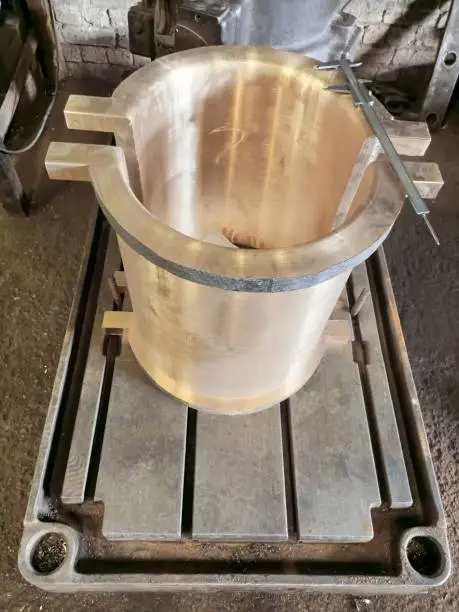
Define the Application and Choose the Right Copper Alloy
Start With the Operating Conditions
Before I look at any quote, I write down where the part will go. Different types of loads need to be handled by a valve body, a spinning hub, an end cover for a heat exchanger, and an electrical connection. Note down how much water from the sea meets the top, how fast it flows, how hot it is, how much pressure there is, whether there is cavitation, whether chemicals are involved, and whether the water turns or slides. Note whether the part stays submerged, is in a splash zone, or is inside a sealed unit. For a Copper casting manufacturer, a full profile lets them choose the check level, the wall thickness, and the casting way before they start making the tools. If the provider doesn't have it, they have to guess. That guess shows up later as leaks, wear, or having to be changed first. This information should go with your RFQ so that you can compare prices.
Review Galvanic Compatibility
Putting two different metals close to each other and using seawater as a fluid can make a galvanic cell. Al and carbon steel rust more slowly when they touch copper parts that are wet. They last longer because they are made of copper. It's still important how they are paired and how much surface area they have, even though iron and nickel alloys are more like copper alloys. When a small steel bolt meets a big copper casting, it usually goes wrong. Check out the nuts, flanges, housings, and shafts that connect them as well. A cover, a coating, or an insulation washer can't let electricity pass through them. Sometimes the best way to fix something is to make a change to it. Make sure of this before you start making the pattern. It will take longer and cost more to make changes after the tools are made.
Match the Alloy to the Job
To get the best strength, resistance to rust, wear life, machinability, and service life, it is important to pick the right metal. Iron bronze is often used to make parts for pumps and power systems because it is strong and doesn't rust or break easily. 90/10 and 70/30 copper-nickel metal is also used to make a lot of ocean lines and heat exchangers. Tin metal is used to make joints and bearings that work well. When you put brasses that are high in zinc in salt water, they can lose some of their zinc. Manganese bronze is easy to work with. This process is known as dezincification. Find out what the fabric's real tensile strength, yield strength, stretch, and stiffness are. See if the numbers come from samples that were heated while they were being made or samples that were left as-cast. We need to know what chemicals were used, how to keep track of each batch as it melts and ships, and what temperatures were used. In the case of ASTM B148, it talks about aluminum-bronze sand molds and makes it clear what you need to do.
Choose the Casting Process and Check Quality
Match the Process to the Part
You can't just look at the unit price to decide which process is best. Also, think about what the business needs in terms of size, style, metal, and quality. Sand casting is a good way to make a lot of small or hard things. Cores can be used to make holes in fittings, valves, and pump housings. It takes less milling to make the parts because they are smaller and have more small details. G-forces are used to make thick cylinder-shaped parts like bearing shells, rings, bushings, and sleeves when a centrifugal mold spins. Dies are a good way to make a lot of the same part when the metal and pressure need to work together. I'd like to compare some more things, such as tools, inspection, transportation, and scrap. A cheaper casting that needs a lot of work or heavy cutting usually costs more when it gets to your line. Each service should be able to explain what they did with your drawing.
Define Tolerances, Allowances, and Finish
It's easy to see which dimensions are needed and which ones aren't. Also, it's clear whether each measurement is needed before or after the machine is used. What does it mean to have limits, roundness, concentricity, close surfaces, and more rough surfaces? Cutting limits can be between 1.5 mm and 6 mm, depending on the size of the part and the method being used. Metal and the time it takes to cut it are wasted if there is too much room. Some seals can leave skin on the face where they were cast. Learn who does each part of the CNC that cuts, grinds, drills, or balances. When the seller and the provider are in the same building, they have more control over the changeover than when the provider sends blanks to shops that aren't part of the provider. That means the fit and finish are always the same.
Plan for Defects and Inspection
Cracks, holes, oxidation, warping, cold shuts, holes, shrinking, and inclusions are all things you should be ready for. Most of the time, hydrogen gas is what makes holes in copper metal. Nitrogen or argon are used by good foundries to get rid of the gasses. Deoxidizers like phosphorus, copper, and gases are also used to help the metal harden in a certain way. Get a copy of these rules. After that, look at the risk and the check. It is possible to test things in two ways: chemically and mechanically. The penetrant test is used to find cracks in the surface. Use X-rays or ultrasound to see if the inside is healthy. Pressure can be used to test parts that can handle it. Use a CMM to measure things too. You should decide what is okay before the work starts. This way, a casting that's almost good won't make things hard at the dock.
Verify Standards and Evaluate the Copper Casting Manufacturer
Confirm the Standards and Certifications
Make sure you follow the rules for the metal, the process, and the use when you make and test marine copper castings. ASTM B584 can be used for sand castings of copper metals most of the time. ASTM B148 talks about metal and bronze sand castings. Also, EN 1982 covers bars and castings made of copper and copper alloys. There could be more rules in the writing or project plans. The supplier's ISO 9001 certificate should cover the things you want to buy, like exporting, casting, or milling. Some projects need to be approved or watched over by groups like Bureau Veritas, ABS, DNV, Lloyd's Register, or ABS. During the quote process, this should be discussed so that the seller can plan for getting the right products, paperwork, tests, and places to find them.
Judge Technical Capability, Not Company Size
Fit has nothing to do with how big or old the business is. You should try to find heat exchangers, pumps, valves, and motion systems that have been used in saltwater before. These ought to be strong enough to handle stress. A good Copper casting manufacturer will look over your plans, CAD files, GD&T, wall thickness, draft angles, core design, gating, and risering before they start the casting process. There are many things wrong with this. List the steps that are done by company workers and those that are done by people from outside the company. The risk goes up with each pass. What are the team's export papers? How do they handle nonconformities? How much can they handle? What is their minimum order number? How long do they have to wait for tools? The questions a provider asks can often tell you a lot about how it will deal with problems during production.
What Fudebao Technology Offers Buyers
Zhejiang Fudebao Technology Co., Ltd.'s major jobs are to cast metal and cut exact shapes out of aluminum alloy, copper alloy, and stainless steel alloy. It's what people from all over the world buy for their business ships, planes, cars, and other things. Our plant melts the metal, casts it, makes the surface smooth, treats it, and stores it. This means that the whole part can be worked on by one team. CNC lathes, high-speed machining centers, low-pressure casting machines, and die casting machines are some of the most important tools. Up to ±0.05mm of accuracy can be reached with this method. ESS batteries and HAAS robots are the only foreign names we buy these days. In the past, agents helped us. It's easier to cast and make the same marine part at the same time with this setup.
Compare Suppliers, Prepare the RFQ, and Avoid Common Mistakes
Compare Suppliers With a Practical Scorecard
When there is a written comparison, more than just the lowest number is picked. Each Copper casting manufacturer gets a score based on how well they communicate with customers, how well they handle quality issues, how well they can keep track of products, how well they can help engineers, what tools they have, how busy they are, how long customers have to wait, and how well they can handle engineering support. We also check to see how well they can work with metal and make alloys. Do the same thing again to find out how much it costs for samples, tools, cutting, testing, packing, freight, taxes, inventory, fixes, being late, and being late. Ask not for samples that were made in a unique way that will only be used once. Ask for samples that were made in a different way instead. Read the first article to find out how big it is, how much it weighs, how it was made, and how it was packed. To make sure the written rules are followed on the shop floor, they can be looked at in person or from afar.
Prepare a Complete RFQ
They can tell you the right wait times and good process tips if you give them a full RFQ. Things like these three types are always in:
- Design data: The package comes with 2D and 3D CAD files, as well as details about the alloy's grade, any relevant standards, its tolerances, surface finish, and how to machine it. Make sure that the important sizes and features are clearly marked, and let the sellers know which parts will be cast and which will be machined. No one will have to guess what you want because everyone will be able to quote the same part.
- Quality and documents: There are metal certificates, science reports, measurement checks, non-destructive tests, pressure tests, and records of where the goods came from that are part of quality and paperwork. You should name the classification group and explain what you will do to get their OK now, if you need it. When you add things at the last minute, it can change when and how tests are done.
- Commercial terms: If you want to buy something, this part talks about the business terms, like the minimum order quantity (MOQ), payment terms, wait time, warranty, claim processes, and yearly and batch quantities. Ask providers to separate things like tools, samples, casting, machining, inspection, packing, and freight. This will make it easy to compare quotes line by line.
These three groups can help the seller figure out how to get things done faster and with fewer emails. You are also ready to buy things if you have a full RFQ.
Avoid Common Sourcing Mistakes
People usually make mistakes when they choose a metal based only on price, send incomplete RFQs, accept vague as-cast tolerances, don't check the metal's integrity inside, and don't look at the paperwork. It's possible for cheap things to break quickly in salt water due to rust, wear, pressure, or galvanic contact. It's also hard to compare prices when there are several RFQs. Make it clear where things are made and where they aren't, test important parts without breaking them, and make sure you have the right material certificates, heat numbers, inspection records, classification papers, and export paperwork to avoid these problems. You need to decide what the standards of acceptance are before you start the work. Most fights don't happen when rules are written down.
Conclusion
Before sourcing marine copper castings, buyers should clearly define the intended application and operating conditions. Saltwater exposure, electrical contact, internal pressure, and mechanical wear can all affect material selection, casting performance, and service life. An experienced Copper casting manufacturer can help evaluate these requirements and recommend the most suitable copper alloy for the application. Buyers should then select a casting method that matches the component's geometry, dimensions, production volume, and required tolerances, while establishing clear inspection, machining, and risk-based acceptance criteria. Relevant industry standards, such as EN 1982, ASTM B584, and ASTM B148, should also be considered according to the specific alloy and casting process. A qualified Copper casting manufacturer should have proven technical expertise, access to appropriate engineering resources, reliable material traceability systems, and in-house machining capabilities where required. To compare potential suppliers effectively, buyers can review performance ratings, production samples, detailed RFQs, and documented acceptance criteria. Choosing a reliable Copper casting manufacturer with strong quality management and manufacturing capabilities helps reduce procurement delays, avoid unnecessary rework, and control overall operating costs. It also provides greater confidence that marine copper castings will meet the required specifications and perform reliably under demanding service conditions.
FAQ
Which copper alloy is best for marine equipment?
Metals aren't all good for the same things. There are different kinds of bronze that can handle different amounts of salt, weight, wear, and heat. Make sure the metal fits your needs and follows the rules.
How do I verify a casting supplier?
The ISO 9001 certificate comes with test results, material certificates, heat-number tracking, and a list of the sources we used. Find out what else it has. After that, you can separate the first part before putting it all together.
What should an RFQ include?
Send your 2D and 3D CAD files along with the rules, the quantity, the finish, the testing that needs to be done, the packaging, and the address where the goods are going.
Can one supplier handle casting, machining, and inspection?
Fudebao Technology has one plant where they finish, treat, cut, melt, and cast. If you tell us what you need, we'll see what we can do for your copper parts.
Request a Quote for Custom Marine Copper Castings
Send your ideas, 3D CAD files, metal needs, numbers, and how you'd like to work to hank.shen@fdbcasting.com. We melt, cast, finish, and treat the surface as a Copper casting manufacturer and supplier. You only need to work with one team from the blank to the finished part because we're accurate to 0.05 mm. Head over to fdbcasting.com to find out more. We'll figure out how much it costs after we know what you need.
References
1. ASM Handbook, Volume 15: Casting, 2008
2. ASM Specialty Handbook: Copper and Copper Alloys, 2001
3. ASTM B584, Standard Specification for Copper Alloy Sand Castings for General Applications, 2014
4. ASTM B148, Standard Specification for Aluminum-Bronze Sand Castings, 2018
5. EN 1982, Copper and Copper Alloys – Ingots and Castings, 2017
6. ISO 9001, Quality Management Systems – Requirements, 2015



YOU MAY LIKE