How to Design Aluminum Die Cast Parts for Better Manufacturability
2026-06-16
It takes a planned approach based on manufacturing facts to make aluminum die-cast parts that are good in terms of performance, cost, and production efficiency. When we work with engineering managers and buying directors, the problem that comes up again and again is how to turn design ideas into castings that meet the standards for dimensional accuracy while avoiding costly mistakes and production delays? To find the answer, you need to know what makes aluminum die casting a special type of high-pressure production process. For this method, molten aluminum alloy (usually A380, ADC12, or AlSi9Cu3) is pushed into precise steel shapes at pressures higher than 10,000 psi. The end result is nearly net-shaped parts that are very strong for their weight and can be used for things like automobile housings, industrial equipment brackets, electrical cases, and structural elements in spacecraft. But if you don't carefully think about the design, you could end up with gaps, warping, or physical instability, all of which hurt the quality of the product and make lead times longer.
Understanding Aluminum Die Casting and Its Design Challenges
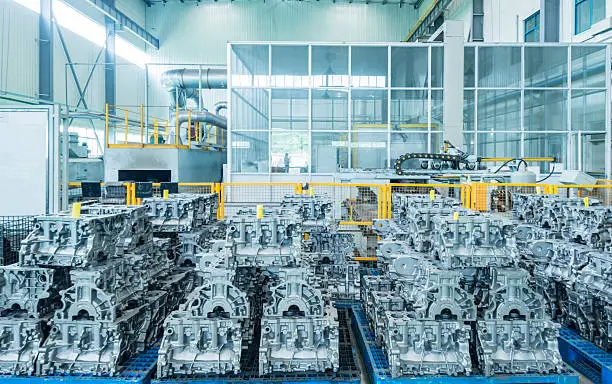
There are different steps in the die-casting process that have a direct effect on design choices. Molten aluminum rushes into the mold hole at a very high speed, quickly filling complex shapes before hardening under constant pressure. This part of cooling is very important, because uneven temperature differences can cause stresses inside the material, which can cause it to warp or crack. The choice of alloy is very important here. The A380 is great for complex thin-walled enclosures in telecoms equipment because it is very fluid and not too strong. ADC12 makes it more resistant to rust, which is helpful for electrical housings that are outside and get salt spray and UV light. AlSi9Cu3 is stronger at high temperatures, making it a good choice for parts of car engines that are heated and cooled many times.
Common Defects Rooted in Design Flaws
Concerns about porosity are still the most common ones we hear. Gas porosity happens when hydrogen dissolves in liquid aluminum and leaves holes in the solid. Shrinkage porosity forms in thick parts that cool slowly, making holes in the metal as it shrinks. Because of these flaws, the mechanical stability of the parts is compromised, and they can't be used in pressure-tight situations like transmission housings or pump bodies. Most warping is caused by uneven wall thickness, where thick parts cool more slowly than nearby thin parts, creating stress inside the structure. When melted metal cools before reaching the edges of the mold hole, this is called incomplete filling. This can happen if the metal is too far from the gate or there isn't enough air flow.
Material Properties That Shape Design Constraints
Because aluminum has a thermal conductivity of about 96–120 W/m·K, heat quickly escapes during casting, leaving less time for the metal to move. Because of this, designs need to include features that make filling smooth and continuous. The oxide layer on the surface of the material naturally protects it from corrosion, but surface processes like powder coating or anodizing make it last longer in harsh settings. Knowing these qualities helps buying teams set reasonable tolerances and surface finish standards that work with manufacturers' abilities instead of making suppliers do extra work that isn't cost-effective.
Key Design Principles for Manufacturable Aluminum Die Cast Parts
The basic idea for aluminum die casting architecture is that walls should all be the same thickness. Most of the time, we suggest keeping walls between 2.0 mm and 3.5 mm thick. Differences of more than 25% within a single part cause different cooling rates, which cause the part to twist. We've found that stress concentrations can be avoided by gently switching between thick and thin parts, using tapered blends instead of sharp steps, in automotive bracket designs that we've improved. Consistent wall thickness is good for electrical house projects because it makes sure that heat is spread out evenly, which is important for parts that handle the thermal loads from power electronics.
Draft Angles and Mold Release Considerations
Draft angles make it easier to get the part out of the die without damaging the surface. A draft of at least 1.5° on the outside and 2° on the inside lets the two parts separate cleanly. To keep things from sticking, angles that are steeper (up to 3°) are needed for deep pockets or tall bosses. We've seen industrial machinery parts that didn't have enough draft have to have expensive mold changes made after test runs showed release marks and differences in size. These problems can be avoided by including a good draft from the start of the design process, which also speeds up the approval process for the tools.
Strategic Use of Ribs and Bosses
Ribs strengthen thin walls without adding bulk, keeping profiles light, which is important for maximizing the range of electric vehicles. By making the ribs as thick as 50–60% of the wall next to them, you can keep the other surface from getting sink marks. Ribs should be at least three times as far apart as they are thick to allow metal to flow freely between them. Bosses give screws a place to go, building assembly features right into the casting. We make boss walls that are 125–150% of the standard wall thickness so that they can handle thread contact loads without cracking in one place. These features show how careful design can cut down on assembly steps, which is important for tier-1 automobile suppliers that handle large amounts of production.
Realistic Tolerance Specifications
Standard die-casting margins start at ±0.005 inches for sizes up to 1 inch, and get bigger as the feature gets bigger. Costs go up through additional machining when you specify tighter standards than are needed. We work with aircraft clients who need important mating areas to be accurate to within 0.002 inches. We can do this through CNC post-processing. But non-critical measurements stay within the limits of the as-cast, which strikes a balance between quality and cost-effectiveness. This selective accuracy method meets the standards for PPAP documents without being too complicated.
Comparing Aluminum Die Casting With Other Casting and Molding Methods for Design Insight
People who work in procurement often compare aluminum die casting to other methods. Sand casting can handle bigger parts and smaller quantities, but the finish on the outside is rougher, and the limits are usually ±0.030 inches. There is more design freedom because undercuts and internal pathways don't limit the design as much. When the pump tank is bigger than 24 inches in diameter, die-casting tools become too expensive for makers of industrial equipment, so they choose sand casting instead. Gravity or low pressure are used to fill reused steel molds in permanent mold casting. This method makes parts with better mechanical features than sand casting but takes longer to make than die casting. This method works well for making medium-sized amounts of gearbox parts that need to be resistant to heat and last a long time.
Zinc and magnesium die casting are both used in situations where even tighter standards or lighter weight are important. Zinc alloys can have walls as thin as 0.6 mm because they flow more easily, but their higher density and lower strength make them less useful for structural uses. Magnesium is 35% lighter than aluminum but just as strong, which makes it useful for making the housings for small power tools or drones. However, magnesium isn't widely used because it can catch fire during processing and costs a lot. Plastic injection molding gives you more design and color choices than metal, but it doesn't have the same thermal conductivity, electromagnetic protection, or stability in shape when heated. Aluminum can get rid of the heat that is made by high-current switching, which is something that plastic can't do. This is useful for electrical connector housings in green energy transformers.
It is possible to get the tightest tolerances and most complicated shapes with CNC cutting from billet aluminum, but it gets too expensive after 500 units. When it comes to aircraft clients, we tell them to make important structural brackets in small quantities at first. Once the design is proven and production starts to grow, they can switch to die casting with machined finish surfaces. Throughout the lifecycle of a product, this mixed approach takes advantage of the best parts of each process.
Advanced Techniques and Technologies to Enhance Design Manufacturability
By predicting metal flow, temperature differences, and flaw creation before cutting steel, simulation software changes the way designs are validated. MAGMASOFT and ProCAST are two tools that can model filling patterns and show you where gas can get stuck or flow isn't full. During the recent project to build an automobile gearbox housing, simulations showed that a gate that wasn't in the right place was causing turbulence and porosity. Moving the gate and adding overflow wells—design changes made digitally—got rid of flaws in physical tests, which saved weeks of tools iteration. These programs also find the best places for cooling channels inside the die, which cuts down on cycle time while keeping part quality high.
Injection Parameter Optimization
Speed, temperature, and pressure of metal filling have a big effect on how well an aluminum die casting turns out. Slower input lowers turbulence, but thin parts may solidify too quickly. Higher melt temperatures make the fluid better, but they also make the cycle take longer and use more energy. During process development, we set these values by balancing different factors that could affect the mechanical qualities we want to achieve. Through controlled precipitation hardening, heat treatment methods like T6 aging can increase yield strength by up to 50%. However, changes in dimensions must be planned for during treatment. Parts that need to have very precise end measurements have compensation limits that take into account movement after treatment.
Surface Finishing Integration
Needs for surface finish affect early design choices. As-cast surfaces usually get between 125 and 250 Ra microinch, which is fine for internal parts but not good enough for panels that people can see or closing surfaces. Powder coating protects architectural hinges and industrial structures from corrosion and makes them look better, but the coating width (50–100 microns) changes the allowed dimensions. Anodizing makes the surface harder and less likely to break down, which makes it perfect for electrical connections and thermal control parts. When you design with these treatments in mind, like avoiding sharp interior corners that trap coating material, you can be sure of a uniform finish quality and make production easier.
Practical Guide to Partnering With Aluminum Die Casting Manufacturers
The success of a project depends on choosing the right production partner. We suggest that you look at sellers on more than just price. ISO 9001 certification shows that you have quality management systems in place, and IATF 16949 certification is needed by car tier-1 suppliers who need to provide PPAP paperwork and production part approval processes. Prototyping potential tells you if a seller can make sample parts to make sure the design works before you commit to full production tools. Different makers have very different minimum order amounts. Some need at least 5,000 pieces, while others can handle batches of 500 pieces at higher unit costs. Tooling lead times range from 8 to 16 weeks, based on how complicated the part is and how much time the seller has available.
Communicating Design Requirements Effectively
Misunderstandings that slow down projects can be avoided by giving clear technical requirements. Give thorough 2D drawings along with 3D CAD models in STEP or IGES files that list important dimensions, geometric tolerances, and surface finish standards. Choose your chosen metals and explain why they are best for the job. For example, you could say that A380 is best for your application because it is cheap and easy to work with, or that AlSi9Cu3 is needed for high-temperature performance. List the checking methods that will be used for important parts, such as CMM measurement, X-ray porosity analysis, or pressure testing. To set clear acceptance criteria, quality standards should use ASTM specifications or methods specific to the business.
Real-World Collaboration Success
We recently teamed up with a company that makes industrial equipment that was having trouble with compressor housings that didn't always fit together right. After a careful study of the design, we found that differences in wall thickness were too big and were causing uneven cooling. By redesigning with regular 2.8 mm walls and adding support plates in certain places, the warping was stopped. Parts stayed within spec by using in-process measurement checks at three stages of cooling. Together, they cut scrap from 12% to less than 2%, which cut costs per unit by a lot while still meeting delivery dates. The manufacturer now buys several families of parts from our plant. This shows how a professional relationship can add long-term value.
Conclusion
To make it easier to produce aluminum die casting parts, you have to find a balance between geometry, the qualities of the material, and the facts of the process. Even wall thickness, the right draft angles, and strategically placed reinforcements stop flaws and keep the structure's performance. When the benefits of die casting are matched by the production volume, complexity, and material qualities, procurement teams can choose it over other manufacturing methods. New modeling tools and improved process factors lower the risk of development and speed up the time it takes to get a product on the market. Working with skilled makers who know your quality standards and can give you technical advice can turn your design ideas into reliable, cost-effective parts that can be used in aerospace, automobile, industrial, and electrical settings.
FAQ
What wall thickness should aluminum die cast parts maintain for optimal quality?
A wall thickness goal of between 2 and 3 5 mm will make sure even cooling and the structure stays strong. Thinner walls may not be fully filled, while thicker parts may develop holes. Differences within a single part shouldn't be more than 25% so that different cooling rates don't cause it to twist.
How does aluminum die casting compare to machining for precision components?
Die casting is great for making a lot of parts with nearly net-shape shapes because it lowers the cost per unit below cutting once the number of parts made goes over 500–1,000. Machining can make limits smaller and is good for testing or small-scale production. The best cost and accuracy are reached by combining both—casting blocks with machined essential features.
Which aluminum alloy is best for automotive applications?
A380 is the most popular die cast material for cars because it is easy to work with, has a modest level of strength, and is cheap for making housings and braces. AlSi9Cu3 is good for engine parts that are subject to high temperatures because it has better thermal stability. Which alloy to use varies on the application's mechanical loads, temperature, and rust exposure.
Can aluminum die cast parts achieve pressure-tight seals?
Yes, if the walls are uniform and the porosity is managed by using the best gating and injection settings during design. Vacuum die casting lowers internal gaps even more, which means that the parts can be used in transmission housings and hydraulic parts that need to be leak-proof. Post-cast impregnation can be used to fix tiny holes if needed.
Partner With a Trusted Aluminum Die Casting Supplier
Precision aluminum die casting is what Zhejiang Fudebao Technology Co., Ltd. does best. They serve automakers, companies that make industrial equipment, and people who buy electrical parts all over North America. Our factory has high-pressure die-casting machines, CNC machining centers, and high-tech testing tools that work together to make everything, from molten metal to finished parts. We keep tolerances to ±0.05 mm, which meets the strict PPAP standards for car uses. For clients in the industrial machinery industry, we offer variable batch production. From making prototypes to mass production, our engineering team works closely with your design and purchasing teams to make sure the product is easy to make, saves money, and gets finished faster. Email us at hank.shen@fdbcasting.com to talk about how our aluminum die-casting services can help you with your unique part needs.
References
Association for North American Die Casting. (2021). Die castings made by the semi-solid and squeeze casting processes must meet certain standards. NADCA.
American Society for Testing and Materials. (2020). ASTM B85-20 is a standard for die castings made of aluminum alloy. The International ASTM.
Herman, E. A. (2019). Die casting engineering is a process that uses heat, water, and machines. Theodore Dekker.
Jones, J. G., and Rooy, E. L. (2018). What are the properties, processes, and uses of aluminum alloy castings? ASM Worldwide.
Todd, G. E., and MacKenzie, D. S. (2017). Physical Metallurgy and Processes: A Handbook of Aluminum. CRC Press.
Bralla, J. G. (2016). A Guide to Designing Things That Can Be Made (2nd Edition). This is McGraw-Hill Professional.



YOU MAY LIKE
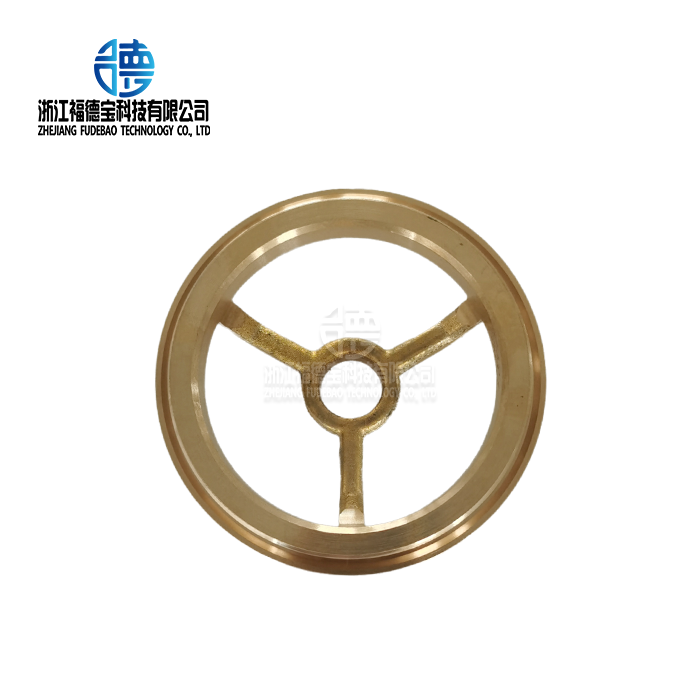
_1756348623524.webp "Turbine compressor housing")
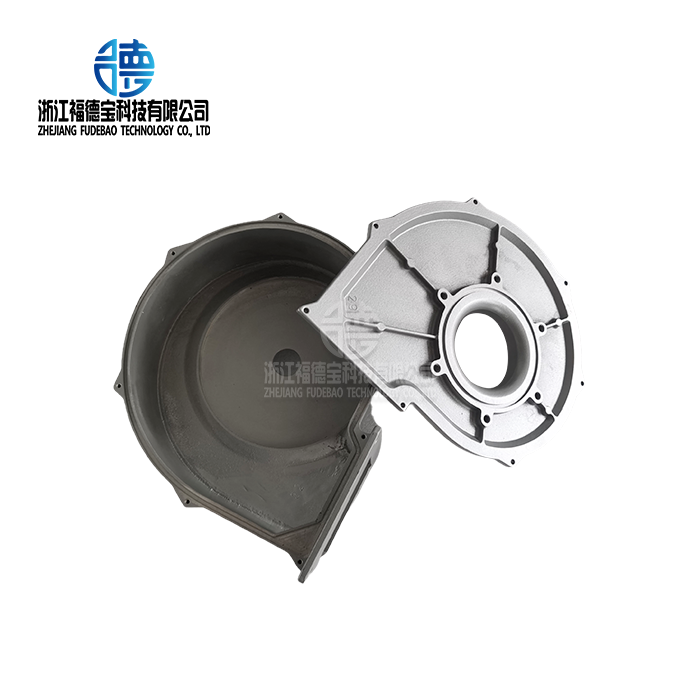
_1756348300182.webp "Aluminum die-cast housing")
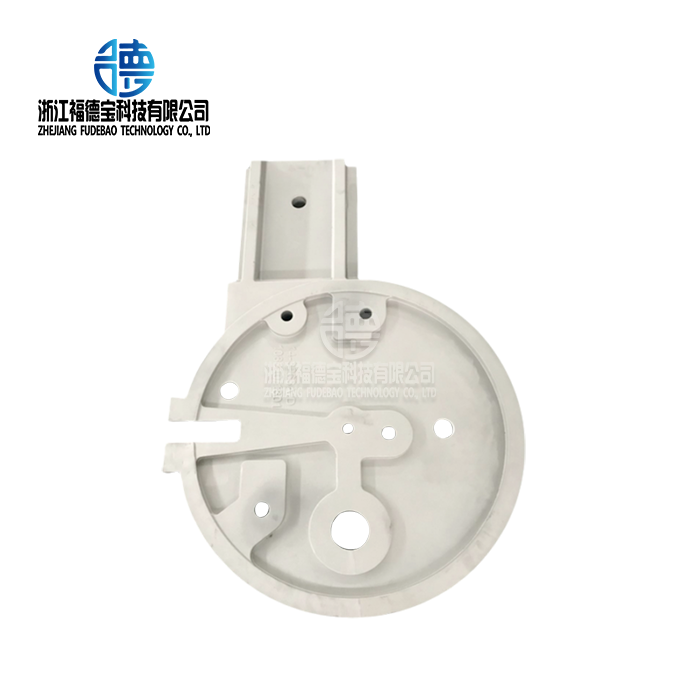
_1756346421748.webp "Aluminum casting telescopic bracket Parts")