
How to Choose a Copper Casting Manufacturer for Pump Components
2026-11-05
To choose a Copper casting manufacturer for pump components, start with your own requirements: alloy, fluid, pressure, and tolerance. Then confirm the supplier offers the right casting method, in-house CNC machining, material testing, and clear traceability. Compare quotes by total cost, including tooling, machining, freight, and scrap risk, not by unit price alone. Finally, approve first articles only after chemistry, dimensions, and leak checks pass. I wrote this guide for engineers, buyers, OEMs, and distributors who want fewer surprises, fewer leaks, and steadier deliveries from the first sample through repeat orders.
Pump parts work under constant wear, heat, and fluid pressure. Copper alloys offer corrosion resistance, thermal conductivity, and good bearing behavior, but only when the alloy and casting process match the duty. A supplier chosen on price alone can deliver porosity, leakage, unstable dimensions, or late shipments. The sections below show how I would screen a copper foundry step by step.
Start With Your Pump Requirements and Casting Method
You are the first person in the room who can help us choose a good source. It's easier to compare things once the needs are clear and the process fits them.
Define Your Pump Component Requirements Before Comparing Manufacturers
I write down what the part does and where it goes before I ask for a quote. We need to use different alloys, make them in different ways, and check them in different ways for each type of bearing housing, wear ring, bushing, valve body, and impeller. It is possible to talk about batch numbers, demand per year, the tool, and both 2D and 3D CAD files. What kind of fluid is being used, how hot or cold it is, how fast the blades are turning, and does it need to cavitate or abrade? One thing that is not the same is cleaning clean water that you can drink with metals. Do not mark cast surfaces that are not important the same way you mark holes and sealing faces that are important. The split lets the foundry set fair limits, draft angles, and allowances during the design review phase, so they don't have to guess.
Compare Copper Casting Methods for Pump Components
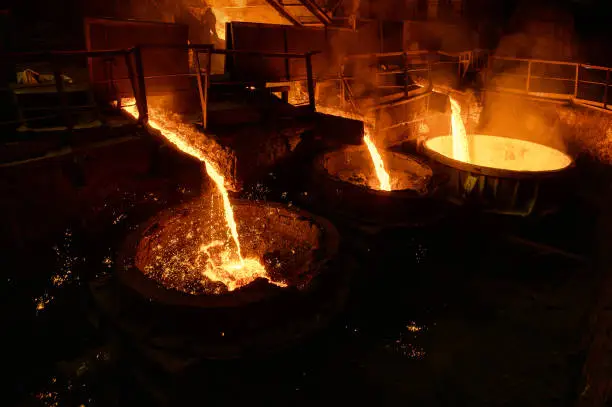
A professional Copper casting manufacturer should select the most suitable casting process based on each component's geometry, dimensions, material requirements, and production volume. Different copper alloy components require different manufacturing methods to achieve the desired quality and cost efficiency. For example, sand casting is suitable for manufacturing valve bodies and other components with complex internal cavities that require cores, accommodating both large and small parts. Investment casting is often preferred for smaller components with intricate geometries and fine details because it can achieve good dimensional accuracy and surface quality. Centrifugal casting is another option for producing dense, relatively uniform cylindrical components, such as bushings, sleeves, and wear rings, by using centrifugal force during solidification. Gravity casting and permanent mold casting can provide repeatable production results for suitable component designs, while continuous casting is commonly used to produce standard copper alloy shapes for subsequent large-scale machining. An experienced Copper casting manufacturer should explain the advantages, limitations, and production costs of each method rather than recommending a process simply because it is the only one available in its workshop. When evaluating a Copper casting manufacturer, buyers should compare tooling investment, material utilization, machining requirements, dimensional consistency, and production efficiency before making a decision. ASTM B584 is also a useful reference specification for copper alloy sand castings in the United States, although the applicable alloy grade and product requirements should always be confirmed. Choosing a capable Copper casting manufacturer with multiple casting options helps buyers achieve a better balance between component performance, manufacturing quality, and overall production costs.
Set Quality, Tolerance, and Surface Finish Requirements
Leave the measurements for the part that hasn't been finished off of your drawing. Instead, put them on a separate line. It depends on how the part was cast, its size, and the alloy that was used to decide what kind of tolerance is acceptable. Make sure that every part does its job. Most of the time, it's important to keep a close eye on mounting faces, bearing fits, shaft bores, and propeller balance zones. The outside, on the other hand, doesn't need it very often. Tolerances on copper casting machines are usually between 1.5 mm and 6 mm, but this can change for each size and method. This number should be set by the person who prints for you. Use Ra numbers where they make sense to set the surface finish by area. Next, find out what the foundry does about flaws like cracks, holes, swelling, inclusions, and hot ripping. There are times when hydrogen gas pores makes copper melts not work right. To fix this, use nitrogen or argon to get rid of the gas and set gates that help the solidification go in the right direction.
Judge Capability, Compare Suppliers, and Count the Real Cost
Once you know what they are, you can compare how well each foundry meets your needs. Before I look at how much it will cost all together, I check to see how skilled the experts are.
Evaluate a Manufacturer's Technical Capability and Engineering Support
A good foundry gives you more than just furnace space. They can also help you with your engineering. No matter if the metal is aluminum brass, lead-based, or lead-free, make sure you know how to work with it. Discover what the team's ASTM, EN, DIN, or customer standards are. Also, find out what chemicals they use, how they test, how they keep track of materials, and what tests they do. ASTM B584 and ASTM B62 are two standards that are often used in the US. They both talk about composition bronze castings. After that, check out the design-for-casting support. It shows the wall thickness, the core design, the gating, the risering, the shrinkage, and the machining allowances. Less people have to touch the part, which speeds up development, when CNC cutting, testing, reverse engineering, and casting modeling are all done in-house. Lastly, make sure the service provider can handle both small amounts for tests and large amounts for output without losing control of the process. They should be on your short list if they can answer these questions with examples from real life.
Compare Suppliers Using a Practical Procurement Scorecard
With a weighted score, it's simple to see the changes. Each source is given a score based on how well they understand alloys, casting methods, quality systems, CNC machining, tool support, capacity, cost, wait time, communication, selling experience, and service after the sale. Things that put your pump at the most risk, like sealing-surface tolerance or leak-tight integrity, should be given more weight. While they are being poured and when they carry electricity, copper metal and brass should be put in different groups. The Reduction of Lead in Drinking Water Act says that parts of drinkable water in the US can't have more than 0.25 percent lead by weight. These parts must also be safe, according to NSF/ANSI 61. Customer service, shipping, protecting your intellectual property, certifications, and the total landed cost are all things that you should use to rate providers in China, Europe, and the US.
Analyze Copper Casting Cost, MOQ, and Lead Time
How much does one unit cost? It's not even close to how much it costs all together. Add up how much the alloy, the tools, the cores, the melting, the finishing, the heat treatment, the CNC machining, the inspection, the packing, the shipping, the taxes, the repairs, and the scrap cost. How long should the tools last? How much does it cost to change them? Find out who owns the tools and who plays with and stores them. The MOQ should be right for the stage of the project. You need to be able to change things quickly for prototypes. For regular programs, you should plan how many will happen and make sure there is enough space. As part of your written plan, you should ask engineers to look it over, make tools, test samples, get approval, make the product, and send it. Find out how long it takes to get samples and how long it takes to get something again. When you have a list of all the lines in a quote, you can say a lot more.
Verify the Supplier and Follow a Clear Approval Process
No amount of paper or signs will help you get anywhere. Your plan will be safe if you have an easy-to-record process and proof.
Verify Supplier Track Record Before Placing a Purchase Order
Transparency is essential when evaluating a Copper casting manufacturer. Buyers should request genuine examples of similar copper castings previously supplied for power plants, marine equipment, electrical systems, and other industrial applications. These reference projects should include details such as alloy grades, component dimensions, pressure ratings, dimensional tolerances, and production history. When visiting a Copper casting manufacturer, buyers can inspect the entire manufacturing workflow, including raw material storage, melting, casting, finishing, machining, quality inspection, packaging, and shipping. It is also important to examine how molds and cores are designed and manufactured, as these processes directly influence casting accuracy and product consistency. Another effective way to evaluate a Copper casting manufacturer is to submit a complete technical package and assess the quality and clarity of its response. A capable supplier should carefully review the drawings, identify potential manufacturing challenges, and ask detailed technical questions before confirming the production plan. These discussions demonstrate the supplier's understanding of process control and engineering requirements. Before placing an order, buyers should also establish clear agreements covering intellectual property ownership, confidentiality, and data protection. These terms should protect important assets such as product drawings, tooling, CAD files, inspection records, and manufacturing process documentation. Working with a trustworthy Copper casting manufacturer that maintains transparent production procedures and clear confidentiality agreements helps reduce procurement risks and protect long-term business interests. Ultimately, choosing the right Copper casting manufacturer requires evaluating not only production capabilities but also technical communication, manufacturing transparency, and professional responsibility.
Follow a Step-by-Step Selection and Approval Process
There is less technical and material risk when there is a well-organized plan. 1. Make a list of the manufacturers who can meet your needs for the type of alloy, the method, the tolerance, the licenses, the capacity, and the inspection. Step 2: Send a full RFQ that includes plans, CAD data, material specs, numbers, quality standards, packing information, when and where the goods will be shipped, and quality standards. Step 3: Ask for different line items for tests, samples, production, tools, shipping, and machinery. Step 4: Don't accept the first things until you've checked their chemistry, shape, size, quality of the surface, and internal stability. If necessary, you can also test for leaks or pressure. In ANSI/HI 14.6 it says that you can test your pump for hydraulic performance after you have built it. 5. After the launch, keep track of sales, bugs, how they were fixed, and any changes in costs.
Red Flags to Avoid When Choosing a Copper Casting Supplier
There are some red flags that make you think. If a supplier won't explain why they chose a certain alloy or process, agrees to all of your needs without asking a single question, or sends off-brand photos instead of production records, you should be very wary. Watch out for things that hurt quality, like not keeping records, inspection reports that aren't clear, testing tools that aren't up to par, making the same small fixes over and over, and not having a written process for nonconformance. When it comes to business, you should be careful of prices that are too low and don't fully explain what they don't cover, wait times that are too short, refusals to share certifications, and informal buying terms. It's clear to a reliable partner what it can and can't do and who is in charge of things like guaranty, rework, and correction action. These questions are free for everyone to answer, and they will teach you a lot.
Make the Final Decision and Match It to Fudebao Technology Capabilities
The choice is made based on how well it fits after these checks are done. I do the following to meet the needs of both the process and the seller:
Match the Process to the Pump Component
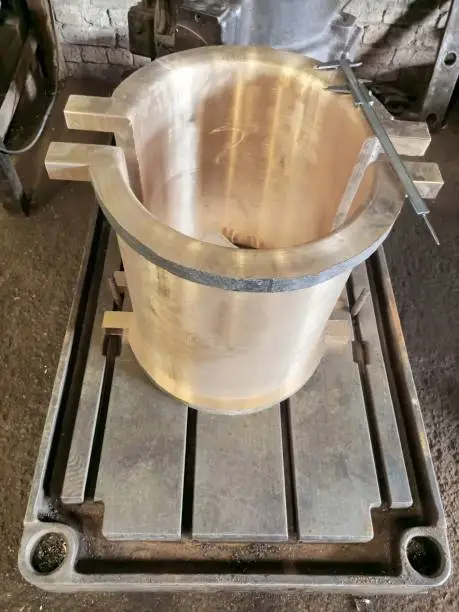
The best Copper casting manufacturer is one whose production capabilities match the requirements of your project. Sand casting is suitable for producing large, complex housings and other heavy components, while investment casting can create intricate shapes with tighter dimensional tolerances. Centrifugal casting is commonly used to manufacture wear rings, bushings, and sleeves. Continuous casting, on the other hand, is ideal for producing consistent metal sections that can later be cut to the required lengths and dimensions. An experienced Copper casting manufacturer can also combine casting with CNC machining, allowing the same production team to manage a component from the initial casting blank through to the finished part. This integrated approach improves dimensional control, maintains consistent quality, and makes material traceability easier. Before placing an order, buyers should confirm the minimum order quantity (MOQ), manufacturing capabilities, delivery schedule, packaging requirements, warranty terms, and order-tracking options for the specified copper alloy. A reliable Copper casting manufacturer should provide clear answers to these questions before production begins, helping buyers identify potential issues and avoid unexpected costs or delays. It is always better to clarify technical and commercial requirements in advance rather than wait until an order has been placed. Choosing a qualified Copper casting manufacturer with the right processes, machining capabilities, and transparent communication can make procurement more predictable and improve the consistency of the final products.
Fudebao Technology Production Capabilities
What Zhejiang Fudebao Technology Co., Ltd. does to make things is mostly machine and cast things out of stainless steel, copper alloy, and aluminum alloy. Businesses from all over the world, including those that make cars, tools, airplanes, boats, and industrial equipment, buy from us. We also want to make the best metal products in China. This is where we make things. CNC lathes, high-speed machining centers, low pressure casting machines, and die casting machines are some of the things that it has. This kind of machinery can heat, cast, finish, and do other things with the surface. Because of their high level of accuracy (up to ±0.05 mm), these services can give the whole thing in one go, from the blank to the finished item. So that pump parts can be cast and made to fit, the whole process range has to stay in one place.
What This Means for Your Pump Project
Here are the main reasons why you should order pump parts:
- Single-source workflow: It is possible to melt, cast, finish, and treat the surface all in the same place and at the same time. Grinding is then done right there on the spot. Don't send parts from one foundry to another for the mounting surfaces, sealing faces, and bores. Instead, work with the same team. It's now easier to talk to each other and the sample and approval steps go faster.
- Tight machining control: A high-speed cutting center or a CNC lathe can get an accuracy of up to ±0.05 mm. Things like shaft bores, bearing fits, and sealing surfaces are very important to this. They can make or break a pump. Tell us which features are most important, and we'll get the machine ready to go right away.
- Early drawing review: We go over your 2D and 3D CAD files with you and talk about the metal and casting choices you have before we start making things. You can save a lot of money when the first models come in if you find out now how thick the walls can be, how much they can shrink, and how much they can be cut. After that, the tools will match the last plan.
When different companies do the casting and cutting, there are often leaks and delays in the production process. These perks make that better.
Conclusion
You need to find the right place to find a Copper casting manufacturer for pump parts. First, make sure you know exactly what metal you need, how it will be used, and the important sizes of it. First, choose a casting method that works for the shape and size. These can be sand, investment, centrifugal, or permanent mold. Some foundries can do more than just pour metal. They can help with planning, test materials, keep records, and do CNC machining right there on the spot. The best way to compare is not by unit price. It is better to have a weighted rating and a picture of the total cost that includes freight, scrap, tooling, and other costs. There are fewer chances of holes, leaks, or late deliveries if there is factory proof, a staged RFQ, first-article checks, and close attention to warning signs. Choose a supplier whose process, quality controls, and range of machining are all good for the whole pump part.
FAQ
Which casting method works best for copper pump parts?
It makes a difference. Making dense bushings and sleeves with centrifugal casting is one way to do it. Making complex housings and inner cores with sand casting is another. Tell the service provider what you need and what you want to do. Then they can give you a better, cheaper way to do it.
Can copper castings meet lead-free requirements?
If you want to make metals made of bismuth, bronze, selenium, and brass, you can. But they are safer and can meet standards for potable water like NSF/ANSI 61. Call your source to make sure you have the right metal and test records.
How do I reduce cost without weakening performance?
Look at the whole price. Only use tight standards on important parts. As soon as possible, agree on what the limits of the machining are. For both CNC milling and casting, use the same source. It's less likely that you'll have to restart work or throw things away without changing how much is needed.
How do I evaluate a China-based manufacturer for an OEM project?
As you would with any other service provider, check their licenses, experience exporting, sample approval, paperwork, and the total cost to land. After you send the team a full technical package, see how quickly and clearly they answer.
Contact Fudebao Technology, Your Copper Casting Manufacturer for Pump Components
Want to find a business that does both CNC cutting and makes and sells copper castings? Fudebao Technology can be reached at hank.shen@fdbcasting.com with your drawings, a list of the alloys you need, the amount you need each year, and any tolerances. We will talk about different ways to do things and look at your pump part. We will also help you plan tests and production. Check out fdbcasting.com to find out more about how we can cast and precisely machine copper alloy, aluminum alloy, and stainless steel.
References
1. ASTM International. Standard Specification for Copper Alloy Sand Castings for General Applications (ASTM B584), 2014.
2. ASTM International. Standard Specification for Composition Bronze or Ounce Metal Castings (ASTM B62), 2017.
3. NSF International. NSF/ANSI/CAN 61: Drinking Water System Components – Health Effects, 2023.
4. U.S. Congress. Reduction of Lead in Drinking Water Act, 2011.
5. ASM International. ASM Handbook, Volume 15: Casting, 2008.
6. Hydraulic Institute. ANSI/HI 14.6 Rotodynamic Pumps for Hydraulic Performance Acceptance Tests, 2016.



YOU MAY LIKE