
CNC Manufacturer for Aerospace Brackets and Complex Metal Components
2026-11-04
Standard machining isn't enough for aerospace brackets and other complicated metal parts. They need a CNC manufacturer with the accuracy, certification, and knowledge of the materials to make parts that will work consistently in harsh conditions. We are experts at CNC machining for aerospace applications at Fudebao Technology. We can hold tolerances as tight as ±0.005mm and make everything from structural brackets in Ti-6Al-4V to Inconel manifolds. Our team is ready to meet the needs of serious aerospace procurement, whether you need a First Article Inspection report or production runs that meet AS9100D standards.
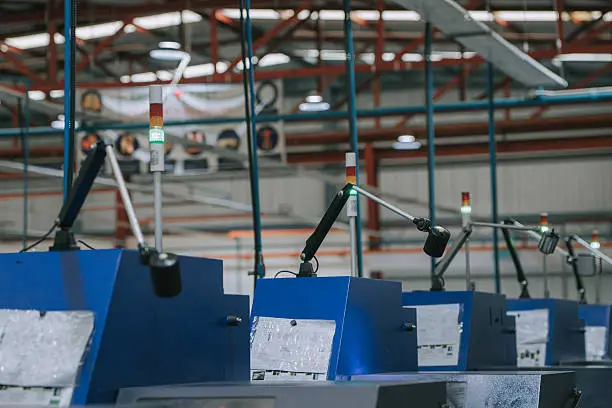
Understanding CNC Manufacturing for Aerospace Components
What a CNC Manufacturer Actually Does
A CNC manufacturer uses computers to run tools that cut away material from a solid block. This is known as subtractive manufacturing. For aerospace work, this means setting up exact tool paths to make brackets, housings, and structural parts that are an exact match for the CAD models, down to the micron level. Because the machines don't move between parts, aircraft engineers prefer CNC fabrication to hand-made work for results that can be repeated and tracked.
Core Machining Processes for Aerospace Parts
Usually, aerospace parts go through more than one stage of cutting. Milling gets rid of extra material and makes features like pockets and slots. Turning works with cylinder shapes. Grinding can get surfaces as smooth as Ra 0.4 μm or even smoother. Five-axis machining can do undercuts and compound angles in a single setup. This cuts down on moving mistakes that could affect the tolerances of parts that are used in airplanes.
Why Aerospace-Grade Materials Require Specialized Equipment
Titanium Ti-6Al-4V and Inconel 718 are known for being very hard to machine. Titanium doesn't conduct heat well, so heat builds up at the tool tip, which speeds up wear. Inconel gets harder very quickly. To properly machine these alloys, you need high-pressure coolant systems, carbide tools, and slower feed rates. These are the things that set serious aerospace CNC suppliers apart from general job shops.
Key Considerations When Choosing a CNC Manufacturer for Aerospace Brackets
Certifications That Actually Matter
Aerospace Brackets Certifications That Really Matter: AS9100D is the basic quality management standard for defense, space, and flight. NADCAP certification covers certain steps, such as heat treatment and chemical processing. Not just a logo on a website isn't enough to judge a machining provider. You should also ask for their current certificates and scope of approval. For aerospace supply chains, ISO 9001:2015 is needed but not enough.
Local vs. International Suppliers: A Realistic Comparison
Choosing the right CNC manufacturer requires balancing production costs, delivery speed, technical expertise, and quality assurance. Domestic suppliers often provide faster communication and shorter shipping times, which can be valuable for urgent projects, prototype development, and frequent design changes. However, the per-part cost offered by a local CNC manufacturer may be higher because of differences in labor costs, operating expenses, and production scale. For medium and large orders, an international CNC manufacturer may offer more competitive pricing without compromising material traceability or compliance, provided the supplier has effective quality management systems and documented inspection procedures. This can be particularly important for aerospace projects, where strict requirements govern material selection, dimensional accuracy, and production documentation. When evaluating a CNC manufacturer for aerospace components, procurement teams should look beyond geographic location and quoted prices. They should examine the supplier's experience with aerospace-grade materials, complex geometries, tight tolerances, and applicable industry standards. A qualified CNC manufacturer should also provide material certifications, inspection reports, process documentation, and clear evidence of its ability to meet customer specifications. Comparing these capabilities helps buyers determine whether a supplier can maintain consistent quality across prototypes and repeat production orders. Ultimately, the most suitable CNC manufacturer is one that combines technical competence, transparent quality controls, reliable communication, and a cost structure aligned with the project's requirements. By conducting a thorough supplier assessment, aerospace buyers can make informed sourcing decisions and establish a dependable long-term manufacturing partnership.
Prototyping and Custom Tooling Flexibility
Designs for airplanes change. It is much more valuable to work with a supplier that can quickly make prototype brackets, incorporate engineering change notices, and adapt fixturing without having to wait a long time. Before a full production run starts, First Article Inspection (FAI) according to AS9102 standards should be standard procedure, not an extra that can be chosen.
The CNC Manufacturing Process for Aerospace Brackets and Complex Metal Parts
From CAD/CAM to First Cut
Get a CAD file from the customer as the first step. That shape is turned into tool paths that machines can read by CAM software. These paths are based on the properties of the material and the tolerances that need to be met. It is then tested with OES or XRF to make sure the billet is really Ti-6Al-4V Grade 5 and not a different alloy. Some kinds of quality slips have cost a lot of money in the field. This step ends it.
Multi-Phase Machining and In-Process Inspection
Space brackets that are very complicated don't usually come off the machine all at once. In roughing, extra material is taken away from the part so that it is getting close to its final size. Finally, finished cuts are made to make the tolerance band that is needed. A Coordinate Measuring Machine (CMM) is used to make sure that geometric sizes and tolerances, like flatness, concentricity, and perpendicularity, stay within the limits between stages. Once they do, the next stage is started.
A Real-World Challenge: Thin-Wall Titanium Brackets
When making airplane mounts, one problem that comes up a lot is how to keep the wall thickness below 1.5 mm in titanium without making it chatter or warp. To fix the issue, special stops, a smaller cut depth along the axis, and high-frequency spindle settings are used. The last step in checking is to use Go/No-Go gauges on all of the bolt holes for thread gaging. This is done before the part is treated on the outside and its final dimensions are reported.
Latest Trends and Technological Innovations in CNC Manufacturing for Aerospace
Multi-Axis Machining Combined with Robotics
When making airplane mounts, one problem that comes up a lot is how to keep the wall thickness below 1.5 mm in titanium without making it chatter or warp. To fix the issue, special stops, a smaller cut depth along the axis, and high-frequency spindle settings are used. The last step in checking is to use Go/No-Go gauges on all of the bolt holes for thread gaging. This is done before the part is treated on the outside and its final dimensions are reported.
AI-Assisted Process Monitoring and Digital Twins
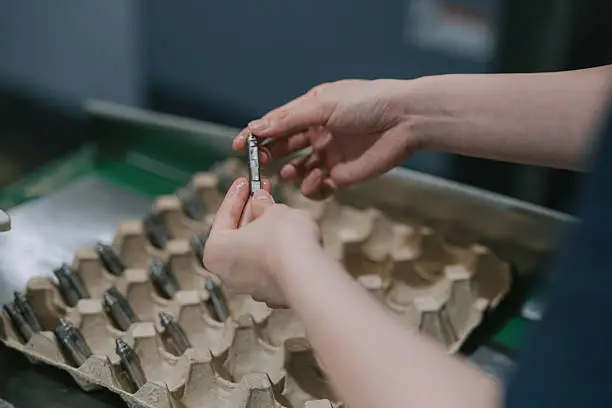
A forward-thinking CNC manufacturer can use real-time machine monitoring and IoT sensors to detect tool wear before it causes dimensional deviations or pushes components outside specified tolerances. By continuously tracking machine conditions, a CNC manufacturer can identify performance changes early, reduce unexpected downtime, and maintain consistent production quality. AI algorithms can analyze spindle load, vibration, and cutting-force data to flag anomalies during machining, allowing operators to investigate potential problems before defective parts are produced. For complex components made from expensive materials such as titanium, a capable CNC manufacturer can also use digital twin technology to simulate machining operations before physical production begins. These virtual simulations allow engineers to evaluate fixturing arrangements, toolpaths, cutting parameters, and potential collision risks without wasting valuable raw material. Integrating these technologies helps a CNC manufacturer optimize machining strategies, reduce scrap rates, and shorten development timelines for new component programs. In addition, simulation results and monitoring data can support process validation and improve consistency between prototype and production stages. Buyers evaluating a CNC manufacturer should therefore consider not only machine specifications but also the supplier's digital capabilities, data analysis methods, and approach to continuous process improvement. When implemented effectively, smart manufacturing technologies enable a CNC manufacturer to improve resource utilization, strengthen quality control, and respond more efficiently to demanding customer requirements. By combining experienced engineers with intelligent monitoring and virtual process validation, a CNC manufacturer can deliver more predictable results while controlling manufacturing costs and production lead times.
Hybrid Additive-Subtractive Manufacturing
Some aerospace brackets now start as near-net-shape builds from metal powder deposition, then receive precision CNC finishing. This approach reduces material removal from expensive titanium billets by up to 40%, lowering cost and machining time. The final CNC step still achieves the tight tolerances and surface finishes aerospace requires — it simply starts from a smarter blank.
Procurement Insights: Ordering from a CNC Manufacturer for Aerospace Components
Quoting, Pricing, and Order Structure
If you want to get a good quote on aerospace CNC parts, you need a full set of drawings with GD&T callouts, material requirements, and surface finish needs. As the cost of materials, the time it takes to machine, and how hard it is to set up go up, so does the price. Most of the time, you can get better prices per part when you buy more of something. Before you place an order, you should always know the minimum order quantity (MOQ). As an example, some aircraft machining providers base MOQs on setup amortization. This means that the cost of small test orders is different from the cost of production runs.
Shipping, Support, and Long-Term Partnership Terms
Controlling exports, following rules for packing to avoid corrosion, and keeping track of paperwork are all parts of how airplane parts are used around the world. When you buy from a trustworthy CNC cutting company, each package comes with proof that it has been approved. People who buy things from other countries often agree to terms of payment that are either net-30 or net-60. This means that the company has to pay for things even after the sale. When a deal is long-term or worth a lot of money, milestone payments are frequent.
Contract Essentials for Risk Mitigation
Intellectual property is protected by a good purchase agreement, which also controls changes to models, spells out delivery and performance terms, and sets due dates for corrective actions. Over and over again, aerospace projects can save money on costs by using blanket purchase orders with planned releases. These orders also keep the supply chain stable. These simple contract terms help protect both parties and make the partnership last for a long time.
Conclusion
For complex metal components and aerospace brackets, choosing a qualified CNC manufacturer with approved quality management systems, controlled material-handling procedures, and comprehensive inspection capabilities is essential. A reliable CNC manufacturer should be able to provide traceable material documentation, dimensional inspection reports, and verification records to support every shipment. Working with an experienced machining partner helps reduce project risks, maintain consistent component quality, and keep the supply chain operating efficiently. As a capable CNC manufacturer, Fudebao Technology can support demanding projects involving 5-axis steel frames, precision-machined Inconel housings, and components inspected using Coordinate Measuring Machines (CMMs). These capabilities allow the company to address complex geometries, tight dimensional tolerances, and demanding material requirements across different aerospace applications. When evaluating a CNC manufacturer, procurement teams should also consider prototype development support, production scalability, process documentation, and the ability to maintain repeatable quality during larger manufacturing runs. From first-article inspection to batch production, a dependable CNC manufacturer should apply consistent quality controls and communicate clearly about specifications, inspection results, and delivery schedules. Fudebao Technology combines machining expertise with structured quality assurance to support buyers seeking reliable manufacturing solutions for aerospace components. By partnering with a technically capable CNC manufacturer, aerospace procurement teams can improve production planning, strengthen traceability, and reduce the likelihood of costly rework or shipment delays. Choosing the right CNC manufacturer ultimately helps ensure that complex components meet engineering requirements and perform reliably in their intended applications.
FAQ
Does your facility hold AS9100D certification?
Yes, you need to be approved by AS9100D in order to make parts for spaceships. Anyone you trust that does aircraft machining should be able to show you their up-to-date, verifiable certifications for the processes you need, like CNC milling, turning, and checking.
What is a typical lead time for complex aerospace brackets?
Lead times change based on the order's form, size, and material. It usually takes two to four weeks to make a prototype bracket out of titanium or Inconel, which includes FAI. Production runs with well-known tools and fittings can ship in 3 to 6 weeks, based on the size of the batch and any finishing or anodizing that needs to be done afterward.
Can you machine Inconel and titanium to aerospace tolerances?
Yes. To get tolerances of ±0.01mm or less, both materials are often machined with carbide tools, high-pressure coolant, and in-process checking that has been verified by a CMM. Tests like OES or XRF are done on the material before it is cut.
Do you provide First Article Inspection reports?
It is always done before a production run starts, as required by AS9102. The report lists all of the parts' sizes, material certifications, and special process records for the first part that was approved.
Partner with Fudebao Technology for Precision Aerospace Machining
Fudebao Technology uses AS9100D-aligned CNC machining to make airplane brackets and other difficult metal parts. They know how to work with aircraft metals made of titanium, Inconel, and aluminum. When it comes to aerospace CNC machining, we help procurement teams from the prototype stage all the way through production. To get a price and talk to our engineering team right away, please email your drawings to hank.shen@fdbcasting.com or visit fdbcasting.com.
References
1. SAE International. AS9100D: Quality Management Systems — Requirements for Aviation, Space, and Defense Organizations. 2016.
2. American Society of Mechanical Engineers. Dimensioning and Tolerancing: ASME Y14.5. 2018.
3. National Aerospace and Defense Contractors Accreditation Program (NADCAP). NADCAP Audit Criteria for Special Processes. 2022.
4. International Aerospace Quality Group. AS9102B: Aerospace First Article Inspection Requirement. 2014.
5. Kalpakjian, S., & Schmid, S. Manufacturing Engineering and Technology. 7th ed. Pearson Education. 2014.
6. Ezugwu, E. O., Wang, Z. M., & Machado, A. R. "The Machinability of Nickel-Based Alloys: A Review." Journal of Materials Processing Technology. 1999.



YOU MAY LIKE