
Copper Processing for Precision Pump Parts and Mechanical Fittings
2026-11-05
Copper processing for precision pump parts and mechanical fittings means turning refined copper or a copper alloy into a finished component. The steps are alloy selection, casting or forging, CNC machining, finishing, and inspection. Brass, bronze, and copper-nickel each suit different fluids, pressures, and wear conditions. Good results depend on correct material chemistry, controlled casting, stable machining, and documented testing. In this article, I explain the chain from ore to part, compare methods and alloys, and share how I would check a supplier before placing an order.
Copper Processing Flowchart: From Copper Ore to Precision Pump Parts
Every pump impeller or fitting has a long history behind it. Here is how that history unfolds.
The Upstream Route from Mine to Refined Copper
They break up and grind up the rock, then smelt or drain it, concentrate it, and make it better. Usually, sulfide ores are broken down by burning them, adding air, and then refining them with electricity. Oxide ores are often treated with electrowinning, washing, and liquid extraction. It is called Extractive Metallurgy of Copper and was written by Schlesinger and others. It goes into great depth about both ways to get copper. This chain doesn't show up very often for people who buy things, but it changes what they buy. Things like iron, arsenic, and sulfur can make a metal not work the way it should. Finally, they can change how well the casting works, how simple it is to make, and how well it doesn't rust.
Flotation, Leaching, and Refining Compared
To separate copper sulfide minerals from waste rock, flotation uses chemicals, air, and froth control. That is, the size of the grind and the chemicals that are in the pulp are important. Copper can be taken out of oxide ore or low-grade ore with acid. The acid is moved around in piles or tanks. To get the metal back, liquid extraction and electrowinning are used after that. Acids that come from water are used instead of heat in hydrometallurgy. You need to know the type of rock, its grade, any impurities, the water and power sources that are nearby, and any environmental rules. This is not the way to go if you want to buy tools. Still, after the metal is done, you should ask for material papers that show how it was made.
From Refined Copper to Castings, Billets, and Bars
Copper can be refined into cathodes, rods, billets, tubes, bars, and castings through different Copper processing methods. Once refined, copper can be combined with zinc, aluminum, nickel, and other metals to produce alloys such as brass, bronze, and copper-nickel. These materials are widely used in Copper processing for manufacturing components with different mechanical and chemical properties. Complex shapes that are difficult to machine but suitable for pouring include impellers and pump bodies, while joints, fittings, and bushings are commonly produced for various industrial applications. Bars and billets also serve as essential raw materials for further manufacturing. According to the Copper Development Association, copper can be recycled without losing its original properties, allowing scrap metal to be recovered and reused in alloy production. This makes efficient Copper processing important for improving material utilization and reducing waste. Throughout every production stage, manufacturers must carefully monitor the chemical composition and temperature of the furnace to maintain consistent quality and ensure that the finished copper products meet the required specifications.
Copper Processing Methods for Pump Parts and Mechanical Fittings
What is the right way to do something based on the shape, size, load, and use of the part? This is how I set up the main choices.
Casting and Forging Options
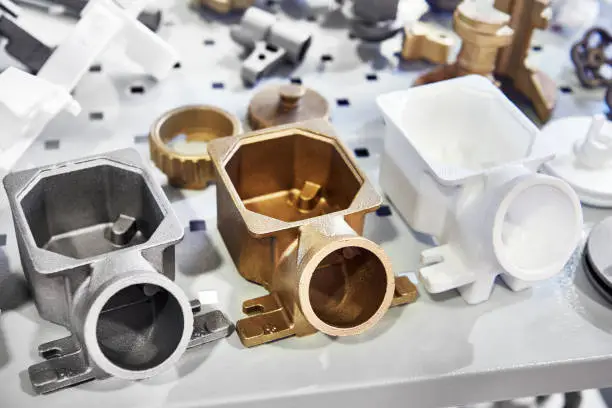
It is possible to make big or complicated shapes out of sand for things like valve bodies and pump housings. That's what ASTM B584 is for: general-use sand molds made of copper alloys. Investment casting is a better way to get more accurate shapes in small impellers. Center-less casting is used to make parts that are dense and round, like sleeves and bushings. For bar stock, things are cast over and over again. When you forge and extrude, you make dense, strong stock. Parts that need to hold a lot of weight or last a long time are made this way. If a solid part has holes in it, it is better to cast it than to cut it out and waste material. When strength is more important than shape, pick cast or bar stock.
CNC Machining for Tight Tolerances
Molds and bars are CNC cut, drilled, fitted, broached, and ground to make them fit the OEM plan. Up to ±0.05mm of accuracy can be kept by these fast machines and CNC lathes. Copper isn't always simple to work with. Because the heat moves quickly, the piece being cut gets bigger as it is being cut. Soft grades can also leave marks like lines or smudges. It is helpful to have tools that are well-built, clamp securely, and have a lot of power over chips. Free-cutting brass C36000 gets a score of 100 because it is so simple to work with. It's used to make a lot of valves and fittings because of this.
Finishing and Surface Treatment
If you make a part, it's ready to be put together. Cutting away burrs gets rid of any sharp edges that could damage seals or send chips into a pump. Clean and polish things to get rid of cutting oil and fines before putting them together. This will make them look better and work better. Sometimes you need to plate or cover something to make it stronger against rust or wear. Faces and threads that need to be sealed need extra care because even small flaws can let air escape. People who want to buy should write on the drawing what kind of surface finish and cleanliness they want. Notes that aren't clear make work go over time.
Choosing the Right Copper Alloy for Pump Parts and Mechanical Fittings
Pick the right metal for the job. It changes performance and service life more than any other choice.
Start with the Fluid and the Duty
Start by describing the type of fluid, its operating temperature, pressure, and flow rate. Then, explain the expected corrosion and wear conditions, along with the estimated service life of the component. These factors are essential when selecting suitable materials and determining the appropriate Copper processing methods. High-purity copper has an electrical conductivity of approximately 58 MS/m, equivalent to 100% IACS, and a thermal conductivity of around 390 W/(m·K). These properties make copper particularly valuable in Copper processing applications involving electrical conductivity and heat transfer. Although pure copper is relatively soft and has limited mechanical strength, it performs well in electrical wires and heat exchangers. For clean-water pumps, its properties may be suitable depending on the operating conditions, while pumps handling abrasive slurry or salt water may require more corrosion-resistant and wear-resistant alloys. Understanding these differences helps manufacturers select the right materials and optimize Copper processing for specific industrial requirements. A clear job sheet should include all relevant technical specifications, making it easier for suppliers to prepare accurate quotations quickly. This approach is equally important whether the component is intended for a compressor, conveyor belt, or electrical enclosure, as well as for other industrial products requiring reliable Copper processing and consistent manufacturing quality.
Brass and Bronze for Valves, Impellers, and Bushings
Brass is good for making valves, fittings, and joints because it is easy to work with. The US should pay more attention to how much lead is in the air. As per the Reduction of Lead in Drinking Water Act of 2011, there can be no more than 0.25% lead on wet surfaces of things that are supposed to be drunk. NSF/ANSI/CAN 61 tells different parts of the system what they need to do to keep people healthy. Wear and rust are important in blades, bushings, wear rings, and valve seats. This is where bronze works best. If you heat aluminum bronzes, they can hit over 800 MPa of tensile strength. Steels that are soft, on the other hand, are about 220 MPa strong.
Copper-Nickel and Specialized Alloys
Copper-nickel grades like C70600 (90/10) and C71500 (70/30) are often used in heat exchangers, desalination, and seawater as long as they don't rust or grow biofouling. Titanium copper (UNS C19900) can be a spring metal, and it can withstand up to 1400 MPa. There will be too many springs and connectors to fit all the pump bodies. You need to be more careful when working with some metals, and some of them wear out tools more quickly. When you look at each candidate, you should ask about their chemical makeup, how hard they are, how stressed they are, the right standard, and how much they will cost altogether.
Copper Processing Equipment, Cost, and Quality Control
The tools, money, and people who work on a project all affect how well it turns out.
Equipment and Plant Types
There are cells that float, thickeners, filters, wash tanks, and cells that use power to get minerals. One type of company that makes parts has furnaces, blast furnaces, casting lines, machining centers, and checking tools. It is important to think about the equipment's output, wear, rust exposure, automation, and how easy it is to keep up. Modular plants are cheaper to set up and easier to switch out. But big joint plants can get a better handle on the process when it comes to unit prices. At Fudebao Technology, we have CNC lathes, low-pressure casting machines, die casting machines, and high-speed machining centers.
Cost Drivers and Capacity Planning
I don't write prices, but I can tell you how much it costs to move. Part prices depend on the metal, how heavy it is, the tools used, the amount of scrap, the processing time, the tolerance, the finishing, the testing, and the order number. Mining plants care about the type of ore they find, where it is located, the services they provide, how they protect the environment, and how they deal with their waste. Plan your work hours, breaks, and space for growth to find out how much you can hold. Think about batch size or feed rate. To figure it out, just multiply Copper in Feed by Copper Recovered in Product by 100. Think about both bad and good events instead of relying on just one.
Quality Control and Common Problems
A lot of problems start before the item is even made. Teams pick a process without giving it enough time to work, find bugs, or think about upkeep. When they buy, they only look at price. Care must be taken to deoxidize pure copper so that it doesn't get gas holes in it. This is often done with phosphorus or boron. Different sizes, pores, and burrs can cause leaks and a bad fit. These are reduced when you use clean melt chemistry, controlled casting, the right heat treatment, and stable machining. Before you start making it, make sure you know the grade of metal, the top pressure, and the limitations. Accept the first item before the rest of the order.
How to Select a Supplier and Plan the Right Copper Processing Route
It is cheaper and takes less time to have a clear goal and plan.
Define the Scope and Request Documents
First, decide whether you want to purchase complete components, machined parts, or castings, depending on your production requirements and the intended application. Then, ask suppliers to provide evidence of their manufacturing capabilities and quality standards. For suppliers specializing in Copper processing, relevant documentation may include material certificates, dimensional inspection reports, surface finish data, heat treatment records, and material traceability records. These documents help buyers verify that the manufacturing process meets the required technical specifications. In many cases, automotive and aerospace projects also require PPAP documentation, industry certifications, or specific manufacturing approvals. Make sure to include these requirements in your initial inquiry to avoid unnecessary delays. When comparing Copper processing suppliers, consider lead times, warranty terms, quality control procedures, production capabilities, and total cost of ownership. You should also evaluate whether their Copper processing equipment and technical expertise are suitable for your specific components. A reliable supplier should be able to provide verifiable evidence to support its claims rather than relying on promotional promises. Checking these details before placing an order helps reduce procurement risks and ensures more consistent product quality throughout the Copper processing and manufacturing stages.
A Practical Route from Drawing to Delivery
There should be six steps. At first, talk about the pressure, temperature, life, and any corrosion that could happen with the fluid. Second, choose the metal and method. You can choose from cast bronze, make copper-nickel, machine brass, or cast plus CNC. Third, write the important sizes, tolerances, hardness, finish, tests, and packing on the plan using ASTM, EN, DIN, ISO, or customer standards. Step 4: Make copies of the samples. Fifth, read the material, put some stress on it, and then look over the first piece. Sixth, stop making reports once they fit the picture. If you skip a step, you might make a mistake further down the line.
What Fudebao Technology Brings to the Process
What Zhejiang Fudebao Technology Co., Ltd. does is mostly machine and cast things out of stainless steel, copper alloy, and aluminum alloy. We work with businesses that make cars, boats, tools, and machines for factories. One step is all it takes to melt, cast, finish, and treat the surface at our plant. This way, we can send the whole thing from the blank to the finished part. There was a time when we worked with middlemen, but now we sell foreign names directly, like ESS batteries and HAAS automation tools. People still need to look at our records and samples before they can place large orders with us.
Conclusion
Cutting and shaping are only one aspect of Copper processing for pump parts and mechanical fittings. Step one is to find ore, refine it, and learn about alloy chemistry. Flaws in the metal change how well it casts, how easy it is to work with, and how well it doesn't rust. You can cast, forge, or use CNC cutting to make parts with different forms and loads. When that's done, the parts are done and can be used or sealed. When working with salt water, it's best to use copper-nickel, not bronze, for work that will be done in salt water. Brass is best for made valves and fittings. Lead rules and standards are checked for water that people drink. Cost depends on metal, amount, accuracy, and scrap, not just one thing. More holes, burrs, and diversity are better when stable cutting, first-article approval, and melt control all work together. Set clear roles, write down what buyers need, and look at their providers' records. This lowers their risk and makes sure they get parts that fit and last.
FAQ
What is the usual route for copper processing before machining?
After that, the ore is broken up, chopped up, concentrated, smelted, or leached to make it better. After the copper is cleaned, it is mixed with other metals, shaped or cast, made, checked, and sent out.
Which alloy suits seawater pump parts?
Copper-nickel types, like C70600 and C71500, don't rust or get biofouling on them. Bronze made of aluminum is very strong and can be used in places like the sea. Check your pressure and fluid with the information from chemistry and mechanics.
Which documents should I request from a supplier?
Proof of the materials used, measurement reports, information on the finish on the outside, records of the heating process, records of how the materials were found, and records of pressure or leak tests are all important. Before you write more, make sure the first story is good.
Can one supplier handle casting and machining?
Yes. Parts can be cast, made, finished, and checked all at the same time with this type of source. Fudebao Technology is a company that melts, casts, finishes, and treats the surface. We need to review records for them.
Start Your Copper Processing Project with Fudebao Technology
Fudebao Technology needs to see your drawings, the grade of the alloy, the accuracy requirements, the yearly output, and the place where the goods will be sent. After that, our team will look at what you want to do with Copper processing. You can visit fdbcasting.com or email hank.shen@fdbcasting.com to ask for a technical review or practice score. We are a Copper processing company that can heat, cast, machine, finish, and treat the surface of copper with 0.05 mm accuracy.
References
1. Schlesinger, M. E., King, M. J., Sole, K. C., and Davenport, W. G. Extractive Metallurgy of Copper, 5th Edition, Elsevier, 2011.
2. Davis, J. R. (Ed.). Copper and Copper Alloys, ASM Specialty Handbook, ASM International, 2001.
3. U.S. Geological Survey. Mineral Commodity Summaries: Copper, 2024.
4. ASTM International. ASTM B584: Standard Specification for Copper Alloy Sand Castings for General Applications, 2014.
5. U.S. Congress. Reduction of Lead in Drinking Water Act, 2011.
6. NSF International. NSF/ANSI/CAN 61: Drinking Water System Components – Health Effects, 2023.



YOU MAY LIKE