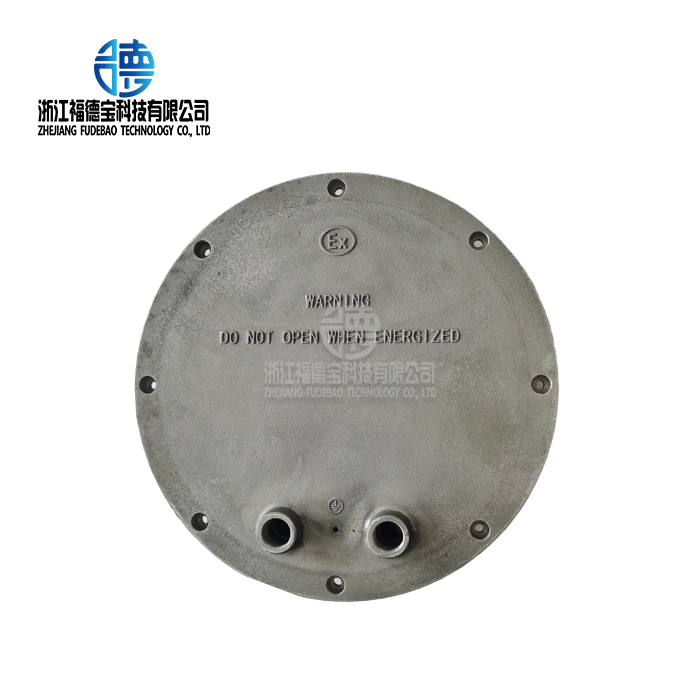
How Low Pressure Casting Improves Quality in Aerospace Aluminum Components
2026-06-09
By counter-gravity filling molds with molten metal under regulated pneumatic pressure (0.02-0.1 MPa), low pressure casting enhances aerospace aluminum component quality. This regulated technique minimizes turbulent flow, greatly lowers oxide inclusions and gas entrapment, and allows directed solidification from the holding furnace. Aerospace-grade parts with little porosity, outstanding mechanical characteristics after T6 heat treatment, and exceptional dimensional consistency fulfill demanding ASTM B618 and ASTM E155 criteria that gravity techniques fail to reach.
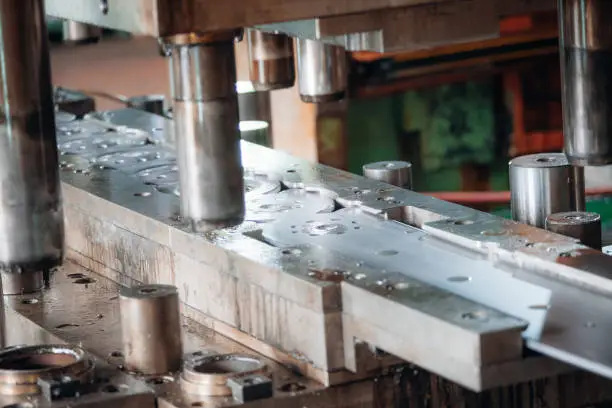
Understanding Low Pressure Casting in Aerospace Manufacturing
A precision foundry uses low pressure casting to transfer molten aluminum from a sealed holding furnace through a riser tube to a permanent mold. Counter-gravity filling uses PID loops to alter the pressure-rise curve in real time under tightly regulated pneumatic pressure, generally 20 to 100 kPa (0.2 to 1.0 bar). This regulated method allows top-down solidification, keeping the last metal to freeze linked to the liquid reservoir below, which feeds shrinkage as the casting cools.
Process Mechanics and Material Selection
When inert gas pressurizes the sealed furnace chamber, liquid metal rises via the refractory-lined riser tube at laminar flow. This smooth filling reduces turbulence that would entrain oxides and air bubbles, aerospace casting failure causes. After the mold cavity fills, pressure remains constant during solidification, allowing the casting to suck metal from the furnace to overcome volumetric shrinkage. After solidification, pressure decreases and wasted metal flows back into the furnace for the next cycle, yielding over 90% compared to 50-60% with feeders.
Aerospace uses aluminum alloys like A356.0 and A357.0 because they are easy to produce and have good strength-to-weight ratios following solution heat treatment and artificial aging (T6 state). The magnesium and silicon in these alloys create powerful precipitates. Keeping iron below 0.15% and adjusting strontium concentration makes alloys more flexible, which is useful for fast-loading parts. Counter-gravity filling's minimal turbulence minimizes gas entrapment, making these castings heat-treatable without blistering, unlike high-pressure die casting.
Advantages Over Traditional Techniques
Continuous pressure feeding eliminates centerline shrinkage in heavy parts and decreases porosity to ASTM E155 radiographic requirements. This beats gravity permanent mold casting. The metal mold and controlled cooling provide finer grain structures with superior mechanical properties and tighter dimensional tolerances (ISO 8062 CT6–CT7, ±0.3mm on critical dimensions) compared to sand casting Semi-permanent molds with resin-bonded sand cores allow engine parts with complicated interior forms like cooling tunnels without destroying the cores, unlike high-pressure techniques.
Challenges with Traditional Casting Methods in Aerospace Component Production
Manufacturing aerospace-grade aluminum parts with typical casting processes is limited. Gravity casting only fills molds with hydraulic head. The metal falls and splashes, creating turbulent flow that captures air and generates oxide sheets. When loaded and unloaded repeatedly, oxide particles produce fractures, which is unacceptable for flight-critical equipment. High-pressure die casting provides thin walls and quick cycle times, but it injects metal at rates of 40 m/s, trapping gas and making parts useless for heat treatment since they boil at solution temperatures.
Quality and Certification Obstacles
Aircraft quality standards prohibit high rejection rates for thick porosity and shrinkage defects. Solid airplane low pressure castings must undergo ASTM E155 radiographic examination, which reveals hidden holes. Reworking or discarding parts with porosity levels beyond the limitations increases cost and delivery time. Uncontrolled cooling rates make microstructures inconsistent, making mechanical property certification tougher. Because tensile test coupons cut from castings (not individually cast test bars) may not fulfill aerospace material specifications for yield strength or elongation.
Economic Impact on Supply Chains
These supply chain faults increase the cost of repairs, cutting scrap (when CNC processes create internal holes), and inspections due to the requirement for more non-destructive testing. Suppliers who struggle with conventional processes frequently over-design safety gaps, which goes against aerospace's aim of mass reduction. Procurement teams have to decide whether to accept higher piece costs from trusted vendors or deal with cheaper providers' quality difficulties. Both alternatives effect ownership cost and delivery reliability.
How Low Pressure Casting Enhances Quality and Reliability
Counter-gravity filling totally changes the solidification environment, improving aircraft performance-critical metallurgy outcomes. Under regulated pressure, a casting hardens from the mold's surface inward as liquid flows to the furnace's storage. This system maintains shrinkage feeding going as the material cools, eliminating centerline porosity caused by gravity casting's too-large steps and exothermic sleeves.
Metallurgical Advantages and Mechanical Properties
Laminar flow in low pressure casting prevents oxide film development in chaotic pours. Even thin oxide layers can't bond to aluminum. They cannot create weak places that cause cracks to propagate when metal is stretched or worn. Fixing these problems improves cast elongation values to those of wrought material. A356-T6 has 8–12% elongation, whereas gravity-cast versions have 3–5%. Tensile and yield strength improve, and they typically achieve flying criteria that gravity techniques can't safely satisfy without more sorting and testing.
Aerospace structural parts need T6 heat treatment (solution at 540°C, quench, and artificial aging at 155°C) for the greatest mechanical properties. Gas porosity trapped during unstable casting will develop during solution treatment, cracking the part. Full heat treatment is safe for this process since it traps less gas. Designers may now employ aluminum castings instead of forgings or billets.
Process Control and Repeatability
Modern systems meticulously regulate pressure curves, mold temperatures, and cycle time with PLCs. This technique reduces human mistake and ensures consistent filling and solidifying conditions for each casting. Statistical process control (SPC) data from several production runs indicates critical measurement capability indices (Cpk) higher than 1.33, satisfying aircraft OEMs' consistency criteria. Automated systems log data to track everything for AS9100 certification and aviation supply chain demands.
Real-world implementations demonstrate these benefits. Porosity rejection rates reduce from 8–12% to < 2% when aerospace industries move from gravity to this technology for structural frames. CNC operations with new internal holes produce less scrap. Even though tool investment was larger, quality improvements immediately decrease manufacturing costs.
Comparing Low Pressure Casting to Other Casting Technologies for Aerospace
Knowing the performance range of different casting methods helps buyers match processes to components. Due to its cheaper equipment and faster mold changes, gravity permanent mold casting is a cost-effective approach to create samples and small quantities. Its higher fault rates and inefficient use of resources (feeders and runners comprise roughly 40–50% of the poured weight) render it unsuitable for aircraft serial manufacturing, where quality control requires low pressure casting methods.
Advantages Over High-Pressure Die Casting
High-pressure die casting makes thin-walled, complex-surfaced items. We record cycle times in seconds, not minutes. However, 40–100 m/s pumping rates generate turbulence that traps air in the casting. Heat treatment fails at this gas porosity, therefore it can only be utilized for as-cast non-structural housings and coverings. This controlled technique takes 2–5 minutes, but solution heat treatment and careful non-destructive testing create structural aviation components with internal integrity.
Comparison with Investment Casting
Investment casting yields smooth surfaces and exact measurements using lost-wax. Complex forms with undercuts and narrow portions are also possible. The clay shell mold takes longer to process (pattern making, shell construction, burnout, casting, and shell removal), increasing cost and wait time. Counter-gravity methods with sand cores combine geometric freedom with better production rates and cheaper piece prices. This makes it ideal for complicated, mechanically robust medium to high-volume aerospace parts including structural brackets, motor housings, and landing gear elements.
For material utilization, counter-gravity technologies are preferred. Because the furnace and mold are directly linked, ungated metal returns to the furnace instead of producing runners and risers for remelting. The 90%+ yield reduces energy usage and improves sustainability, which is increasingly significant in aviation supply chain inspections. When calculating overall cost, procurement teams must include material reduction, higher quality, and less inspection labor.
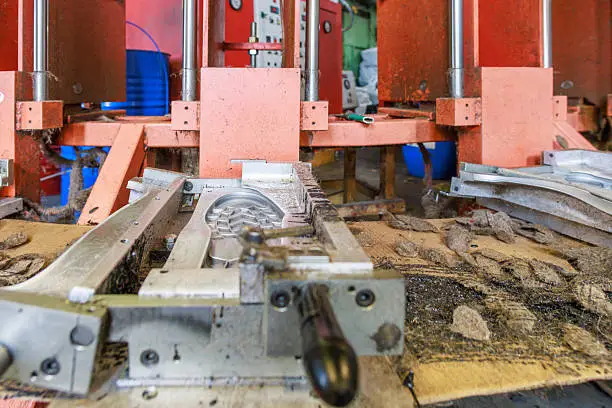
Procurement Insights: Selecting Low Pressure Casting Equipment and Suppliers
Selecting the best manufacturing partners includes assessing technical and organizational skills. Equipment characteristics affect process stability and part quality. Precision pressure control systems with customizable ramp rates optimize filling velocity for each component shape. Operator impact is reduced by automated mold handling and integrated cooling systems, enhancing shift and production campaign repeatability. Aerospace suppliers should show PLC-controlled low pressure casting systems with data recording for traceability.
Certification and Quality Systems
Aerospace certifications verify vendors' flight-critical component management systems and technical competency. ISO 9001 quality management is enhanced with AS9100 certification for aircraft configuration management, risk assessment, and first item inspection. Non-destructive testing and heat treatment NADCAP certification ensures suppliers satisfy industry technical requirements assessed by independent aerospace primes.
Assess manufacturing capacity in tonnage and technological flexibility. Can the supplier accommodate internal complexity sand cores? Do they have ASTM E8-compliant metallurgical labs for chemical composition verification and mechanical testing? Assess equipment age, maintenance records, and workforce training paperwork on tours. Suppliers upgrading technology and improving continuously show long-term collaboration rather than transactional ties.
Cost-Benefit Analysis Framework
Premium casting costs must be modeled beyond piece pricing to justify investment. Include inbound inspection, rejection rates, machining scrap from internal problems, and warranty risk in total acquisition cost. This method costs 15–25% more than gravity casting but reduces defect costs by 60–80%. Supplier disruptions from quality escapes cost aerospace OEMs 10-50 times the part value for urgent replacements, engineering inquiry, and service bulletins.
ROI estimates should include inventory reduction from better delivery dependability and design optimization from consistent mechanical qualities. When designers trust casting quality, they may minimize safety factors and optimize shape for weight reductions, which saves thousands in aircraft fuel costs per kilogram.
Conclusion
Low pressure casting is established production process designed to meet aerospace aluminum component specifications that typical foundries struggle to reach. This technology removes porosity, oxide inclusions, and microstructure irregularities that affect component integrity and certification success using controlled counter-gravity filling, constant pressure feeding, and precise process automation. Aerospace procurement experts should prefer casting vendors with low-pressure capabilities, aerospace quality system certifications, and heat-treatable aluminum alloy competence. Premium casting processes reduce defect rates, improve mechanical properties, increase material yields, and optimize design, strengthening competitive positioning in quality, reliability, and weight-efficient markets.
FAQ
What defects does controlled pressure eliminate compared to gravity methods?
In gravity casting, controlled counter-gravity filling eliminates turbulence-induced oxide coatings and air trapping that produce porosity. Heavy section centerline shrinkage is eliminated by continuous pressure feeding during solidification. These enhancements minimize radiographic rejection rates and enable blister-free T6 heat treatment, addressing aerospace aluminum castings' two main failure mechanisms.
Can thin-wall aerospace structures be produced reliably?
Wall thicknesses of 2.5 to 3.0 mm are attainable with the correct metal and pressure curves. Although not as thin as high-pressure die casting (1.5 mm), this range covers most aircraft construction demands. low pressure casting allows parts to be heated and retain mechanical properties, unlike die casting for load-bearing items.
How does this process affect production lead times?
Part cycle periods are 2–5 minutes, greater than high-pressure die casting but quicker than investment casting. Making durable molds takes 8–12 weeks. Less processing afterward—fewer finishing steps and fewer items rejected—speeds up the raw material-to-approved part process.
What production volumes justify the investment?
For annual quantities of 5,000 to 10,000 pieces, break-even analysis favors the process since material savings and consistent quality more than offset higher equipment costs. Even with reduced volume, the procedure may be appropriate if other methods aren't available due to cost, complexity, or defect concerns.
Partner with Fudebao Technology for Aerospace-Grade Casting Excellence
Aerospace component manufacture requires partners with modern equipment, quality systems, and technical experience. Zhejiang Fudebao Technology offers one-stop solutions for molten metal to flight-ready components, including CNC-controlled low pressure casting machines, high-speed machining centers, and comprehensive finishing capabilities. Tolerances exceed ±0.05mm. Our quality management solutions promote aerospace procurement documentation rigor by aligning with AS9100.
We are an aluminum casting company with expertise in A356 and A357 alloy processing, T6 heat treatment optimization, and aerospace non-destructive testing. At design-for-manufacturing reviews, our engineering team finds ways to optimize shape for castability and structural performance. This alliance minimizes development time and speeds series production certification.
Contact our technical specialists at hank.shen@fdbcasting.com to discuss your aeronautical component needs. Detailed capabilities presentations, facility tours, and sample part evaluation show how precise technology enhances your supply chain. Explore our aluminum foundry services at fdbcasting.com and learn why major aircraft manufacturers choose Fudebao Technology.
References
Campbell, John. "Complete Casting Handbook: Metal Casting Processes, Metallurgy, Techniques and Design." Butterworth-Heinemann, 2015.
American Society for Testing and Materials. "ASTM B618-14: Standard Specification for Aluminum-Alloy Permanent Mold Castings." ASTM International, 2014.
ASM International Handbook Committee. "ASM Handbook Volume 15: Casting - Low Pressure and Squeeze Casting of Aluminum Alloys." ASM International, 2008.
Kaufman, J. Gilbert and Rooy, Elwin L. "Aluminum Alloy Castings: Properties, Processes, and Applications." ASM International, 2004.
Society of Automotive Engineers. "AMS2772: Heat Treatment of Aluminum Alloy Castings - Solution and Precipitation Hardening." SAE International, 2018.
Davis, Joseph R. "Aluminum and Aluminum Alloys - Casting Processes and Defect Analysis for Aerospace Applications." ASM Specialty Handbook, 1993.



YOU MAY LIKE
_1756360265131.webp "Aluminum casting chair legs")
_1756352561845.webp "stainless steel blanking plug")
_1756352340434.webp "Aluminum chassis cover")