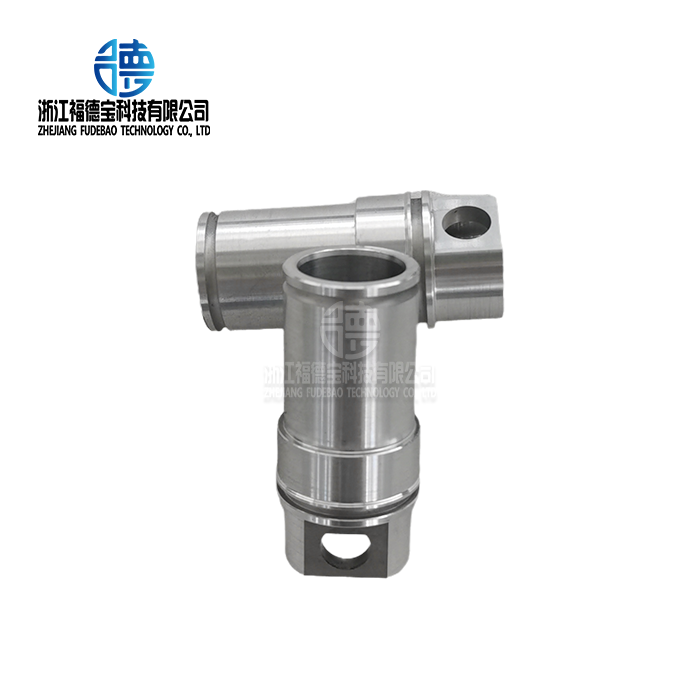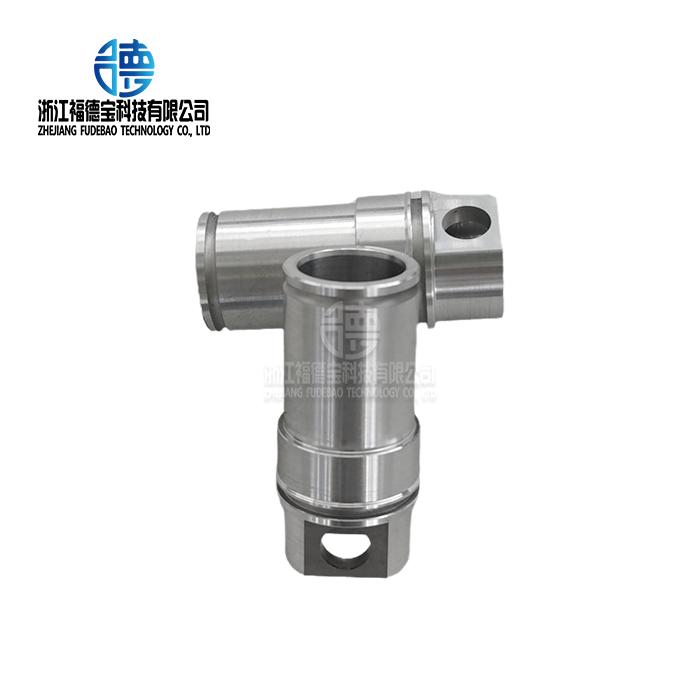
What Is the Sand Casting Process of Aluminum Parts?
2026-06-09
Sand casting is an ancient yet practical method for shaping metal. Molten metal is placed in disposable green or resin sand molds. The foundry process is used for 60% of metal castings worldwide. Sand casting overcomes manufacturing challenges including die casting's high beginning costs for low to medium volume runs, can handle component weights from a few ounces to over 100 tons, and offers the most material versatility for complicated designs.
Understanding the Sand Casting Process
Fundamental Principles of Sand Casting
The principle of sand casting is simple yet complicated. We create a hole in the cemented sand the same size and form as the terminal section. After the liquid metal hardens, we remove the temporary mold to reveal the completed casting. Instead of being reused, sand molds are discarded. This enables the creation of intricate interior elements with removable cores.
The technique uses high-grade silica sands' refractoriness—they do not fuse to aluminum at 1600°C. Bentonite clay or furan resin bonding methods give shear strength and permeability, allowing trapped gases to escape during metal pouring. To prevent structural porosity, this gas escape mechanism is essential.
Step-by-Step Manufacturing Stages
The sand casting process begins with pattern creation. Toolmakers build precise models of final parts from wood, plastic, or metal, leaving area for metal to shrink and cutting stock. These designs are cheaper than permanent metal dies, reducing the initial expenditure.
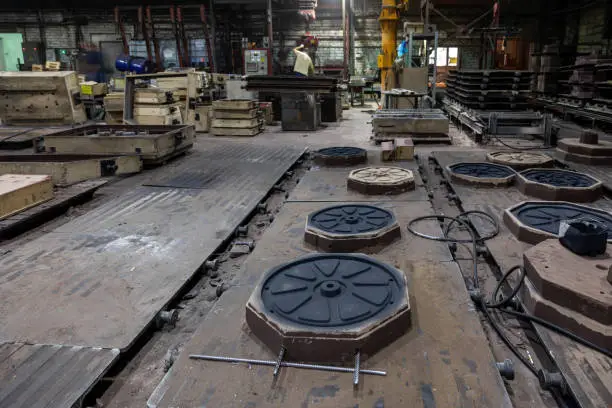
Casting workers then put sand around the pattern in flask boxes to prepare the mold. Molds commonly have cope (top) and drag (bottom) portions. The architecture alone cannot produce rock tunnels as sand cores can. The mold body is ready to pour once the design is removed.
Gas or electric furnaces may melt aluminum at 700°C to 750°C, depending on the metal. Using optical emission spectroscopy, we control melt chemistry to satisfy ASTM B26 or an equivalent standard. Degassing removes porosity-causing dissolved hydrogen.
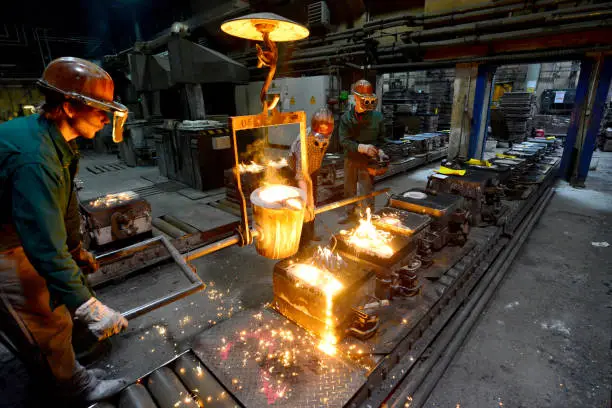
Pouring requires precise timing and temperature. Molten metal is ladled into the mold's gating system, a network of tubes that disperse aluminum and trap slag and oxides in risers. Piece width affects solidification time. They might be minutes for thin-walled parts or hours for massive castings.
The cycle ends with shakeout. Shaking or tumbling castings removes sand that stays after cooling. Fettling removes gate systems, grinds separating lines, and prepares surfaces for CNC cutting. Many aviation and vehicle applications require heat treatment after casting to improve mechanical qualities.
Material Selection Impact on Quality
Casting performance depends heavily on aluminum metal choice. Due to its ease of manufacture, medium strength, and corrosion resistance, A356 (AlSi7Mg) is the most popular aviation and vehicle metal. Silicon makes it more fluid, allowing liquid metal to cover microscopic gaps before freezing.
The A380 is utilized for industrial parts and electrical housings where size stability is more critical than tensile strength. High copper content in alloys like 319 makes them easier to process, which is useful for parts that require a lot of effort.
Binder choice affects outcomes similarly. Green sand makes many automobiles because its patterns survive over 1,000 strikes. Resin-bonded systems feature tighter dimensional tolerances (typically ISO 8062 CT10 versus CT12 for green sand) and are ideal for large industrial machine components that demand inexpensive machining.
Advantages and Benefits of Sand Casting Aluminum Parts
Cost-Effectiveness for Varied Production Volumes
Sand casting saves money when order quantities do not support tool investments. Die casting provides superior surface finishes and tighter standards, but steel dies cost tens of thousands of dollars and must be used for over 5,000 pieces to pay for itself. Sand designs are inexpensive and can break even at 50–500 pieces, depending on complexity.
This pricing strategy benefits industrial machinery manufacturers that build many customized pump housings or compressor components each year. Sand casting is an excellent prototyping method because engineering teams may modify designs without retooling, saving money.
Design Versatility and Complex Geometries
Sand molds are easier to fold and pack than hard-fixed molds, giving designers greater latitude. Sand molds flex and break as aluminum hardens and shrinks, preventing hot ripping, which is critical for high-solidification shrinkage metals. This ability enables the creation of complicated undercuts, internal cavities, and walls of varied thicknesses that die casting would not remove.
Automotive engine usage demonstrate flexibility. Engine blocks feature sand-cored water jackets. These form three-dimensional cooling channels in the casting. Different approaches to solving this complex problem might involve numerous phases or pieces, increasing expense and risk.
Comparison with Alternative Casting Methods
Investment casting produces a finer surface polish and more exact dimensions, but it is too costly for metal products above a few pounds. Its ceramic shell method is better for jewelry and turbine blades than large machinery housings.
Permanent mold casting costs approximately the same as die casting and performs similarly to sand casting. Fixed metal molds are less flexible and need more material than sand patterns, but the surface polish is superior. For 1,000 to 10,000 units a year of simpler designs like electrical enclosures with few interior characteristics, we recommend a fixed mold.
Die casting is ideal for gearbox cases, which are needed in excess of 50,000 per year. Short cycle times and strict standards justified the pricey equipment. Die casting can only manufacture narrower walls and struggles with metals that break quickly when heated during high-pressure injection.
By understanding these trade-offs, procurement teams may better match production processes to project needs. Low-pressure casting fills molds with less pressure and produces castings with forging-like mechanical properties. This makes them ideal for airplane safety parts.
Common Challenges and Solutions in Sand Casting Aluminum Parts
Typical Defects and Root Causes
Aluminum sand casting molds still have the biggest porosity issues. Gas porosity occurs when hydrogen in a liquid crystallizes during solidification, producing circular holes that impair tensile strength and allow pressure-containing sections to leak. Shrinkage porosity types vary. Cooling metal shrinks, and risers that do not feed it enough produce spongy patches in heavier portions.
Mold deterioration while filling lets sand into concrete. Fast-moving metal flow removes sand from castings. These faults concentrate tension and make machining difficult. Metal freezes before filling the mold hole, causing misruns. This frequently happens because of low pouring temperatures or improper gate design. Cold shuts are gaps where metal fronts connected but did not join.
Best Practices in Mold Preparation and Process Control
You must organize the procedure across several elements to avoid blunders. Careful grain distribution and pressure packdown yield the optimum sand permeability. Air becomes trapped in thick molds, while erosion can occur in loose molds. Standard testing for sand moisture, clay percentage, and green compression strength ensure batch consistency.
Metal-mold reactions can be prevented by adding a mold layer. Graphite or zircon-based refractory washes increase surface quality and prevent sand burn-on, which occurs when aluminum alloys chemically bind with silica sand at high temperatures.
Temperature control is crucial. We limit the aluminum melting point. Too cold causes errors, too hot causes hydrogen to gather up and mold to wear away quicker. The pouring bowl's filters and ceramic foam portions collect oxides and dross before they enter the casting hole.
Rotating degassing or nitrogen cleaning removes dissolved hydrogen. We test sand casting results at lower pressure to ensure hydrogen stays below 0.1 ml per 100g of aluminum.
Case Study in Quality Improvement
A Midwest firm that built aluminum pump housings for industrial fans had porosity issues during pressure tests. An inquiry found that their green sand's moisture content fluctuated more than allowed due to poor temperature control in the shaping area.
We proposed installing dehumidifiers and hourly moisture checks. Additionally, they enhanced their degassing system and modified the gates to streamline mold filling. These steps reduced scrap rates from 18% to 3% in six months, proving that structured foundry basics increase reliability.
How to Choose the Right Sand Casting Supplier for Aluminum Parts?
Essential Evaluation Criteria
Sellers are judged by quality certifications. ISO 9001 and IATF 16949 certifications cover fundamental quality management systems and automobile supply chain demands, respectively. Aerospace applications require AS9100 and NADCAP clearance for heat treatment and non-destructive testing.
Besides licenses, we evaluate technical skills. Before cutting patterns, modern foundries employ modeling software like MAGMASOFT or ProCAST to predict metal movement, solidification, and flaws. Virtual approval speeds time-to-market and reduces development cycles. Robotic molding lines repeat large-volume projects, and flexible jobbing foundries speed development.
Pattern-making abilities matter. Suppliers using CNC pattern shops can alter designs faster and monitor measurement quality. Tooling lead times affect project plans. Depending on complexity, competent foundries may create sand casting models in two to six weeks.
Balancing Cost, Quality, and Lead Time
Different foundries price differently. Some vendors provide piece rates that incorporate tool costs distributed across predicted sales. Other providers disclose design expenses apart from casting unit pricing. Understanding these concepts helps procurement specialists compare more accurately.
Lead times depend on design difficulties, foundry capacity, alloy supply, and finishing required. Special mixtures that must be melted ship slower than standard metals like A356. Parts that require substantial heating or machining delay delivery. Production backlogs and bottlenecks must be discussed to set appropriate timelines.
Quality assurance procedures distinguish excellent suppliers from bad ones. Written inspection techniques that incorporate non-destructive examination, chemical analysis using optical emission spectrometry, and mechanical property testing utilizing proof bars cast separately are needed. Ultrasonic testing shows interior shrinkage, while dye penetrant screening finds invisible surface fissures. Coordinate measurement equipment verify sizes against CAD models.
Fudebao Technology's Comprehensive Capabilities
From melting to completion, our plant manages production. Our regular sand casting and low-pressure casting equipment allow us to improve processes for each client's form and volume demands. CNC lathes and high-speed machining centers can finish items to 0.05 mm, fulfilling medical device and automotive regulations.
Business is guided by environmental responsibility. Modern sand reclamation reduces garbage and material costs. Low-energy induction melting furnaces emit less carbon than fossil fuel furnaces. These eco-friendliness measures match multinational firms' tighter purchase restrictions.
Before creating tools, our engineering team works with customers to optimize castability during design-for-manufacturing evaluations. This proactive approach reduces costly redesigns and qualification time. We have worked with aircraft, industrial equipment, and automobile companies for over 20 years, so we know how laws and paperwork differ by industry.
Ordering and Procurement Guide for Aluminum Sand Casting Parts
Efficient Quote Request and Design Submission
A good buying process begins with complete request-for-quote packets. Foundries may thoroughly evaluate STEP or IGES 3D CAD models for manufacturing. Include critical measurements, surface polish criteria, and mechanical properties. Determine which pieces must be machined and which may be cast; this affects costs.
Annual number projections assist providers recommend production methods. Sand casting is most cost-effective for 200 items each year. If 20,000 pieces are planned per year, mold or die casting may be best. Be upfront about the amount's uncertainty; competent foundries tolerate estimate variations without raising pricing.
Your lead time should include time for producing the pattern, checking the initial product, and perhaps changing the design. Deadlines are costly and might reduce quality. Planning manufacturing six months in advance allows for development, especially for complex designs that need core toolmaking.
Strategic Optimization of Cost and Schedule
Material selection lets you enhance things immediately. Choose the cheapest metal that fits needs to avoid premiums. A356 is cheaper than specialized formulae yet may be used for most building projects. Copper-bearing metals' price premiums are only justified when processing ease reduces manufacturing costs.
Tolerance specifications affect pricing. Sand casting may generally meet ISO 8062 CT10–CT12 tolerances; narrower bands need unnecessary labor. Find the critical measurements and use looser tolerances for the remainder. This technology reduces production costs without harming product quality.
Volume commitment strategies measure stockpile expenses against price decreases per item. You can manage cash flow and take advantage of economies of scale with annual blanket sales with quarterly decreases. Long-term contracts incentivize suppliers to invest in mutually beneficial process modifications.
Selecting Certified Manufacturers Through Proper Channels
Global supplier listings like ThomasNet and industry bodies like the American Foundry Society maintain authorized casting site lists. These websites rank providers by expertise, qualifications, and geography. But directory listing does not guarantee they can perform what they say. Site surveys evaluate tools, process controls, and quality systems.
Asking prior buyers for references provides valuable information. Discussing on-time delivery, issue resolution, and engineering aid provides useful information beyond marketing materials. We recommend qualifying at least two different suppliers to ensure you can continue doing business despite quality or volume issues.
Before investing in production gear, prototypes help you evaluate capabilities safely. Sample castings are destructively tested to determine the optimal surface polish, dimension regularity.
Conclusion
Sand casting is essential for automotive, industrial machinery, electrical, and aerospace aluminum component manufacture. Its economic benefits for low-to-medium production quantities, design freedom for complicated geometries, and material variety make it the logical choice when die casting economics do not support tooling investments. Procurement experts may define realistic requirements, evaluate supplier capabilities, and improve production strategies by understanding the process from pattern making to finishing. Porosity and dimensional variation require careful process control, but certified foundries using current quality assurance methods reduce these risks and offer dependable components that fulfill strict performance criteria.
FAQ
What aluminum alloys work best for sand casting applications?
A356 aluminum alloy dominates sand casting because of its outstanding castability, mechanical qualities after heat treatment, and corrosion resistance. Its 7% silicon concentration makes molten metal flow smoothly, filling narrow portions. For CNC-intensive components, 319 aluminum improves machinability, whereas A380 prioritizes dimensional stability above strength.
How does sand casting compare to investment casting for intricate aluminum parts?
Investment casting has better surface finishes (3.2-6.3 Ra) and tighter dimensional tolerances than sand casting, making it appropriate for components under five pounds that need little post-processing. Sand casting is cheaper for bigger pieces and allows more design complexity with collapsible molds. Sand casting handles industrial housings and structural parts, whereas investment casting serves jewelry-like components depending on size, accuracy, and production quantities.
What factors influence lead times for aluminum sand casting projects?
Tooling takes two to six weeks depending on pattern complexity. Foundry capacity impacts melting and molding queues. Standard alloys like A356 ship faster than chemically verified special melts. After casting, heat treatment takes one to two weeks, and thorough machining depends on CNC shop availability. Suppliers can prioritize and satisfy delivery obligations by communicating critical path goods.
Partner with a Trusted Aluminum Sand Casting Manufacturer
Zhejiang Fudebao Technology offers precision aluminum sand casting with integrated melting, casting, CNC machining, and surface treatment. For automotive OEMs, industrial equipment makers, and aerospace suppliers, our ISO-certified facility offers ±0.05mm dimensional precision and complete PPAP documentation. Our technical team optimizes castability and reduces manufacturing costs throughout the project lifecycle, from prototype development for design validation to medium-scale batch production. Contact sand casting provider Fudebao Technology at hank.shen@fdbcasting.com to discuss aluminum casting needs and seek customized quotes.
References
American Foundry Society. "Sand Casting Processes and Materials Handbook." Des Plaines: AFS Technical Publications, 2019.
Campbell, John. "Complete Casting Handbook: Metal Casting Processes, Metallurgy, Techniques and Design." Oxford: Butterworth-Heinemann, 2015.
Davis, J.R., ed. "ASM Specialty Handbook: Aluminum and Aluminum Alloys." Materials Park: ASM International, 1993.
International Organization for Standardization. "ISO 8062-3:2007 - Geometrical Product Specifications (GPS) - Dimensional and Geometrical Tolerances for Moulded Parts." Geneva: ISO, 2007.
Kaufman, J. Gilbert and Elwin L. Rooy. "Aluminum Alloy Castings: Properties, Processes, and Applications." Materials Park: ASM International, 2004.
Wang, Q.G. "Microstructural Effects on the Tensile and Fracture Behavior of Aluminum Casting Alloys A356/357." Metallurgical and Materials Transactions A, Volume 34, 2003.



_1756346371362.webp "separator housing")
_1756352472762.webp "steel threaded plug")
_1756349794241.webp "round belt pulley")
_1756348780785.webp "porting turbo compressor housing")
_1756346043433.webp "guardrail connecting block")