
Aluminum Die Casting Auto Parts for Lightweight Vehicle Design
2026-07-27
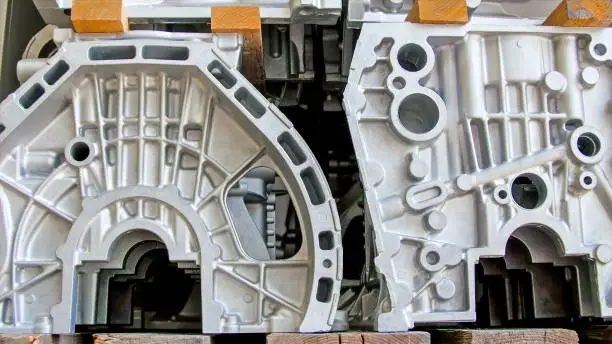
Aluminum die casting auto parts represent a transformative solution in modern automotive engineering, addressing the industry's pressing demand for weight reduction without compromising structural integrity. Through high-pressure die casting technology, molten aluminum alloy is injected into precision steel molds at pressures exceeding 1,500 psi, producing complex components with exceptional dimensional accuracy. This process enables manufacturers to create integrated parts like transmission housings, engine brackets, and battery enclosures as single-piece units, eliminating welding and reducing assembly time while achieving the lightweight performance essential for fuel efficiency and extended electric vehicle range.

Understanding Aluminum Die Casting in Automotive Applications
The Core Process Behind Precision Manufacturing
High-Pressure Die Casting (HPDC) is the most important technology for making auto parts that meet the strict standards of the industry. The first step is to melt aluminum alloys like ADC12 or A380, which have the best fluidity and mechanical qualities for stress situations in cars. Before they are pressed into hardened steel dies at up to 30,000 psi, these alloys are heated to about 650–700°C. The fast pumping cycle, which usually ends in milliseconds, makes sure that all of the holes are filled with liquid metal before it hardens. This speed keeps the material from cooling too quickly and lets complex shapes be made with walls as thin as 1.5 mm. The dimensional limits that can be reached through die casting usually meet NADCA standards. This means that even when hundreds of thousands of units are made, the tolerances stay the same.
Material Selection for Automotive Performance
Picking the right aluminum alloy has a big effect on how well parts work in real-world driving conditions. The A380 alloy, which is made up of about 8.5% silicon and 3.5% copper, is easy to cast and has a modest level of strength, which makes it perfect for making braces and housings that aren't structural. ADC12 is a Japanese standard metal that has a similar amount of silicon but less copper. It has better corrosion protection and is good for parts under the car that are exposed to salt and water. When you heat treat A356 alloy with T6, it makes it stronger. This gives it a higher tensile strength, which is important for load-bearing parts like suspension components and steering knuckles. These metals have a specific gravity of about 2.7 g/cm³, which is about one-third that of steel. This means that vehicles will weigh less. According to studies from the car industry, a 10% drop in a vehicle's weight can make it 6–8% more fuel efficient. This is an important measure for manufacturers as they try to meet stricter emissions rules.
Quality Control and Dimensional Accuracy
To make sure that the standard of aluminum die casting auto parts stays the same, they need to go through multiple inspection steps during production. X-ray fluorescence (XRF) analysers check the composition of an alloy before it melts. This keeps it from getting contaminated, which could damage its mechanical properties. Real-time tracking devices keep an eye on injection pressure, temperature profiles, and cycle times during production to make sure the process stays stable. Coordinate measuring tools (CMM) are used for post-casting inspection to make sure that the dimensions are accurate to within 0.05 mm, which is the level of accuracy needed for connecting to other car systems. Porosity identification using computed tomography (CT) scans finds flaws inside that can't be seen from the outside, which is very important for safety-critical parts. Automotive OEMs need PPAP (Production Part Approval Process) documentation, which includes material certificates, dimensional reports, and functional test results that show how the part was made, starting with the raw material and ending with the finished product.
Advantages of Aluminum Die Casting for Lightweight Vehicle Design
Weight Reduction and Fuel Efficiency Gains
The car industry is switching to lighter materials because of pressure from regulators and consumer demands for better fuel economy. In some situations, replacing steel parts with aluminum die casting auto parts can cut the weight of the part by 50–70% while keeping the same level of strength. A normal aluminum die-cast gearbox housing weighs 8–12 kg, while a steel equivalent weighs 20–25 kg. This makes a noticeable difference in how the car moves and how much energy it uses. The benefits go even further when you think about how less rotating mass in the drivetrain parts lowers the amount of energy needed for acceleration. Manufacturers of electric vehicles really like this weight loss because every kilogram saved means a longer battery range. Studies show that EV range can be increased by 10–15 km for every 100 kg of car mass lost. Aside from saving money on gas up front, aluminum's resistance to corrosion makes parts last longer, which lowers the number of replacements needed and the overall cost of ownership over the course of a vehicle's 10-15-year life.
Cost-Effectiveness in High-Volume Production
To understand the economic benefits of die casting, you need to look at both the cost of the tools and the cost of making each unit at different production rates. The original die fabrication is a high upfront cost that can range from a modest to a substantial investment, based on the complexity of the part and the number of cavities. When production rates go above 5,000 to 10,000 units per year, cycle times of 30 to 90 seconds per part allow for fast output that CNC cutting can't match cost-effectively. In die casting, 60–70% of the materials are used, and scrap metal can be recycled and put back into the production stream, which lowers the cost of trash. Secondary machining is usually limited to drilling precise holes or making threaded features. This cuts down on the time needed for downstream processing compared to sand-cast alternatives that need a lot of material to be removed. Fast production, few secondary operations, and high repeatability make for a very attractive cost structure for auto suppliers who are in charge of multi-year programs with steady demand.
Thermal Management and Durability Benefits
Die-cast parts are great for getting rid of heat because aluminum has a thermal conductivity of about 96 to 120 W/m·K, based on the alloy makeup. This trait is used by the battery housings of electric vehicles to keep the batteries at the best working temperatures. This keeps the batteries charged over time and extends their life. Fast heat transfer helps keep lubricant temperatures stable, which lowers the stress on seals and gaskets in engine parts like oil pans and valve covers. The natural oxide layer that forms on aluminum surfaces makes them more resistant to corrosion than steel that hasn't been coated. This is especially useful in underbody applications that are exposed to water, road salt, and changes in temperature. Surface treatments like powder coating, anodizing, or chromate conversion make things even more resistant to the environment. This means that parts can withstand the 1,000-hour salt spray test that is needed by car standards. When OEMs prioritise long-term reliability, this means fewer warranty claims and a better reputation for the brand.
Comparing Aluminum Die Casting with Alternative Manufacturing Methods
Die Casting versus Magnesium and Steel Alternatives
To choose the right material, you have to weigh the mechanical qualities, weight goals, production numbers, and cost limits that are unique to each component application. With a density of 1.8 g/cm³, magnesium die casting can reduce weight even more. However, it comes with problems, such as higher material costs and a higher risk of fire during processing. Because it is not as stiff as aluminum, it can only be used for non-structural parts like instrument panel supports or seat frames. Steel pressing has better tensile strength and cheaper materials, but it can't make complex three-dimensional shapes like die casting can, without a lot of welding and putting them together. Because steel is almost three times denser than aluminum, it makes things heavier, which goes against the main goals of modern vehicle design to make things lighter. Aluminum die casting auto parts hold a strategic middle ground, providing sufficient strength for the majority of automotive uses while significantly reducing weight at production costs that are affordable for tier-1 suppliers. Component design complexity often makes the difference, since die casting makes complicated built-in features that would need to be put together from multiple pressed parts.
Production Volume Considerations
Choosing a manufacturing method depends a lot on how much is expected to be made and how long the program will last. Sand casting is still a good way to make prototypes and small batches (less than 1,000 units per year) because it's cheaper to make the tools and allows for more design changes. Because of the surface finish and size limits of sand casting, a lot of CNC cutting is needed, which makes the cost per unit much higher. Permanent mould casting can make parts with an average volume and a better surface quality than sand casting, but it can't match the cycle speed or complexity of die casting. Die casting is worth the extra money spent on tools when it comes to large production runs, where the lower cost per part adds up to big savings. Automotive projects usually last between 4 and 7 model years, and yearly production levels range from 50,000 to several million pieces. This makes the economics of die casting perfect. When buying, teams understand amortisation schedules and break-even analysis, they can look at the total costs of a program instead of just the piece price. This shows die casting's value offering across product lifecycles.
Design Complexity and Integration Opportunities
Die casting is different from other methods because it can make complicated shapes with built-in features. This lets designers come up with design strategies that lower the overall cost of the system. By adding mounting bosses, ribs, brackets, and fastening features directly to the casting, it's not necessary to do separate hardware and assembly work. Connecting structural points with thin-wall sections saves material while keeping the structure stiff, which can't be done with cutting or forging. With multi-cavity dies, you can make more than one part at once or both left-hand and right-hand forms in just one cycle, which speeds up production. To take advantage of these integration opportunities, design engineers and casting experts must work together closely during the development phase. They must use Design for Manufacturability (DFM) principles to balance the functionality of the part with the limitations of the casting process. When compared to units made from multiple stamped or machined pieces, die-cast parts can save 20–30% on costs, which is a huge benefit for car engineers who are trying to meet tight cost goals.
Procurement Insights: Working with Aluminum Die Casting Auto Parts Manufacturers
Supplier Qualification and Certification Requirements
To find reliable aluminum die casting auto parts partners, you need to carefully look at their professional skills, quality systems, and history in the automobile supply chain. ISO 9001 certification gives basic assurances about quality management, while IATF 16949 covers the needs of the car industry, covering things like advanced product quality planning, control plans, and methods for ongoing growth. Suppliers that work with big OEMs usually have customer-specific approvals that show they follow proprietary standards and pass audit protocols. A manufacturing capacity review should look at the range of press tonnages that are available, from 400 to 4,000 tonnes, and how well the equipment matches the size and complexity of the parts that need to be made. The ability to machine is also very important, since most die-cast auto parts need extra work to make them precise. By looking at current customer lists and asking for case studies, suppliers can show that they have worked with similar parts and levels of complexity before, which lowers the risk of starting a new program.
Managing Lead Times and Supply Chain Reliability
Careful control of deadlines is needed for successful automotive projects from the initial quote through production ramp-up and ongoing delivery. From the time the design is finalised until the first article is inspected, die development and sampling usually take 10 to 16 weeks. This depends on how complicated the part is and how busy the seller is. The PPAP clearance process takes an extra 4–8 weeks because customers have to look over dimensional reports, material certifications, and practical testing results. Adding "just in case" time to launch schedules keeps production from being held up when design changes or processing changes need to be made during the validation phases. Setting realistic delivery schedules that balance the costs of keeping inventory with the expectations of just-in-time delivery is necessary for ongoing production. Transportation lead times from foreign suppliers—usually 4–6 weeks for ocean freight—require inventory gaps or storage plans in the United States. Getting key parts from more than one qualified source lowers the risk of supply disruptions. However, handling multiple suppliers at the same time requires teamwork to keep quality standards constant and stop specification drift between sources.
Custom Engineering Support and Collaboration
The best supplier relationships go beyond just making parts for a transaction; they also include technical collaboration that makes designs easier to make and cheaper. Die casting engineers with a lot of experience can find ways to combine parts, change wall thicknesses to make metal flow better, or rearrange parting lines to get rid of extra steps. Getting suppliers involved early in the design phase, preferably before finalising the full CAD, is the best way to get these ideas while it's still cheap to make changes. Prototyping tools, such as 3D printing for form-fit check and CNC cutting of prototypes made from cast aluminum, let you test your design before committing to die production. When suppliers offer concurrent technical support, they shorten the time it takes to develop a product and lower the risk of having to make expensive changes to the tools after the first samples are made. This method of working together matches the skills and goals of the supplier with those of the customer, resulting in relationships that last across many projects and model generations.
Design Considerations for Aluminum Die Casting Automotive Parts
Wall Thickness and Structural Optimization
To get the best performance from aluminum die casting auto parts, you need to follow certain design rules that work with the casting process and make the structure as efficient as possible. Keeping the wall thickness the same all the way through the part—usually between 2.0 and 4.0 mm for car uses—helps it cool evenly and reduces interior stress that can lead to cracks or warping. To keep the filling process from becoming turbulent, the change between section thicknesses should happen slowly and over at least three times the thickness change. Using ribs that are about 60–80% of the thickness of neighbouring walls to avoid sink marks on opposite sides improves bending stiffness without adding a lot of weight. Draft angles between 1 and 3 degrees make it easier for the part to come out of the die without damaging the surface. For deeper cavities, more draft is needed to overcome the friction forces. Using radii equal to the wall thickness as a minimum, fillet radii at internal corners lower stress concentrations and improve metal flow. These things have a direct effect on both the quality of the parts and the life of the dies, which changes the costs of the program over the course of production.
Avoiding Common Casting Defects
Designers and engineers can define features that lead to better production when they know about possible flaws and what causes them. Porosity, which is shown by tiny holes in the structure of the casting, usually happens when air gets stuck during high-speed injection or when gas escapes during solidification. To keep porosity to a minimum, gates must be carefully designed to allow metal to flow smoothly and air to escape without letting metal leak. Shrinkage porosity happens when separate pieces of metal solidify without being able to access more molten material. This can be avoided by designing the feeding system correctly and controlling the cooling patterns. When metal streams that are coming together don't fuse fully, cold shuts and flow lines show up. This can be fixed by changing the injection temperatures and velocity patterns. During solidification, hot cracking happens when the pressures of thermal contraction are higher than the material's strength at high temperatures. This can be avoided by choosing the right metal and controlling the rate at which it cools. Surface blisters show that gas is caught below the surface of the part and close to the surface. This gas is usually released by changing the die temperatures or shot patterns. Working with experienced casting engineers during design reviews helps find high-risk parts that need extra care before the die is made.
Thermal Management and Surface Protection
A key design goal is to incorporate functionality that will last for a long time in harsh automotive environments. Surface treatments should be specified during the design phase for parts that need better rust protection. This makes sure that the right amount of material thickness is left over after chemical processing. Powder coating and e-coating protect underbody parts well, but the surfaces need to be prepared in a way that gets rid of any casting fluid remains. Aluminum's thermal conductivity is used to control component temperatures through heat absorption features like fins, stretched surfaces, or built-in cooling channels. More and more battery housing designs have cooling channels inside that are made through complicated die actions or secondary assembly operations. These keep the cells at the right temperature even when the outside temperature changes. How well electromagnetic shielding works depends on how thick the walls are and how well the surfaces conduct electricity. This affects how electronic control unit housings and sensor systems need to be designed. Dimensional stability during thermal cycling is important for mounting surfaces between aluminum and steel parts. To achieve this, the coefficients of thermal expansion must be carefully matched, or fastening designs must be flexible and allow for differential movement.
Conclusion
In conclusion, aluminum die casting auto parts technology is very useful for automakers who want to make lightweight cars without sacrificing speed, sturdiness, or the cost of production. Precision control over dimensions, the ability to work with complex shapes, and good strength-to-weight ratios make die-cast aluminum parts ideal for use in powertrain, chassis, and body systems. To implement something successfully, you need to know about both the technical possibilities and the economic trade-offs. You also need to be able to balance the cost of the tools you buy with the cost of making one unit while still maintaining high-quality standards. When design engineers, procurement teams, and experienced manufacturing partners work together, they can make sure that component designs are as castable as possible while still meeting functional requirements. This leads to vehicles that meet regulatory requirements, consumer expectations, and corporate goals for profit.
FAQ
Which automotive components are best suited for aluminum die casting?
The best uses are for parts with complicated shapes that need to be made in large quantities with tight tolerances. Aluminum die casting auto parts are a way to make precise, strong, and light parts like gearbox housings, engine frames, steering components, battery casings, motor housings, and structural nodes. Aluminum's qualities work best for parts that need thin walls, built-in fixing features, or the ability to get rid of heat.
How does die casting cost compare to machining or fabrication?
Die casting needs more money to buy the tools up front, but it costs less per unit when more than 5,000 to 10,000 are made each year. CNC cutting from billet aluminum works well for prototypes or speciality uses that don't need a lot of them, but it gets too expensive to use for mass production of cars. Die casting's short cycle times and lack of secondary operations save a lot of money over long production plans like those used in car manufacturing.
What certifications should qualified suppliers possess?
Automotive die casting suppliers with a good reputation keep their IATF 16949 certification, which shows that they follow quality management systems that are specific to the automotive supply chain. ISO 9001 is a basic standard for quality assurance, and customer-specific approvals from big OEMs show that the company has proven its abilities. PPAP documentation skills and well-known measurement system analysis protocols make sure that measurements are always correct and can be tracked throughout production.
Partner with Fudebao Technology for Advanced Die Casting Solutions
Zhejiang Fudebao Technology Co., Ltd. can help you create lightweight vehicles because they have a lot of experience working with metals and can do a lot of different types of die casting. Our factory is fully integrated and has high-speed CNC machining centers, cutting-edge die casting equipment, and full finishing processes that include melting and surface treatment. We can make precise aluminum die casting auto parts with tolerances of ±0.05mm. We work with global automakers and tier-1 suppliers that need PPAP documentation, accurate measurements, and dependable delivery schedules for complicated parts. Whether you need gearbox housings, battery cases, or structural frames, our engineering team works together closely during development to make sure that designs are made in a way that makes them easy to make and meet your performance needs. We are a well-known company that supplies aluminum die-casting auto parts to foreign brands, such as companies that make automotive systems and tools. We can handle difficult tasks because we have experience with them. Email our engineering team at hank.shen@fdbcasting.com to talk about your project needs and find out how our end-to-end manufacturing solutions can help you speed up the development process while still ensuring the quality of your parts and the reliability of your supply chain.
References
1. North American Die Casting Association (NADCA). (2022). Product Specification Standards for Die Castings Produced by the Semi-Solid and Squeeze Casting Processes. NADCA Publications, Rosemont, Illinois.
2. Kaufman, J.G. & Rooy, E.L. (2004). Aluminum Alloy Castings: Properties, Processes, and Applications. ASM International, Materials Park, Ohio.
3. Society of Automotive Engineers (SAE). (2021). Aluminum Alloys for Automotive Applications: Material Selection and Design Guidelines. SAE Technical Paper Series, Warrendale, Pennsylvania.
4. Lumley, R.N. (2018). Fundamentals of Aluminum Metallurgy: Recent Advances. Woodhead Publishing, Cambridge, United Kingdom.
5. Hirsch, J. (2014). "Recent Development in Aluminum for Automotive Applications," Transactions of Nonferrous Metals Society of China, Volume 24, Issue 7, pp. 1995-2002.
6. International Automotive Task Force (IATF). (2016). IATF 16949:2016 Quality Management System Requirements for Automotive Production and Relevant Service Parts Organizations. IATF Publications, Southfield, Michigan.



YOU MAY LIKE