Five Ways to Improve Aluminum Die Casting Part Quality
2026-04-13
To make better aluminum die casting parts, you need a planned approach that includes controlling the process, making sure the design works best, choosing the right materials, working with suppliers, and always making the quality better. To make exact parts for things like electrical boxes, car housings, and industrial equipment, molten aluminum alloy is put into steel molds under high pressure. This is known as aluminum die casting. Porosity and shrinking are common flaws that need to be kept to a minimum in order to get good quality. Parts also need to meet strict standards for mechanical performance and size limits. To make parts more reliable, cut down on rejections, and lower the total cost of ownership for tough uses, procurement pros need to carefully manage process factors, make smart design choices, and work with certified makers.
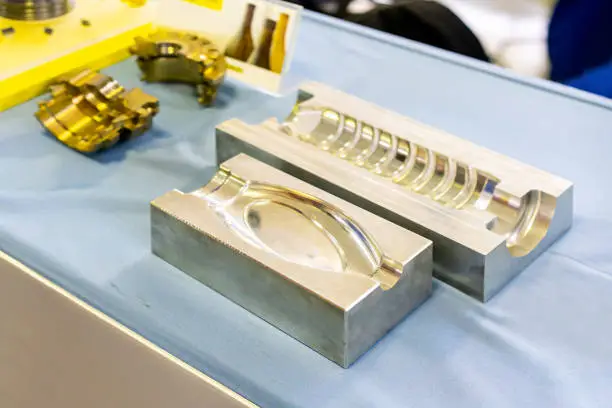
Understand and Control the Aluminum Die Casting Process
The first thing you need to do to make sure the quality of the parts you make stays the same is to learn how to do die casting right. When buying directors and engineering managers look at manufacturing skills, they can make smart decisions if they know how each step of the process impacts the quality of the final product.
Core Process Stages and Their Impact on Quality
There are several important steps in the aluminum die casting process, and each one gives you a chance to make the job better. Making sure that the furnace stays between 1,200°F and 1,300°F during the melting stage is important to get rid of all the alloying elements and let as little gas as possible escape. During the injecting phase, the shot speed and pressure must be carefully controlled so that the whole space is filled without creating turbulence that leaves holes. These levels are typically between 1,500 and 30,000 psi.
The next important step is cooling, and controlling the temperature has a direct effect on how stable the nanostructures and measurements are. Things that cool at different rates can become pushed together, which can crack or bend parts with different wall thicknesses. It's important to find the right speed for the release so that the mold doesn't stay in place for too long and slow down production. It has been seen that rejection rates drop below 2% for producers who check the temperature in real time during these steps. That's different from the normal 5–8% failure rate in the business world.
Identifying and Preventing Common Casting Defects
Most of the time, porosity, which looks like holes inside the structure and makes it less strong against pressure, is the main problem with high-pressure die casting quality. When air gets stopped, gases leave as the metal solidifies, or the metal shrinks as it goes from liquid to solid. Cold shuts happen when two metal lines don't connect properly, which makes the part's structure weak in some places. Flaws in shrinkage happen when the area that needs to harden doesn't get enough material. This usually happens in parts that are too thick or joints that aren't built well.
Instead of just looking for signs, you need to get to the bottom of these problems to fix them. You can help lower porosity by making the vacuum systems inside the die better, changing the gate speeds to lower noise, and picking metals that solidify well. When the metal's temperature goes up, cold shuts allow more air to flow through and change the flow patterns so that the metal doesn't harden too quickly. Using X-rays and metallography to do systematic flaw analysis helps quality teams find problems that are caused by certain process factors and make the changes that are needed.
Alloy Selection and Temperature Control
The material used makes a big difference in how well the casting turns out. To give you an example, well-known metals like A380 are simple to make and not very strong, but A356 is stronger after being heated. It's very important that the metal is good. For example, any iron content above 1.3% in A380 can cause issues with die bonding and surface flaws. Also, too much magnesium content makes it easier for rust and dross to form. Temperature control isn't just for the oven; it also includes heating up the dies ahead of time and keeping an eye on the temperature during production runs.
Most of the time, die temperatures are between 300°F and 500°F, but it varies on the part's shape and how long the cycle needs to be. When you lower the die's temperature, the surface gets smoother and you don't have to solder as much, but small spots may still need to be filled. Higher temperatures make it easier to fill, but they can also make cycle times longer and put more stress on the tools because of the heat. Manufacturers can keep measurements more accurately when they use closed-loop temperature control systems that monitor more than one zone. Rather than keeping them within ±0.005 inches, they can often keep them within ±0.002 inches.
Optimize Design for Aluminium Die Casting
Design optimization is one of the best ways to improve quality for aluminum die casting without spending a lot of money on new tools. This is because it fixes problems that might arise during production. When you build something carefully, you reduce the number of flaws, improve the fill qualities, and make the part work better overall.
Wall Thickness and Structural Considerations
Uniform wall thickness is a basic design idea that cuts down on differences in cooling rates and the problems that come with them. There are hot spots where shrinkage porosity builds up in parts of different widths, and thin sections may not be fully filled or close properly. The thickness of the walls should stay between 0.06 and 0.25 inches, and the changes between parts should be smooth instead of rapid.
Lowering friction and wear during the extraction cycle makes it easier for parts to be removed. This also makes the die last longer. The minimum draft angle is usually between 1 and 3 degrees, but it depends on how deep the part is and how rough the surface needs to be. It's not drafty enough, and the next part will have ejection lines, physical distortion, and early die wear that makes it less good. Corner curves do more than one thing. They give the metal more room to move during filling, less stress during service, and less die wear at sharp changes. Many times, radii inside should be bigger than 0.5 mm, and radii outside should be at least 1 mm.
Gating, Venting, and Flow Management
The form of the gate determines how the liquid metal gets into the hole. This changes how the fill pattern is made, how much air is trapped, and how heat moves around. Metal should flow toward thick areas when a gate is put in place, but cores and other delicate parts should not come into direct touch with the gate. Gate width and form can change fill rate. It's possible for weathering and turbulence to happen when gates are too thin, and it's possible for the fill to harden too soon when gates are too big.
Venting lets gases and air that are trapped escape as metal fills the hole. This stops surface flaws and holes. Most vents are between 0.002 and 0.006 inches deep and are placed where air naturally gathers when the tank is filled. For not letting go of enough air, filling is slowed down, gas holes appear, and surface flaws appear. Oxides and cold metal from the first metal streams are caught by overflow wells. These impurities are then kept from getting into the part shape.
Alignment with International Standards
Designing to well-known standards makes it possible to switch out parts and makes it easier to buy things around the world. As per ISO 8062, the grades of casting correction (CT) range from CT 4 (tightest) to CT 16 (loosest). Depending on the trait and where it is, most die casts get CT 6 to CT 9. There are different kinds of physical tolerances for sand castings made of aluminum alloy in ASTM B26. There are also the largest tolerances that can be used for die castings of different sizes and shapes in NADCA Product Specification Standards.
There are two things you can avoid: over-engineering (which costs more without adding utility) and under-specification (which makes it hard to put together or perform). During the planning phase, you should do a tolerance stack-up analysis to figure out which measurements are important and need tighter controls and which ones aren't and can be made with standard casting tolerances. With this science method, our clients have been able to cut down on secondary cutting by 30–40% while still being able to put things together.
Implement Quality Control and Continuous Improvement Practices
Systematic quality control and methods for ongoing growth keep aluminum die casting quality performance high over the long term. Operational success helps a company stand out from its rivals.
Advanced Inspection and Testing Methods
Tests that don't damage parts can find problems inside them, so all the important parts can be checked. On an X-ray, you can see holes, shrinking, and inclusions right away. To find flaws, the pictures are instantly compared to acceptance standards. Making sure that parts that need to hold gases or liquids don't leak is done with leak testing. Different methods are used based on the amount of accuracy needed. These include helium mass spectrometry and pressure decay.
More than one coordinate measuring machine (CMM) check readings to within 0.0001 inches. This lets you look at how well a process works statistically. Systems that automatically look at things quickly look for flaws on the surface by measuring things like flash, surface roughness, and decorative flaws that change how something works or looks. Material testing, like spectrographic analysis, hardness testing, and metallographic study, proves what the alloy is made of and the microstructural traits that affect how strong it is.
How many checks and practice plans are done should depend on how skilled the process is and how important the features are. If a process is stable and its capability index (Cpk) is above 1.67, it might be okay to cut down on the number of checks for measurements that aren't very important. Checks must be done on everything, though, until steadiness is proven for a new process or one with important safety features. When you follow ANSI/ASQ Z1.4 for statistical sample plans, you get testing methods that are based on science and strike a good balance between cost and risk.
Lean and Six Sigma Methodologies
It is part of Six Sigma and stands for Define, Measure, Analyze, Improve, and Control. It is a structured way to deal with long-term quality issues. Goals that are clear and easy to measure help define the problem so that growing efforts are focused on chances that will make money. Before the data is examined, measurement system analysis makes sure that the way it was collected was correct. When you use fishbone plots and 5-why questions for root cause analysis, you look for the real reasons behind problems instead of just the symptoms. When you use planned tests to make changes, you can improve more than one thing at the same time. Use control plans to see what's going on and avoid making mistakes. This will help you keep the wins coming.
By getting rid of mistakes, overproduction, waiting, and dealing that isn't needed, lean manufacturing ideas cut down on waste that costs money but doesn't add value. Value stream mapping helps cut down on wait times and increase first-pass output by showing how materials and information move. Forms at work write down the best ways to do things so that all workers and jobs can do them the same way. Any issues can be seen right away with a visual management system, so they can be fixed quickly before they get worse.
Automation and Real-Time Monitoring Integration
When people do the same thing over and over, they make mistakes more often. Automation speeds up the process and reduces mistakes. Part splitting that is done automatically cuts down on handling damage and speeds up cycle times. When robots trim and deburr, the lines are always better than when they are done by hand. Automated manufacturing cuts down on location variation and mistakes made by missing parts compared to human processes.
Tracking systems that work in real time are always gathering data about the process. This lets them quickly find changes in factors before they cause problems. The program for statistical process control creates control reports, capability indices, and tells itself when processes are getting close to their control limits. Small patterns found by machine learning systems let you know when something is about to break. This makes it possible to plan repair ahead of time, which stops unplanned downtime and the quality problems that come with it.
All of these ways to raise quality help make goods more reliable and achieve practical success. When manufacturers set up full quality systems, the number of defects drops to less than 50 parts per million, guarantee claims drop by more than 60%, and customer satisfaction goes up. This makes the manufacturer a desired seller, which leads to more business wins.
Conclusion
That being said, if you want to get better aluminum die casting parts, you need to pay attention to process control, design improvement, material choice, partnerships with suppliers, and ways to keep growing. You can make changes that lower the rate of rejection and improve the mechanical features if you know how process factors affect the formation of flaws. Carefully picked design elements make it easier to make the product while also meeting international standards that make it easier to buy things from other countries. The cost of the alloy, its production limits, and the need for speed are all taken into account when choosing a strategic alloy. Working with qualified makers who can show they are technically skilled and committed to quality is the best way to make sure the supply chain works consistently. Setting up strong quality control systems with advanced inspection tools and ways to keep growing is how long-term success is kept up. Suppliers will be able to meet higher levels of performance and lower costs overall if they learn these five quality improvement strategies. These strategies can be used in automotive, industrial, electrical, and military settings.
FAQ
What are the most common defects in aluminum die casting and how can they be prevented?
Most faults in aluminum die casting are gas or shrinkage holes (called porosity), cold shuts (when metal streams don't fuse completely), and surface flaws. To avoid this, you can make vacuum systems better so air doesn't get stuck, control the metal's temperature and injection speed to fill the whole space, make sure there are enough holes for gas to escape, and make sure all the walls are the same thickness to avoid shrinkage. Defects are less likely to happen when the dies are well taken care of and the process factors are tracked in real time.
How do I determine which aluminum alloy is best for my application?
Picking the right metal depends on how it will be used and how well it performs. This stuff, A380, is simple to make, doesn't rust, and isn't too strong, so it can be used for most things. A356 is great for making things that need to be harder or less likely to break when hit because it has better mechanical properties and can be heated to change its properties. You should think about the tensile strength you need, the temperature range you can work in, the chance of rust, the need for pressure tightness, and whether post-cast heat treatment fits into your budget and production plan.
What certifications should I look for when selecting a die casting supplier?
Companies that sell to the auto industry should have IATF 16949 approval. This shows that they follow quality standards set by the industry, like PPAP processes. For use in aircraft, tracking and controlling configuration tools need to be approved to AS9100. There is a standard for quality control systems called ISO 9001 that can be used in any business. In addition to certifications, you should look at specialized skills such as how well the equipment works, how well the process controls are set up, and how much experience the person has with making similar parts and producing them.
Partner with Fudebao Technology for Superior Aluminum Die Casting Quality
One of the best in China for aluminum die casting is Zhejiang Fudebao Technology Co., Ltd. They make high-quality parts that meet the strict needs of factories that make cars, tools, and electronics all over the world. From freezing to finishing the outside, our combined production plant has everything we need to make things. It has modern die casting machines, high-speed machining centers, and CNC lathes that can make parts that are correct to within 0.05 mm in size. We follow strict quality standards that are the same around the world. We offer full PPAP paperwork and tracking for use in cars and planes. Whether you need a quick prototype or a lot of them, our engineering team works with buying experts to make sure that plans are made in a way that saves money and is simple to carry out. Email hank.shen@fdbcasting.com about your need for an aluminum die casting source and learn how our technical know-how and one-stop delivery plan can help you strengthen your supply chain, make your parts better, and lower your total cost of ownership.
References
Kaufman, J. Gilbert & Rooy, Elwin L. (2004). Aluminum Alloy Castings: Properties, Processes, and Applications. ASM International, Materials Park, Ohio.
Jorstad, John L. (2017). "Controlling Quality in Aluminum Die Casting Operations." North American Die Casting Association Technical Paper Series, Wheeling, Illinois.
Bonollo, Franco; Urban, Jan; Bonatto, Bruno & Botter, Mauro (2005). "Gravity and Low Pressure Die Casting of Aluminium Alloys: A Technical and Economical Benchmark." La Metallurgia Italiana, Volume 97, Issue 6.
Mohanty, P.S. & Gruzleski, J.E. (1995). "Mechanism of Grain Refinement in Aluminum." Acta Metallurgica et Materialia, Volume 43, Issue 5, Pergamon Press.
Verran, Gisele Otto; Mendes, Ricardo Paulo Krett & Valentina, Luiz Veriano Oliveira Dalla (2008). "DOE Applied to Optimization of Aluminum Alloy Die Castings." Journal of Materials Processing Technology, Volume 200, Issues 1-3, Elsevier.
American Society for Testing and Materials (2019). ASTM B26/B26M-18: Standard Specification for Aluminum-Alloy Sand Castings. ASTM International, West Conshohocken, Pennsylvania.



YOU MAY LIKE
_1756361423150.webp "Cryopump body")
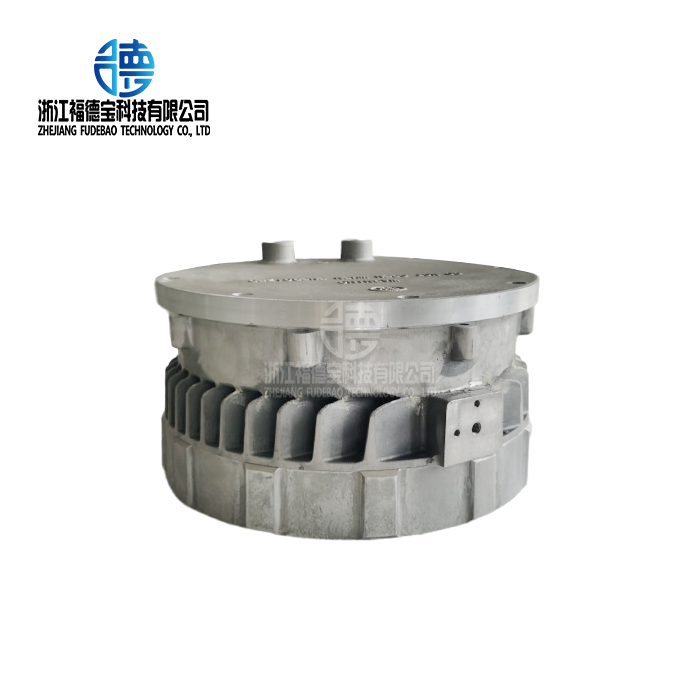
_1756348711711.webp "anti surge turbo housing")
_1756348356531.webp "Automobile engine oil pan")
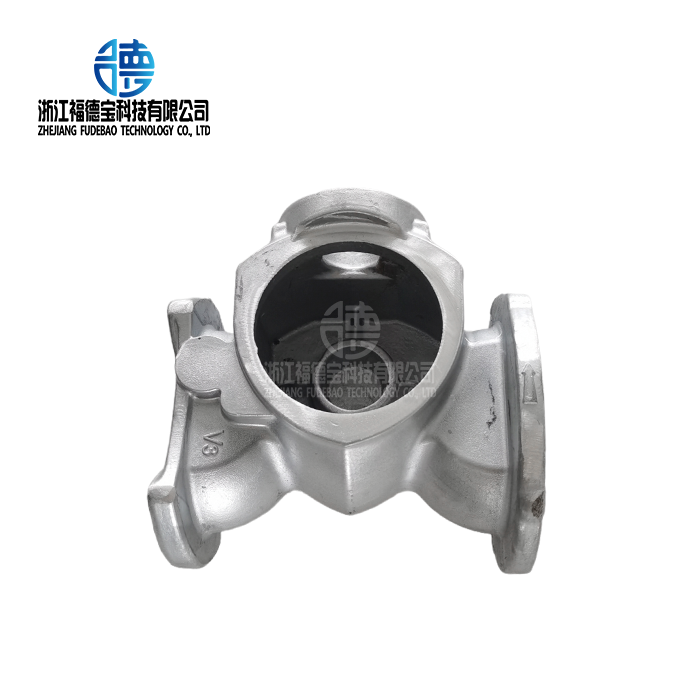
_1756346259673.webp "heavy duty hinges")