
Die Casting for Aviation with High Precision Aerospace Parts
2026-07-16
Die casting for aviation is a huge step forward in manufacturing because it makes it possible for modern aircraft to have parts that are both precise and light. This advanced metal shaping method presses molten alloy into precise steel moulds at high pressure. This makes complex shapes that are very accurate in terms of size and shape. More and more, aerospace companies use this method to make important structural brackets, housings, engine parts, and electrical enclosures that meet strict weight and performance standards while keeping the tight tolerances needed for safe flight and efficient operations.
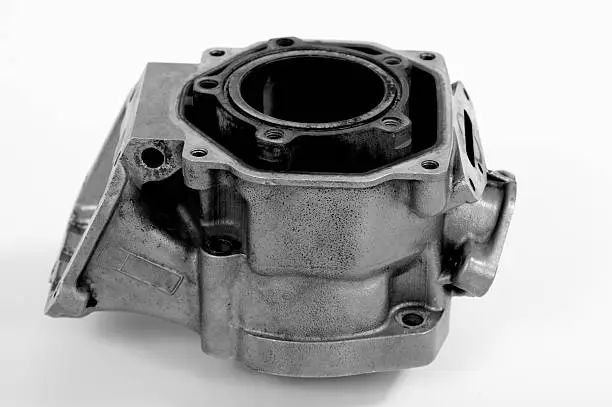
Understanding Die Casting in Aviation
The Fundamentals of Aerospace Die Casting
Die casting for aviation follows rules that have been fine-tuned over many years to meet the strict standards of the industry. The process starts with carefully chosen alloys, mostly aluminium, magnesium, and special zinc mixes, being melted at exact temperatures and pushed through hardened tool steel dies at up to 10,000 psi. This high-pressure injection makes sure that all the holes are filled, catching fine details and making parts that are close to net-shape so that they don't need as much cutting afterward. This method's fast solidification makes fine-grained microstructures that improve mechanical qualities. This makes parts with better strength-to-weight ratios, which are important for aircraft uses where every gram affects fuel economy and payload capacity.
Material Selection for Flight-Critical Components
Materials used in aviation need to be able to balance a number of different performance characteristics. Die casting for aviation is mostly done with aluminium alloys, especially those in the A380 and A383 families, because they are easy to cast, don't rust, and conduct heat well. Most of the time, these metals have tensile values higher than 30,000 psi and densities about one-third that of steel. At about 1.8 g/cm³, magnesium alloys like AZ91D have the lowest density of all structural metals and save even more weight. Engineers choose the right formulas based on the working environment, the load requirements, and the interaction with nearby materials. This makes sure that every part works consistently in a wide range of temperatures, through vibration cycles, and for long periods of time between service intervals.
Quality Challenges and Aerospace Standards Compliance
To make die casting for aviation parts, you have to deal with process problems that come up naturally by using strict controls. To this day, porosity is still the biggest problem because trapped air or gas can weaken structures and create stress points. To keep voids from forming too much, we use vacuum-assisted casting, optimised control systems, and real-time process tracking. Protocols for heat treatment keep sizes stable and improve mechanical properties by controlling the hardening of precipitates. Nondestructive testing on every part includes X-ray inspection, checking the dimensions with coordinate measuring machines that are exact to ±0.001 inches, and material certification that links the alloy's makeup to approved mill sources. AS9100 quality management systems and NADCAP accreditation show that a seller is committed to the aerospace-specific process controls that buying teams look for when they are choosing providers.
Comparing Die Casting with Other Manufacturing Methods in Aerospace
Process Selection for Optimal Component Performance
When making new parts for aerospace systems, makers look at a number of different ways to make them, each with its own benefits. Although forging has better grain flow and mechanical properties, which makes it perfect for highly stressed landing gear and structural fittings, it can't be used as much because of the cost of the tools and the way they are designed. Investment casting can handle complicated internal tunnels and thin-wall parts, but it takes longer to make and costs more per piece. Conventional machining from billet stock gives you the best material properties and flexibility, but it wastes a lot of material and takes a long time to do.
Die casting for aviation stands out because it has a number of strong benefits that buying workers and engineering teams really like:
Die casting for aviation is very good at making complicated shapes with built-in features. It can combine several machined parts into a single casting, which cuts down on assembly steps and gets rid of any possible leak paths. Dimensional consistency across production runs is at a level that can't be reached by hand, and tolerances of ±0.005 inches are common when working directly from the die. When the number of units produced each year goes over 5,000, the economics of high-volume production become even better. This is because tooling costs are amortised and cycle times are very fast (often less than 60 seconds per part), which leads to big price cuts per unit compared to other methods. When the surface finish quality is good right from the die, secondary operations are often not needed. As-cast Ra values below 125 microinches can meet many functional and aesthetic needs without any extra processing.
Because of these factors, aircraft OEMs are choosing die-cast parts more and more for housings, brackets, heat sinks, and enclosures where tight budgets, complicated designs, and high production volumes all come together. Modular tooling and prototype die trials make it possible to make quick changes to designs. This shortens the time it takes to develop new aircraft platforms and brings them to market faster. Proven manufacturing processes also help keep program risk low.
High-Pressure vs. Low-Pressure Die Casting for Aviation
Knowing when to use different types of die casting for aviation helps you choose the best parts. When working at injection speeds of more than 100 feet per second, high-pressure die casting for aviation can fill complex holes before the metal hardens. This method is best for parts that need thin walls, detailed details, and smooth surfaces. This method is mostly used for housings in consumer gadgets and car trim, but it needs careful gating design to keep bigger aircraft parts from breaking because of turbulence.
Low-pressure die casting for aviation brings in molten metal from below at controlled speeds. This lowers turbulence and oxide inclusions while increasing the mechanical properties by directing solidification. This softer filling method works better for bigger sections and structural parts where strength is more important than surface finish. For safety-critical parts that need full material traceability and better fatigue resistance, many aircraft makers prefer low-pressure methods, even if it means slightly longer cycle times to get better metallurgical quality.
Selecting and Procuring High-Precision Die-Cast Parts for Aviation
Qualification Criteria for Aerospace Casting Suppliers
When procurement teams choose suppliers, they have to make important choices that will affect the success of the program for years to come. Certified die casting for aviation manufacturers has to show that they can do more than just make things. International certifications like AS9100D, ISO 9001:2015, and NADCAP accreditation for non-destructive testing show that quality management is at an advanced level. Expertise in materials includes more than just casting common alloys. It also includes knowing how metals react to changing temperatures, chemicals, and mechanical loads that are unique to aviation environments.
To figure out how much production can be done, you have to look at how complex the equipment is. This includes everything from the tonnage of the die casting for aviation machine and its process control options to the downstream machining centers and surface treatment facilities. Zhejiang Fudebao Technology is a good example of this all-around method because it has high-speed machining centers, CNC lathes, and integrated casting tools that help with manufacturing from raw materials to finished parts with a level of accuracy of ±0.05mm. This kind of vertical integration gets rid of the need for handoffs between subcontractors, which cuts down on lead times and quality risks and makes supply chain management easier by giving accountability to a single source.
Navigating Lead Times and Procurement Processes
Most die casting for aviation projects have set schedules that procurement managers should be aware of. Initial tooling development takes 8 to 12 weeks, depending on how complicated the part is. This includes designing the die, making the mould, and testing the first product. Before full-rate manufacturing authorisation, production sample makes the first parts that are checked for dimensions, material tests, and functional evaluation. Lead times for series production run from 4 to 6 weeks for catalogue parts to 12 to 16 weeks for fully machined and finished pieces that need a lot of extra work.
Long-term supply deals and bulk buying can add a lot of value to programs that are already in place. When suppliers agree to a certain amount of work, they can plan their schedules more efficiently, keep dedicated tools in good shape, and invest in process improvements that are good for everyone. Contract manufacturing agreements make pricing, delivery schedules, and quality standards official. This makes budgeting easier and ensures capacity during times of high demand. Many suppliers let designers work together with engineers during the development process. They use their knowledge of how things are made to improve castability, lower weight, or combine features that lower the overall cost of the program in ways other than just lowering the piece price.
Technical Guidelines for Designing and Processing Die Cast Aerospace Parts
Design Principles for Manufacturability and Performance
For die casting for aviation to work, the plans need to strike a balance between how the parts should work and how they can be made. The thickness of the walls has a direct effect on how metal flows, how it solidifies, and its mechanical properties. Even cooling and fewer defects caused by shrinkage are helped by sections that are all the same thickness (2.5–4.0 mm), and smooth changes between thicknesses keep stress from building up in one place. Draft angles of 1-3 degrees make it easier to eject parts without damaging the surface, and large fillet radii lower stress risers and improve metal flow while cavities are being filled.
Tolerance specifications need careful thought about how to make things and what they need to do. Standard die casting for aviation tolerances of ±0.005 inches per inch are good enough for most aerospace uses. Tougher requirements are only needed for critical interfaces that need extra work. Designers should only ask for finish cutting when it's really necessary, since taking off cast surfaces gets rid of the helpful compression skin layer and increases cost and lead time. During design reviews, placing parting lines, ejector pin locations, and overflow wells in a way that makes sense helps keep visible surfaces free of flaws and guarantees consistent dimensional results across production runs.
Post-Processing for Enhanced Component Properties
Without more work to improve their qualities and appearance, raw castings rarely meet the final aircraft standards. Solution heat treatment and artificial ageing are two types of heat treatment methods that are used to keep measurements stable and improve mechanical properties. Aluminium aerospace castings often go through T6 temper treatments, which dissolve alloying elements at high temperatures around 980°F. The castings are then quickly quenched to keep the supersaturated solid solutions. Finally, controlled ageing at 320°F forms strengthening phases that increase the yield strength by 40–60% over as-cast conditions.
Finishing the surface keeps it from rusting and meets both aesthetic and practical needs. Chemical conversion coatings, such as chromate or non-chromate alternatives, protect the base and help paint stick. Anodising makes strong oxide layers that make things more resistant to rust and wear. Type II and Type III hard anodising are commonly used in aircraft. Powder coating makes products that are strong and uniform, and they don't break down when exposed to chemicals or UV light. Shot peening adds helpful compressive pressures that make fatigue life a lot longer. This is especially helpful for brackets and structural parts that are loaded and unloaded many times. These steps after casting turn raw castings into finished parts that are ready to be used in harsh aviation environments.
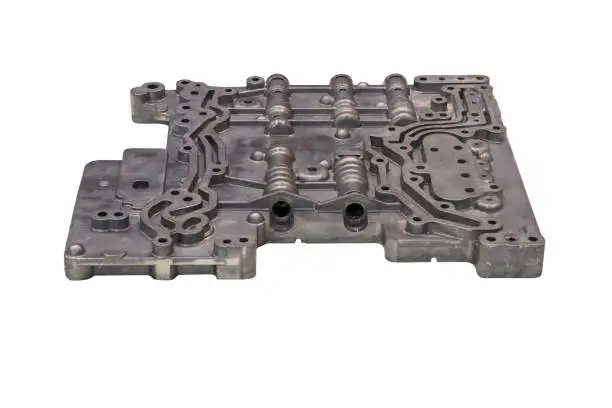
Future Trends and Innovations in Aviation Die Casting
Automation and Advanced Materials Integration
Die casting for aviation is always changing as new technologies make it possible to do more and be more consistent. Robotic automation can move materials, take out parts, and check quality in ways that humans can't do over and over again. Automated cutting systems get rid of flash and gates without the need for human variation, and vision-guided systems check that the dimensions are correct at rates that match production cycles. These digital manufacturing technologies make factories less reliant on workers and collect data about the processes that help with planned maintenance and ongoing improvement.
New material innovations open up new ways to cut down on weight and improve performance. Aluminum-lithium alloys can be made normally, but they have densities that are about 10% lower than regular compositions. However, the higher costs of the materials are currently stopping them from being widely used. Metal matrix composites that contain ceramic particles offer customised coefficients of thermal expansion and better resistance to wear. Combining die casting for aviation with selective reinforcement through embedded inserts or overmolded structures creates optimised parts that can't be made using a single process, allowing designers more freedom that next-generation aircraft are demanding more and more.
Industry 4.0 and Sustainable Manufacturing Practices
The digital transformation changes aerospace supply chains by making them more connected and better at using data. Real-time process tracking records casting factors like metal temperature, injection speed, and cooling rates. It then connects these process variables with the properties of the finished part to improve quality and cut down on waste. Blockchain-based material traceability systems keep permanent records of the alloy's composition, processing history, and inspection results. These records make certification easier and stop fake parts from getting into supply chains. Predictive analytics find maintenance needs for equipment before they happen, which increases uptime and delivery reliability, which is very important to procurement teams.
Environmental duty drives changes in how aerospace products are made. Modern die casting for aviation plants reuses and recycles metal trash, sending trim and rejected parts back to the furnace for charges with little material loss. Melting systems that use less energy and cooling circuits that recover heat lower carbon footprints and operating costs. Water-based lubricants and surface solutions that don't use chromate get rid of dangerous chemicals, making workers safer and the world safer. These ecological efforts are in line with the aerospace industry's promises to have less of an effect on the environment without lowering the quality and dependability that is needed for flight safety.
Conclusion
In conclusion, die casting for aviation gives modern aviation the accuracy, repeatability, and material properties it needs. It also has cost benefits that help build competitive aircraft. Procurement experts can make smart sourcing choices that combine technical needs with program limitations when they know about process skills, material options, and source qualifications. As manufacturing technologies improve and industry standards change, aerospace OEMs that want to cut weight, save money, and speed up development times will find that working with skilled die casting for aviation specialists becomes more valuable. Die casting for aviation is an important way to make parts for current and future aircraft platforms because it combines tried-and-true methods with new ideas and strict quality control systems.
FAQ
What advantages does die casting offer for aerospace components?
Die casting for aviation makes high-precision, lightweight parts that are very consistent in size and shape, which means they don't need to be put together as much. The process keeps production runs short enough for mass production while still keeping tight tolerances of about 0.005 inches. The properties of the material meet the needs of the structure while also reducing weight, which directly improves the fuel efficiency and payload capacity of the aircraft.
How do I verify supplier quality for aviation die-cast parts?
Aerospace casting suppliers that are qualified keep their AS9100 and ISO 9001 certifications, which show that their quality management systems are mature. Having NADCAP certification for certain processes, like non-destructive testing, gives you even more peace of mind. Before committing to a long-term supply relationship, make sure you get material certifications that show how the alloy was made and where it came from, read process control documentation, and do on-site audits that look at the equipment, inspection procedures, and traceability systems.
Can die casting replace forged or machined aerospace components?
Die casting for aviation doesn't completely replace other ways of making things; it works with them. Die casting for aviation makes it easy to create complex housings, brackets, and covers, and it's also cheap to make. Forging may still be needed for highly stressed structural parts that need the best mechanical properties, but machining from billet is better for prototype quantities or parts that need to be very closely matched. When engineers are designing something, they look at things like load requirements, production volumes, and performance criteria to decide which parts to use.
Partner with Fudebao Technology for Certified Aerospace Die Casting Solutions
Zhejiang Fudebao Technology can help you with your aircraft component needs because they can make a wide range of products using precise CNC machining, aluminium alloy, copper alloy, and specialised metal casting. Our modern building has high-speed machining centers, advanced die casting for aviation equipment, and full finishing capabilities, so we can take care of everything from the raw materials to the certified finished parts, and the accuracy is up to 0.05mm. As a reliable provider of die casting for aviation for the aerospace industry with customers all over the world, we keep strict quality control systems and can track all of our materials to meet the highest standards in the industry. Email our technical team at hank.shen@fdbcasting.com to talk about the specifics of your project, get full quotes, or set up a facility review. We give aerospace procurement teams the accuracy, dependability, and quick service they need.
References
1. Campbell, J. (2015). Complete Casting Handbook: Metal Casting Processes, Metallurgy, Techniques and Design. Butterworth-Heinemann Publishing, Oxford.
2. Kaufman, J.G. & Rooy, E.L. (2004). Aluminum Alloy Castings: Properties, Processes, and Applications. ASM International, Materials Park, Ohio.
3. Aerospace Industries Association (2021). AIA Standards for Quality Management Systems in Aerospace Manufacturing. Aerospace Industries Association Publications, Arlington, Virginia.
4. North American Die Casting Association (2020). Product Specification Standards for Die Castings: Dimensional Tolerances and Draft Guidelines. NADCA Technical Publications, Wheeling, Illinois.
5. SAE International (2018). Aerospace Material Specifications: Heat Treatment of Aluminum Alloy Castings. SAE Technical Paper Series, Warrendale, Pennsylvania.
6. European Aviation Safety Agency (2019). Certification Specifications for Materials and Manufacturing Processes in Aircraft Structures. EASA Regulatory Publications, Cologne, Germany.



YOU MAY LIKE