
Aluminum Die Casting Process for High-Strength Metal Parts
2026-07-15
The aluminum die casting process is a sophisticated way to make things. Under very high pressure, often over 10,000 psi, molten aluminum alloy is pushed into precise steel molds. This high-pressure die casting method turns liquid metal into strong, complex parts in a matter of seconds, with perfect surface quality and accuracy of size. This process solves important problems related to structural integrity, production scalability, and cost efficiency for industries that need metal parts that are reliable and light.
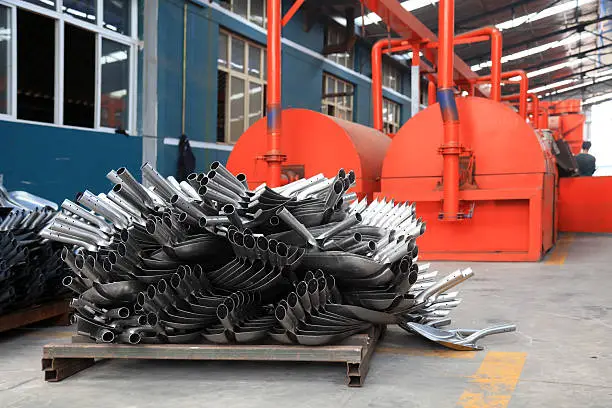
Understanding the Aluminum Die Casting Process
The Complete Production Workflow
Careful mold preparation is the first step in making any high-strength aluminum part. We use hardened steel dies at our facility that are made to withstand thermal cycling and repeated high-pressure injections. The aluminum die casting process is organized: the mold is heated to the right temperature (usually 400–500°F), molten aluminum is ladled from the furnace, and it is injected into the die cavity through the shot sleeve. Under constant pressure, the metal hardens quickly, which lets the part reach a nearly net-shape form before it is ejected.
Managing cycle times has a direct effect on how fast things get made. Standard rounds last between 30 seconds and 2 minutes, based on how complicated the part is and how thick the walls are. Faster cycles increase output, but they need to be carefully balanced with the need for cooling to avoid flaws in the metal. We've tweaked the parameters of our process so that cycle times stay the same and mechanical properties stay the same.
Temperature Control and Metallurgical Precision
Controlling the temperature is the most important part of making a good aluminum die casting. To make sure the aluminum melts smoothly and fills holes properly, the temperature must stay within a small range, usually between 1,200°F and 1,300°F, based on the metal. When it's too hot, the metal attacks the die surface, which wears down the tool too quickly. When it's too cold, filling is incomplete, or the die cold shuts.
Controlling the temperature of the die is also very important. We use advanced thermal management systems with built-in cooling ducts that keep the temperatures of the dies the same in many areas. This stops thermal gradients that can cause warping or changes in the size of the object. Our workers use infrared sensors and thermocouples to keep an eye on these factors. They make changes in real time to keep the process stable during production runs that include thousands of shots.
Alloy Selection for High-Strength Applications
Material choice determines how well a final component works. A380 aluminum alloy is the most common choice for general-purpose uses because it is easy to cast, doesn't rust, and has balanced mechanical properties. A380 is a good material for automotive brackets, electronic housings, and industrial enclosures because it can withstand tensile strengths of up to 47,000 psi and only moderate elongation.
A383 has slightly better fluidity for thin-walled sections while keeping the same levels of strength. A357 is the best material for parts that need to have high mechanical qualities, like engine parts or structural parts for cars. This alloy can be heated to higher temperatures and has tensile strengths of more than 45,000 psi in the T6 condition. It can also stretch by about 5–8 percent, which makes it flexible enough for use in impact-loaded situations. Heat treatment changes the microstructure by forming hardening stages that make the yield strength and wear resistance much better. The aerospace and defense industries often ask for A357 or similar high-quality metals when the chance of a component failing is too high.
Advantages and Design Considerations for High-Strength Aluminum Die Cast Parts
Core Benefits Compared to Alternative Manufacturing
There are more benefits to the aluminum die casting process than just lower costs. The strength-to-weight ratio is better than most other methods, and the parts have the same specific strengths as many steel parts, but are only a third of the weight. This feature has completely changed how cars are lightweighted, directly leading to better gas mileage and longer range for electric vehicles.
Another strong benefit is that the measurements are accurate. It is common for die casting to get tolerances within ±0.005 inches on important features without the need for extra machining. This level of accuracy gets rid of problems with building and lowers the costs of processing that comes after. The surface finish quality right off the die is usually Ra 125 microinches or better, which is good enough for many visible uses with only light finishing.
Cost-effectiveness becomes very clear when production rates go over 5,000 units per year. Even though the cost of the tools seems high at first, the cost per piece drops sharply as the volume goes up. Forging, on the other hand, needs multiple steps and a lot of waste material to get similar tolerances, while sand casting needs a lot of machining. Investment casting can make very detailed parts, but it takes longer to make and costs more per piece. Die casting combines several steps of production into one, which greatly reduces the amount of work and dealing that needs to be done.
Design Rules for Structural Integrity
With the right design, you can get the most out of die casting's natural benefits while avoiding its usual problems. Consistency in wall thickness stops internal stress concentrations and shrinkage flaws. As much as possible, we suggest keeping walls between 0.080 and 0.200 inches thick, with gradual changes between thicknesses to help keep the building cool. Sudden changes in width make areas that allow cracks and holes to form.
Draft angles make it easier to eject parts and make dies last longer. A draft of at least 1 degree on the outside and 1.5 to 2 degrees on the inside keeps things from sticking and galling. To get around release friction, higher drafts are needed for deeper pockets. Undercuts should not be used unless they are economically justified by side actions or complicated tooling.
Ribs and gussets make the structure more rigid without adding too much weight. Rib thickness shouldn't be more than 70% of the wall next to it, so that sink marks don't show up on surfaces that can be seen. Large fillet radii—usually at least 0.030 inches—get rid of stress stems that shorten the wear life. By strategically placing ribs, loads are spread out more evenly, which makes it possible for thinner sections that use less material and take less time to make.
Optimizing Cooling and Material Performance
The design of the cooling system strikes a balance between part quality and production speed. Placing efficient cooling channels near heavy sections speeds up solidification, cutting down on cycle time while lowering the risk of porosity. We use conformal cooling technologies in important dies, which don't involve straight-line drilling but channels that follow the shape of the part. This new idea lowers thermal gradients and makes it easier to keep dimensions the same across complicated shapes.
The choice of die material affects both the quality of the part and the life of the tool. When heated to 46–50 HRC, premium H-13 tool steel has great resistance to thermal stress for the mass production of cars. Surface treatments, such as nitriding or PVD coatings, make dies last longer by stopping molten aluminum flow from wearing them down. These investments pay off because they cut down on downtime and keep part quality stable over hundreds of thousands of rounds.
Troubleshooting and Quality Assurance: Defects and Solutions
Common Defects and Root Causes
Porosity is still the most common flaw in the aluminum die casting process. It shows up as hollow spaces inside the metal that weaken its structure and make it less resistant to pressure. Gas porosity happens when dissolved hydrogen crystallizes during solidification, and shrinkage porosity happens when there isn't enough metal feed during the last stages of solidification. Both types have a big effect on mechanical properties, especially elongation and fatigue strength.
When two metal streams meet without properly fusing, cold shuts and flow lines show up. These flaws happen when the metal isn't hot enough, when injection speeds are too slow, or when the gates aren't designed well, causing turbulent flow. Blisters on the surface mean that air or gas is caught and will grow when heated or exposed to service. Differences in dimensions are caused by inconsistent die temperatures, old tools, or bad control of the process parameters.
Effective Process Adjustments and Solutions
Getting rid of holes needs more than one method. Vacuum-assisted die casting methods remove air from the hole before injection, which makes it much less likely that gas will get trapped. During the final solidification phase, intensification pressure is used to make up for metal shrinkage by adding more material to the parts that solidify last. With these methods, we've been able to cut leakage by more than 80%, which lets us make hydraulic parts and other pressure-tight housings.
Optimizing the gate and runner system stops cold shuts by making sure there is laminar flow and even cavity filling. Computational fluid dynamics simulations can predict flow patterns before the construction of the tooling. This lets designers place gates strategically and change the cross-sections of runners to ensure even filling. When parting lines and cavity edges are properly vented, air that is trapped can escape instead of being squished into the hardening metal.
The maintenance protocols keep the accuracy of the dimensions across all production campaigns. Wear patterns, erosion damage, and thermal checking can be found through regular inspections before they turn into casting defects. Preventive die maintenance, such as refinishing the surface, cleaning the cooling channel, and replacing worn inserts, keeps the quality of the parts consistent and extends the life of the tool.
Quality Control and Certification Standards
Reliable supply chains are based on strict quality systems. Our ISO 9001:2015 certification sets up full process controls, from checking the materials that come in to shipping and final inspection. IATF 16949 compliance covers standards unique to the car industry, such as documentation for the Production Part Approval Process (PPAP), advanced product quality planning (APQP), and failure mode and effects analysis (FMEA).
We use more than one inspection method to make sure conformance. Coordinate measuring machines (CMMs) check that important measurements are correct to within 0.0001 inches. X-ray radiography can find internal porosity without damaging the material, which ensures that the pressure integrity is maintained without damaging production parts. Spectrographic research proves that the alloy's chemistry meets the requirements of the standard. Tensile, hardness, and impact tests are some of the mechanical tests that are used to check the qualities of materials, lot by lot.
Third-party audits make sure that our quality systems are working properly. Regular evaluations by automotive OEM teams and certification bodies find ways to make things better while also boosting customer trust. This level of openness is very important when providing safety-critical parts that can't have any failures.
Comparative Insights: Aluminum Die Casting vs Alternative Manufacturing Methods
Process Comparison Across Manufacturing Technologies
Finding the best way to make something involves knowing what the trade-offs are in a lot of different areas. Zinc die casting has better surface finish and tighter tolerances than aluminum die casting, but aluminum is stronger and better at withstanding heat. Zinc's higher density makes up for its lower melting point, which saves energy and makes dies last longer, but it loses the weight benefits that are important for car and aerospace uses.
Plastic injection molding gives you a lot of creative freedom and low costs for materials. Polymers aren't as strong, stiff, or good at conducting heat as metal, so they can only be used for non-structural parts. When electrical conductivity, EMI shielding, or heat dissipation are needed, aluminum casting is the best option, even though it costs more for the material and the tools.
However, forging produces parts with better grain structure and mechanical properties, but it does so at a much slower rate. Through flash, the process creates a lot of waste material, and the final dimensions can't be reached without a lot of machining. The near-net-shape feature of the aluminum die casting process gets rid of most of the need for machining, which cuts down on both waste and labor. Forging is best for parts that are under a lot of stress and are made in small quantities, as long as the best mechanical properties make up for the higher cost.
Sand casting and investment casting are good for small jobs or parts that are too big to be cast in a die. Because of these methods, tolerances are less tight, so large machining allowances are needed. The quality of the surface finish is still poor, so it often needs to be fixed again for cosmetic purposes. Cycle times range from hours to days, while die casting only takes minutes. This means that they are not cost-effective for production rates above a few thousand units per year.
Cost-Benefit Analysis and Strategic Considerations
The main thing that stops people from using the aluminum die casting process is the cost of the tools. Making dies for complicated car parts can cost a lot of money up front, but this cost is spread out over hundreds of thousands of parts. Break-even analysis usually shows that die casting can compete on price after about 5,000 to 10,000 units per year, but this can change based on the complexity of the part and other process options.
Lifecycle costs are more than just the price of a single part. Die casting's consistent dimensions cut down on assembly work and get rid of the need for selective fitting. Less weight means less expensive shipping and better function of the goods. Better resistance to corrosion and durability cuts down on warranty claims and failures in the field. Because of these things, die casting is often the best choice, even when other methods show lower initial piece-part costs.
The ability to increase or decrease production volume is a clear benefit. Once the tools are set up, adding more molding machines that use the same dies doesn't cost much to do and increases the output in small steps. When using different methods, you usually have to buy more tools as the number of tools goes up. This ability to grow is very important when market demand changes or when product lifecycles are not clear.
Procuring Aluminum Die Casting Services: What B2B Buyers Need to Know
Evaluating Supplier Capabilities and Reliability
To find a good die casting partner, you need to do more than just compare prices. Certification credentials are the basis. For example, ISO 9001 shows that you know basic quality management, and IATF 16949 shows that you know a lot about cars. Aerospace manufacturers should be certified by either AS9100 or Nadcap. These certifications show that processes are written down, and audits show that they are being followed.
Supply interruptions are avoided by figuring out the production capacity. Visit possible providers to find out how old their equipment is, how they maintain it, and how much of their capacity is being used. When suppliers are almost at full capacity, it's hard for them to handle higher volumes or faster orders. Suppliers with a wide range of customers are less likely to be affected by changes in demand that happen during business cycles.
Strategic partners are different from commodity suppliers in terms of their technical skills. Advanced simulation software can predict possible casting flaws before the tools are made, which cuts down on the time and money needed for development. With in-house tool design and maintenance, changes to designs can be made quickly, and processes can be made more efficient. Having secondary processes like machining, surface treatment, and assembly all done at the same time makes managing the supply chain easier and cuts down on wait times and transportation costs.
Understanding Lead Times and Cost Structures
Setting realistic deadlines keeps projects from running late and over budget. Initial equipment development usually takes between 8 and 14 weeks, depending on how complicated it is. This time includes validating the plan, getting the steel, cutting it, and making samples. Rush programs can shorten deadlines, but they come with higher costs and more risk. For established programs, production lead times are between 3 and 6 weeks, depending on the number of orders and the available capacity.
The minimum order quantities are based on the costs of setup and changeover. The minimum order quantity (MOQ) for the aluminum die casting process is usually between 500 and 1,000 pieces. This is a lot less than forging or investment casting, but more than machining or 3D printing. Blanket purchase orders with scheduled releases balance the costs of keeping inventory against the price benefits of selling parts separately. This lets sellers make the best use of production schedules while giving customers a choice of delivery times.
When it comes to die casting, costs include more than just the raw material. Tooling amortization is a big investment, whether it's paid for all at once or spread out over the price of each part. Melting energy, machine time, and direct labor are all part of the process costs. Trimming, grinding, and surface treatment are examples of secondary processes that add extra costs but often end up being cheaper when they are done at the same time as casting production. Logistics and packaging make up the rest of the delivered cost structure.
Preparing Effective RFQs and Communication
Complete documentation for a request for quote speeds up the response time from suppliers and ensures that prices are correct. Three-dimensional CAD models in neutral forms (STEP or IGES) help makers figure out if a product can be made and how much it will cost to make the tools. Drawings in two dimensions that use geometric dimensioning and tolerancing (GD&T) make it clear what features are important and what inspection requirements are.
Instead of using general terms, material specs should refer to industry standards like ASTM and SAE. Mechanical property requirements, surface finish expectations, and cosmetic standards make it clear what performance is needed without giving too many details. Forecasts of annual volume and lifecycle help suppliers plan production and invest in tools in the best way possible.
During the quote process, clear lines of communication are set up to avoid mistakes during production. Set up a single point of contact for each side to make it easier to make decisions. Reviewing the design often while the tool is being made helps find problems early on, before they need expensive fixes. Quality expectations, inspection protocols, and escalation procedures are all brought up to speed at production launch meetings. Instead of just doing business with a vendor, these actions create partnerships.
Conclusion
The aluminum die casting process is the best way to get high-strength metal parts for the aerospace, automobile, industrial, and electrical markets. This way of making things combines very fast production cycles with very accurate measurements, which lets designers make lightweight designs that stay strong even in harsh service conditions. It's important to pay close attention to alloy choice, design optimization, process control, and supplier qualification if you want to be successful.
To make smart decisions about procurement, it's helpful to know the technical differences between good suppliers and real partners. Reliable sources can be told apart by their credentials for certification, their ability to produce, their technical skills, and the way they talk to people. When the performance of a component has a direct effect on the success of a product, spending time evaluating suppliers and building relationships with them pays off in the form of consistent quality, quick service, and a low total cost of ownership.
FAQ
What injection pressures are typical in the aluminum die casting process?
High-pressure die casting methods work at pressures ranging from 1,500 to 30,000 psi, based on the complexity of the part and the wall thickness needs. For thinner sections, higher pressures are needed to make sure that all the holes are filled before the metal starts to solidify. Pressures in the 8,000–15,000 psi range are usually used for automotive structural parts, balancing filling speed with die wear.
How does porosity reduction improve high-strength part reliability?
When gas gets trapped inside or the material shrinks, it leaves holes inside. These holes act as stress concentrators that cause cracks to spread when the load is cycled. Using vacuum assistance and intensification pressure to reduce porosity keeps the full strength potential of the aluminum alloy and increases fatigue life by three to five times in serious situations. This is necessary for parts in cars and airplanes that need to be safe.
Can aluminum die castings be heat-treated for additional strength?
When heat-treatable alloys like A356 and A357 are treated with T6 solution heat and artificial aging, their tensile strength goes up by 30 to 40 percent compared to when they were first cast. Because they contain silicon and are made up of different phases, common die casting alloys like A380 don't heat treat well. If post-casting heat treatment can improve mechanical qualities for demanding uses, it depends on the alloy that was chosen during design.
Partner with Fudebao Technology for Precision Aluminum Die Casting Solutions
Zhejiang Fudebao Technology is ready to help you turn your problems with parts into manufacturing successes. We can do the whole aluminum die casting process, from melting the alloy to precise machining and surface treatment. The finished parts we make meet strict requirements for cars, aircraft, and industrial equipment. We bought high-speed machining centers, CNC lathes, and high-tech die casting equipment so that we can consistently reach tolerances of ±0.05mm.
Our team has directly supplied well-known international brands, such as American HAAS automation and ESS energy storage systems, showing that we can meet high-quality standards. Our technical knowledge makes sure that the best alloys are chosen, tools are designed efficiently, and production runs smoothly, whether you're looking for gearbox housings for auto OEMs or electrical enclosures for renewable energy applications. Get in touch with Hank Shen at hank.shen@fdbcasting.com to talk about your project needs with a skilled aluminum die casting process source who wants you to succeed.
References
1. North American Die Casting Association. (2019). Product Specification Standards for Die Castings Produced by the Semi-Solid and Squeeze Casting Processes. Arlington Heights: NADCA Press.
2. Kaufman, J. G., & Rooy, E. L. (2004). Aluminum Alloy Castings: Properties, Processes, and Applications. Materials Park: ASM International.
3. Bonollo, F., Urban, J., Bonatto, B., & Botter, M. (2005). Gravity and Low-Pressure Die Casting of Aluminium Alloys: A Technical and Economic Benchmark. Materials Science Forum, 492-493, 353-358.
4. SAE International. (2017). Automotive Aluminum Casting Alloys - Properties and Applications Standard J452. Warrendale: Society of Automotive Engineers.
5. Schlesinger, M. E. (2013). Aluminum Recycling: Second Edition. Boca Raton: CRC Press.
6. Jorstad, J. L., & Apelian, D. (2009). Pressure Assisted Processes for High Integrity Aluminum Castings. International Journal of Metalcasting, 3(2), 19-38.



YOU MAY LIKE