
Custom Aluminum Die Casting Auto Parts with Tight Tolerances
2026-07-20
Custom aluminum die casting auto parts are a game-changing way for automakers to reduce weight while maintaining structural integrity and exact measurements. This high-pressure manufacturing method makes it possible to make complicated car parts, like gearbox housings and engine brackets, with accuracy as low as 0.05mm. By carefully pouring molten aluminum alloys into precise steel molds, die casting achieves repeatable accuracy that is hard to achieve with other methods. It meets important industry needs for making electric vehicles lighter and improving fuel efficiency.
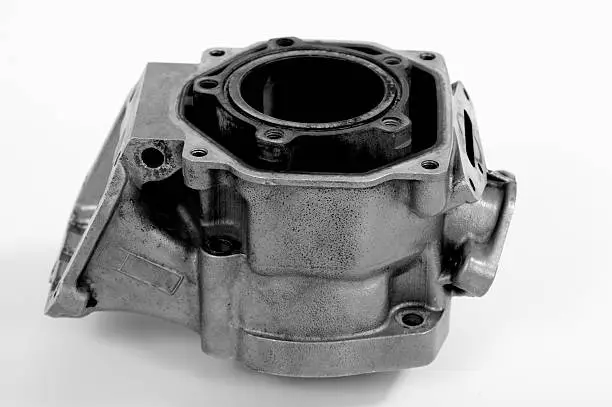
Understanding Aluminum Die Casting for Automotive Parts
The aluminum die casting process changes the way we make parts for cars in a fundamental way. At its core, this method involves pushing molten aluminum alloy into hardened steel tools at pressures higher than 10,000 psi. This makes parts that are very stable in their dimensions and have a great surface finish.
Material Selection and Alloy Specifications
Because their qualities are balanced, A380 and ADC12 aluminum alloys are mostly used in automotive applications. A380 is great for complicated shapes like intake manifolds because it is fluidly and pressure-tightly sealed. It has about 8.5% silicon in it, which improves the way it casts and keeps its density at about 2.74 g/cm³, which is about a third of the weight of steel parts that are the same size. ADC12 is commonly used in Asian automotive supply chains because its controlled copper content makes it better at die-filling and resists corrosion. Both metals have tensile strengths of 310 to 330 MPa when they are just cast, which is strong enough for most structural car uses without heat treatment.
The Die Casting Process Step-by-Step
The first step in the manufacturing process is melt preparation, which involves heating aluminum bars in holding furnaces to between 650°C and 700°C. Refiners and degassing treatments for grains get rid of hydrogen porosity risks that hurt mechanical properties. The molten metal is moved to a shot chamber, where a hydraulic plunger shoots it into the die cavity at up to 50 meters per second. This short fill time (20–80 milliseconds) keeps thermal loss to a minimum and makes sure that all the holes are filled before solidification starts. Cooling channels inside the die take out heat at controlled rates, keeping cycle times between 45 and 90 seconds, depending on the mass of the part. Ejector pins take out the hardened part, which then goes through shaping steps that get rid of the flash and gates.
Precision Maintenance in High-Volume Production
To keep tolerances tight across production runs, you need to use complex process control. Keeping an eye on the temperature of the die is very important, and thermocouples keep an eye on hot spots to keep the ideal thermal profiles. Changes of more than ±5°C can make the dimensions change beyond what is allowed by the specifications. Modern factories use shot monitoring systems that keep track of injection pressure curves and look for oddities that could mean die wear or process drift. Statistical process control charts keep track of measurements taken by coordinate measuring tools, which means that problems can be fixed before the parts get to customers. Preventative maintenance plans for tools include things like hole polishing and gate repair. These steps keep the dies accurate in size and extend their life beyond 80,000 rounds.
Advantages Over Traditional Manufacturing Methods
There are more benefits to aluminum die casting than just making parts. With thermal conductivity ratings of 96 to 120 W/m·K, aluminum castings are the best way to get rid of heat, which is why they are used in battery housings for electric vehicles and power electronics enclosures. Vehicles that are lighter are more fuel-efficient. For example, switching from a steel gearbox case to an aluminum die-cast one can cut mass by 40–50% without affecting structural performance. The near-net-shape feature cuts down on machining stock removal, which cuts down on trash and the costs of extra operations. Surface finishes can get Ra values of 1.6 to 3.2 μm as-cast, which means that grinding isn't always needed after the sand casting or forging process.
Comparing Aluminum Die Casting to Other Auto Part Manufacturing Methods
Weight-to-Strength Performance Across Processes
Specific strength, which is the ratio of material strength to density, is very high in die-cast aluminum parts. The die-cast A380 bracket has a density of 2.74 g/cm³ and a yield strength of 160 MPa. The steel stamping has a density of 7.85 g/cm³ and a yield strength of 250 MPa. The aluminum part is 35% lighter and has 68% of the strength of the steel. This benefit is even greater for assemblies that need more than one fastener or reinforcement. The weight of magnesium die casting is about 35% less than that of aluminum. However, the materials are more expensive, and the casting itself doesn't guard against corrosion very well without protective coats. Plastic injection molding is the lightest option, but it can't compare to the stiffness and thermal performance of metal when it comes to building structures.
Cost Efficiency in Mass Production Scenarios
Investing in tools is the most important economic factor. Depending on the complexity of the part and the number of cavities, aluminum die casting molds can be moderately to highly expensive. With proper maintenance, the tool can last for more than 60,000 to 100,000 shots. This initial cost is successfully spread out over production numbers above 5,000 units per year, where costs per part drop significantly below alternatives like CNC machining. Sand casting has lower starting costs for tools, but it needs a lot of extra machining to get the same tolerances, which raises unit costs. Forging is great for making things that need to be very strong, but it needs a lot of finishing work. The break-even analysis suggests that die casting is the best option when the amount of work needed justifies the cost of the tools and when the design is too complicated to be made up of separate parts.
Environmental Impact and Sustainability Considerations
Because aluminum can be recycled, die casting does well in lifetime studies. The alloy's mechanical properties stay the same even after being melted and cooled many times. In automotive castings, recycled content often exceeds 30% without affecting performance. A little over 5 percent of the energy needed to make aluminum from bauxite ore is used during the casting process. Modern factories use closed-loop recycling systems that melt down scrap gates and runners right away, which cuts down on waste. During blanking processes, steel pressing creates a lot of scrap, but steel is also very easy to recycle. When plastic molding is done, it can be hard to get rid of the waste, especially composite materials that are hard to separate and recycle.
Procuring High-Quality Custom Aluminum Die Casting Auto Parts
Effective procurement strategies are what set apart car projects that are successful from those that have problems with quality and service. To find reliable component sources, business-to-business buyers have to understand technical specs, supplier capabilities, and quality control systems.
Supplier Evaluation and Certification Requirements
Automotive supply chains require strict adherence to certification rules. IATF 16949 certification is the basic quality management standard for tier suppliers. It includes ISO 9001 requirements plus process controls that are specific to the automotive industry. Third-party servers, not self-declarations, are the best way to make sure that providers keep their certifications up to date. Check their manufacturing skills that are directly related to tight tolerance requirements, such as what models of coordinate measuring machines they use in their quality lab. Do they use statistical process control with real-time updates to the control charts? Ask to be shown around the building to see how the dies are maintained, how the melt quality is checked, and how often the dimensions are checked. Suppliers who use predictive maintenance programs and proactive process monitoring show that they are more mature than just reactive quality management, especially when producing aluminum die casting auto parts that require consistent dimensional accuracy, material performance, and long-term reliability in demanding automotive applications.
Technical Specification Development
Misunderstandings during production can be avoided by having clear documentation of the specifications. Instead of using the old plus-minus tolerancing system, engineering plans must include callouts for the right geometric dimensioning and tolerancing (GD&T). Figure out which parts need to be tightly controlled (like bearing bores, fitting surfaces, and mounting hole shapes) and which ones can handle wider tolerances to make manufacturing easier. When describing the surface finish, use Ra or Rz values instead of general phrases like "smooth finish." When describing the material, use specific alloy names (A380.0, ADC12) that have acceptable compositional ranges and mechanical property minimums. List the PPAP level standards, which are usually Level 3 for car parts, and describe the paperwork that needs to be submitted before production can begin.
Prototype Sampling and Production Validation
Before investing in full production tools, prototype tooling can help lower the risk. When you use aluminum or pre-hardened steel for soft tooling, you can make samples for form-fit-function validation and initial testing. However, the tool life is shorter than with production dies. To check the quality of trial samples, get dimensional inspection reports that cover all the required features, material certificates that say what kind of alloy it is, and mechanical tests if the structure's strength is important. Through X-ray radiography, porosity inspection can find internal holes that weaken the material's ability to keep pressure inside or resist wear and tear. Before approving serial production, production validation follows PPAP guidelines and asks for dimensional results, material certifications, process flow diagrams, and FMEA (Failure Mode and Effects Analysis) reports.
Ensuring Precision and Quality in Aluminum Die-Cast Auto Parts
Dimensional accuracy is what sets good casts apart from great ones. To get tolerances close to ±0.05mm, you need to be very good at using technology and follow strict process rules. This is what sets advanced manufacturers apart from commodity suppliers.
Advanced Tooling and Process Technologies
Vacuum-assist systems are now built into modern die casting tools. They remove air from the die cavities before metal is injected, which reduces porosity and improves mechanical properties. When additive methods are used to make conformal cooling channels, they can follow complex part shapes and remove heat more evenly than straight-drilled channels. This thermal management cuts down on cycle times and keeps warping to a minimum by preventing uneven cooling rates. Squeeze pins are used in high-integrity casting processes to apply localized pressure to key areas during solidification. This makes up for metal shrinkage and gets rid of holes in thick sections. Some companies use simulation software to look at how metal flows, how it solidifies, and how it reacts to heat before they cut steel. This helps them find the best gate locations and cooling strategies to meet their size goals.
Quality Control and Inspection Methodologies
Dimensional verification programs depend on coordinate measuring machines to work. Three-axis CMMs with touch probes can measure geometric features with an accuracy of ±0.002mm, making sure that the cast's dimensions stay within the allowed range. Optical scanning systems take pictures of the whole shape of a part in minutes. They then compare the real surfaces to CAD models to find any differences in size across the whole part. X-rays show internal holes and inclusions that can't be seen from the outside. This is very important for parts that are under pressure or are loaded and unloaded quickly. Helium mass spectrometry is used for leak testing, which finds tiny paths through part walls. This makes sure that hydraulic housings and parts that hold fluid are pressure-tight. Metallographic research looks at the substructure and checks the grain size and secondary phase distribution, which affect how well the material works.
Defect Prevention and Process Optimization
Porosity is still the most common flaw in casting. It happens when caught air or gas forms during solidification, which is a critical concern in the production of aluminum die casting auto parts. Some ways to stop this from happening are to use better gate designs that allow metal to flow smoothly and without any problems, and to apply more pressure during the solidification phase to squeeze the pores. Different cooling rates or residual stresses can cause warpage. When dimensional stability is important, solutions include designing balanced cooling channels and using stress-relieving heat treatments. If there are cold shuts, which are incomplete fusion lines where metal streams meet, it means that the die temperature is too low or the injection speed has slowed down too much. Design of experiments (DOE) methods are used in process optimization to find the best parameter combinations that balance cycle time, dimensional accuracy, and mechanical properties.
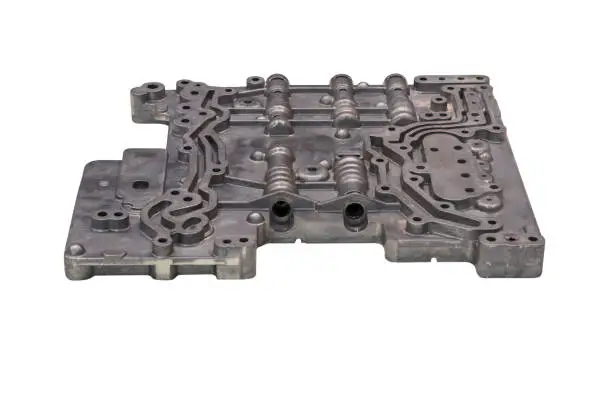
Why Choose Custom Aluminum Die Casting Auto Parts with Tight Tolerances for Automotive Projects
When performance needs, cost concerns, and government rules all come together, precision aluminum die casting becomes a smart way to make things for automotive uses.
Cost Efficiency Through Process Excellence
When casting with tight tolerances, extra processes like machining that add cost and lead time are cut down or eliminated. If you cast the gearbox case to the final bearing bore dimensions, you won't have to do any more boring. This saves time on cutting and keeps material that would have been chips. Die casting is repeatable, and when it is controlled correctly, it produces parts with very little difference in size from one to the next. This keeps scrap rates below 1% in mature processes. This consistency makes just-in-time delivery models possible, which lowers the costs of both suppliers and OEM customers' inventory holding. When you compare making near-net-shape parts in 60 seconds to machining operations that take hours, you can see that getting more of them in less time leads to lower unit costs after the equipment costs are paid for.
Performance Enhancement in Modern Vehicles
Electric car designs need ways to handle heat that can only be found in aluminum die casting. Battery pack covers need to be light to maximize range, rigid to protect against crashes, and thermally conductive to get rid of heat. All of these properties can be found in aluminum. When the powertrain is electrified, heavy iron engine blocks are replaced with small motor housings. The reduced weight directly increases the driving range. Autonomous vehicle sensor integration needs mounting brackets that are precisely positioned at an angle. Tight-tolerance casting gets rid of the need for adjustment mechanisms and installation variation. Because of these performance requirements, precision aluminum parts are not only cheaper options, but they also make it possible for new technologies to be used in car designs in the future.
Industry Trends and Future Outlook
Lightweighting rules are getting stricter all over the world. Material substitution is happening because of business average fuel economy standards and emissions goals. According to a study of the industry, the amount of aluminum in vehicles rose from 179 kg on average in 2012 to over 250 kg in 2022, and it is expected to hit 280 kg by 2026. Die casting technology is also getting better at the same time. Better cooling and automation cut down on cycle times, which lowers production costs. Monitoring the process through Industry 4.0 connectivity improves quality control. As more electric vehicles hit the market, these trends speed up because the weight of the batteries forces structure and frame parts to lose mass quickly. When manufacturers invest in precision die casting, they put themselves in a good position for how the market is changing.
Conclusion
The automotive industry's biggest problems are lowering vehicle weight while keeping its structural integrity, making sure that parts fit together correctly and work properly, and producing a lot of parts at a low cost. Custom aluminum die casting auto parts with tight tolerances solve these problems. The process combines the benefits of the materials—such as being lightweight, conductive, and resistant to corrosion—with the ability to make complex shapes in a single step. For procurement to go well, suppliers need to be judged on more than just their certifications. Process control maturity and quality systems that keep tight tolerances across production volumes need to be the main things that are looked at. As electric cars and self-driving cars change the way cars are designed, precision aluminum casting stops being an old technology and starts being a way to make next-generation mobility solutions possible.
FAQ
What tolerances are achievable in aluminum die casting?
For sizes less than 50 mm, standard aluminum die casting can achieve linear tolerances of ±0.1 to 0.2 mm. These tolerances can get tighter or looser depending on where features are located and how the part is shaped. Critical features can be made to within 0.05 mm with the right tools and process control, but they need extra work to be done on bearing surfaces or precise mating interfaces. To keep geometric tolerances like perpendicularity and concentricity in check during cooling, careful die design and thermal management are needed.
How does alloy selection impact automotive component performance?
Because A380 alloy is easy to cast and doesn't let pressure through, it can be used for parts that contain fluids, like valve bodies. The A356 metal can be heated to the T6 state, which gives it higher strength (about 240 MPa) for structural uses like suspension parts. Copper-based metals make things stronger, but they also make them more likely to rust, so they need to be treated on the outside when they're used outside. The choice of alloy takes into account the mechanical needs, casting properties, and cost factors that are unique to each part's service environment.
What lead times should buyers expect for custom die-cast parts?
For moderately complicated dies, the design and production of tools usually takes 8 to 12 weeks. For highly complex multi-slide tooling, the time frame goes up to 14 to 16 weeks. Prototype sample adds two to three weeks for testing the tool, inspecting the part, and making any necessary changes to the die. After the tool is approved, it takes three to four weeks to prepare the PPAP documents. Between 14 and 20 weeks pass between the design freeze and the production authorization. Lead times for making serial parts vary from 3 to 6 weeks, depending on how many are ordered and how much capacity the supplier has.
Partner with Fudebao Technology for Precision Aluminum Die Casting Auto Parts
It has become well-known that Zhejiang Fudebao Technology can make high-quality aluminum die casting auto parts with a level of accuracy of ±0.05mm. They can do this by melting, casting, machining, and surface treatment all in one process. High-speed machining centers and CNC lathes at our facility work well with die casting, so we can deliver the whole part, from the blank to the finished product, all in one place. We work with automakers and tier-1 providers that need PPAP-compliant parts with tight specs. Our ISO and IATF certifications show that we meet international quality standards. Whether you need gearbox housings, engine frames, or structural parts, our engineering team works together to make sure that the designs are as efficient as possible so that they can be made while still meeting your performance requirements. You can email Hank Shen at hank.shen@fdbcasting.com to talk about your needs for aluminum die casting auto parts and get expert advice on choosing the right materials, their tolerances, and production schedules that are specific to your project.
References
1. North American Die Casting Association. (2021). "Product Specification Standards for Die Castings Produced by the Semi-Solid and Squeeze Casting Processes." NADCA Technical Publication.
2. Kaufman, J.G. & Rooy, E.L. (2018). "Aluminum Alloy Castings: Properties, Processes, and Applications." ASM International Materials Park, Ohio.
3. Bonollo, F., Urban, J., Bonatto, B., & Botter, M. (2020). "Gravity and Low Pressure Die Casting of Aluminium Alloys: A Technical and Economical Benchmark." La Metallurgia Italiana Journal of Materials Science.
4. Society of Automotive Engineers. (2019). "Castings—Classification and Inspection of Microporosity in Aluminum Alloys." SAE Standard J975 Revision.
5. Lumley, R.N. (2017). "Fundamentals of Aluminium Metallurgy: Recent Advances." Woodhead Publishing Series in Metals and Surface Engineering.
6. International Aluminium Institute. (2022). "Lifecycle Assessment of Aluminium in Automotive Applications." Sustainability Report on Material Circularity and Energy Efficiency.



YOU MAY LIKE