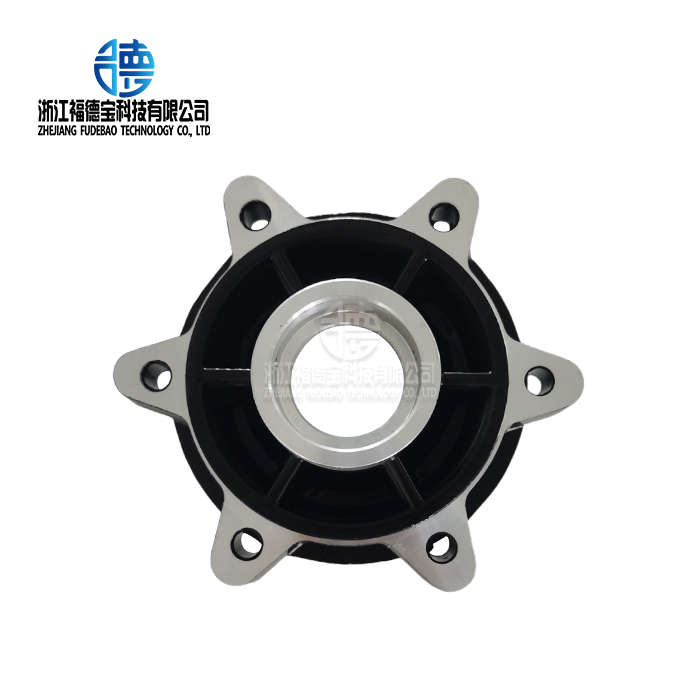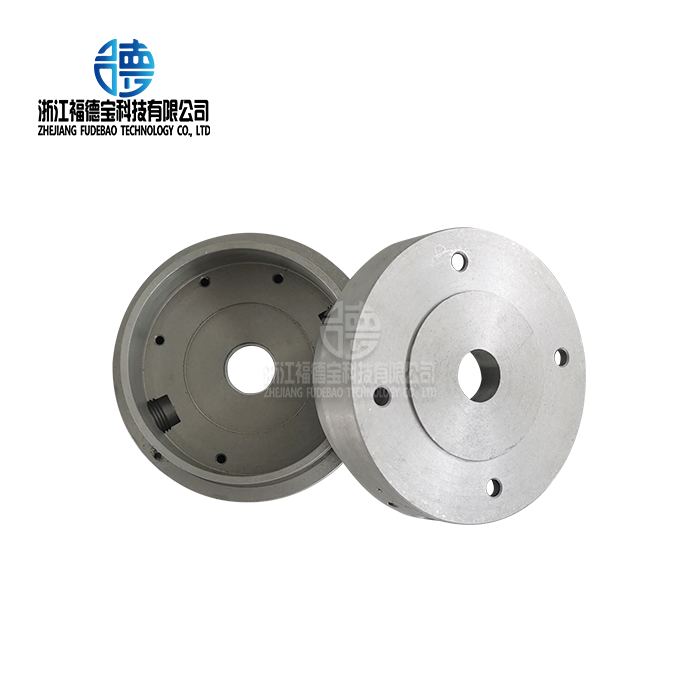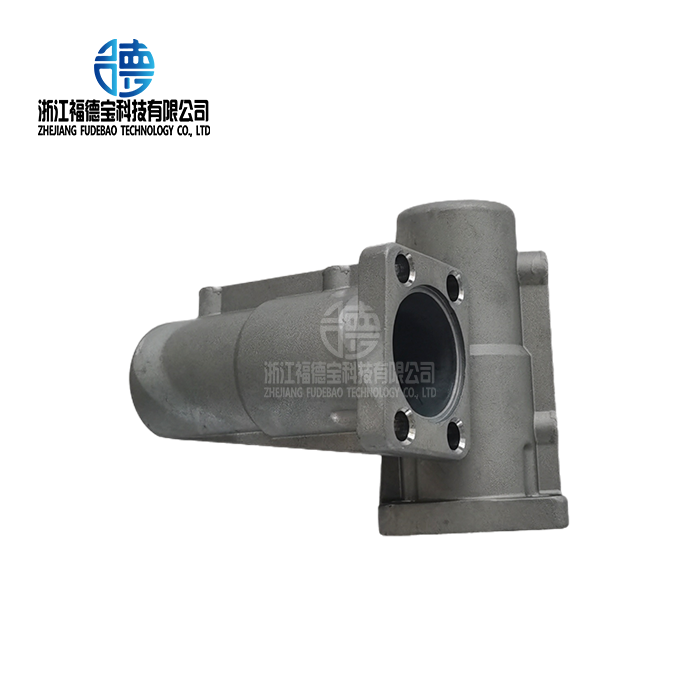
Design Rules for Aluminum Die Casting Parts
2026-03-13
Aluminum die casting design rules are important guides that control things like wall thickness, draft angles, and geometrical issues to make sure the best quality parts are made as quickly and efficiently as possible. These design principles help engineers make parts that are more accurately measured and have fewer flaws like holes, bending, and uneven surfaces. When aluminum die casting design rules are used correctly, they lower production costs, speed up cycle times, and make cast parts more reliable in a wide range of industries, including automotive, industrial, and aircraft.
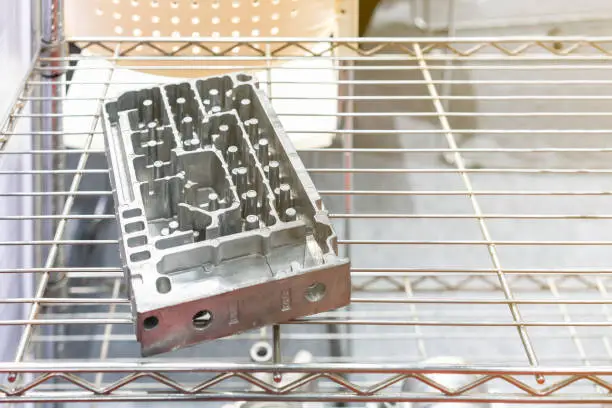
Understanding Aluminum Die Casting and Its Design Principles
Making complicated metal parts with the aluminum die casting process is one of the most exact ways to make things. In this method, liquid aluminum is pushed under high pressure into precise steel molds. This makes parts with a very smooth surface and accurate measurements that usually don't need much secondary cutting.
Fundamental Process Advantages
Traditional ways of making steel or sand do not work as well with aluminum. The material is very light, so parts made of it are up to 40% lighter than steel options while still having great strength-to-weight ratios. Another great thing about aluminum is that it is a great thermal conductor, which makes it perfect for use in cooling down car engine parts and electrical housings.
The process is very accurate, with limits usually between ±0.1mm and ±0.3mm, based on the shape and size of the part. With this level of accuracy, many secondary processes are not needed at all, which cuts down on total production costs and lead times.
Critical Design Rules for Part Integrity
Consistency in wall width is a key factor in how well die casting works. Engineers should try to keep wall thickness consistent between 2 mm and 6 mm as much as possible. Sudden changes in thickness can cause stress buildup or filling problems. When changes in thickness are needed, smooth transitions with slopes no higher than 3:1 help the metal move properly.
Draft angles are also important for getting the part out of the mold correctly. As a general rule, all vertical surfaces must have draft angles of at least 1-3 degrees. Deeper features must have higher angles to prevent damage during ejection. Surfaces on the outside usually need 1-2 degrees, while features on the inside may need 2–5 degrees, based on their depth and complexity.
Rib shape has a big effect on both how well the structure holds up and how easy it is to make. To avoid sink marks and keep the temperature even, ribs should be made with a thickness that is about 60–80% of the neighboring wall width. The right rib spacing, which is usually three to five times the width of the wall, lets the metal move properly and gives the structure the support it needs.
Common Design Challenges and Solutions
One of the biggest problems in die casting design is that it can be porous. This flaw usually shows up in thick parts where air or gas that gets stuck can't leave during the injection process. Porosity risks can be reduced by strategically placing vents, designing proper gates, and keeping the right wall thickness ratios.
Stress builds up in places like sharp edges and quick changes in geometry, which can cause cracks or failure before its time. Adding radius changes with minimum values of 0.5 mm helps spread stress more evenly and improves how the metal flows during casting.
How to Optimize Aluminum Die Casting Designs for Precision and Efficiency
To get the best accuracy in die-cast parts, you have to carefully balance the needs of the function with the limitations of the production process. When engineers know how choices about design affect both quality and cost, they can make smart decisions that help the whole production process.
Dimensional Accuracy and Tolerancing Best Practices
In order to set the right limits, you need to know what the aluminum die casting method can and can't do. It is possible to achieve very tight standards, but they usually require more complicated tools and higher production costs. For most features, standard business tolerances are between ±0.1mm and ±0.3mm. Tighter tolerances can be achieved through secondary machining processes.
Early in the planning process, it's important to figure out which measurements are the most important. This way, parting lines and gates can be placed in a way that doesn't affect these dimensions too much. Focusing on tight specs only where they are technically necessary helps keep costs down while still meeting performance standards.
Material Selection Strategies
Picking the right aluminum metal has a big effect on both speed and how easy it is to make. The most common die-casting material is still A380 aluminum alloy, which has great flow properties, good dynamic properties, and great surface finish properties. This metal can be pulled apart up to 320 MPa and has great corrosion protection, making it useful in both automobile and industrial settings.
The A383 metal makes complicated thin-wall molds more fluid, but its mechanical qualities are a little worse. However, A360 has better corrosion resistance for uses in hard settings and still has good die filling properties for complicated shapes.
When compared to other materials, like magnesium or zinc, aluminum is stronger and better at controlling heat. Although magnesium is lighter, it is not as strong and costs more than zinc. Zinc, on the other hand, is better at reproducing details but has a much higher density.
Design Guidelines for Post-Processing Operations
Taking secondary operations into account in the planning process can greatly lower total production costs and lead times. By leaving machining margins of 0.5 to 2.0 mm on key areas, you can keep the efficiency of casting while still having enough material for finishing operations.
Putting cutting reference surfaces in the right place helps make sure that the quality is the same from one production run to the next. Fixturing is easier to use and cutting is more accurate when clamping and identifying features are built into the shape of the casting.
When possible, the surface finish needs should match the die making abilities. Standard die-cast surfaces usually get Ra values between 1.6 and 3.2 μm, which are good enough for many uses without any extra finishing steps.
Aluminum Die Casting Design Rules to Address Environmental and Sustainability Concerns
Environmental duty is becoming more and more important in industry, which is why sustainable design practices are essential for modern die casting operations. Aluminum's natural ability to be recycled and use less energy help companies meet their sustainability goals while keeping manufacturing costs low.
Energy Efficiency and Waste Reduction Strategies
When compared to older methods, modern die casting technologies use up to 25% less energy because they use more energy-efficient heating systems and better process settings. Vacuum-assisted die casting methods make the castings better and reduce the amount of scrap, which is good for the environment and the economy.
Using design rules that keep structures strong while using as little material as possible directly helps reach waste reduction goals. Optimizing wall thickness, getting rid of extra material in places that aren't needed, and designing for material economy can cut aluminum use by 15 to 20 percent without affecting performance.
Sustainable Material Practices
One of the best things about aluminum for the earth is that it can be recycled. Making recycled aluminum only takes 5% of the energy required to produce new metal. Aluminum die casting practices can support circular economy principles by designing parts that are easier to recycle at the end of their useful lives, such as avoiding additions made of different materials whenever possible.
By choosing metal alloys with a lot of recycled material, you can help the environment while still meeting performance standards. A lot of die casting alloys now use 85 to 90% recovered material without changing their mechanical properties or surface quality.
Design Approaches for Defect Minimization
By cutting down on waste and rework, careful design that reduces flaws directly supports sustainability. When gates are placed correctly, there is enough air flow, and the cooling design is improved, rejection rates go down, and the total efficiency of the process goes up.
Design for Manufacturing (DFM) ideas should be used early on in the product development process to find problems before investing in tools. This saves money on changes that need to be made and less material waste during production ramp-up.
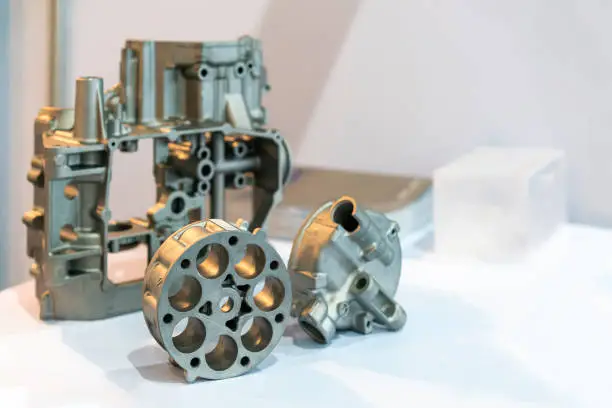
Comparison of Aluminum Die Casting Design with Other Manufacturing Methods
When procurement teams know the pros and cons of each manufacturing process, they can make better choices based on the needs of the project, the expected number, and the budget.
Aluminum Die Casting vs. Alternative Die Casting Materials
Zinc die casting has better surface finish and consistency in measurements, but it also has a much higher material density. Zinc can be made with tolerances as small as ±0.05mm, but the parts that come out of it are about 2.5 times heavier than aluminum parts of the same size. Because zinc is heavier, it is not as good for uses in the car and aircraft industries where weight reduction is still important.
Magnesium die casting has great strength-to-weight ratios, but it needs special handling techniques and costs more for the materials. Because magnesium tends to rust, protected layers are needed for many uses. This makes the manufacturing process more complicated and expensive.
Aluminum Die Casting vs. Plastic Injection Molding
Plastic injection molding gives you more design options and lower material costs, but it can't compare to metal castings when it comes to mechanical qualities and temperature resistance. Plastics work best for consumer goods and low-stress jobs, but aluminum die casting is still better for building parts, heat sinks, and jobs that need to be strong or good at transferring heat.
The cost of the tools for both methods is about the same, but steel molds tend to last longer than plastic injection molds, so aluminum die casting tools tend to last longer.
Sand Casting and Permanent Mold Comparisons
Although sand casting can be used for both small and large parts, it is not as accurate in terms of size or surface finish as die casting. Tolerances for sand casting are usually between ±1.0mm and ±3.0mm, so they need a lot of secondary cutting to be precise.
Permanent mold casting is a method that is in between sand casting and die casting. It gives better control over the dimensions than sand casting and can handle bigger parts than most die casting tools. It is not as good for high-volume production, though, because cycle times are much longer than with high-pressure die casting.
Practical Procurement Insights: Choosing the Right Aluminum Die Casting Supplier
Choosing the right production partner for a project is very important. You need to carefully look at their technical skills, quality systems, and service offers to make sure they meet the needs of your project.
Critical Supplier Evaluation Criteria
Quality approvals are one of the most important ways to tell if a provider is qualified and committed to consistent performance. For basic quality control assurance, ISO 9001 certification is enough. For tier-one and OEM uses, car suppliers should keep IATF 16949 certification up to date. For aerospace uses, you need both AS9100 certification and NADCAP approval for certain processes.
The project's volume needs and technical standards must be met by the equipment's production ability. Suppliers should show that they have the right number of tons of die casting machines, the right secondary equipment for finishing tasks, and the ability to check quality using coordinate measuring machines and non-destructive testing tools as needed.
In today's fast-paced production world, lead time performance and freedom are becoming more and more important. Suppliers who have a history of delivering on time and being able to adapt to changes in schedules are very helpful for supply chain stability.
Regional Sourcing Considerations
For US-based customers, North American providers usually have benefits when it comes to communication, logistics, and following the rules. Shorter supply lines cut down on wait times and transportation costs while making it easier to keep an eye on quality and work together technically.
Asian providers, especially those in China, often have low prices and the latest technology for making things. Many of China's top foundries have put a lot of money into modern equipment and quality systems. As a result, they can compete with Western suppliers on performance levels while giving big price cuts.
European providers are the best when it comes to technical know-how and precise manufacturing, especially for high-performance car and aerospace uses. Being close to big companies that make cars and industrial equipment gives them important industry information and unique skills.
Custom and Low-Volume Production Capabilities
Through quick-turn tools and small-batch production, rapid prototyping services speed up the process of making new products. Suppliers of prototype tools can usually send out the first models within two to four weeks. This gives you time to make sure the plan works before you invest in production tools.
It's especially helpful to be able to make small amounts of something for special uses, spare parts, or market testing. Suppliers with flexible minimum order amounts and quick setup processes can keep costs low while still meeting changing demand trends.
Conclusion
To make aluminum die casting projects work, you need to pay close attention to design principles, choosing the right materials, and building relationships with suppliers. Engineers can make parts that are both effective and easy to make by understanding wall thickness standards, draft angles, and geometrical issues. When buying teams compare aluminum die casting to other ways of making things, it helps them make smart choices based on the needs of the project. As preservation and caring for the environment become more important, aluminum's ability to be recycled and use less energy become useful benefits. To find the best provider, you need to look at their quality certifications, technical skills, and service offers that match your project's goals and number needs.
FAQ
What are the most critical design considerations for minimizing defects in aluminum die casting?
Consistency in wall width is the most important thing for preventing defects. Porosity, bending, and sink marks can be avoided by keeping the width constant between 2 and 6 mm and avoiding abrupt changes. Draft angles of 1-3 degrees are ideal for clean part removal, and rib designs with 60–80% nearby wall thickness keep structural problems at bay.
How do aluminum die casting tolerances compare to other manufacturing methods?
Tolerances for aluminum die casting are usually between ±0.1mm and ±0.3mm. This is much tighter than sand casting (±1.0-3.0mm) and about the same as plastic injection molding. Machining can get closer tolerances, but die casting often gets rid of the need for extra processes on many features, which lowers the cost of production as a whole.
What rules of design make finishing and putting things together easier?
Allowances for machining of 0.5 to 2.0 mm on key areas give you material for finishing while keeping the efficiency of casting. Fixturing is easier when reference surfaces and built-in identifying features are placed strategically. Designing for standard bolt sizes and avoiding interference fits as much as possible makes assembly easier and lowers the cost of production.
Partner with Fudebao Technology for Your Aluminum Die Casting Needs
Zhejiang Fudebao Technology Co., Ltd. offers precise aluminum die casting solutions for use in automobile, aircraft, and industrial settings by combining advanced manufacturing skills with in-depth design knowledge. Our fully integrated factory has high-speed machining centers, CNC lathes, and up-to-date die casting tools that help with the whole production process, from melting to finishing, with accuracy of up to ±0.05mm. As an experienced aluminum die casting company with customers all over the world, we offer complete solutions that include design optimization, fast testing, and mass production. Email our tech team at hank.shen@fdbcasting.com to talk about your unique needs and find out how our proven skills can help your next project move forward.
References
American Foundry Society. "Aluminum Die Casting Design Guidelines and Best Practices." AFS Technical Publication, 2023.
North American Die Casting Association. "Design Standards for High-Pressure Die Castings." NADCA Engineering Handbook, 2022.
International Aluminum Institute. "Aluminum Die Casting Process Optimization and Quality Control." Technical Report Series, 2023.
Society of Manufacturing Engineers. "Advanced Die Casting Technologies and Design Principles." SME Manufacturing Engineering Quarterly, 2023.
Materials Research Institute. "Comparative Analysis of Die Casting Alloys and Manufacturing Methods." Advanced Materials Processing Journal, 2022.
Automotive Industry Action Group. "Die Casting Design Requirements for Automotive Applications." AIAG Technical Standards Publication, 2023.



_1756361494985.webp "sliding block copper castings")
_1756350092126.webp "radiator cover")
_1756349862928.webp "belts pulleys")
_1756348489473.webp "Automobile intake valve")