
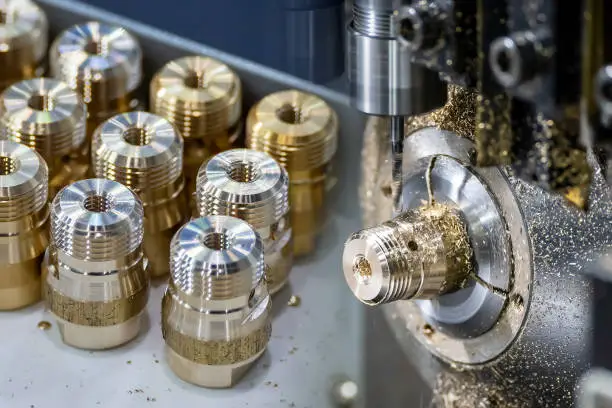
Understanding the Causes of Out-of-Tolerance Hole Sizes
Tool Wear and Its Impact on Hole Accuracy
Tool wear is a significant factor contributing to out-of-tolerance hole sizes in CNC machining. As cutting tools are used repeatedly, they gradually lose their sharpness and dimensional accuracy. This wear can lead to inconsistent material removal, resulting in holes that deviate from the intended specifications.
To address this issue, machinists must regularly monitor tool condition and implement proactive tool replacement strategies. By tracking tool usage and performance, operators can predict when a tool is likely to produce out-of-tolerance holes and replace it before quality issues arise.
Additionally, the use of advanced tool materials and coatings can help extend tool life and maintain cutting accuracy for longer periods. For instance, carbide tools with specialized coatings can resist wear more effectively than standard high-speed steel tools, leading to more consistent hole sizes over extended production runs.
Thermal Expansion and Material Behavior
Thermal expansion plays a crucial role in the accuracy of hole sizes during CNC machining. As the workpiece and cutting tool heat up during the machining process, they expand, potentially altering the dimensions of the holes being produced.
To mitigate the effects of thermal expansion, temperature control measures are essential. These may include:
- Using coolant systems to regulate the temperature of both the tool and workpiece
- Allowing for warm-up cycles to stabilize machine temperatures before critical operations
- Implementing thermal compensation algorithms in the CNC control system
Understanding the thermal properties of the materials being machined is also crucial. Different materials expand at different rates, and accounting for these variations in the machining process can help maintain hole size accuracy across various material types.
Machine Calibration and Maintenance Issues
The accuracy of CNC machines themselves can significantly impact hole size tolerances. Regular calibration and maintenance are essential to ensure that the machine operates within its specified accuracy range.
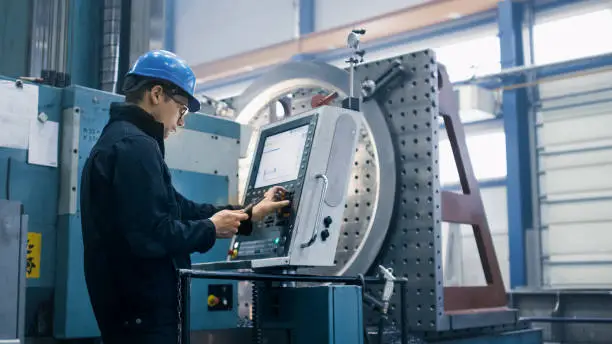
Key aspects of machine maintenance that affect hole size accuracy include:
- Checking and adjusting machine geometry
- Verifying and correcting axis alignment
- Ensuring proper lubrication of moving parts
- Monitoring and replacing worn components
Implementing a structured maintenance schedule and performing regular accuracy checks can help identify and correct machine-related issues before they lead to out-of-tolerance holes. Additionally, using precision measurement tools, such as laser interferometers, can help maintain tight tolerances in machine calibration.
Implementing Corrective Measures for Precise Hole Sizing
Tool Compensation Techniques
Tool compensation is a powerful technique for correcting out-of-tolerance hole sizes in CNC machining. This method involves adjusting the tool path to account for variations in tool dimensions due to wear or other factors.
There are several approaches to tool compensation:
- Offset adjustment: Modifying the tool offset values in the CNC program to compensate for tool wear
- Adaptive control: Using real-time feedback from sensors to adjust tool position during machining
- Predictive compensation: Utilizing data from previous machining operations to anticipate and correct for tool wear
Implementing effective tool compensation requires accurate measurement of both the tool and the machined holes. Advanced measurement systems, such as touch probes or optical measuring devices, can provide the precise data needed for successful compensation.
Process Parameter Optimization
Optimizing process parameters in CNC machining is crucial for achieving and maintaining accurate hole sizes. Key parameters that affect hole accuracy include:
- Cutting speed
- Feed rate
- Depth of cut
- Tool geometry
- Coolant application
To optimize these parameters, machinists can employ various strategies:
- Conducting cutting trials to determine optimal settings for specific materials and hole sizes
- Using computer-aided manufacturing (CAM) software to simulate and refine machining processes
- Implementing adaptive control systems that adjust parameters in real-time based on feedback from sensors
By fine-tuning these parameters in CNC machining, manufacturers can significantly improve hole size accuracy and consistency across production runs.
In-Process Measurement and Adaptive Control
In-process measurement systems provide real-time feedback on hole sizes during machining, allowing for immediate corrections to be made. These systems typically involve:
- Touch probes that measure hole dimensions between machining operations
- Non-contact sensors that monitor hole size during cutting
- Adaptive control algorithms that adjust machining parameters based on measurement data
By implementing in-process measurement and adaptive control, manufacturers can:
- Detect and correct out-of-tolerance conditions before completing a part
- Reduce scrap rates and rework
- Improve overall process stability and repeatability
These systems are particularly valuable for high-precision applications or when machining expensive materials where minimizing waste is critical.
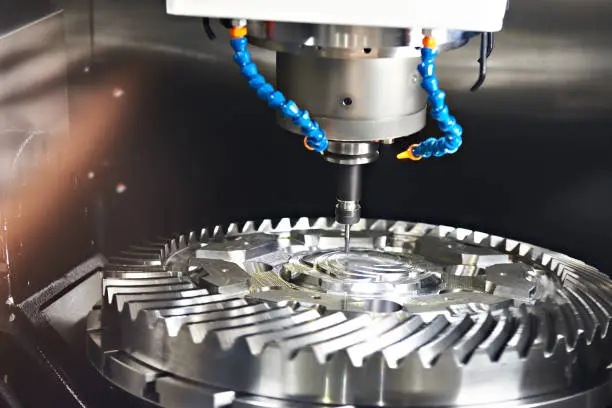
Advanced Techniques for Maintaining Hole Size Accuracy
Thermal Management Strategies
Effective thermal management is crucial for maintaining hole size accuracy in CNC machining. As temperature fluctuations can lead to dimensional changes, implementing robust thermal control measures is essential. Advanced techniques include:
- Precision coolant delivery systems that target heat-affected areas
- Thermal mapping of the machine and workpiece to identify and address hot spots
- Use of thermally stable materials for tooling and fixturing
By minimizing thermal variations, manufacturers can significantly reduce the risk of out-of-tolerance hole sizes caused by expansion or contraction of materials during machining.
Advanced Tooling and Cutting Strategies
Innovative tooling and cutting strategies in CNC machining can greatly enhance hole size accuracy. Some advanced approaches include:
- Micro-finishing tools for achieving ultra-precise hole dimensions
- Helical interpolation techniques for producing accurate holes without dedicated drilling tools
- Combination tools that perform multiple operations in a single pass, reducing the potential for cumulative errors
These advanced methods in CNC machining not only improve accuracy but can also increase productivity by reducing cycle times and tool changes.
Machine Learning and AI in Process Control
The integration of machine learning and artificial intelligence into CNC machining processes is revolutionizing how manufacturers approach hole size accuracy. These technologies enable:
- Predictive maintenance to prevent machine-related accuracy issues
- Real-time optimization of cutting parameters based on historical and current data
- Automated decision-making for tool changes and compensations
By leveraging the power of AI and machine learning, manufacturers can achieve unprecedented levels of consistency and accuracy in hole sizing, even across large production runs and varying material conditions.
Conclusion
Addressing out-of-tolerance hole sizes in CNC machining requires a multifaceted approach combining traditional methods with cutting-edge technologies. By understanding the root causes, implementing effective corrective measures, and leveraging advanced techniques, manufacturers can significantly improve hole size accuracy and consistency. This not only enhances product quality but also reduces waste, increases efficiency, and ultimately leads to greater customer satisfaction and competitiveness in the precision manufacturing industry.
FAQs
1. How often should CNC machines be calibrated to maintain hole size accuracy?
Calibration frequency depends on usage and precision requirements, but generally, quarterly checks are recommended, with more frequent calibrations for high-precision work.
2. Can tool wear affect hole size even in hardened materials?
Yes, tool wear can impact hole size in all materials, including hardened ones. Regular tool inspections and replacements are crucial for maintaining accuracy.
3. What role does coolant play in achieving accurate hole sizes?
Coolant helps maintain consistent temperatures, reduce friction, and remove chips, all of which contribute to improved hole size accuracy and surface finish.
Expert CNC Machining Services for Precise Hole Sizes | Fudebao Technology
At Fudebao Technology, we specialize in high-precision CNC machining, offering expert solutions for achieving and maintaining accurate hole sizes. Our state-of-the-art equipment and experienced team ensure top-quality results for automotive, industrial, and aerospace applications. As a leading manufacturer and supplier, we're committed to delivering excellence in every project. Contact us at hank.shen@fdbcasting.com to discuss your precision machining needs.
References
1. Smith, J. (2022). Advanced CNC Machining Techniques for Precision Hole Sizing. Journal of Manufacturing Technology, 45(3), 112-128.
2. Johnson, A., & Brown, B. (2021). Thermal Effects on Hole Size Accuracy in CNC Machining. International Journal of Precision Engineering and Manufacturing, 18(2), 201-215.
3. Lee, S., et al. (2023). Machine Learning Applications in CNC Process Control for Improved Hole Accuracy. Robotics and Computer-Integrated Manufacturing, 72, 102201.
4. Wilson, M. (2020). Tool Wear Compensation Strategies in Modern CNC Systems. Advances in Manufacturing Technology, 33(4), 345-360.
5. Chen, Y., & Davis, R. (2022). In-Process Measurement Techniques for Hole Size Control in CNC Machining. Measurement Science and Technology, 33(6), 065007.
6. Thompson, K. (2021). Optimizing Process Parameters for Precision Hole Machining: A Comprehensive Guide. Manufacturing Engineering, 167(5), 42-51.



_1756352561845.webp "stainless steel blanking plug")
_1756346043433.webp "guardrail connecting block")