
Cast Copper for Electrical Equipment: Conductivity and Component Selection
2026-11-20
It's not possible to make cheap parts for electrical equipment that aren't conductive, don't conduct heat well, and can't be cut or bent. For these components, cast copper works well. 100% IACS means that the copper has been melted down to 58 MS/m. Cast grades, on the other hand, test lower because they have more flaws, holes, and iron-containing parts. I believe you should pick the grade based on the weight, the rise in temperature, the mechanical stress, and the location where you work. Next, make sure that everyone agrees on how to check and cast. Find out how to make things, pick the right alloy and parts, and check out the supplier in this guide. This will help your team write a better request for quotation.
Cast Copper Fundamentals and Conductivity Basics
What Cast Copper Means in Practice
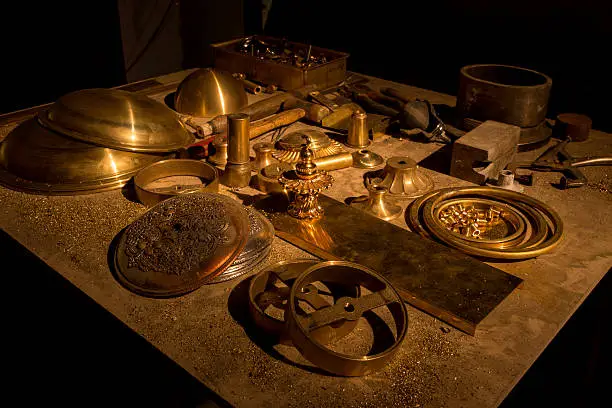
Cast copper is molten copper or copper alloys poured into a mold and left to harden into a net-shaped part. This way, the foundry doesn't have to cut a solid billet into thick pieces and make holes, bosses, and fixing points inside it. They can make them all at once instead. When business grades are made, conductivity comes first. Alloyed metals like brass, bronze, and copper-nickel lose some of their ability to carry electricity. But these grades are tougher and less likely to rust or break. There are standards, like ASTM B584, that cover sand castings made of copper alloy that are used for many things. So, when someone buys something, they can talk about it in specific terms instead of using general terms.
Why Cast Copper Conductivity Differs From Wrought Copper
Engineers use a small part of IACS to find out how conductivity works. If you heat copper to 20 °C, its IACS is 100%, which is about 58 MS/m. An engineer can use ASTM B193 to find out how to measure the resistivity of things that carry electricity. You can figure out the conductivity once you know this. Cast copper doesn't always work as well as worked copper because of three things: flaws make the metal more resistant, alloying elements scatter electrons, and porosity makes the metal less effective. Even small amounts of phosphorus, which is often used to get rid of oxygen, are not good. The name of the test site should be put on the part, and the test method should be shown in the picture. There should be a minimum value guarantee.
Thermal and Mechanical Properties That Matter
Copper is a good heat carrier at about 390 W/(m·K). Copper molds are used to make parts that move heat away from hot spots, motor parts, and parts that get rid of heat. Parts that work are also important. Copper can have a tensile strength of about 220 MPa for soft brasses and over 800 MPa for heated aluminum bronzes when it is cast. Aluminum weighs about 2.70 g/cm³, while copper weighs about 8.96 g/cm³. That is, copper makes the metal heavy. This is what a busbar clamp needs to hold both power and bolt load. Being a conductor isn't enough by itself.
Cast Copper Manufacturing Process for Electrical Components
Choosing Between Casting Methods
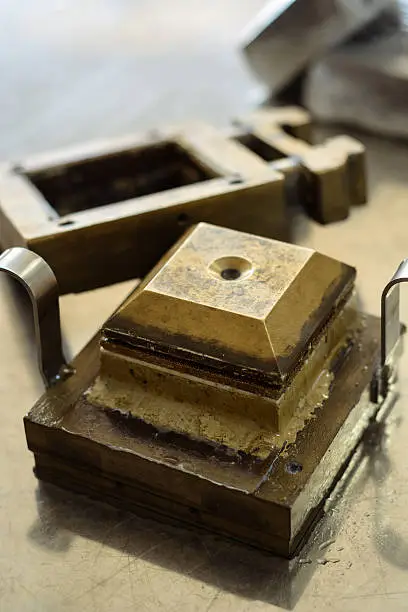
The method is based on the tolerance, wall thickness, volume, and geometry. When you cast in sand, you can use tools of different sizes to make both big and small parts. The structure gets denser, and the surface gets smoother when you order the same thing more than once. This process is also known as permanent mold casting. When you invest cast, it's best to use small models with lots of details. Copper melts at about 1,085 °C and silver melts at about 1085 °C. In other words, the molds you make and the way you pour will be different. I look at the drawing, the 3D model, and the power needs all at the same time before I offer a route. This is because a way to fix the shape might still damage the key contact face.
Melting, Pouring, and Porosity Control
Copper lets go of gases when it hardens and dissolves them when it melts. The gas gets trapped as holes because of this. Foundries get rid of oxygen, use clean charge material, check the filling temperature, and feed areas that are shrinking with gates and ramps. Oxides, inclusions, and voids happen when you don't be careful with your pour. They make the area more resistant, make hot spots when weight is put on them, and make threaded holes less strong. The problem is with the melt itself, not just how it looks. This means that controlling the melt is hard with electricity. For better flow of electricity, the casting should be dense, and the bolted parts get stronger over time.
Finishing, Machining, and Inspection
It's possible to heat, CNC machine, clean, plate, or do something else to the molds' surfaces after they are dry and set. What makes it easy for contact faces to touch at bolted joints is how flat and smooth they are, so extra care needs to be taken with them. A company called Fudebao Technology has CNC lathes and high-speed machining centers that can be accurate to 0.05 mm. They can melt, cast, finish, and do other things to the surface. Then, people who are interested can ask for measurements of each lot's conductivity, chemicals, and size to make sure they are correct before sending.
Cast Copper Grades and Material Comparisons
High-Copper and Alloyed Grades
UNS C81100 and other high-copper grades are used to make parts that need to move heat and electricity. Sometimes called UNS C81500, chromium copper gets stronger when heated. It still conducts electricity well, though, which makes it a good choice for parts like switchgear and contact arms. Bronze, brass, and copper-nickel are stronger, last longer, and don't rust, but they don't get electricity moving as well. ASTM B148 says that aluminum bronze can be used to make heavy-duty, strong parts. I ask the foundries to send me a report on what's in the metal every time they heat it. Because changes in impurities, no matter how small, can have a big impact on the flow of electricity.
Cast Copper vs. Wrought, Forged, and Aluminum Parts
It is still best to use sheet, plate, and wire for simple flat conductors. This is because cast copper is the best conductor and has a structured grain. When a part needs to have a three-dimensional shape, internal pathways, or ways to attach itself, cast copper is the best option. The structure is dense, and it has good mechanical strength when forged. However, the shapes that can be made and the cost of the tools may go up. It's about a third as heavy as copper and moves electricity about 61% of the time. But for aluminum to carry the same amount of current, the cross-section needs to be bigger, and the joints need to be put with more care.
Corrosion Resistance and Plating Choices
Copper has a stable oxide layer called patina that keeps salt water and air from eating away at it. If electrical equipment parts rust, the contact resistance goes up. To fix this, many designers choose to plate the contact sides with tin or silver. Extra care needs to be taken with parts that are made of more than one metal. As long as copper and aluminum are in wet air, they connect electrically. This means metal is the first thing to rust. That risk goes down if you use washers, plating, sealing compounds, or bimetallic transition pieces. This will help them pick the best finish and grade. You could write down on the drawing how the temperature, humidity, and salt exposure changed.
How to Select Cast Copper Components
Typical Components and What Each Needs
Cast copper is used in many types of electrical systems, and each type needs a unique set of properties. There are three main types of groups:
- In order for parts like connector bodies, terminals, and grounding lugs to work properly, they need to be able to prevent corrosion and have low contact resistance. Any tiny hole or rusty face can make the joint hot if the current stays the same. Before you start making tools, it's important to pay close attention to the machined contact areas and the right plating.
- Busbar supports and junction blocks are examples of parts that carry power. Because they carry a lot of current, they need to have enough cross-section, flat machined faces, enough creepage distance, and good heat dissipation. If the wall thickness is the same all the way through, shift voids are less likely to show up near terminal pads and bolted joints.
- A motor, generator, or transformer has parts that have to deal with temperature changes, vibrations, and not having a lot of space between them. It depends on the shape and grade of the end, as well as the insulation gaps and how well they work with electromagnetic fields. A lot of fluids touch metal in places like pumps, valves, heat exchangers, and charging system hardware. This makes corrosion and pressure ratings more important there.
These groups show why some alloys don't work with certain parts. Cost and effectiveness stay the same when grade is matched to duty.
A Step-by-Step Selection Method
Current, voltage, frequency, duty cycle, temperature rise, and grounding are all parts of electrical duty. First, you should think about these things. Next, write down the technical needs, such as how much weight it can hold, how it will vibrate, how it will wear, how it will be smooth, how it will have threaded features, and how it will wear. Next, get the making method that fits the item's size, shape, number of items needed, cost of the tools, and due date. Finally, make a list of the quality standards. These should include what the material is made of, how well it can be tracked, how conductive it is, how big it is, how many mechanical tests it needs to pass, and how it can be examined without breaking it if the risk is high enough. Pick a material, only to find out it isn't strong enough. You won't make that mistake if you do things this way.
Design Details That Reduce Resistance and Heat
Some small changes to how a part is made can change how it works when it's full. For bolted joints to not fret, the fasteners need to have the right amount of force and the contact faces need to be flat, clean, and plated. We can get the liquid metal to fill the mold and harden without any holes because the walls are thick and round. The foundry can machine the contact faces with enough room to get rid of surface oxides and make the surface flat enough. When it's hot, it's usually better to get a bigger cross-section or more cooling area than to switch to a more expensive grade. Quickly send me a 3D model of the parts before they are made. This way, we can find any thin spots or corners that are too sharp and mark them.
Quality Assurance and Supplier Evaluation
Documents to Request Before You Order
To get good technical quality, you need to fill out forms. People who want to buy something should ask for material certificates, chemical analyses, conductivity results, measurement inspection reports, records of nonconformances, and the ability to track the goods from the melt batch to the shipment. A lot of the time, PPAP or first-article reports are added to automotive and industrial programs. Make sure this is what you need when you get the price. Write down the point of sampling and the values of conductivity that are appropriate. That's important because a test bar that was made separately might not fit with the whole. See the papers more quickly if they are clear. It will also be easier to fix things if several things go wrong.
Prototype, Tooling, and Lead Time Planning
You should ask suppliers to give you a list of the times they need to make prototypes, tools, first articles, and production. This is because every stage has its own plan. A prototype or small-scale test run can help you avoid making a mistake when you want to make a new or complicated part. How it's packed is also important. Faces that are machined need to be kept free of harm, water, and dirt when goods are shipped by sea or air. When something hits a surface, dents and corrosion make it weaker. Get separate quotes for the materials, tools, testing, packaging, freight, and the smallest amount that you need to order. Look at more than one quote. There should be a separate line on the terms page for the risk of the price of copper.
How Fudebao Technology Supports Cast Copper Programs
Zhejiang Fudebao Technology Co., Ltd. is very good at casting and milling stainless steel, copper alloy, and aluminum alloy very finely. All over the world, people who work in the automotive, industrial equipment, machinery manufacturing, aviation, and marine industries buy from them. This is where we make things. CNC lathes, high-speed machining centers, low-pressure casting machines, and die casting machines are some of the things that it has. One place melts, casts, finishes, and treats the outside of everything. And because it can machine with an accuracy of up to ±0.05 mm, it is possible to do the whole process in one stop, from the blank to the finished product. The same group of people cast and cut contact faces for people who buy electronic parts. The person who is in charge of making things fit and smooth will stay put.
Conclusion
Cast copper can be used in a lot of different electrical items as long as the right materials and methods are used to make them. A lot of the time, 100% IACS pure copper is used to show how well electricity flows through something. Cast copper components, on the other hand, may not carry electricity as well due to impurities, holes, or alloying components. Before the item is made, buyers should make sure there are clear rules for testing and a minimum level of conductivity. What kind of material was used, how well it was cast, how the gate is designed, how the melting is controlled, and how it is finished all affect how well cast copper transfers electricity. Some problems inside the process can be fixed by a good process manager. They can also stop localized resistance that could cause hot spots or too much heat. Copper-chromium alloys are useful since they are strong and can move electricity well. You could pick brass, bronze, or aluminum bronze if you need something harder, more durable, or less likely to rust. Iron alloys, made iron, or cast iron could also be used, but it would depend on the shape of the part and how it will be used. Manufacturers of Cast copper that will be used in electrical applications should first think about the environment, the operating temperatures, the mechanical loads, and the amount of current that will be needed. After that, they should test the stuff to see how well it works. The results should be written down so that they can be checked. Using this method helps people choose reliable Cast copper parts that meet their needs in terms of how they look, how they work, and how they conduct electricity.
FAQ
Is cast copper as conductive as wrought copper?
Not very often; no. Cast values are less than the 100% IACS standard for annealed copper because they have flaws, holes, and alloying elements that make them less pure. Set a minimum conductivity level, a test method, and a sampling site so that all the lots meet the same electrical standard.
Which casting method fits electrical parts?
Grain die casting is best for regular orders that need a smoother surface. This method works best for both big and small parts. Investment casting, on the other hand, works best for small shapes with lots of details. The shape, number of walls, volume, and tolerance all play a role in making the final choice.
Can aluminum replace copper in my design?
Sometimes. Galvanic rusting can't happen where copper and metal meet unless the joints are bigger and better made. Only a third as dense, it lets about 61% of IACS flow through it.
What information do you need for a quotation?
You should send drawings or 3D models along with the yearly volume, operating current and temperature, environment, tolerances, and details about what needs to be inspected, machined, and surface treated.
Request Cast Copper Components from Fudebao Technology
Fudebao Technology works as a cast copper supplier and machining partner for electrical, industrial, and automotive programs. Send your drawings, annual volume, operating current, and tolerances to hank.shen@fdbcasting.com, and our engineers will review material, process, and inspection options with you. Our one-stop casting and CNC machining reach ±0.05 mm accuracy. For details, please visit fdbcasting.com.
References
1. ASM Handbook, Volume 15: Casting (2008), ASM International
2. Copper and Copper Alloys, ASM Specialty Handbook (2001), ASM International
3. ASTM B584, Standard Specification for Copper Alloy Sand Castings for General Applications (2014), ASTM International
4. ASTM B193, Standard Test Method for Resistivity of Electrical Conductor Materials (2016), ASTM International
5. ASTM B148, Standard Specification for Aluminum-Bronze and Silicon-Aluminum-Bronze Castings (2018), ASTM International
6. Complete Casting Handbook: Metal Casting Processes, Metallurgy, Techniques and Design (2015), John Campbell, Butterworth-Heinemann



YOU MAY LIKE