
What Should Buyers Evaluate When Sourcing Copper Crafts Die Casting?
2026-11-20
When I look at a Copper Crafts Die Casting project, I make a list of seven things. These are: Can the part be die cast? What alloy should be used? How should the mold be made? What kind of surface finish is needed? What kinds of inspections and tolerances are needed? How much will the whole thing cost? Can the seller prove that it can do what it says it can do? People can avoid most delays and extra work if they agree on these things before they ask for quotes. Pure copper melts at about 1,085°C, so brass or bronze are often used instead. So that engineers, sourcing teams, and quality managers can compare sources fairly, I'll explain each check in simple language below.
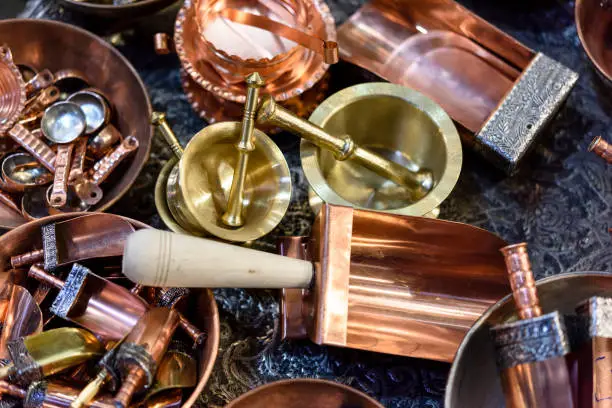
Match the Application and the Alloy
Confirm That Die Casting Fits the Part
I start with purpose and then move on to shape, size, and how long something will last. When you die cast, you don't have to cut as much, so you can make complicated parts that are close to net shapes over and over. Tooling, on the other hand, costs money over time. It might be cheaper to use investment casting, sand casting, forging, or CNC machining if you only need a few pieces or a lot of them.
Most of the time, artistic items like lighting trim, building hardware, and gifts need a good surface quality. For example, parts that are used in electrical, thermal, or outdoor settings need to be stronger, more conductive, and less likely to rust. At the start, I always ask for the yearly number. That tells me if the tools are worth the money.
Choose the Alloy for the Whole Application
Copper melts at about 1085°C and moves heat around very quickly. This makes it hard to use traditional die casting. This is the reason why brass, bronze, and some kinds of copper are better.
Brass is a bright yellow metal that is easy to machine and work with, while also offering good corrosion resistance and a classic appearance. Copper Crafts Die Casting can be used to produce brass and copper-alloy components with consistent shapes, detailed features, and suitable surface finishes for different applications. For buyers in the electrical and energy sectors, conductivity may be the most important consideration, while buyers of tools and hardware may place greater emphasis on wear resistance and mechanical strength. When selecting Copper Crafts Die Casting products, buyers should not choose a material based only on its color or appearance. Instead, they should consider the intended application, electrical requirements, mechanical loads, wear conditions, corrosion environment, and required service life. A reliable Copper Crafts Die Casting supplier should be able to recommend an appropriate copper alloy and manufacturing process based on the actual performance requirements.
There should be clear language in both the RFQ and the purchase contract about the exact alloy grade, its mechanical properties, and how well it works with different finishes. Something as vague as "copper finish" makes it easy to mix things up.
Verify Material Certificates and Compliance
In the US, buyers should ask for material certificates, records of the materials used, and the ability to keep track of each batch. This is important because different types of brass have lead in them. It is against the law for plumbing parts to have more than 0.25% lead on their wet surfaces, according to the Reduction of Lead in Drinking Water Act. Things that people buy may also have warnings about California's Proposition 65.
To send goods abroad, people may also need RoHS or REACH records. Many aerospace and automotive programs need to be able to track parts back to the lot level. Some automotive programs also need PPAP documentation. You should list any of these that your program needs in the RFQ so the seller can give you the right price.
Review the Process, Mold, and Production Readiness
Understand the Copper Die Casting Process Flow
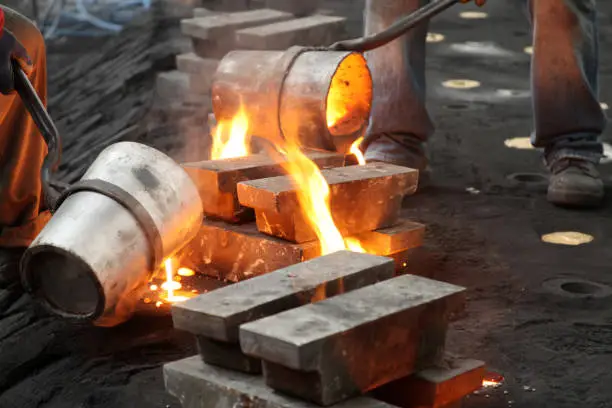
The first step in a good process is to look over the plan to make it. The next steps are to confirm the alloy, do a mold-flow analysis, make the tools, cast, trim, machine, finish, inspect, and pack.
For copper metals to melt, the temperature needs to be higher than for zinc or aluminum. Most of the time, cold-chamber machines are the best choice. On the other hand, zinc, magnesium, and lead metals are mostly worked with hot-chamber machines. Depending on the size, shape, machine power, and alloy, the right answer is still unknown. You should write down why each supplier picked the machine they did and then ask them to explain it. This makes it clear that the team knows what the metal is.
Inspect Mold Design and Tool Ownership
The cost and quality of the parts depend on the shape of the mold. What I look at are things like parting lines, draft angles, wall thickness, gates, runners, vents, cooling channels, ejector locations, and inserts that can be changed. I.e., bad venting lets gas stay inside and makes the material porous.
Copper alloys can have shorter die lives than aluminum alloys because they are processed at higher temperatures. This is because the higher thermal load puts more stress on the die steel. For Copper Crafts Die Casting, buyers should know how the tools will be fixed, kept, inspected, and changed, as well as how long the die is expected to last with the planned production volume. Before any steel is cut, the buyer and seller should make it clear who owns the mold, when payments are due, who is responsible for maintenance, and how engineering changes should be made. For Copper Crafts Die Casting projects, these details are especially important because the cost of the tools can add up over long production runs. A clear agreement about tools can stop arguments about who owns them, how much to fix them, what changes can be made, and who is responsible for replacing them. By agreeing to these terms from the start, buyers can avoid surprising costs and keep production steady during the Copper Crafts Die Casting project.
Plan Sampling Stages and Lead Time
People who work for the seller look over 2D and 3D CAD files before they make the final tools. After that, the sampling process should go in a clear order: prototype or soft-tool samples, first mold trials, measurement approval, finish approval, pre-production samples, and a golden sample.
I also separate lead time into engineering, making tools, tests, getting approvals, production, finishing, inspection, packing for export, and getting approvals. Each block comes with a risk, and a good supplier will tell you about them and give you a backup plan. Finally, discover how many die casting machines the supplier has, how much work they delegate, how much work they can do with CNC, and how much work they can do with inspection tools.
Check Surface Finish, Tolerances, and Quality Control
Define the Finish and Cosmetic Standard
People who buy decorative castings often decide whether to accept or reject a shipment based on how it looks. It should be made clear what kind of finish it has: as-cast, polished, brushed, tumbled, old, patinated, plated, lacquered, PVD-coated, or powder-coated. Separate the surfaces that are used or can't be seen from the ones that are for looks.
Okay, I agree with the lighting used for inspection and the master samples, golden samples, and limit samples. This way, there won't be too much difference between batches. Common flaws include holes, pinholes, blisters, scratches, flow lines, flash, oxidation, and coating that isn't even. Real-life tests should be done on coatings. Tests for adhesion, abrasion, UV rays, and tarnish, along with ASTM B117 salt spray tests, show how an outdoor finish will change over time.
Set Tolerances That Match Function
There are different parts that need different amounts of flexibility. I keep casting tolerances separate from important functional features, machined surfaces, measurements for looks, and the places where parts fit together. It costs more and doesn't work better because of strict standards on every part.
Product specification standards are made by the North American Die Casting Association and are used to set the limits for die casting. Most of the time, parts that need to be more precise are given secondary CNC machining. Tolerances change based on the metal, its shape, the tools used, and how it is machined. If you only mark the features that are important to you, your supplier will be able to give you a better quote.
Confirm Inspection Methods and Documents
Buyers should plan how they will measure and record each important feature before purchasing Copper Crafts Die Casting. Parts are often inspected to see how thick their walls are, how many holes or threads they have and where they are located, how flat and circular they are, how heavy they are, how rough their surfaces are, and how big they are overall. How often you should inspect depends on how dangerous the job is and how high the supplier's quality standards are. If the Copper Crafts Die Casting part is very complicated, the people who make it may use calipers, micrometers, visual measurement systems, coordinate measuring machines (CMM), 3D scanning, X-ray checking, CT scanning, density testing, or pressure testing. A trustworthy Copper Crafts Die Casting provider should determine the best ways to check, the tools to use, the standards for acceptance, and the reporting process before starting mass production. In this way, buyers can be sure that the same production batches will always be accurate in terms of measurements, integrity, surface quality, and how well they work.
Learn about the control plans, certificates of conformity, records of nonconformance, and first article reports. An organized corrective action report, like 8D, shows how the supplier handles problems. A quality system that is ISO 9001 is a good sign, but I always ask to see the process records that go with it.
Compare Cost, Supplier Capability, and Scoring
Read the Quotation Beyond the Unit Price
A good price will be able to tell the difference between one-time tooling and regular unit cost. Along with jobs like inspection, packing, freight, taxes, duties, and trimming, it also includes a call sheet.
I need prices for a prototype, a small batch, a medium volume, and a contract that lasts for one year. That's how the picture can change when you look at how long tools last, how much they cost, and how well the machine works. Things like fixes, inspections, inventory, damaged packaging, late supplies, and guarantee claims are also part of the total cost of ownership. When it comes to business terms like tooling payments, deposits, Incoterms, currency, minimum order quantities, price validity, changes to raw materials, cancelation conditions, and tooling payments, you should be just as careful.
Judge Supplier Capability With Evidence
The words that are used in ads don't say much. Someone who has done copper metal die casting before and made parts that look and feel like yours is what I want. It's important to look at areas like lighting, furniture fittings, architectural hardware, decorative parts, and OEM products.
A plant that is combined can make teamwork less likely because all the steps are done in one place, including casting, trimming, machining, polishing, plating, patination, inspection, and packing. As for quality checks, process records, and sample tracking, you should ask for them. Talking to people is also very helpful. With a good supplier, you can get clear quotes, fair deadlines, and quick technical feedback.
Build a Weighted Supplier Scorecard
A scoreboard makes sure that everyone has a fair chance to choose. I give grades based on how well they can control the metal, their technical skills, the design of the mold, the quality of the surface, how accurate the measurements are, their quality systems, their capacity, their total landed cost, their lead time, their ability to comply, communicate, and last.
The way your business works should determine the weights. A lot of the time, documents and being able to repeat things are the most important things for OEM buyers. Price and shipping may be important to people who sell things. Premium craft brands care most about getting the finish right and making sure that each order is unique. To get a full picture of the pros and cons, you should look at more than just the cheapest quote. This way, you can compare copper casting suppliers from other countries, local manufacturers, and custom casting factories that are all connected.
Prepare a Clear RFQ and Choose an Integrated Partner
Build a Complete RFQ Package
All providers can bid on the same job if there is a complete RFQ. As well as 2D and 3D CAD files, you should include the alloy you need, the annual volume, the original order number, the key dimensions, the surface finishes, the expected packaging, the compliance standards, and the shipping location.
I believe that if you want to do Copper Crafts Die Casting, you should ask makers to price the casting, test samples, tooling, finishing, inspection, packing, and shipping as separate line items. When it comes to Copper Crafts Die Casting projects, volume-based pricing can also help you compare unit costs at different order sizes and see how the overall quote changes based on production volume. Finding the best Copper Crafts Die Casting deal is easier when all suppliers quote the same costs. This is because buyers can more accurately compare the costs of tools, pieces, processing, and shipping.
Ask the Right Technical Questions
The RFQ also lets you know how informed a seller is. What I want to know is what metal they recommend and why. Could this part be cast in a cold chamber? In what ranges can they work? How do they keep the porosity in check? How many flaws are they willing to accept? How long do they think the tool will last? Who has the mold? Please send me an example of an inspection report and a list of wait times.
A lot of clear answers show that you have real-life experience. Giving vague answers is a sign of risk. A good provider will also send back design-for-manufacturing feedback before production starts. This could be a change in the draft angle or a thinner wall. It saves changes to the tools when you give feedback.
How Fudebao Technology Supports Copper Alloy Projects
One of the main things that Zhejiang Fudebao Technology Co., Ltd. does is cast and cut stainless steel, copper alloy, and aluminum alloy very precisely. People who work for us make cars, tools, industrial goods, and parts for boats and planes. In our workshop, we have CNC lathes, high-speed machining centers, low-pressure casting machines, and die casting machines.
We can make a blank all the way through to a finished product all in one place because we melt, cast, finish, and treat the surface. As little as ±0.05mm can be wrong with the machining. For people who work in aircraft, cars, machinery, electricity, or cars, that range is good for parts that need to fit tightly after being cast.
Conclusion
When you find a good source for Copper Crafts Die Casting, you check the process fit, alloy, mold design, finish, tolerances, cost, and supplier proof in a clear order. For making a lot of complicated parts, die casting works best. For making a few parts, other ways might work better. Because copper has a high melting point, brass and bronze are better materials to use instead of pure copper. How well the mold works, how long the tool lasts, and who owns the tool all affect quality and long-term cost. Standards for finish must be backed up by tests and samples, and tolerances should only be used on key parts. It is best to have separate quotes for prices of tools and prices of units. A weighted scorecard makes sure that comparisons are fair. There shouldn't be any real differences in how the work is done when there is a full RFQ.
FAQ
Can pure copper be die cast?
This method is not easy to use because pure copper melts at around 1,085°C and heat moves quickly. Most of the time, brass or copper works better for different jobs.
What affects mold cost?
It's important to think about the number of holes, the complexity of the part, the inserts, and how long you think the tool will last. Copper materials put more stress on dies than aluminum, so get a written estimate of how long the tool will last.
What tolerances can I expect?
When you use different metals, forms, tools, or do more work on the part, the tolerances can change. Our machining is accurate to within 0.05 mm, so make sure you mark your important parts very clearly.
What should I send with an RFQ?
Send your alloy needs, annual volume, finish, packaging, compliance standards, and delivery location along with 2D and 3D CAD files.
Request a Copper Crafts Die Casting Quote from Fudebao Technology
Fudebao Technology is a dependable Copper Crafts Die Casting manufacturer for buyers who need copper alloy parts with casting, CNC machining, and surface treatment in one place. Our one-stop process runs from blank to finished product, with machining accuracy up to ±0.05mm. Send your drawings, alloy needs, and volumes to hank.shen@fdbcasting.com, or visit fdbcasting.com for details. We will review feasibility and reply with a clear quotation.
References
1. ASM International, ASM Handbook, Volume 15: Casting, 2008.
2. North American Die Casting Association, Product Specification Standards for Die Castings, 2015.
3. J.R. Davis (ed.), Copper and Copper Alloys (ASM Specialty Handbook), 2001.
4. ASTM International, ASTM B117 Standard Practice for Operating Salt Spray (Fog) Apparatus, 2019.
5. International Organization for Standardization, ISO 9001:2015 Quality Management Systems — Requirements, 2015.
6. United States Congress, Reduction of Lead in Drinking Water Act, 2011.



YOU MAY LIKE